‘My Adventures with Superman’ a good new version of the hero’s animated adventures

Like Batman or Spider-Man, Superman is a character familiar enough to get audiences to tune in but with a past that allows some exploration and surprising variations.

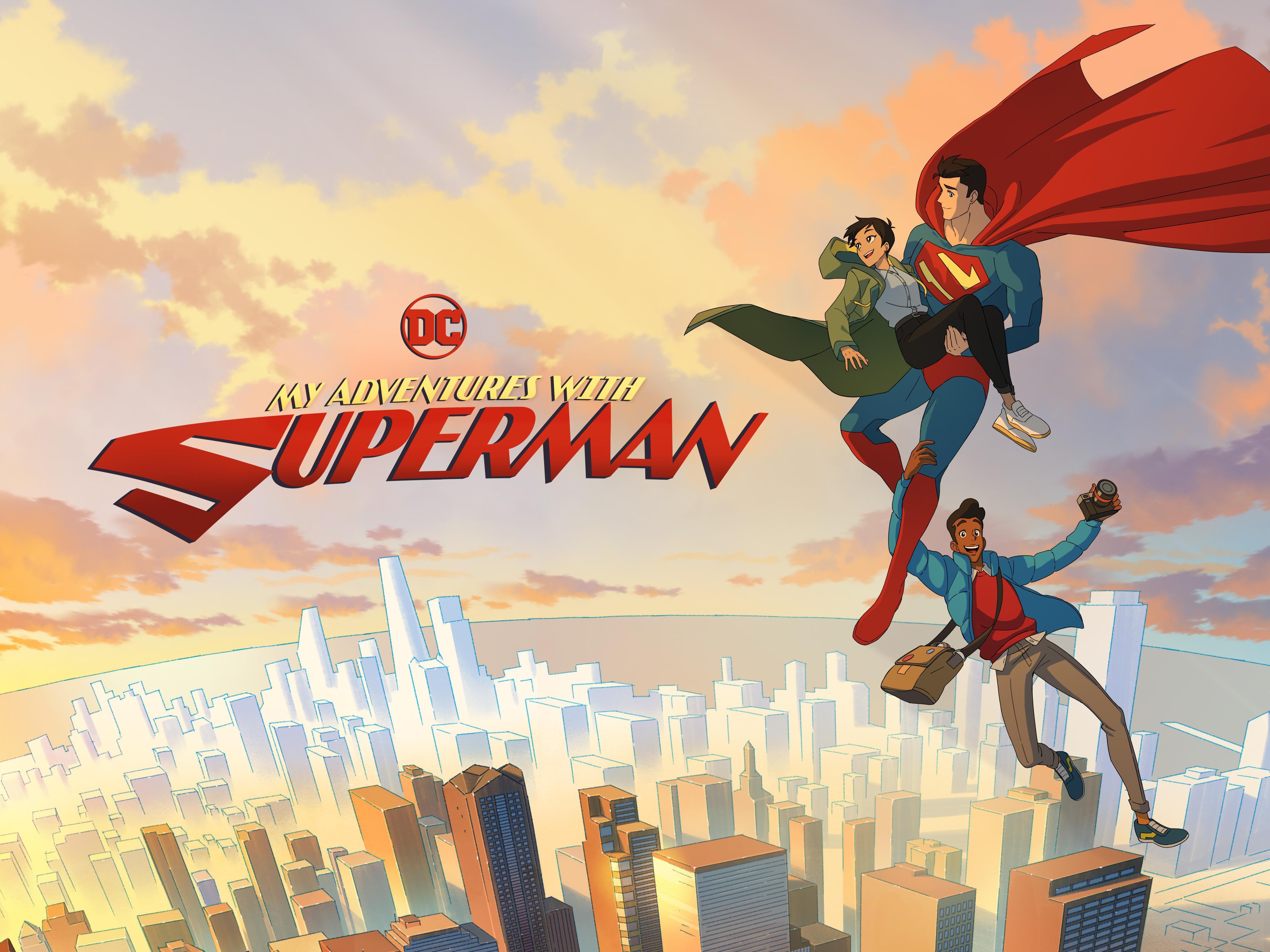
I’ve enjoyed the episodes I’ve seen so far of “My Adventures with Superman,” a fun series, squarely aimed at youngish viewers and longtime fans, airing on Cartoon Network’s Adult Swim block.

The show can’t quite measure up to WB Animation’s classic Superman tales of going on 30 years ago – and I’m not sure how it’s even possible that that much time has passed – “Superman the Animated Series,” “Justice League” and “Justice League Unlimited.”

I loved those series, have them all on DVD – remember those? – and my fondest memories are introducing those to my son when he was old enough to not be bothered by the animated violence. (His first action animation experience, along with “The Incredibles.”)

So while I’ll always have a fond spot for those series, “My Adventures with Superman” is really cute. And I don’t mean that term to serve as a disservice, or “sweet” either. But those are the first two thoughts that come to mind.

If you haven’t checked it out yet, “My Adventures with Superman” starts out as Clark Kent, Lois Lane and Jimmy Olsen begin their journalism careers as interns at the Daily Planet. It’s enjoyable that Clark is the most uncertain of the three, much like the character in the Christopher Reeve live-action film.

Superman is a character that’s open for varying interpretations, from Reeve’s quietly confident hero but bumbling Clark to the racket-busting Clark and Superman of the 1950s “The Adventures of Superman” to the kind and admirable character of the animated series of the 1990s and 2000s.

In other words, Superman is everybody’s Superman, and as long as an animated series or live-action film gets right his innate goodness and his unflagging desire to do the right thing, that’s a good Superman tale in my book.
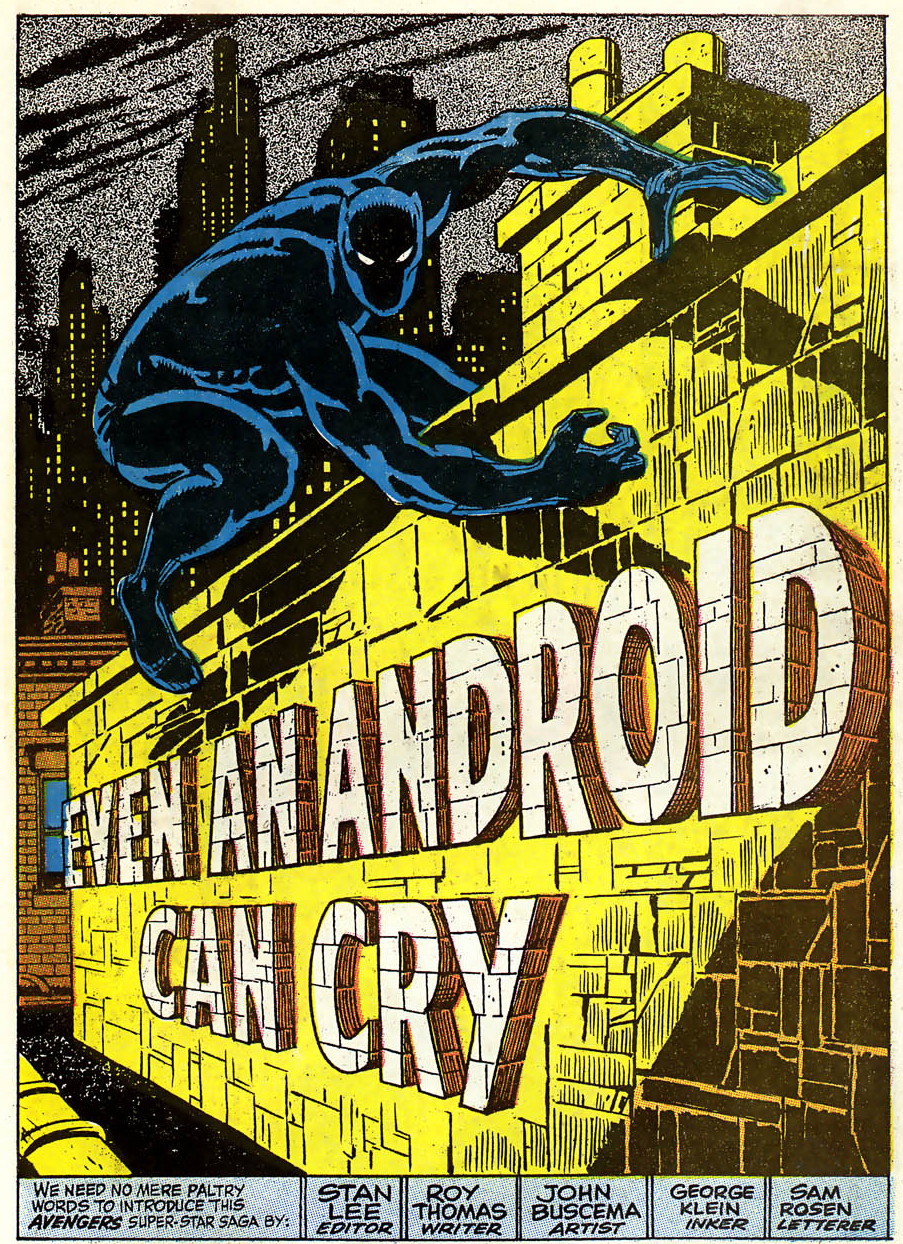
Avengers 57-58 showed Marvel at a powerful peak

In late 1968, I was buying Marvel comics after getting an introduction to them from a neighbor.

The powerful images and what-seemed-to-me powerful storytelling made an impact on me, Not the least reason was that I loved – and still do – team stories. Avengers and Fantastic Four were my favorite comics.

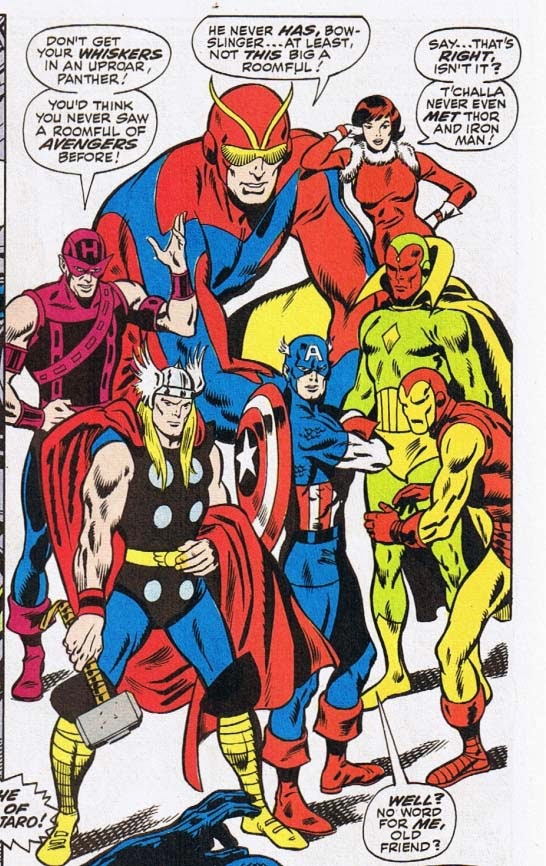
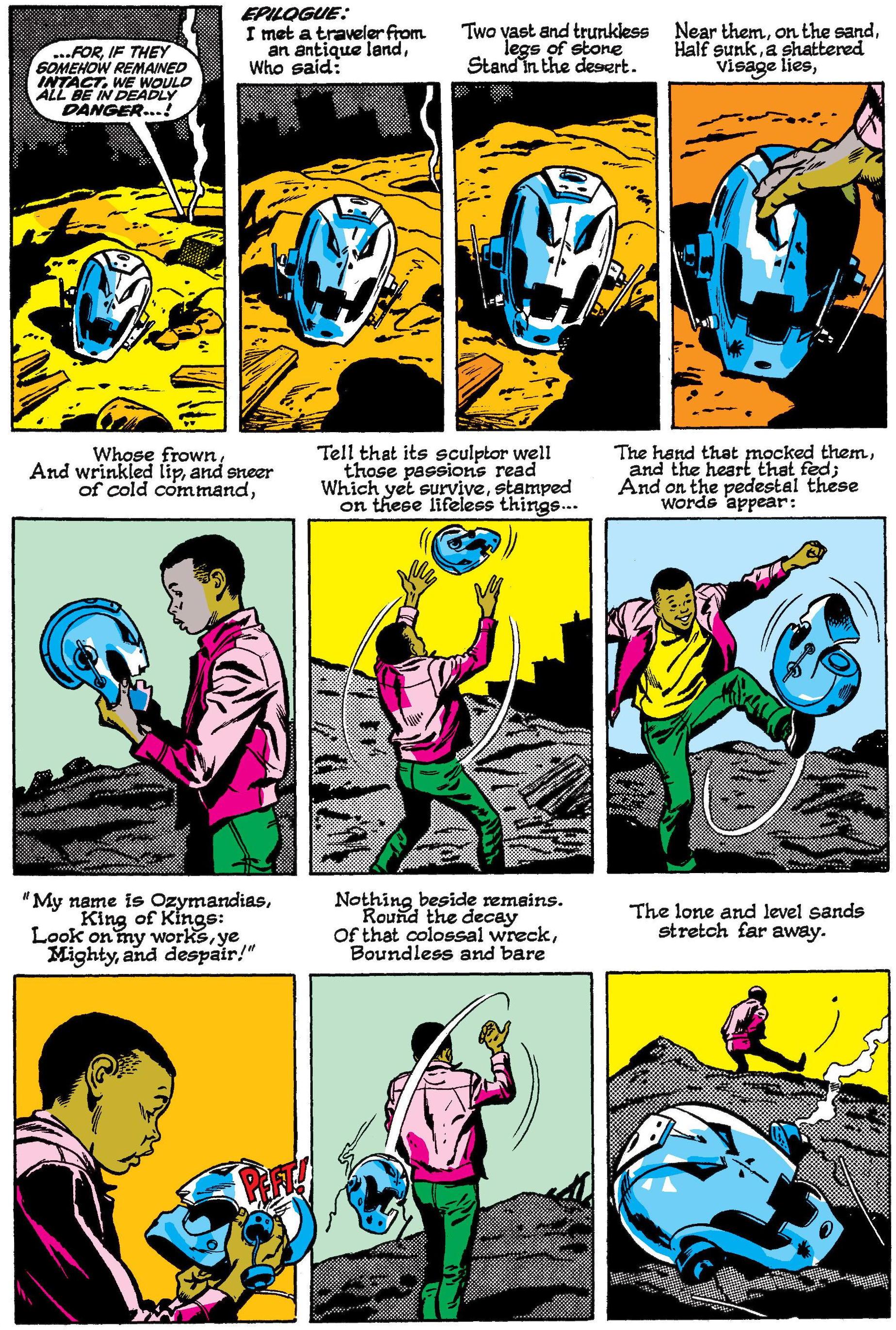
So Avengers 57 (the final page of which can be seen above) wowed me.

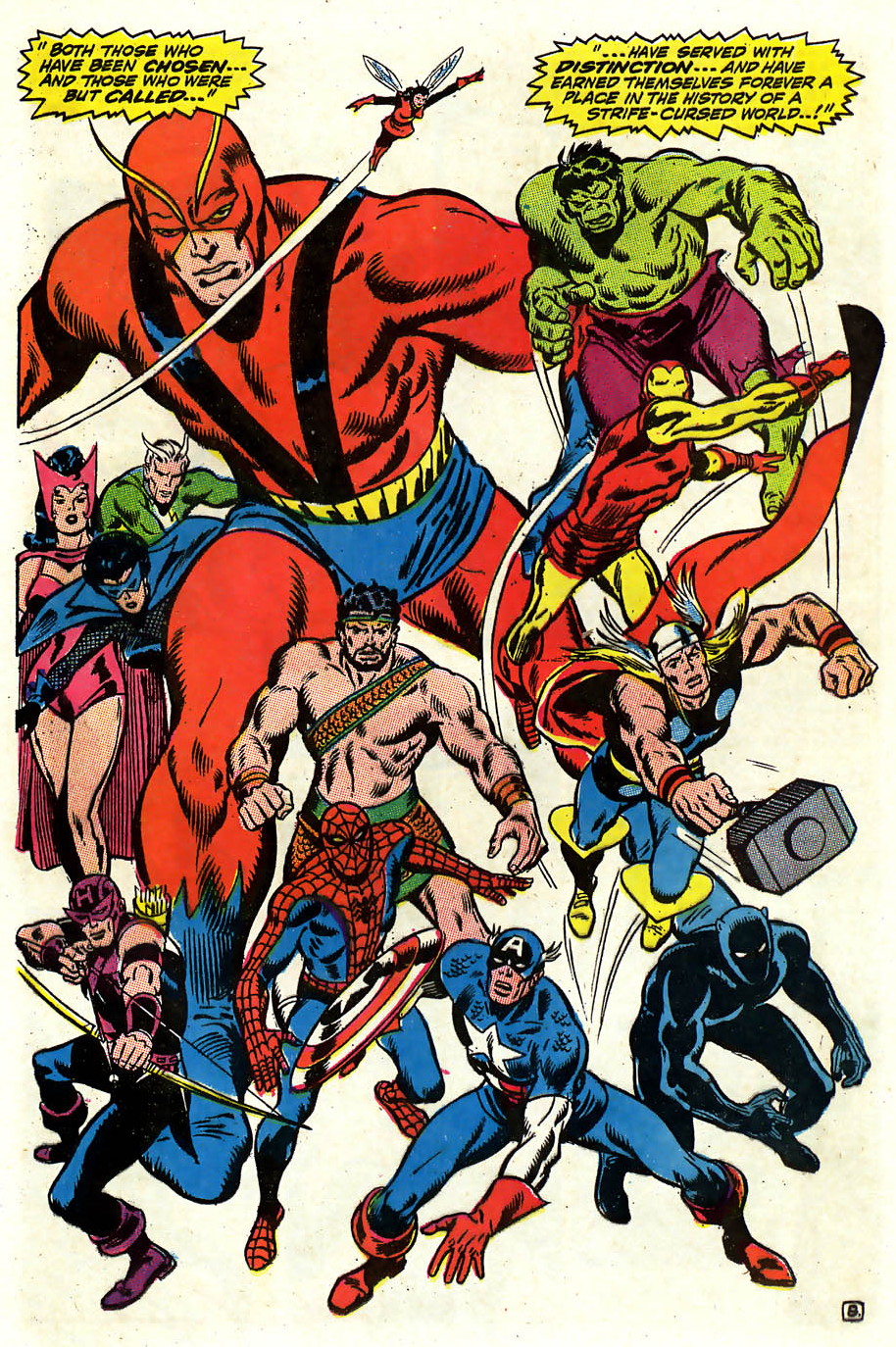
Roy Thomas’ writing and John Buscema’s art were breathtaking in the next issue.

What we couldn’t know at the time was that the comics would influence, decades later, big-screen Marvel adaptions. The world that Captain America, Iron Man, Vision, Black Panther and even Spider-Man lived in was a shared one. Cap and Panther were friends. The Avengers clashed sometime, but they were Earth’s Mightiest Heroes.

The team-ups had already been strong, of course, but only grew stronger after this.

Zombies – zombie movies – on parade: Sometimes fast, sometimes slow

Don’t ask me how this happened, but I’ve been watching a lot of zombie movies lately.

When I’m not watching movies or a TV series for an article I’m writing, my tastes in viewing are offbeat, but even I wasn’t prepared to watch so many zombie movies.

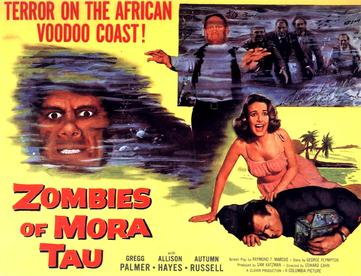
The other day, I watched “Zombies of Mora Tau,” a low-budget flick from 1957 whose only well-known star was Allison Hayes of “Attack of the 50-Foot Woman” fame.

Not long ago, I wrote about a pair of zombie movies, including “King of the Zombies,” from 1941, that basically told the same story as “Zombies of Mora Tau” – zombies arise on a remote island. (The difference was that in the two earlier films, a scientist was creating an army of zombies for the Nazis.)

Watching those old films made me think of later zombie/walking dead films, notably George A. Romero’s “Night of the Living Dead” from 1968 and “Dawn of the Dead” in 1978. Both genuinely great films.

But what I got to thinking was when zombies got fast. Make no mistake, zombies are still slow, shambling creatures in some films and TV series, notably “The Walking Dead.”

The big change from walkers to runners came in 2002, of course, with director Danny Boyle’s “28 Days Later.” In the film, the zombies could run – run fast! – and were probably considered a bigger threat than the paunchy, stumbling and mostly old white guys from earlier films.

If you haven’t seen “Dawn of the Dead” and “28 Days Later,” I urge you to do so.

As for the earlier films … well, you don’t have to rush to see them. The zombies are in no hurry. In fact, they won’ be going anywhere.

Avco Embassy: A studio – and logo – lost to time

As one of THOSE obsessive moviegoers who stayed to watch all the end credits, sometimes I relished the little surprise a cool logo could make at the beginning of a movie.

There are many vanity production company logos in use now, some with animation of archers firing arrows or lighthouses shedding beams on rocky outcroppings. None will ever beat MGM’s lion, of course, or the 20th Century Fox logo whose fanfare was extended for “Star Wars.” Not to mention the classic Universal pictures logo that transformed every few years for most of the 20th century.

The logo for Avco Embassy was simple by comparison and not as stories as those, but still effective. Just sliding tones of blue and green that formed the AE logo.

But like the American International Pictures logo that came earlier, the Avco Embassy logo was – for me, at least – a sign that an interesting picture would follow.

(And I should note that the AE logo I cite above was not always the logo for the studio, which also operated under the name Embassy Pictures and other monikers.

I was a little surprised to find that the company dated to 1942. I really always noticed it during great films of the 1970s and the first half of the 1980s.

What movies were decorated by the logo: “The Fog.” “The Howling.” “Escape from New York.” “This is Spinal Tap.” “Scanners.” Many more before Avco Embassy tapped out around 1986 or so.

Pour one out for Avco Embassy and a logo that always left me eagerly anticipating what followed.

In ‘3 Body Problem’ and ‘Three-Body,’ the cosmic comes to Earth

It’s hard to go online without seeing opinions about “3 Body Problem,” the relatively new, eight-episode Netflix series that adapts the first of Liu Cixin’s three science fiction epic novels from 2008.

It’s especially interesting that, besides the books, we have two versions of the story to watch: The Netflix series and “Three-Body,” an epic 30-part Chinese television version.

I’m a few episodes into “Three-Body” but I’ve watched and I really enjoyed “3 Body Problem,” the Netflix series.

The story is basically the same in each series: Scientists around the world start experiencing strange phenomena: Many are seeing daunting visions and some are seeing a countdown that’s superimposed in their field of vision. As the countdown clicks away, some kill themselves.

Benedict Wong (“Dr. Strange,” “The Martian”) plays a British investigator who pursues the truth behind the suicides and the threat to the planet that’s implicit in the scientists’ discovery.

Slight spoiler: The warnings are coming from a civilization four light years away. Through a vivid virtual reality game, scientists learn that an invasion of Earth is 400 years away.

The news – and phenomena in the sky – is greeted with mixed reaction on Earth. It’s 400 years from now, right? Let future generations figure out what to do.

Luckily, a handful of scientists – part of a group of friends dubbed “The Oxford Five” – begin to prepare for the future, all under the supervision of Wade, a British intelligence official.

That description barely scratches the surface of this story, which is not only a cerebral sci-fi thriller but also a drama about friendship and soul-searching: what if your scientific advancement was used to fend of an invasion – and in the process killed a thousand humans?

“3 Body Problem” is fast-moving and engaging.

Favorite TV credits and their sneaky changes

I’m a compulsive credits watcher, for both movies and TV shows. (Just like I read the acknowledgements and dedications in books.) As part of an obsessive TV generation, the compulsive credits watchers among us were able to see, over and over, the credits for shows and we’d notice anytime something had been changed.

I don’t hold it against many modern-day and recent TV shows that their credits are brief. Maybe it’s a common belief that viewers don’t want to sit through credits. Every streaming service gives us the option to skip the credits. Let me just say, if you hit the remote to skip the credits, I don’t want to know you.

In the history of TV and in some relatively recent TV, there have been a tremendous number of great credits sequences, including those that are mesmerizing for their visuals, like “Counterpart,” “Silo” and “True Detective.”

As a compulsive credits watcher, I love when credits changed to reflect a change in the cast or setting.

“Star Trek.” My love of little tweaks to TV credits goes way back to the original “Star Trek” series. In the first season, only William Shatner and Leonard Nimoy were listed in the opening credits. This changed with, I’m pretty sure, the second season, when DeForest Kelley, who contributed so much to the series as grumpy Dr. Leonard McCoy, was added to the opening credits. Today, the entire recurring cast would be listed up front, and rightfully so.

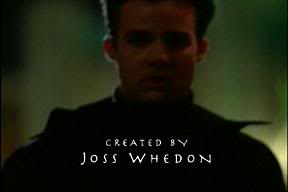
The “Superstar” episode of “Buffy the Vampire Slayer.” In the fourth season of “Buffy,” from 2000, the episode “Superstar” took place in an alternate reality in which Jonathan, a geek played by Danny Strong, was the most-admired pop star, author and action hero in the world.

“Buffy” had multiple other credits changes over the years, as characters like Angel left the show. Probably the sneakiest and possibly the cruelest change to the credits came when Amber Benson, who played Tara, was prominently featured in the series but not added to the opening credits until the sixth season episode “Seeing Red” – and then for only episode, as the character was killed.

It’s possible there’s no TV series that has so many credits variations as “Fringe,” a sci-fi series that ran for five seasons beginning in 2008. I’m in the middle of a “Fringe” rewatch right now and it was fascinating to be reminded how the credits changed to reflect the alternate universes in which episodes took place.

The worst credits change? When Mike Farrell joined the cast of “MASH” at the beginning of the fourth season, in 1975. What was so bad about how the credits handled the change? Remember how the opening credits had Hawkeye and Trapper John rush out to a helicopter landing pad and there were shots of the actors and characters? Well, when Farrell joined as BJ, they shot a closeup of him, naturally, to sub in for an action shot of Wayne Rogers. But they didn’t shoot a new shot, from overhead, of the Jeeps and medical transports heading to triage at the mobile army surgical hospital. Instead, the overhead shot is cropped so that when the camera pans back to include the Jeep – in which Rogers is clearly visible – the former star isn’t on screen.

Yes, we all had a lot of time on our hands back in our TV-watching days.

Remembering – or rediscovering – a pioneering Black actress

There are many Black actors and actresses who moved through the background of classic films like they moved through Hollywood of the 1930s and 1940s – quietly working and trying to preserve their dignity.

One of my favorites has always been Mantan Moreland, a gifted comedian and comic actor who was usually reduced to playing manservants in films of the 1930s and 1940s. In horror films, he often played the comic relief, and his performances – no doubt the result of the film’s direction and the culture of the time – seem pretty over the top, stereotyped and problematic now. He made dozens of films from the early 1930s and into the 1970s.

I watched two Moreland films in recent days, “King of the Zombies” from 1941 and “Revenge of the Zombies” from 1943. “Revenge” is a low-budget remake of “King” and is a little more polished but the plot is basically the same: A mad scientist on a remote island works to create an army of zombies, the walking dead, for Hitler. A small group comes to the island and foils the plan. Moreland is funny in both and John Carradine enlivens “Revenge” as the mad doctor.

But I watched the two films for another cast member who I was surprised I’d never heard of in all my decades of watching horror films, an actress known as Madame Sul-Te-Wan.

The actress, born Nellie Crawford in 1873, was the first African-American actress to sign a film contract. She had been born in Louisville, Kentucky, and her parents had been slaves. She had small roles in the Klan-glorifying “Birth of a Nation” in 1915 and was paid $3 a day for filming and had a contract worth $25 a week for work in films by director D.W. Griffith.

She appeared in Tarzan films and in “mammy” roles and she was in the 1933 classic “King Kong.” Despite the limitations Hollywood put on Black performers (and filmmakers) she worked steadily over the decades. She worked so often in part because she was a fine actress but also because she could believably play roles of many ethnicities. An April 1928 article noted that she was “from the Orient.” Others cited that she was born in Hawaii, contradicting that she was born in Louisville. Ah, Hollywood publicity!

In the twin “Zombie” movies, she plays largely the same role, an old woman in the mad doctor’s household who not only knows about the existence of zombies but in the first film performs the voodoo ritual that creates them. 

In later films, her roles were memorable even when she wasn’t credited as prominently as she was in the two zombie films. Notably, she played Dorothy Dandridge’s grandmother in “Carmen Jones” in 1954. 

In March 1944, the California Eagle newspaper reported on the party thrown for her 71st birthday. More than 500 people attended, the newspaper reported. The Eagle largely reported on prominent Black figures and, as early as 1928, had praised “this plucky little woman.”

In February 1959, the Eagle reported that Sul-Te-Wan had died following a stroke at the Motion Picture Country Hospital, a nursing facility in which many prominent show business figures of the era lived in their declining years. 

In its obituary for Sul-Te-Wan, the Los Angeles Times noted she had “played in several hundred motion pictures since 1915.” 

She certainly deserved to be better known.

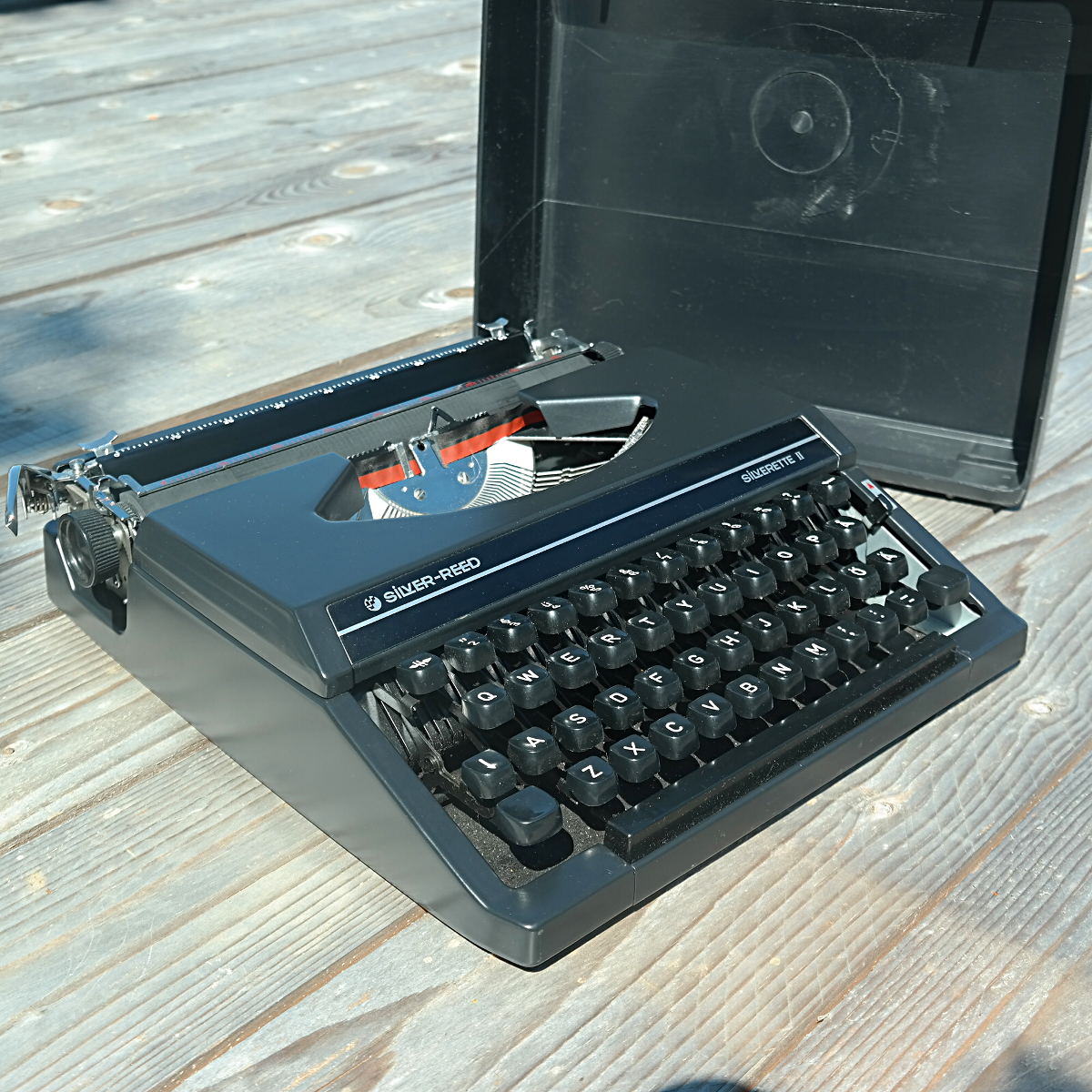
Old-timey typewriters have their charms. Oh, not to write on, though!

SAMSUNG CSC

When I began in journalism, writing freelance for one of my hometown newspapers – see, that tells you it was a long-ass time ago: we had two newspapers – I wrote all of my articles and movie reviews and other stuff on a portable typewriter and, later, on a Brother word processor. I hand-delivered hard copies of the articles to the newsroom.

I got to know the editors and reporters there, so after college, I got offered a full-time job. By the time I was working full time, the newspaper had a primitive word-processing system, not connected to the internet, but still better than typewriters.

I still remember when i was bringing my freelance pieces there some of the older people in the newsroom who banged away on manual typewriters. There was one old guy in particular who brought his two fingers down on the typewriter keyboard so hard it sounded like hammer falls.

I wrote a lot of pieces on my portable manual typewriter, which is still stored someplace. It was a constant companion: Because I was writing movie reviews, and my friends and I were seeing a lot of movies, I would take it along when we were all going out and write my review at a friend’s house after we got back from the theater.

It’s been decades since I’ve used a manual typewriter and would not trade my MacBook Pro for any number of typewriters. I wrote and edited books and many, many articles sitting on a folding chair or at my kitchen counter in recent years, but that was all done on the Mac laptop. It matters much less where I’m sitting and what I’m using for a desk than what I’m writing on.

I can’t imagine writing on a manual typewriter now, with all that balkiness and all the laborious corrections on paper. I know some people do it, but that’s not for me. I much prefer modern-day writing tools.

Having said that, when I ordered business cards a few years ago, I asked for an old-time typewriters motif in the background, behind my name and email address. I was ridiculously pleased with how they came out.

But I’d rather have one of those old beauties on my biz cards than have to work on one.

Blast from the past: Remember Svengoolie and the 3-D debacle of 1982?

If you were watching “Svengoolie” on TV a couple of Saturday nights ago, you know he was screening “Revenge of the Creature,” the 1955 sequel to “Creature from the Black Lagoon,”

In passing, the MeTV horror host mentioned that he had hosted a TV screening of the movie – ostensibly in 3-D – in the 1980s and cited it as a horrible experience. Sven has made this same reference a few times, much like the survivor of a horror film looks back on an encounter with Leatherface or Jason Vorhees.

You might not know, but 3-D films, which had been a popular novelty in the 1950s with “House of Wax” and other movies, were a sub-sub-genre of renewed interest by Hollywood in the 1980s. For the most part, movie theaters screened newly recirculated films like “Andy Warhol’s Frankenstein” and “Dracula” and “The Bubble,” which was redistributed as “Fantastic Invasion of Planet Earth.” Spoiler: It was not fantastic.

So it was probably inevitable that someone – not Svengoolie – had the bright idea of trying out an actual good 3-D movie, “Revenge of the Creature,” on TV.

In my area in Indiana, we were able to see Svengoolie from Chicago channel WFLD, but in the spring and early summer of 1982, the Creature film was screened on TV channels all over the country.

Sometimes, these airings were hosted and sometimes they were not.

What they all had in common:

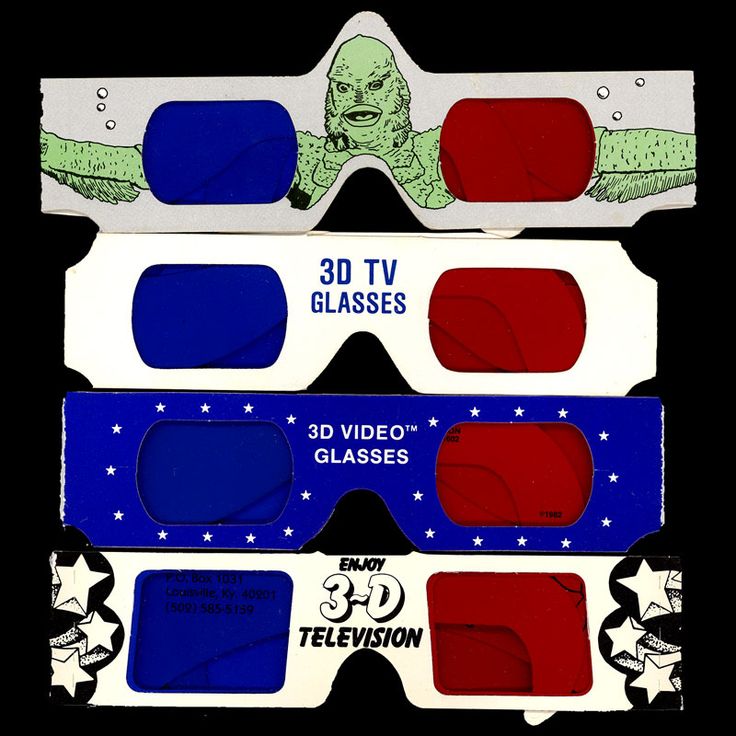
You had to get a pair of red-and-blue 3-D glasses from a fast food place or convenience store (I got mine with the purchase of Pepsi at a c-store, I believe).

You had to watch on a color TV. (Even though the movie was in black and white.)

You were supposed to try to sit six feet from the TV and as straight on to the TV as possible.

You had to try to contain your disappointment at the lack of quality 3-D when the movie aired.

“I think I just saw the Gill-Man’s hand in 3-D,” my friends and I regularly shouted during the movie.

Svengoolie ruefully remembers that ill-fated attempt, but for me, it’s a pleasant memory.

And far from the stupidest thing we did in the 1980s.

‘Mr. and Mrs. Smith’ might not be what you’re expecting, but it is good

I guess what most people think of when they hear the title “Mr. and Mrs. Smith” is the 2005 film starring Angelina Jolie and Brad Pitt as a couple who mutually discover that the other is a spy, face off against each other and ultimately fight together to survive and save their marriage.

It’s not until very late in the eight episodes of the Amazon Prime Video “Mr. and Mrs. Smith” series that John (Donald Glover) and Jane (Maya Erskine) find themselves in that standoff. But there’s a lot of mutual tension and distrust between the two before that point.

I mean, marriage is tough enough, but if you’re both spies? Hella tough.

So there are some similarities between the movie (and an even earlier TV series) and the new series, but they’re mostly superficial: married spies but not a lot more.

The new series, created by Francesca Sloan and Glover, sets up the Smiths in a bizarre blind date: Each applies for a job with some unspecified spy agency. What they only begin to realize is that along with the intrigue comes a relationship: marriage and cohabitation and learning to trust each other with, literally, their lives.

(There’s a prologue to the series that shows an earlier John and Jane Smith, played by Alexander Skarsgard and Eliza Gonzalez, and we find out there are a lot of Smith agents out there, including a recurring duo played by Parker Posey and Wagner Moura.)

But most of the series’ episodes, which are mostly standalone and quite distinctive at the same time they service the ongoing subplot of will the Smiths survive and will their marriage survive, focus on the Smiths. Erskine is quirky and heartfelt and Glover is funny and flirty and how they clash in married life is a great counterpoint to how they clash and sync in their missions.

There’s no real way to compare this to “Pokerface” but I found myself thinking of that great series not only for its through-line of story but also for how each episode is distinctive in setting, tone and guest-starring actors. Here we get to see not only the divine Posey but also Paul Dano, John Turtorro, Billy Campbell, Sarah Paulson and, maybe my favorite, Ron Perlman as a man they must protect but who becomes a surrogate child for the Smiths. Believe it or not.

I’m not sure there will be a second season of “Mr. and Mrs. Smith.” I hope there will be, not only because of the need to follow up on the finale here but another chance to see Erskine and Glover work their murderous marital vibe again.