Tag Archives: book-reviews

My little foul-mouthed scrappers will return in my novel GHOST SHOW

I’ve noted in this space before that most of my books and short stories occupy the same universe that mostly varies from the town of Seven Angels, Tennessee, to the small city of Middletown, Indiana. The former is the focus of my newest novel, SEVEN ANGELS, and the latter is the setting of my 2025 novel THAT OCTOBER.

I’ve plotted references to those locales in most of my fiction, including my upcoming novel GHOST SHOW, which is set in Middletown in 1948 (THAT OCTOBER was set in Middletown in 1984).

And there’s been a few times I’ve had characters cross over from stories to novels. I’ve previously mentioned here Butcher Crabtree, who pops up in SEVEN ANGELS and a few stories.

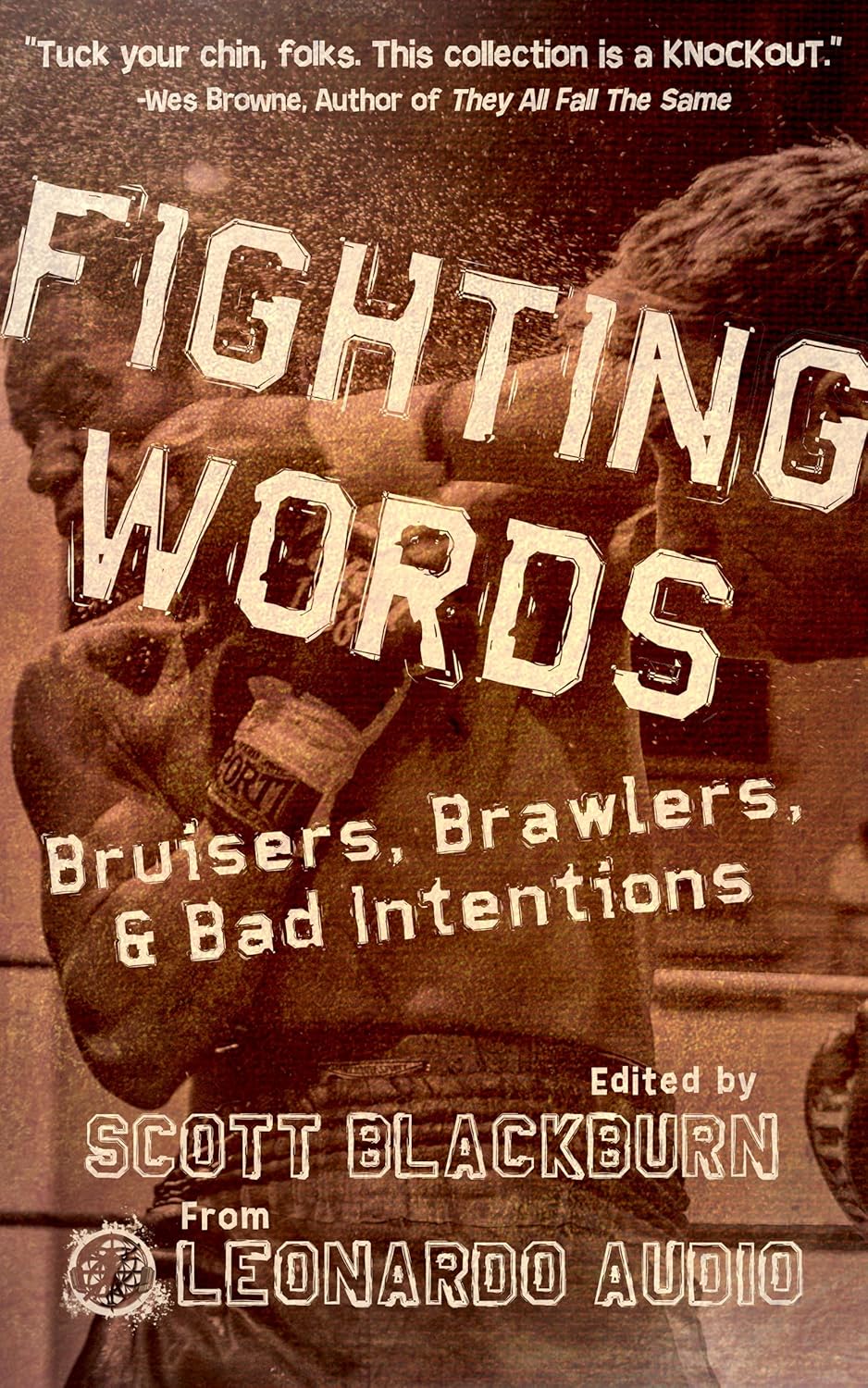
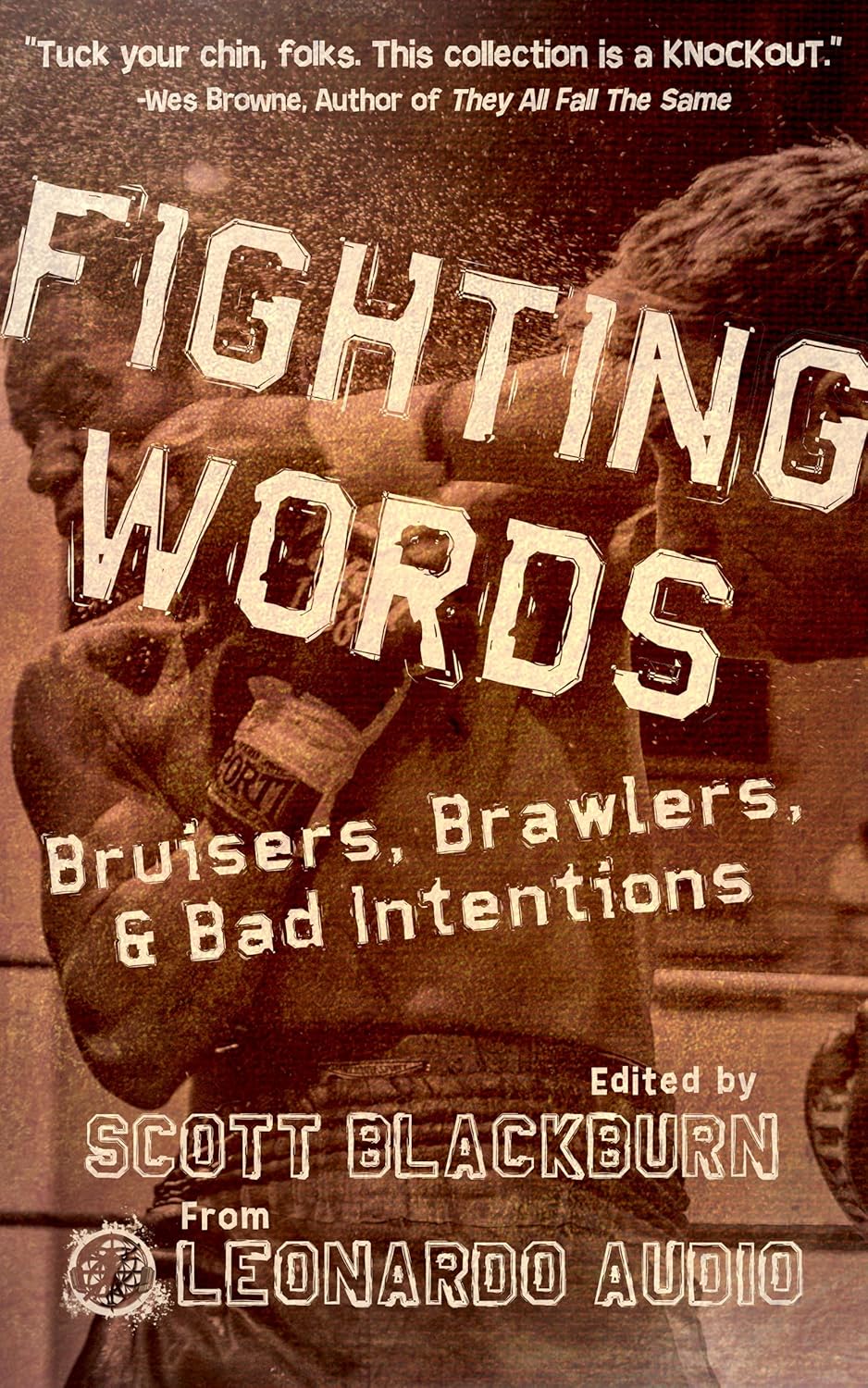
But in GHOST SHOW, when it shows up this winter, you’ll see some characters I introduced in “A Fighting Life,” a short story in the 2025/2026 anthology FIGHTING WORDS, edited by Scott Bradburn and published by Leonardo Audio.

Four of the Anderson siblings, who are the focus of GHOST SHOW, are in “A Fighting Life,” which is also set in Middletown in 1948.

They’re pretty different characters in some ways, and very much the same characters in other ways. In “A Fighting Life,” siblings Marie, Saul and Peter get into vacant-lot-punchfests when the three, all of them teens or pre-teens, discover they can make money by letting other neighborhood kids fight them for nickels. They’re foul-mouthed little bastards, as Courtney Fabrizio, the marvelous narrator of my story for Leonardo Audio, alludes to. (You should read the story, but you really should get the audio version of the anthology, particularly for the amazing work of Courtney.).

In the story, Marie, Saul and Peter take on all comers – and get rescued by their big sister Rachel as they’re about to be busted by the cops – and it’s a story that is, by turns, fun and dire.

In GHOST SHOW, Marie, Saul and Peter are still the youngest members of the Anderson family and Rachel sometimes rescues and sometimes needs rescuing. GHOST SHOW is a story that’s very, very loosely based on my mother and her siblings when they were young, and the four are based on one of my aunts, two of my uncles and my mom. There wasn’t as much mayhem in real life as I injected into either the short story or the novel.

I’d encourage you to buy FIGHTING WORDS not just for my story “A Fighting Life” but also for the really crisp and tough writing by the other writers in the anthology. And it might tide you over until GHOST SHOW arrives.

The link to buy FIGHTING WORDS:

The horror, the horror: Horror Writers Association column says AI is good and inevitable in an incredible self-own

Now I understand how the characters in the Terminator movies timeline felt when they realized that other humans had totally betrayed humanity in favor of SkyNet.

I missed the first couple of hours of this controversy this morning until I saw writer Coy Hall mention it on Twitter. I then found writer Chuck Wendig’s righteously outraged column about it, so you might be sick of this topic by now, but here goes:

In a Horror Writers of America column in the HWA newsletter that dropped in members’ mail boxes this morning (August 5, 2026), a writer and apparent HWA trustee or board member emulates the whole Bob Knight stance of “If rape is inevitable, lie back and enjoy it” from 1988. Knight, a bully of the first order, surprised no one with this bit of wisdom.

But this new sentiment today wasn’t coming from a bully like Knight. This was coming from, ostensibly, a writer and a person in a position of authority with the Horror Writers Association.

The writer decries all the people criticizing the use of AI to make book covers and argues that “every week,” the gatekeepers of horror writers “have some new witch hunt.” The writer says that those who say AI doesn’t belong in the creative arts are on a witch hunt.

Before I go much further, I’ll note something I’ve said in this space and on social media and even LinkedIn, ffs: AI kills careers and it kills people. It takes work and money away from writers and editors and artists and musicians AND DOES ALL OF THEIR WORK IN A WORSE MANNER and the data centers that power AI are killing the planet, using up mammoth amounts of water to cool their technology, befouling the environment with hundreds of diesel engines that power data centers, committing sound pollution in poor neighborhoods – and they’re often in poor neighborhoods, isn’t that a surprise? – and generally making life worse for everyone except the people who own the AI companies and data centers.

Back to that HWA column: The writer bemoans that people are complaining about AI and THEY”RE DOING IT ON FACEBOOK, WHICH USES AI, OH MY GOD THE HYPOCRISY. That’s the most ingnorant argument I’ve ever heard. Facebook is awful and I wish everyone would abandon it, but people are using it to get the word out about AI, which seems like a victory more than a failure. It’s like those people who project wannabe fascists on the sides of their own buildings. You take your battle onto the enemy’s battlefield sometimes.

“AI is here,” the HWA columnist says, and argues that we should all lie back and enjoy it.

Most people I saw online this morning were saying that the Horror Writers Association had severely damaged, if not destroyed, its credibility with this column. HWA certainly slapped in the face and kicked in the crotch the members who support it and who just happen to be, I dunno, writers and other creatives who have the most to lose to this bastard invention.

The final section is a sham “if you don’t understand AI, just ask” argument and says you should be able to ask without getting “shut down.” The phrase can’t help but remind me of the Republican congressman from a few years ago that said in cases of rape, women had the ability to “shut down” their system and prevent pregnancy, so why would we even need availability of abortion on demand or birth control or, anything like that, really.

Keep in mind the same people who think anything so horrible and injurious can just be “shut down” are the same people who want to “shut down” protections of people who are completely vulnerable. Protections like housing and food assistance and medical programs.

I said I wan’t going to get political with this. Nah, actually I knew I was going to get political with this. Because the same class of people who advocate AI, who will make money from it if it comes into wide acceptance, are interested in nothing but pushing everyone else down and keeping them down.

As much more eloquent people than I have said, fuck AI and fuck you, anyone at the Horror Writers Association, who aren’t standing up and calling it the awful, unwanted thing that it is.

We’re gonna remember who you are.

The great writer Chuck Wendig says all this better than I can, with his trademark angry logic, and I can’t do better than that, but I wanted to give it a shot. Link to Wendig’s post at the end of this piece.)

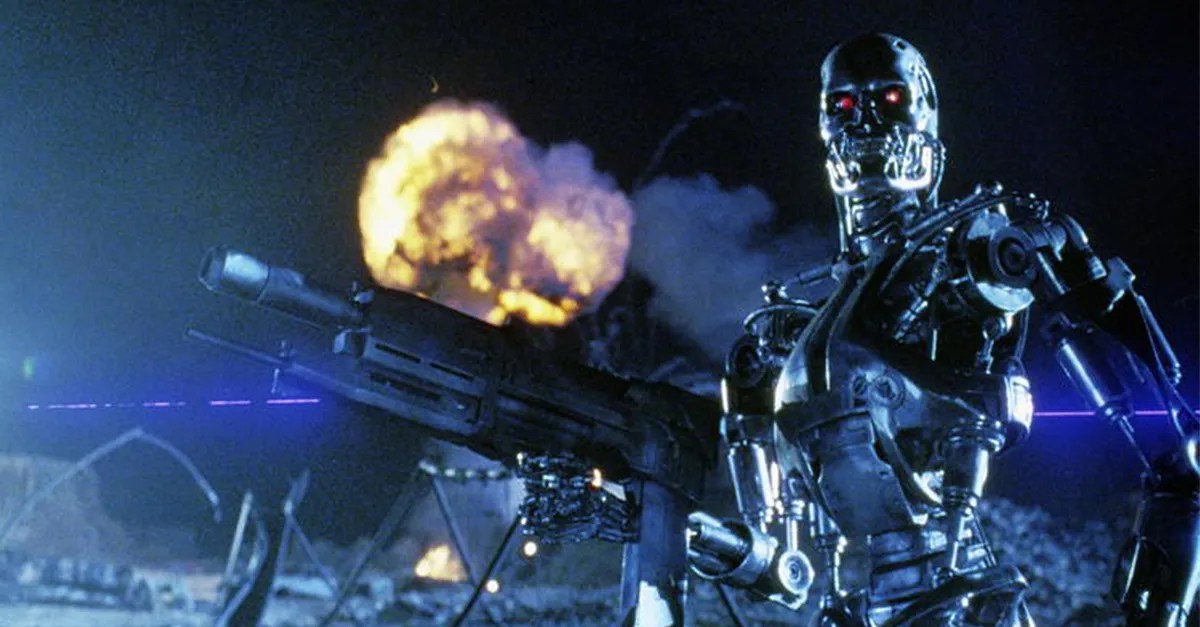
(The image at the top is of a Stan Winston Terminator endoskeleton for “Terminator 2: Judgment Day,” released in 1991.)

Chuck Wendig on the HWA post:

Book touring. Touring with books. Book talks. Talking about books, I’m kinda tired, can you tell?

Screenshot

Okay, so this post won’t make any sense because even though I had a good night’s sleep I’m still kinda brain-fried. So prepare yourself. Head-scratching is not only likely, but recommended.

My longtime friend and fellow author Jill Blocker – she’s one of the masterminds behind Constellate Creatives and Constellate Publishing – just held two days of book talks and signings in Muncie, Indiana. We’re still groggy, and Jill has only just begun her extended book tour.

Two days, you scoff. That’s barely any tine at all.

On the contrary, we packed five book talks and signings and an afterparty event at a local martini bar, RoHo’s, into those two days. We spoke at the Ball State University-affiliated EB and Bertha C Ball Center, Carnegie Library, Ink Drinkers Anonymous Bookstore, Aw Yeah Comics and the Orchard Shop at Minnetrista, all in Muncie, where I was a newspaper reporter and editor for 40 years and Jill attended Ball State and interned at the newspaper. That’s where we met, a little less than 20 years ago, and we kept in touch. When we published our novels WHAT WAS BEAUTIFUL AND GOOD, THAT OCTOBER, SEVEN ANGELS and HAPPILY AFTER EVER – the latter two newly out this summer – we decided we’d publish books by other authors who wanted to work with us. We’ve published one other so far and have others in the pipeline – and we’re looking for more authors. Go to the Constellate Creatives website for more. (Link below.)

Anyway, the sadist who set up the Indiana portion of our book tour (raises hand) didn’t leave much room for seeing family and friends or even breathing while we were in the Hoosier state, yet we somehow managed to.

Now Jill is off to Seattle and NYC and back to her home base of Zurich, Switzerland.

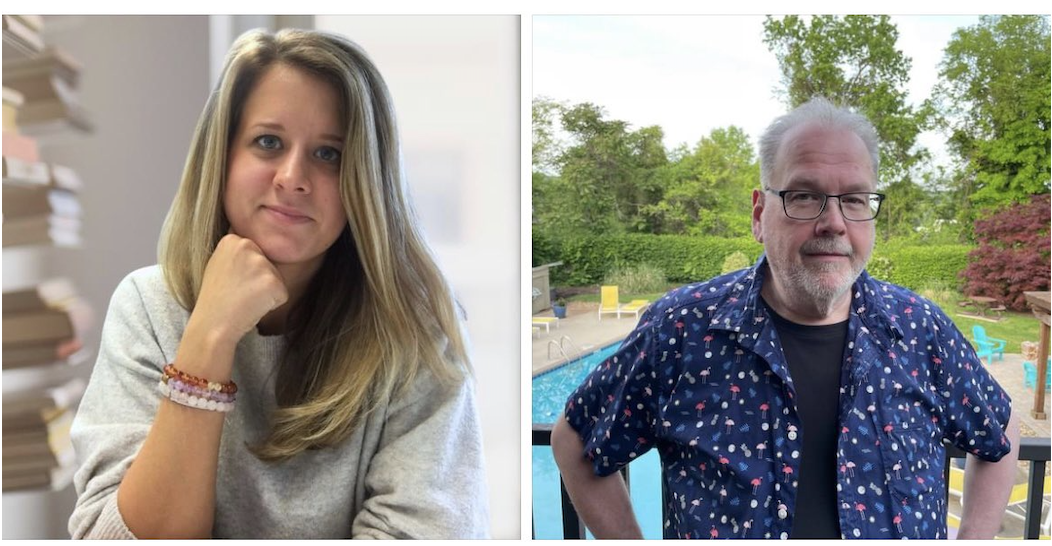
At a couple of events, we were joined by our talented friend Sara McKinley, who painted the beautiful cover for THAT OCTOBER. That’s Sara on the right there.

And we’ll be doing all this again, probably next year. Hopefully with even more books by other authors.

Nest year? Man, I better get some sleep.

Hey look: A press release about where we’ll be in July

I’m not sure if you heard or not, but I’ve got a new crime novel, SEVEN ANGELS, out and my longtime friend Jill Blocker has a new novel out, HAPPILY AFTER EVER.

You know I’m kidding, because if you’ve seen me on social media for the past several months, you know these things.

But if you’re in Indiana – both of us are from the Hoosier state – and want to come see us, you can.

Here’s a quick rundown of where both of us will be. Jill will also have events in Seattle, New York City and Zurich after our Hoosier trip. (I’ll link to the Constellate Publishing events page below.)

Anyway:

Authors Roysdon, Blocker plan book talks, signings

Two authors with Muncie, Indiana, ties are releasing new novels and planning on talks and signings in Muncie in July.

Keith Roysdon and Jill Blocker will be speaking and signing books at events July 14 and 15 in Muncie.

The two will be talking about “Seven Angels,” Roysdon’s latest novel, and “Happily After Ever,” Blocker’s new novel.

They’ll be speaking and signing books:

Tuesday, July 14, 6-8 p.m., at the E.B. and Bertha C. Ball Center, 400 W. Minnetrista Blvd., Muncie. The talk is free and open to the public, but the Ball Center requests advance registration to ensure plenty of seating and refreshments.

Earlier Tuesday, at 3 p.m., they’ll be at Ink Drinkers Anonymous Bookstore, 108 S. Walnut Street.

Wednesday, July 15, 6:30 p.m. at Carnegie Library, 301 E. Jackson Street.

Earlier Wednesday, at 3 p.m., they’ll be at Aw Yeah Comics, 119 E. Charles Street.

Also earlier Wednesday, July 15, at noon, they’ll be at the Orchard Shop at Minnetrista, 311 W. St. Joseph St.

Blocker, a native Hoosier, is a Ball State University graduate who worked at The Star Press while she was attending the university. A resident of Switzerland, Blocker is the author of “What Was Beautiful and Good,” an epic but personal account of love and the beginnings of the Dada art movement in the early days of World War I, and her new novel, “Happily After Ever,” the story of a young writer from America who finds love, disappointment and renewed hope as a citizen of the world.

Blocker and her sister are principals of Constellate Creatives, a multi-faceted international company that publishes books (through its Constellate Publishing division) and provides editorial and marketing services for a variety of books, authors and clients. Constellate’s announcement of its 2026 slate of books was widely publicized earlier this year. Constellate also has a studio for recording audiobooks or podcasts.

Roysdon, a resident of Tennessee, was a reporter and editor for 40 years for The Star Press (and its predecessors) in Muncie. He won or co-won more than 30 first-place awards in Indiana and national journalism competitions. He’s the co-author with Douglas Walker of four award-winning true crime books about the Muncie area, including “Wicked Muncie,” “Muncie Murder & Mayhem,” “The Westside Park Murders” and “Cold Case Muncie.” Roysdon’s short fiction, news and pop culture writing has been widely published. His short stories are included in three 2026 anthologies, “Fighting Words,” “Bad Intentions” and “Daydream Believer.”

Roysdon’s first novel, “That October,” was published in 2025. Set in a fictionalized version of Muncie in 1984, the novel is about six high school friends who band together to solve the mystery of a friend’s murder and another’s disappearance. His new novel, “Seven Angels,” is about a young woman who returns to her small Tennessee town to help run the family funeral home. After she’s named county coroner, she must not only solve a murder but battle white supremacists, a pill-pushing doctor, a corrupt sheriff and a ruthless Russian trafficker hunting a young girl from Ukraine.

More about Constellate Publishing and the authors:

The Facebook page I can’t kill

This is NOT a “pity me” post. Poor baby! He’s got a Facebook page that’s so popular he wants to kill it but can’t!

Well, I guess it is a “pity me” post.

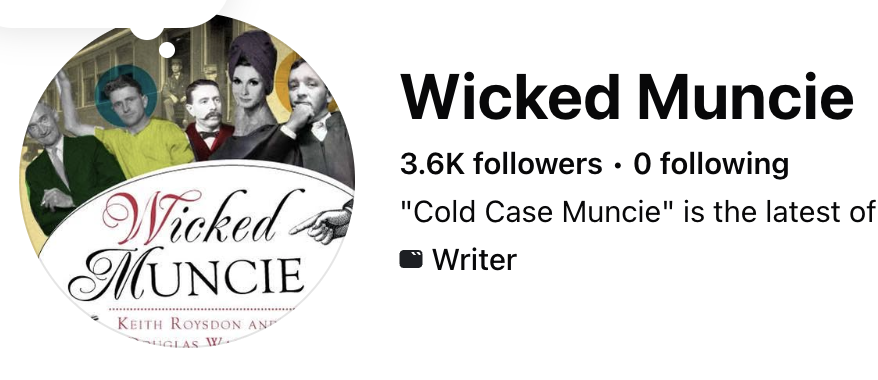
My longtime co-author Douglas Walker and I wrote the first of our true crime books, WICKED MUNCIE, for the History Press in 2015 and the book was published in 2016. It did well enough that History Press wanted us to keep writing the books and we complied through our fourth, COLD CASE MUNCIE, published in 2023.

My favorite of the four books is THE WESTSIDE PARK MURDERS, about the most famous unsolved murders in our area, in and around Muncie, Indiana, published in 2021. A pandemic publication, it has done well despite – or because of? – we didn’t get to do our usual talks and signings.

Even before we were unable to talk to people in person because of the pandemic, four years before, in fact, I created a Facebook page named after WICKED MUNCIE, the first book. Over the years since 2016, I populated the page – sometimes on a hit and miss basis – with anecdotes about the four books and their making, plus I told stories that were not included in any of the books.

This year, 10 years after I created it, the WICKED MUNCIE Facebook page is still going strong, adding new followers every day. I haven’t posted much true crime content in a while – hmm maybe people prefer a page that doesn’t have a lot of new content from the likes of me – and now tops 3,600 Facebook followers. Undoubtedly some of those are bots and now-inactive accounts, but it’s a lot of eyeballs to just casually turn away from. Until just recently, it was my largest social media presence. That’s no longer the case as just this week, my Bluesky account reached more than 3,800 followers. That’s about the same number as follow my Twitter account, although I really suspect many of the “people” on that hellsite are not actually people.

So with 3,600 followers on the WICKED MUNCIE page, I don’t feel like I can shutter it or even walk away and neglect it. So I’m cross-posting some of the same stuff I post on my other socials. And of course there’ll be some true crime stuff occasionally. Not as much as in the past, though.

So yes, there’s a word for someone who won’t walk away from a platform that affords them thousands of followers. Several words, really.

It’s like that old joke with the punchline, “We’ve already established what you are. Now we’re just haggling over the price.”

The kids are alright – and interested in cold cases

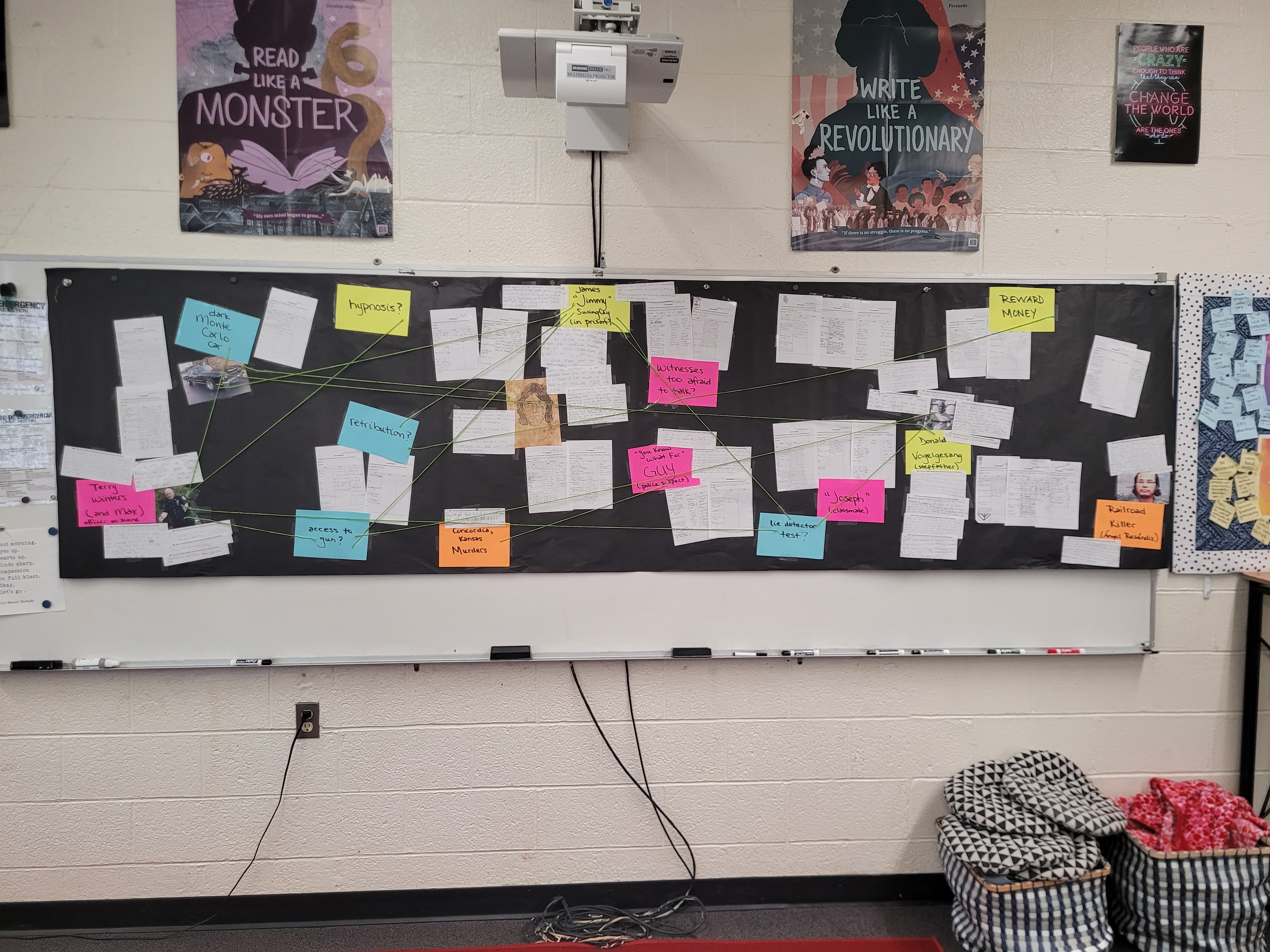
That’s a murder board. You’ve probably seen them in movies and TV shows. You might have made one yourself.

But have you ever seen a murder board, based on two real-life unsolved murders, put together by 13-and-14-year-olds? I didn’t think so.

Earlier this week I spoke to teacher Megan Byard’s middle-school class at Inspire Academy in Muncie, Indiana, my hometown. Ms. Byard had approached me and Douglas Walker, my longtime writing partner at Muncie newspapers and in four true crime books, including “The Westside Park Murders: Muncie’s Most Notorious Cold Case,” published by History Press in 2021, about talking to the class about Westside.

In September 1985, teenagers Ethan Dixon and Kimberly Dowell were shot to death in Muncie’s Westside Park. No one was ever charged with the crime, although police have had a person of interest for a few years now. In our book, we name that person, who is in prison following a conviction for a separate murder years after the Westside slayings. We explain the line of reasoning that prompted police to suspect him. We reached out to him in prison to ask about the case against him. He did not respond to written questions and a self-addressed, stamped envelope. In addition to naming him, our book explores many other theories and suspects connected to the case.

Since it came out, our book has received a lot of attention. Popular podcasts have been based on our book and the crime. On Amazon, the book has 163 ratings for 4 out of 5 stars. It prompted a Peabody-winning producer of non-fiction television to contact us about turning it – and some of our other writing – into a multi-part true crime series, but no networks or channels took the producer up on the pitch.

Of all the attention that our book has received, I think one of the coolest and most interesting was from Ms. Byard’s class. The students, who are interested in journalism and writing and true crime, studied the book and the crime in advance of having me do an online talk for their class. They asked good questions.

I think I was most impressed with the murder board, though. Made me feel like I was working in a police precinct, hoping for a breakthrough.

And I guess all of us are still waiting for a breakthrough.

Thanks to Ms. Byard and her class at Inspire Academy. Your interest and care made my week.

Here’s a link to the book on Amazon, although you can find it anywhere, including many libraries, including the Chicago Public Library.

It’s an e-book kind of day!

It’s Labor Day and the beginning of fall – don’t argue – and the beginning of Spooky Season – that cannot be argued with – and it’s e-book day here on the ranch.

Just a quick note that THAT OCTOBER, my 1984-set high school crime novel, is available for quick and easy download beginning today on Kindle.

Here’s the link:

Also today, FIGHTING WORDS: BRUISERS, BRAWLERS AND & BAD INTENTIONS is out on Kindle.

The anthology, put together by writer and editor Scott Blackburn, features stories about fighting, fracases, brawlers, pugs and the sweet science, especially when it’s not so sweet.

My story, “A Fighting Life,” begins in 1948 and follows three young siblings – Marie, Peter and Saul – as they discover there’s money to be made, a nickel at a time, taking on other neighborhood kids in bare-knuckle challenges in vacant lots and abandoned buildings.

But besides my story, there are nine other great stories from some of the hottest authors today, including:

Saint Bullethead by Nick Kolakowski, narrated by Chris Andrew Ciulla

Where the River Breaks by L.S. Goozdich, narrated by Victor Clarke

Pure Wrath by A.M. Adair, narrated by Linda Jones

Fight Club by David Moloney, narrated by Chris Andrew Ciulla

Conor McGregor Was a Friend of Mine by J.B. Stevens, narrated by Michael Orenstein

Call Me Mina by Laura Brashear, narrated by Stacy Gonzalez

A Fighting Life by Keith Roysdon, narrated by Courtney Fabrizio

The Grit by Meredith R. Lyons, narrated by Suzanne Elise Freeman

Bourbon BrawI by Ashley Erwin, narrated by Matt Godfrey

The Cleaner by Jason Allison, narrated by Chris Andrew Ciulla

And what’s that “narrated by” element there? That’s because in addition to the e-book, which is available now, there’s an audiobook edition coming right away.

I got to work a little bit with Courtney Fabrizio, who narrated my story, and she is fabulous.

The e-book was upon its debut the Number One new release in martial arts books and it’s a firecracker.

Here’s a link:

The many lives – and deaths – of Butcher Crabtree

A lot of writers, maybe most of us, have characters that we love to play with. They might be heroes or villains, but we love to return to them again and again.

Mine is Butcher Crabtree, a character I created back in the early 2000s in DEATH AND TAXES, the first novel I wrote. It was the first of a series of books I wrote about Middletown, Indiana, my version of my hometown, Muncie, Indiana. That first book was about Jack Richmond, a newspaper reporter who investigates the death of the head of the local chamber of commerce and finds that the chamber chief was involved in shenanigans with some unsavory characters.

One of them was Butcher Crabtree, at the time a muscled and menacing, fire hydrant-shaped tough guy who was working as the bouncer at the Gilded Cage, the strip bar in Middletown. In his spare time, Butcher was up for committing murder on behalf of his bosses.

I’ve returned, in the past few years, to some of those characters. Reporter Jack Richmond was a novice newshound in 1984, the time period for my novel THAT OCTOBER, which was published just this past June.

Butcher is in that book, too, although in a blink-and-you’ll-miss-him cameo at a Halloween party. He’s referred to as “Uncle Butcher,” but it’s good old Butcher. Complete with his characteristic baseball bat.

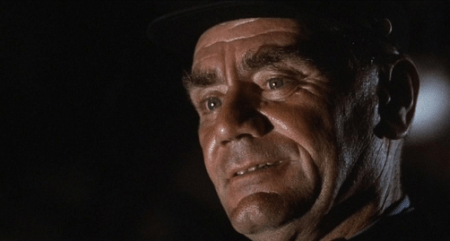
(By the way, that’s not Butcher above, but it is Ernest Borgnine in the great 1973 thriller “Emperor of the North.” In that movie, Borgnine is a vindictive and murderous Depression Era-railroad guard. I didn’t have Borgnine in mind when I created Butcher, but at least in that movie, he’s a pretty good illustration of Butcher. George Kennedy is also a passable doppleganger.)

But Butcher isn’t just a tough guy. I’ve enjoyed casting him in a variety of roles, from the threatening old uncle in THAT OCTOBER to his role in my story “Rousting,” published just recently by Pistol Jim Press. In that one, Butcher is a racist sheriff’s deputy who pushes his luck too far.

Butcher also showed up in “The Devil’s Cut,” my story in HOOSIER NOIR 7. In that one, Butcher is once again a sheriff’s deputy and is again murderous.

Is Butcher ever a good guy? Well, in my book SEVEN ANGELS – winner of the 2021 Hugh Holton Award for Best Unpublished Novel from Mystery Writers of America Midwest – he’s a mentor figure for Travis King, a troubled young man trying to make sense of his violent life.

I’ve included Butcher in a couple of other stories, too, and those – like SEVEN ANGELS – might see the light of day sometime, as THAT OCTOBER has.

Butcher often meets his end in my stories. He did way back more than 20 years ago in DEATH AND TAXES and he has since.

I don’t mind that Butcher’s lives and deaths conflict and contradict and that he seems to move back and forth through time at my whim.

When you’ve got a fun character, you don’t want to let them go.

‘Jesus Land,’ a poignant memoir from a friend and fellow Hoosier, headed for the big screen

The bright young faces in this photo belong to David and Julia.

The bright young faces in this photo are of Julia and David as portrayed by Ella Anderson and Xavier Jones.

My friend Julia Scheeres’ 2005 memoir, “Jesus Land,” is being made into a movie. If it’s anything like Julia’s book, the movie – directed by Saila Kariat – will be poignant and harrowing and heartfelt and, yes, controversial. Julia’s memoir is routinely banned because she tells the truth about the fundamentalist Christian life.

I’ll give you the shorthand version of why we should all care about “Jesus Land,” and why you should read Julia’s book and see the movie when it comes out. First, a little background.

Julia and I grew up in Indiana at about the same time. In the 1980s. I lived in Muncie and she lived in the Lafayette area. Her parents were abusive religious fundamentalists – my family was Baptist but never abusive when I was growing up. Julia’s parents ended up sending Julia and David to the Dominican Republic to a teen concentration camp run by an Indiana church.

I didn’t know Julia until about 20 years ago, when she contacted me from her home in California to ask if that church was undergoing a rebirth in Indiana.

I spoke with Julia and other survivors of the church gulag and, along with a small group of reporters and editors, wrote extensively about their experiences and the modern-day church and whether it was still sending, at parents’ expense, kids out of the country to hellholes, where they were abused and made to work.

I disappointed Julia back then because my editor at the time was so afraid of upsetting the church and the local chamber of commerce that they gutted our stories.

Julia’s “Jesus Land” had come out the year before, and it told the story better than we could have anyway.

Julia and I became friends – we never met but kept up to date on each other’s families and kids on Facebook – and I wrote about “Jesus Land” again in 2021, when I interviewed Julia for an article about fundamentalist groups that were pressuring Indiana schools to ban the book. It’s something that Julia has grown accustomed to: “Jesus Land” is among books regularly banned because it dares to tell the truth about the religion-based “troubled teen industry,” and how there’s money to be made by pseudo-religious organizations that incarcerate “troubled” young people.

The two of us also spoke while I was working on, shortly after that time, another story about money flowing to the troubled teen industry in Indiana. Julia encouraged me to pursue the story and read drafts of it, which I worked on on a freelance basis for more than a year. Ultimately, the cowardly editors of a major newspaper spiked my story but kept all my research – legal documents, video depositions, reports – and, a year later, did their own story. It remains a very bitter end to my newspaper career.

I’ve moved on from those disappointments to other forms of writing, and Julia has moved on in spectacular fashion: She’s written and published two more books, and now “Jesus Land” will move from the realm of New York Times bestseller to big-screen film.

Julia and David’s story, so movingly told in “Jesus Land,” will find a whole new audience.

Julia, always gracious and kind, was the first person I thought of when I thought of writers who could read my new 1984-set crime novel THAT OCTOBER. I hoped she would appreciate its story of Indiana teenagers grappling with injustice and forces beyond their control. Her comments about the book are prominently displayed on the back cover.

Thank you, Julia. I’m so happy for the movie version of your book.