Del Tenney, director of ‘Horror of Party Beach,’ dies

horror-of-party-beach

Word has reached monster movies fans of the death of director Del Tenney, who passed away in February at 82.

del tenney

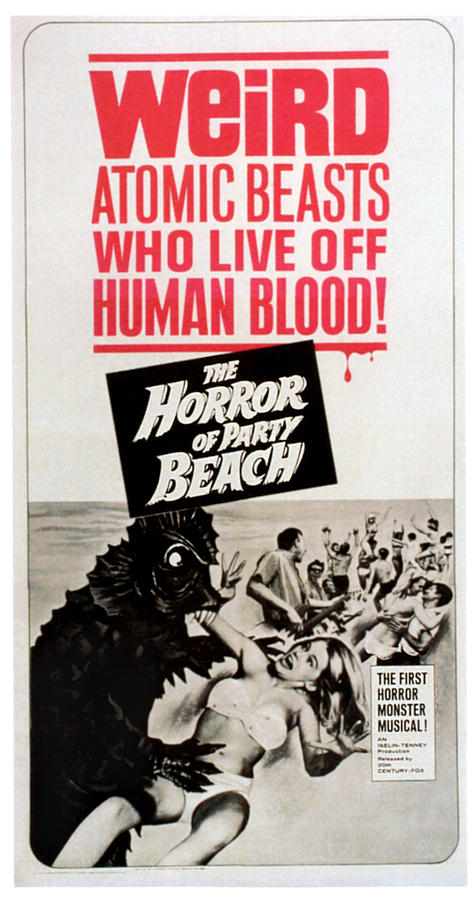
Tenney produced and directed several films, including a drive-in double-feature classic, “I Eat Your Skin,” but he was best known as the director of “The Horror of Party Beach,” a grandly silly 1964 exploitation movie that was often shown on a double feature with “The Curse of the Living Corpse.”
the-horror-of-party-beach-1964-everett

Tenney’s “The Horror of Party Beach” is one of those movies that could only have existed in the wild exploitation days of the 1960s, when drive-in theaters meant that even the lowest-budgeted, most ludicrous movies could be seen by millions of teenagers.

With its mix of Beach Boys-style rock and roll – courtesy of the Del Aires, who perform “The Zombie Stomp” in the movie – frantically dancing teens, beach blanket bingo and a biker gang, the movie had a little something for everyone.

Perhaps typical of a low-budget monster movie from the 1960s, “The Horror of Party Beach” seems pretty vague – or pretty confused – about what its monsters were. In the trailer alone, they’re referred to as atomic monsters, demons, the living dead and zombies. Huh?
horror party beach curse corpse double

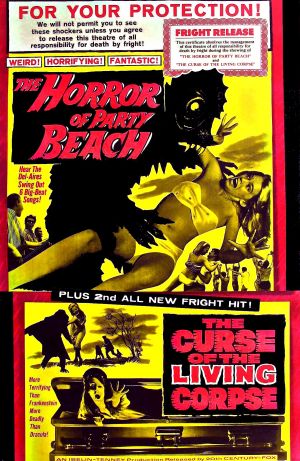
The ads for the “Party Beach” and “Living Corpse” double-feature were among those that warned that, in order to see the movie, viewers had to release the theater from liability in the case moviegoers died from shock.

Tenney made his movies in the Stamford, Conn., area, and years after he lit up drive-in movie screens he made a (legitimate) name for himself, according to online obituaries, as a leading light in live theater. Henry Fonda made his last stage appearance in a production at the company that Tenney shepherded.

Here’s to Del Tenney. Our drive-in nightmares were better because of him.
Movie classic: ‘Shaun of the Dead’

shaun-of-the-dead

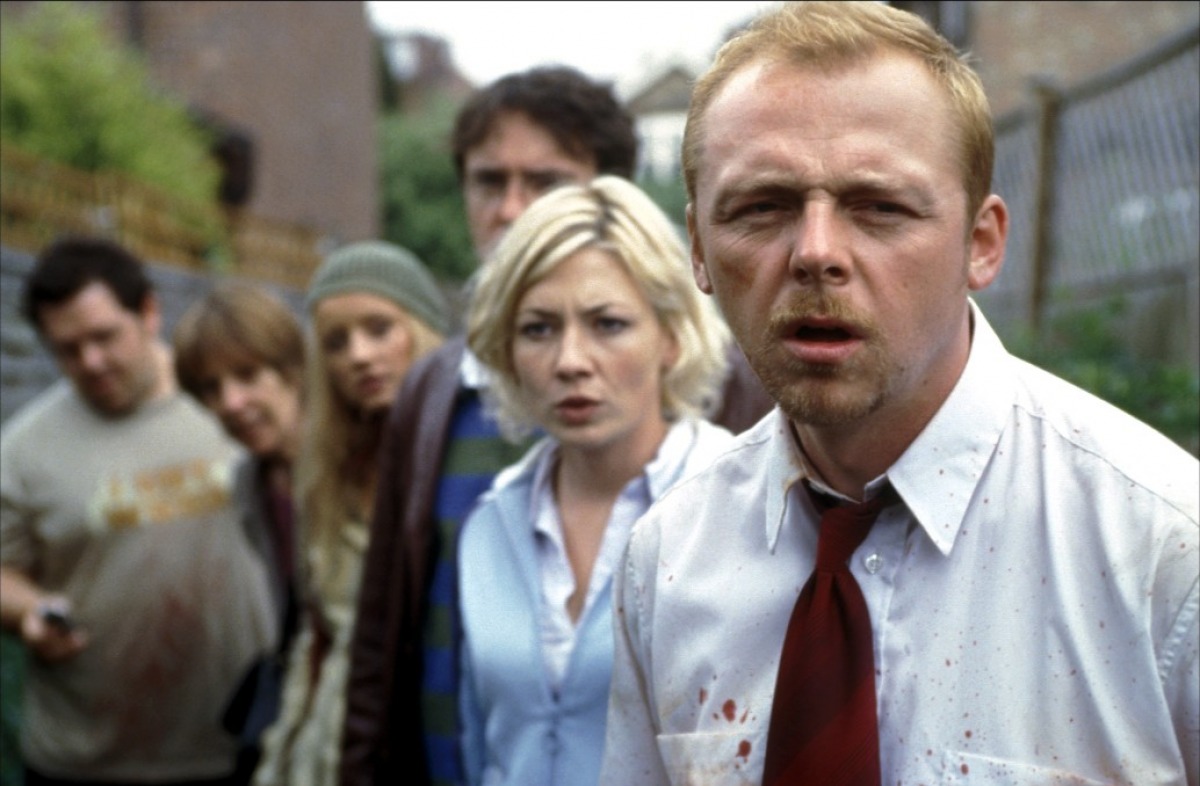
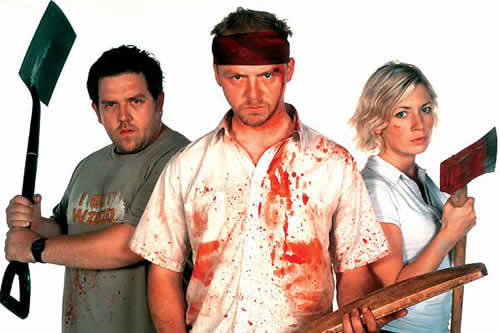
Did anyone anticipate just how damn good “Shaun of the Dead” was going to be?

When the 2004 British comic-thriller, about a couple of goofy guys stumbling their way through life and, suddenly, the zombie apocalypse, debuted, I don’t think many of us appreciated how much comedic gold was to be mined from the end of the world.

Director Edgar Wright and stars Simon Pegg and Nick Frost – two under-achieving blokes who only very gradually realize the population around them is turning into flesh-eating zombies – turned the zombie story on end.

There’s plenty of creep factor, as zombies zero in on victims, and there’s some derring-do. But what made “Shaun of the Dead” so great was its humor, as Pegg and Frost sort through vinyl records to see which are suitable to toss at zombies or plot out schemes to save Shaun’s mum and girlfriend.

Random observations:

I love that Martin Freeman has a cameo in the movie. And I love that the actor, better known now as “The Hobbit” and John Watson from “Sherlock,” is featured in Wright’s upcoming apocalyptic picture “The World’s End.”

shaun-of-the-dead scene

I love that there’s a mirror-image group as counterpart to that led by Pegg. There’s an amusing scene when Pegg’s group encounters the other and nobody really seems to notice that they’re like an alternate universe version of our heroes.

“We’re coming to get you, Barbara!” Frost shouts into the phone to Pegg’s mum. It’s a play on “They’re coming to get you, Barbara,” From George Romero’s “Night of the Living Dead,” of course.

Has there been a better ending to a zombie apocalypse movie? Plainly, no.

Classic TV: ‘Evil Roy Slade’

evil roy slade

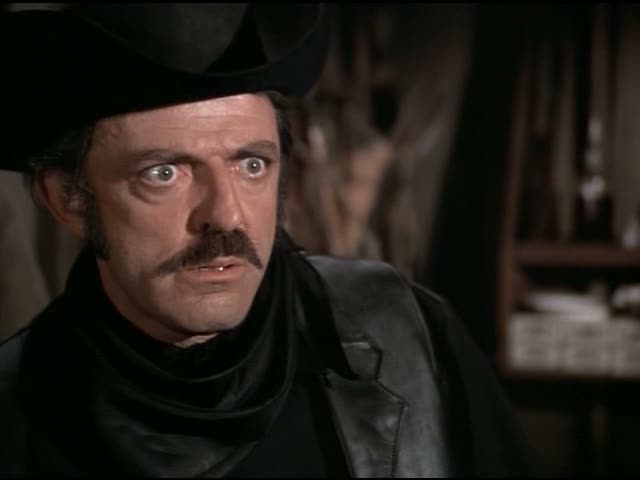
I can only imagine most TV audiences in 1972 upon encountering the western spoof movie “Evil Roy Slade.”

My friends and I loved the movie, with its goofy wordplay and spoof of traditional western movie moments.

But what was a straighter audience to make of John Astin as an outlaw so mean even wolves wouldn’t raise him when, as a baby, he was orphaned in an Indian raid?

Or Mickey Rooney as Nelson Stool, a bitter railroad magnate who had worn down his index finger tapping out telegraph messages?

Or Dick Shawn as Bing Bell, a traveling lawman?

Directed by Jerry Paris, the “Dick Van Dyke Show” actor turned TV director, and produced and written by “Happy Days” masterminds Garry Marshall and Jerry Belson, “Evil Roy Slade” was the type of TV movie that they just didn’t make back then and they certainly don’t make now.

Some observations:

The movie is full of great lines. “I learned a valuable lesson today. Never trust a pretty girl or a lonely midget.” “I have kings with an ace.” “I have threes with a gun.” “You win.”

Slade at some point tells a cello player to get his instrument out from between his legs and hold it up under his chin, like a fiddle should be held. The man complies.

Slade is asked to solve a math problem: “If  you had six apples and your neighbor took three apples, what would you have?” “A dead neighbor and all six apples.”

Each time Bing Bell’s name is mentioned, a character says, “Somebody at the door?”

According to Rooney’s nephew, played by “Laugh-In” regular Henry Gibson, Rooney’s deformity is the stuff of western legend: “Men often sit around the campfire and sing about your stubby index finger.”

The movie seems like a time capsule to Hollywood past. Besides Rooney, the cast includes Milton Berle, Edie Adams and, in the role of narrator, Pat Buttram.

‘Star Wars,’ ‘Doctor Who’ legends pass away

stuart-freeborn-yoda

A moment of thoughtful consideration, please. Two genre legends have passed away.

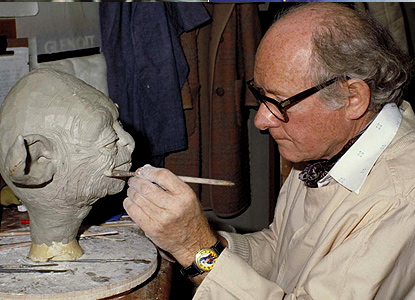
British makeup designer Stuart Freeborn has died at 98.

Freeborn worked on 75 movies during his career, according to the New York Times, including creating the apemen from “2001: A Space Odyssey.”

But he is best known for creating the look of Yoda, the puppet embodied by Frank Oz in “The Empire Strikes Back.” Freeborn’s creation has lived on in several movies, animated series and, no doubt, future “Star Wars” movies now in the planning stages.

Freeborn famously decided Yoda’s look needed to include eyes reminiscent of Albert Einstein.

Ray-Cusick-dalek

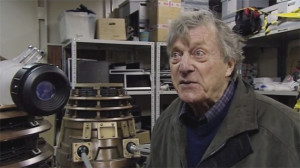
Also leaving us was another talented Brit, Ray Cusick, who died at age 84. He created the most famous “Doctor Who” adversary, the robotic Daleks, for a 1963 episode of the series.

The world of entertainment is better for their roles in it.

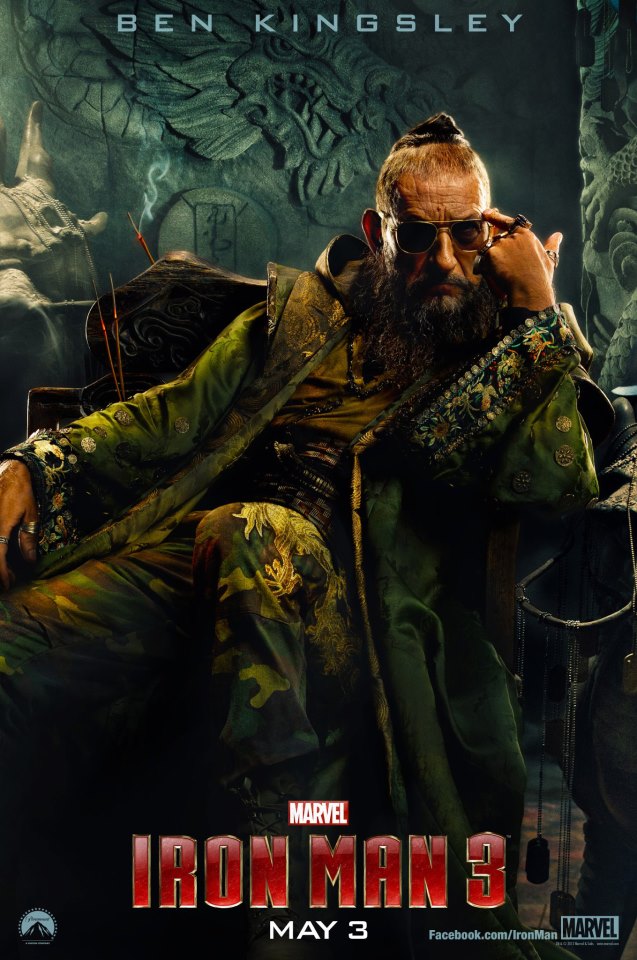
Cool Mandarin poster for ‘Iron Man 3’

iron-man-3-poster-ben-kingsley

So Marvel has been releasing these character posters for “Iron Man 3.”

The ones for Don Cheadle as Rhodey and Guy Pierce as a baddie are fine.

But this one … this is cool.

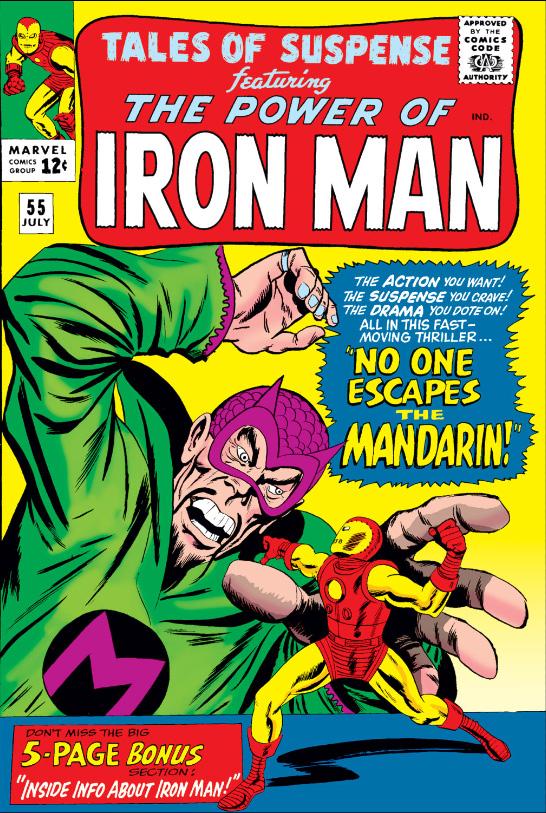
tales of suspense 55 mandarin

At the top here is Ben Kingsley as Mandarin. Based on a fairly typical 1960s-era “Yellow Peril” villain from the Iron Man comics, Mandarin seemed like a daunting character to pull off in a modern-day movie without being offensive or silly.

But I wonder if director Shane Black hasn’t gone and done it.

Look closely at that poster.

See the dog tags hanging over the arm of Mandarin’s chair?

He’s wearing the camo pants of a soldier but the regal robe of a king.

He’s a big lover of incense.

He sports both cool shades and a ponytail.

But most of all: The ten rings!

Just the design of this character’s look is cool.

I cannot wait until May. But I guess I have to.

Late to the party: ‘Friday Night Lights’

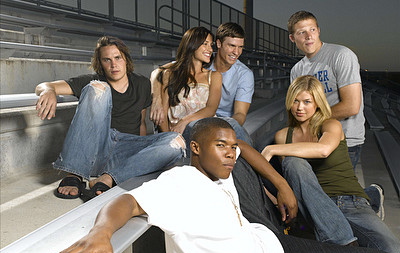
friday-night-lights

Back before the advent of DVD, I would videotape (remember that?) and watch each episode of a favorite show, like “Buffy the Vampire Slayer” or “The X-Files,” and re-watch a whole season during the summer months, especially in preparation for a new season in the fall.

It was kind of the precursor to the TV season binge that’s possible now with DVD, Blu and streaming video.

Since entire seasons of shows became available on disc, I’ve usually bought the ones I’ve already seen and re-watched those. But I recently bought “Friday Night Lights” because I’d heard so much about Peter Berg and Jason Katim’s TV version of Berg’s movie about high school football in Texas and thought I might like it.

And I do.

I’ve just finished the first of five seasons and found myself really enjoying its middle-class, small town soap opera.

If you’re unfamiliar, “Friday Night Lights” is about the town of Dillon, Texas, where Eric Taylor (Kyle Chandler) has become coach of the high school football team. As the show opens, Taylor finds himself poised to coach young football star Jason (Scott Porter) to a championship season … when an on-field accident leaves Jason paralyzed for life.

Taylor taps second-string QB Matt Saracen (the priceless Zach Gilford), an under-confident but talented player, to lead the team.

The football action punctuates most episodes but the emotional heart of the show is the web of relationships among the characters. We grow to know and care about Tami Taylor (the wonderful Connie Britton), the coach’s wife; their rebellious daughter Julie (Aimee Teegarden), who begins dating Saracen; ballers Smash Williams and Tim Riggins (Gaius Charles and Taylor Kitsch) and their struggling middle-class families; and very different high school girls Lyla (the adorable Minka Kelly) and Tyra (Adrianne Palicki).

The show is filled with realistic characters, for a soap, from Saracen’s aging grandmother to Lyla’s dad, Buddy, the local car dealer and head of the booster club.

“Friday Night Lights,” with its soap opera-ish tone balanced by its documentary-style cinematography, carries the perfect emotional heft. It’s a bit corny in spots, sure, but it’s one of the best depictions of small-town life I’ve seen on TV.

Robert Crais goes to the dog with ‘Suspect’

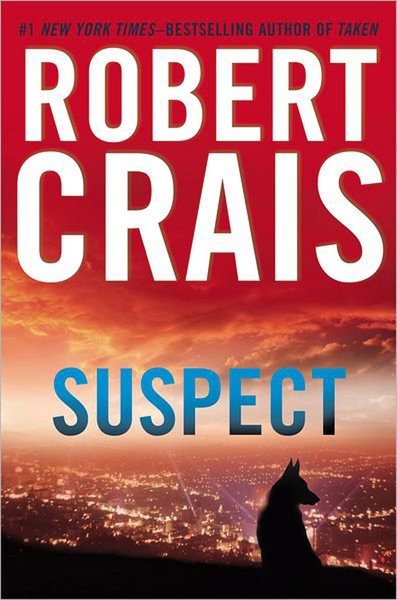
robert-crais-suspect

If you know Robert Crais, you probably know him from his series of Los Angeles-based crime novels about private eyes Elvis Cole and Joe Pike. Crais has ventured into non-series books a few times, but most of his novels have revolved around smart-aleck Cole and cool and deadly Pike. Interestingly, Crais has thrown a few change-ups even in the Cole and Pike series, making Pike the lead in some and Cole the lead in others.

“Suspect,” Crais’ latest book, focuses instead on Scott James, an LAPD uniform officer who, as the story opens, is preparing to leave his Adam patrol car and partner, Stephanie, for a department management fast track.

At the same time, Crais introduces us to Maggie, a smart and loyal German Shepherd patrol dog in the Marines in Afghanistan. Maggie and her handler are ambushed by insurgents. Her handler – the Alpha in her pack – is killed and Maggie is seriously injured.

At the same time, Scott and Stephanie have the misfortune of rolling up on a deadly ambush in LA’s mean streets. A carload of shooters kills several people and then train their guns on Scott and Stephanie. Scott is badly wounded and Stephanie is killed.

A few months later, Scott and Maggie are paired up in a LAPD K-9 training program. They have a lot in common: Both lost their partners and both suffer from PTSD.

Most of “Suspect” follows Scott and Maggie as they become a pack and work to recover from their traumatic experiences. As the two are training to be K-9 partners, Scott also pushes along the investigation into the ambush that left his first partner dead.

Like the best crime drama heroes, Scott isn’t afraid to take risks by pursuing suspects and potential witnesses to that fateful night, even risking trouble with the police brass. And like the best crime drama heroes, Maggie is brave and fiercely loyal to her new pack.

There’s not a lot of similarity in tone, but some readers might find “Suspect” reminiscent of Spencer Quinn’s novels about detective partners Chet and Bernie. In Quinn’s books, Chet narrates the entire tale from a dog’s point of view and there’s considerable humor. That’s not the case here, even though some chapters are from Maggie’s POV. If the Quinn books sound too cute, I can assure you they’re really not. And Crais’ story definitely is not.

robert_crais

I won’t spoil the ending, obviously, but it’s possible that Crais might give us another tale of Scott and Maggie. Their return would be most welcome.

Classic TV: ‘Star Trek’ ‘Assignment: Earth’

star trek assignment earth

Although it’s disparaged in some circles, “Assignment: Earth” remains one of my favorite episodes of the original “Star Trek” series.

Airing in March 1968 – the last episode of the second season of the classic show – “Assignment: Earth” was a “backdoor pilot,” industry parlance for an episode of a regular TV series that was intended to be a try-out for a spin-off series, an entirely different show.

The story follows the crew of the Enterprise as they – in rather blase manner – use the “slingshot” effect to travel back through time to 1968, a pivotal moment in world history. With the launch of an orbital nuclear weapons platform, the U.S. threatens to escalate the arms race.

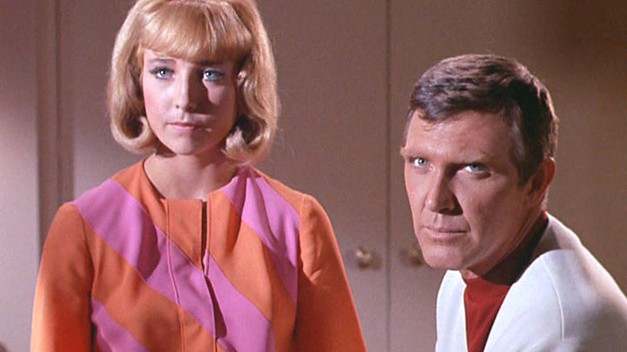
Kirk, Spock and company don’t know about this particular wrinkle in time (heh), however. They just know that they have been waylaid by Gary Seven (Robert Lansing), ostensibly an Earth man who tells Kirk he’s been living on another planet his entire life and has been beamed back to his motherland to help the population avoid World War III.

Seven proceeds to escape from the Enterprise and beam down to the rocket launch site, with Kirk and Spock wondering if they should capture him or help him.

star trek assignment earth spock kirk

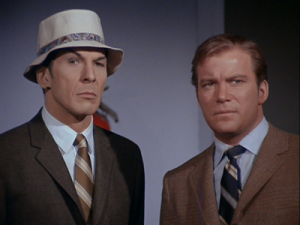
To investigate further, the two go down to 1968-era Earth, nattily dressed in sport coats and, for Spock, an ear-covering hat, and get mixed up in the goings-on. Lots of time-twisting hijinks ensue and we meet Roberta Lincoln (Teri Garr), the young woman working as secretary in the futuristic office from which Seven operates.

The episode builds to a tense climax as Seven tries to sabotage the rocket launch and throw just enough of a scare into the world without actually sparking war.

star trek assignment earth spock

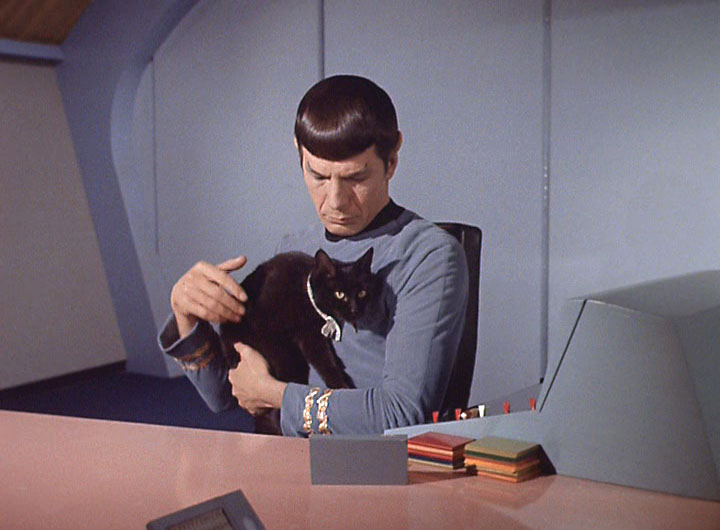
The episode ends with Kirk and Spock, looking smug, having done some research on Seven and Lincoln – they are from the future, after all – and predicting interesting adventures ahead for the team (including Seven’s shape-shifting cat/companion, Isis).

It was not to be, however. The series never materialized.

The characters turned up in a couple of “Star Trek” novels and comic books, but we never got to see the continuing adventures of Gary Seven. That’s too bad, too, because Lansing was such an interesting character actor. His grumpy, frowning demeanor would have made for an interesting, ahead-of-his-time presence on TV.

Some online criticism of the episode is that it seems dated – Teri Garr’s “mod” wardrobe and explanation of the hippie movement – or that it limits the amount of screen time for Kirk, Spock and others, particularly in the final episode of the second season. But I’m not sympathetic to those arguments. It was, after all, a pilot for a spin-off TV series. It’s done much more handily than in some series.

And it left me wanting more of Gary Seven and Roberta Lincoln.

Reading is fun: The ‘President’s Vampire’ series

red white and blood

Christopher Farnsworth had done what might seem impossible: He’s merged the political thriller and the horror novel with his “President’s Vampire” series.

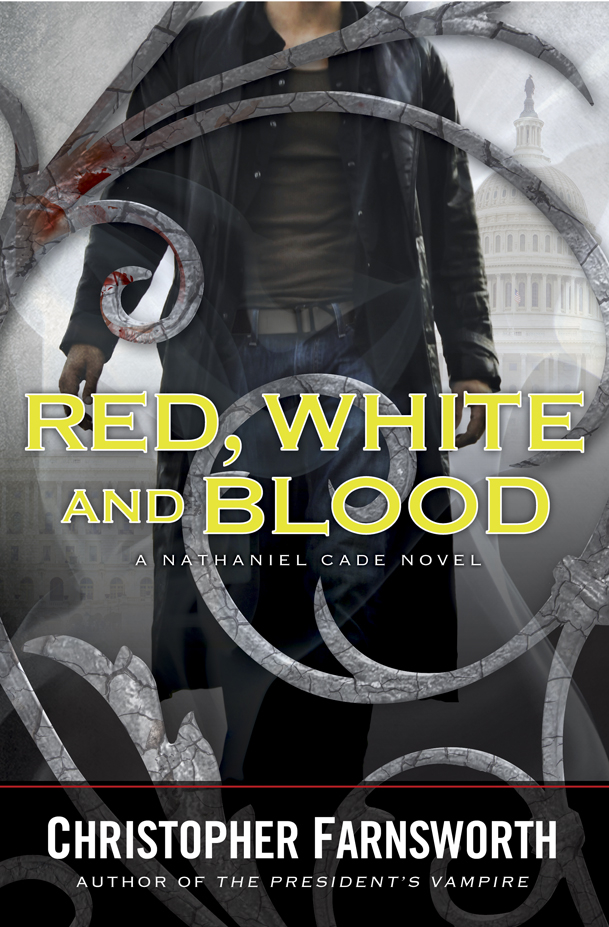
Beginning with “Blood Oath” and continuing through “The President’s Vampire” and “Red, White and Blood,” Farnsworth recounts the adventures of Nathaniel Cade, a 150-plus-year-old vampire, and Zach Barrows, a young political operative, who are thrown together when Barrows becomes Cade’s handler.

Since shortly after his creation as a vampire, Cade has been – thanks to a spell conjured by by voodoo mistress Marie Laveau and evoked by President Andrew Johnson – an undead servant of the occupant of the White House.

The books, although mostly set in the present-day, trace Cade’s history in the service of presidents ranging from Ulysses Grant to Sam Curtis, the Obama-surrogate in the Oval Office during most of the series so far.

Thanks to the spell, the otherworldly strong and fast Cade is bound to obey the orders of the president and his trusted operatives. In the books, this pits Cade against plotters of the political and supernatural variety – the two are often connected here – and his own set of enemies.

The latest book, “Red, White and Blood,” pits Cade against the Boogeyman, an ages-old monster that, we’re told, is the basis for all kinds of urban legends and spooky stories that range from New Orleans’ legendary Axe Man to the guy with the hook on his hand who stalks Lovers Lane.

Farnsworth’s plots are clever and thrilling as Cade and Zach maneuver their way through threats both supernatural and political, including the real-life Dr. Frankenstein and renegade CIA agents.

The author accents the stories with smart and funny references to monsters both real – Son of Sam gets name-dropped a lot in the third book – and fictional, including not only the Jason surrogates but also creatures that are sly references to movies and books.

Farnsworth’s books are a fun read for fans of Washington-based thrillers as well as the adventures of other types of monsters.

Chelsea Cain’s fun, twisted mysteries

chelsea_cain

If you haven’t checked out author Chelsea Cain’s series of crime novels centering on Archie Sheridan and Gretchen Lowell, you’re missing one of the most interesting and offbeat partnerships in crime fiction.

But if you think Archie and Gretchen are a crime-solving duo like Patrick and Angie in Dennis Lehane’s series, you’re wrong.

Archie is a Portland cop and Gretchen is the infamous Beauty Killer, a stone-cold beautiful female serial killer.

Gretchen, in years pre-dating most of the books, killed dozens – maybe even hundreds – of people. And in the most gruesome ways imaginable. We’re talking neckties made of intestines here.

She also very nearly killed Archie, who as the series began was recuperating from the double-whammy laid on him by Gretchen. Archie and other cops consulted with Gretchen on a series of slayings and Archie cheated on his wife with the blonde bombshell. Only afterward did he find out that Gretchen was the killer. And he found out when Gretchen drugged and kidnapped him.

Gretchen tortured Archie for days, keeping him barely alive and getting him hooked on powerful pain killers. During their time together, Gretchen left Archie with permanent scars, including one heart-shaped one carved into his chest. It’s a Beauty Killer trademark.

Although Gretchen is eventually captured and put in prison, Archie’s dealings with her don’t end. That’s because she prolongs their meetings by parceling out information about other killings. It’s an opportunity for Archie to close cases and give some relief to still-grieving families.

But it’s also Archie’s opportunity to be near Gretchen. Archie has a very real fatal attraction to the Beauty Killer. It’s an attraction that threatens to ruin any chance of reconciliation with his wife, wreck a budding relationship with Susan, an endearing if oddball young newspaper reporter, and harm his relationship with his stalwart and supportive partner, Henry.

Cain writes with a level of gore and kink that will drive some readers away and appeal to many others. Her characters are totally sympathetic – well, not Gretchen. Not much anyway – and compelling.

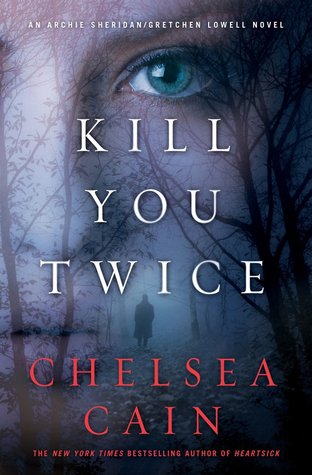
kill you twice

Cain has a new book in the series due out this summer, but I just finished the most recent, “Kill You Twice,” and there’s a Hannibal Lecter element to the book that most of the entries in the series don’t have. (And don’t need.) It’s a great yarn about another serial killer on the loose and that murderer’s ties to Gretchen.

If you have a taste for some twisted mystery, check out Cain’s books. I recommend reading them in order, though, starting with 2007’s “Heartsick.” There are five so far, and you might find yourself racing hungrily through them.