My morning began with a rejection but ended up with signing a short story contract, all threaded through writing some totally separate piece of work.
Man, every day is a little game of expectations versus reality for all of us, but that’s especially evident for writers.
The rejection email, as these things go, was from an editor and fiction outlet I haven’t tried before. It was direct and to the point but also gracious, saying a couple of nice things about the story I’d submitted and they’d rejected. Much better than a form rejection – I got one of those just a while back – and even thanked me for my support of them on social media, which will absolutely continue.
This rejection stung, man. It was for a story I wrote for an earlier anthology call for submissions and honestly, I really like this story. It’s not my typical crime-wimey story. It was, dare I say it, hearfelt.
But I’ll submit it again somewhere and I’m sure I’ll submit something else to the humane editor who rejected this particular story this particular morning,
So i got back to work. I’m close, very close, to finishing a 5,000-word short story to sub to an anthology/collection that I really want to be included in. I’ve got a few more words to write.
Then I signed a contract for the anthology you see above, DAYDREAM BELIEVER: CRIME STORIES INSPIRED BY THE MUSIC OF THE MONKEES. The anthology comes out this fall and has some wonderful writers in it and I’m happy that editors Shelley and Larry chose my story to include.
Then I got back to working on that 5,000-worder. And I wrote this.
(I’m thinking about having a snack later, if you need that much insight into my day,)
All of this could be filed under the life in a day of a writer. Or maybe managing expectations. Or dealing with rejections and successes.
To writers and other people: Push on. The only way out is through.
I’ve always loved watching Halloween horrors on TV. That didn’t change when it became easy to find classic horror films on first cable TV and VHS and later online and on streaming.
There’s still something wonderful about the communal experience of watching horror films, old and new-ish, on TV, even if the communal watchers are all over the world. That’s one of the reasons I love TCM – Turner Classic Movies – in October.
A few years ago, AMC was a go-to place for horror films and documentaries in October and the channel still shows the genre, but TCM has the largest and most diverse and often strangest selection of films each October.
That’s again the case this year, with Fridays devoted to Creepy Cinema, Sundays devoted to Hitchcock and weekends featuring classic horror films. Look for Hammer horror on Monday October 20, Boris Karloff on the 21st, sci-fi horror on the 22nd and horror marathons the last few days of the month.
Here’s a link to TCM’s offerings this month. Happy Halloween!
Anybody who knows me knows that I really enjoy writing stories set in the 1980s.
My new book THAT OCTOBER is set – for the most part – in October 1984, although there’s some exposition in the book that leads readers back 20-plus years before that.
There’s a “Stranger Things” vibe that a couple of writer friends who kindly blurbed the book noted, although there are no monsters – except for the human kind – in “That October.”
Sara McKinley, my friend who created the wonderful cover for THAT OCTOBER, said she was thinking about “Paper Girls” and other “kids on bikes” stories as she was working on the art. (My kids in the novel are slightly older, although not by much, and more mobile.)
But besides THAT OCTOBER, I wrote another story, “Steel Victory,” which was published in the 2024 Slaughterhouse Press anthology “Maximum Firepower: An ’80s Action Anthology.” The premise behind the Brian G. Berry-created “Maximum Firepower” is that the tales we wrote were inspired by 1980s action movie tropes.
In my story “Steel Victory,” a Captain America-style super soldier escapes from a top-secret lab in 1986 Washington, D.C. This super soldier is no Steve Rogers, however, and when he goes missing he goes on a murder spree.
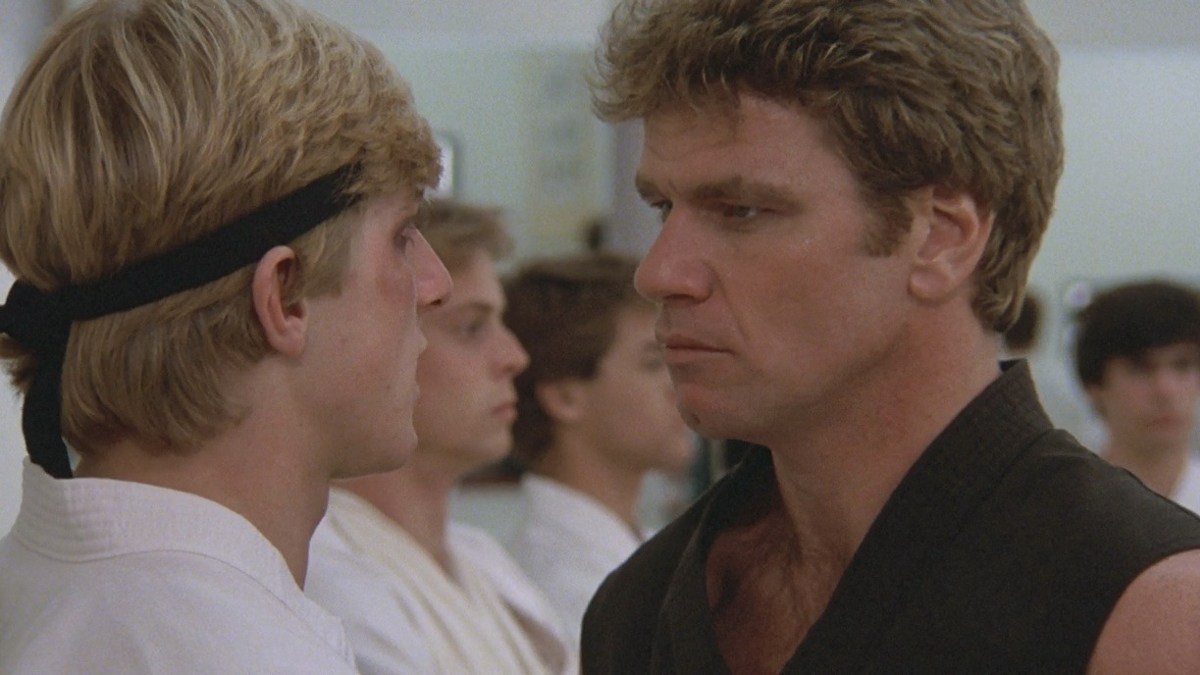
For the look of the missing super soldier, I pictured Martin Kove, the actor who played the bad guy in “The Karate Kid” and other 80s action pictures and recently returned in the “Cobra Kai” series.
It’s up to three women – the doctor who conceived the project, the “lab rat” who knows more about the project than anyone and the project’s head of security – to track him down in the darkness of D.C.
“Steel Victory” and THAT OCTOBER appealed to me because the time period was very defined and familiar to many of us, even those who were too young to experience it. Everybody knows the trappings of the decade, from “Terminator” movies to “Star Wars” on home video to the music of MTV.
As much as I find my cell phone and the Internet indispensable now, there’s something very freeing about writing about a time when the protagonist couldn’t just pull a phone out of their pocket and call or text some crucial information to someone.
I love research, and one of the things I discovered as I wrote “Steel Victory” was that I couldn’t round up a bunch of those government-issue black SUVs for the search party. SUVs, other than Jeep Cherokees, were not in wide use at the time. So my protagonists had to improvise.
It’s an intoxicating thing, to write about a period that’s so close yet so far away. I hope I get to do it again.
Here’s where you can get “Maximum Firepower” and my story “Steel Victory.”
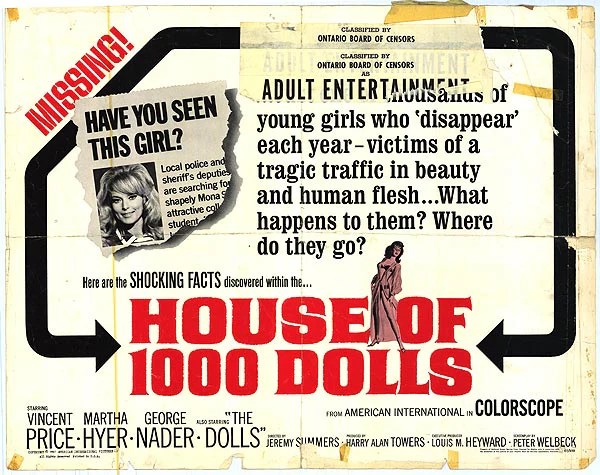
By the standards of the exploitation movies of just a few years later, there’s not that much shocking about “House of 1,000 Dolls,” a 1967 German-Spanish co-production starring Vincent Price as a magician who hypnotizes women during his nightclub act in Tangiers. The women end up in a house of prostitution, although there are considerably fewer than 1,000 women there. Unless maybe you count the miniature actual dolls that line one bookshelf?
“House of 1,000 Dolls” definitely qualifies as racy stuff for the period and it no doubt titillated drive-in movie audiences with its scenes of kidnapped women wearing bras and panties and filmy gowns.
And Price apparently was a little scandalized. This was during the period the actor was starring in well-remembered, full-color Roger Corman adaptations of Edgar Allen Poe tales and, according to one interview, Price was startled to learn that the makers of “House of 1,000 Dolls” were shooting more explicit scenes on the sets when his scenes were not filmed.
My favorite aspect of the movie, though, is the presence in the cast of an actor named Herbert Fux. He was an Austrian actor who, in addition to appearing in legit and semi-legit films, also appeared in some kind of porn films. And he was in politics as well.
As the old Smuckers commercials might have said, “With a name like Fux, it has to be porn.”
“House of 1,000 Dolls” is available via streaming and it’s worth it alone to see Price running around in a top hat and cape.
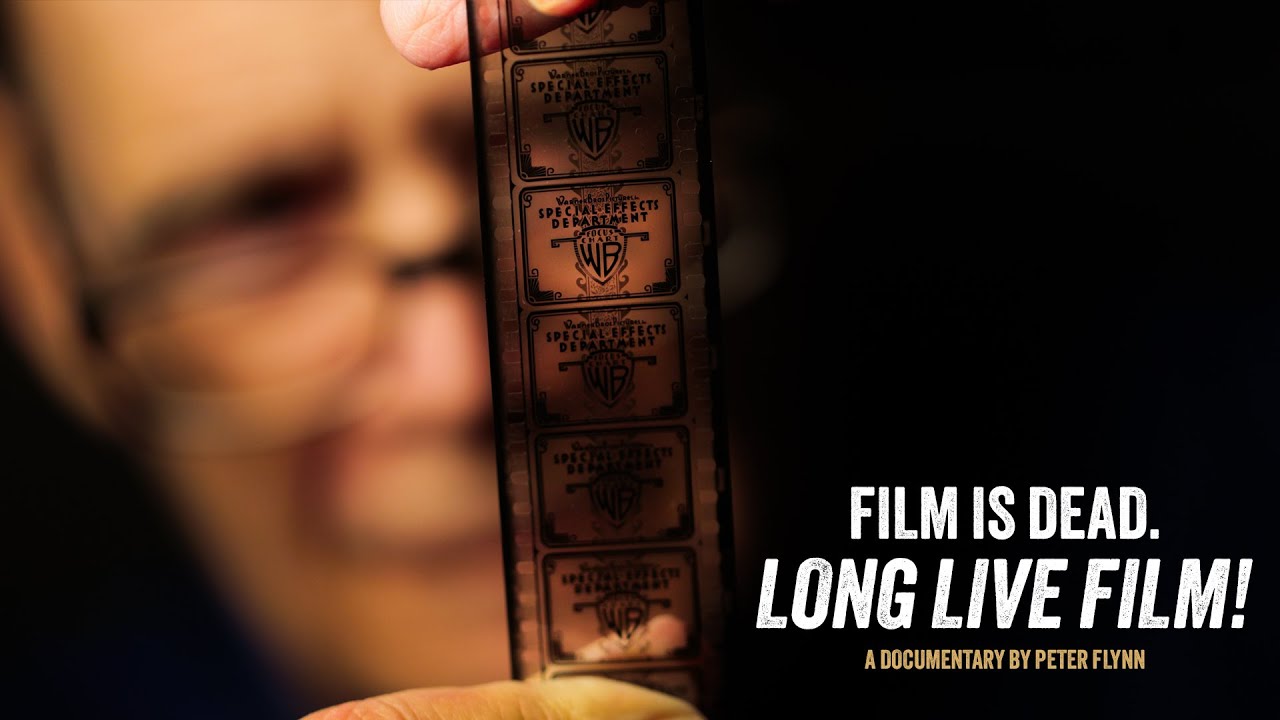
“Film is Dead. Love Live Film” is a new (earlier in 2024) documentary film from director Peter Flynn and it captures a type of collecting and preservation of history that I have to say I’d not considered all that much before: personal film collecting. As in, scavenging and collecting and restoring and preserving and sharing a wide variety of films from the entire history of movie-making, from feature films to home movies to commercials to – well, you name it.
I just watched “Film Is Dead” on TCM, which has always done an admirable job of film preservation and popularization, and Flynn’s documentary calls attention to the private collectors of film – everything from 8 millimeter to 70 millimeter – who can become slightly obsessive about their hobby, which itself can be an artistic endeavor.
I’ve always known about the many ways film and films have been preserved and shared, with my first awareness of this coming when I was young and got an 8mm projector and some films. My goal was to get an 8mm movie camera and make my own movies – I really wanted to do my own version of “Dracula” – but the hobby, as long as it lasted, remained focused on collecting those minutes-long 8mm versions – released by Castle Films, but the documentary notes there were several companies – of old horror films. The Castle films I was familiar with were heavily edited versions of old Universal horror features like “Frankenstein” or sometimes just scenes.
This was in the 1960s and 1970s, so needless to say it was long before even truncated versions of the films were available to watch at home on video. The thirst to see old Laurel and Hardy or Abbott and Costello or Boris Karloff films was great and coincided with the release of those books that reproduced hundreds of photos from films like “Psycho” along with the script. The 8mm films and those books were the only way most of us, who did not have access to 16mm films, experienced these movies when they weren’t airing on local TV.
The 8mm films are covered here, but the bulk of the documentary is about the film fans – maybe even obsessives – who dived in dumpsters to salvage films thrown away by movie studios and TV stations (something that happened often; tens of thousands of films from the Silent Era forward were lost forever) or bought them from other collectors or even stole copies.
For decades, the Hollywood studios frowned on, and with the help of authorities even prosecuted, private collectors of films. “Film Is Dead” recounts a lot of things I didn’t know, including that well-known film buffs like Rock Hudson, Mel Torme, Hugh Hefner and Roddy McDowall were targeted. “Planet of the Apes” star McDowall was in 1974 busted by the feds for “film piracy.” The documentary notes that the feds used McDowall as an example to anyone who traded and trafficked in private film ownership.
The hobby was “basically illegal,” as one collector points out.
Decades later, though, studios and museums were seeking out collectors who had copies – sometimes the last surviving copies – of films, features and shorts, commercials and those “Let’s All Go to the Lobby” intermission films from drive-in theaters, in order to help make them more widely available.
“Film is Dead” acknowledges that movie theaters are never going back from digital projection to showing films on film. But the resources of digital restoration and online sharing of films make it possible to see many of these works of art again.
The collectors in the documentary are very passionate about preserving films but also about sharing them with other people. And the film really emphasizes how cavalier the studios and TV stations were in throwing away and destroying or melting down (to recoup the silver in film stock) films once they were no longer of value. So much history was lost.
One collector depicted here gives his collection to a younger collector/museum/archive. Another turns over his collection to the Library of Congress. There’s acknowledgement, too, of the kind of thing I’ve seen in Facebook groups about collecting vintage comic books. These old collectors are wondering what to do with tens of thousands of comic books and what will happen to them when they die. Will they just be thrown away if their kids don’t want them?
Probably.
“Film is Dead. Love Live Film” is an engrossing and touching look at the history and current status of collecting film. It’s funny at times – there’s acknowledgment of what a dirty job salvaging old films is – and the toll it takes on collectors and their families, because collecting can be as much of an obsession as anything.
Way back in the dark ages, before the Internet, I wrote about TV – we’re talking about the 1980s, so even pay-cable, as they called it then, was relatively new – and my favorite time of year to write about TV was the run-up to Halloween.
I’d been a dedicated watcher of Halloween-oriented TV in my childhood, watching late-night horror host Sammy Terry and, of course, the Charlie Brown “Great Pumpkin” special.
So by the time I was an “adult” and getting paid to write about TV for my local newspaper, I would devote one of my weekly columns in October to Halloween specials and movies we could look forward to seeing on the tube, Because this was before the Internet, I mostly relied on press releases sent via MAIL in PRINT from TV networks and Indianapolis TV stations.
So I’d list a Halloween week’s worth of TV. In October 1984, for example, I noted that the 1979 remake of “Invasion of the Body Snatchers” would air on Cinemax on October 31, followed by John Carpenter’s “Halloween,” “Alligator” and George Romero’s “Creepshow.”
I noted that Elvira, Mistress of the Dark, would host a four-hour block on MTV. I watched this a while back for a book I was writing, set in October 1984, and found it a very fun experience that included Romero’s “Night of the Living Dead.”
Now we have all the info we want, all the time, about what’s coming up on great cable channels like TCM – this October its star of the month is Bela Lugosi – and streaming services.
I’ve been catching a few fun old horror films and specials. What have I watched so far this month? I enjoyed rewatching the Tom Cruise “Mummy” movie from 2017 that was supposed to kick off “a new world of gods and monsters” for a Universal “Dark Universe” that would see revivals of all the classic films from the studio. We know how badly that went.
I watched “Halloween with the New Addams Family,” a 1977 special that was really misnamed because most of the cast of the 1960s series returned for this TV movie sequel.
I’m enjoying the Creepy Cinema series on TCM that kicked off with “Sudden Fear,” a little-seen 1952 thriller starring Joan Crawford and Jack Palance.
One of the most enjoyable watches so far was “Spine Tingler: The William Castle Story,” a documentary from 2007 about the shock film director/producer who rivaled Alfred Hitchcock for the ingenuity of his films – and especially the gimmicks used to promote them, including “The Tingler.” I highly recommend this doc if you’ve never seen it. I found it for free on streaming.
And of course I’m watching as “Svengoolie” counts down to Halloween with double-features every Saturday night.
I’m almost certain that before Halloween I’ll rewatch that Charlie Brown special. It wouldn’t be Halloween without seeing t.


 keithroysdon