Tag Archives: Muncie

Cold cases still pull at the heartstrings

I was watching “Ballard” the other week – it’s a good series, by the way, and a very valid follow-up to the “Bosch” series and it’s own streaming sequel, “Bosch Legacy” – and it got me thinking about the cold cases I’ve written about over the decades.

“Ballard,” which stars Maggie Q as Renee Ballard, Los Angeles police detective who is featured in her own series of crime novels by author Michael Connelly, creator of “Bosch,” is about how the Ballard character is “demoted” to the LAPD’s under-funded and over-scrutinized cold case unit.

The unit, comprised of police officers and reserves and a handful of volunteers and interns, huddles in a cluttered series of rooms that look more like storage than an office. The cold case squad is the definition of an effort that is nothing like a priority for LAPD leadership but is an essential thing to the squad members.

Ballard is initially leery of the assignment – punishment, really, for daring to report another cop for assaulting her – but grows to find satisfaction in solving long-unsolved murders, bringing killers to justice and giving closure to survivors.

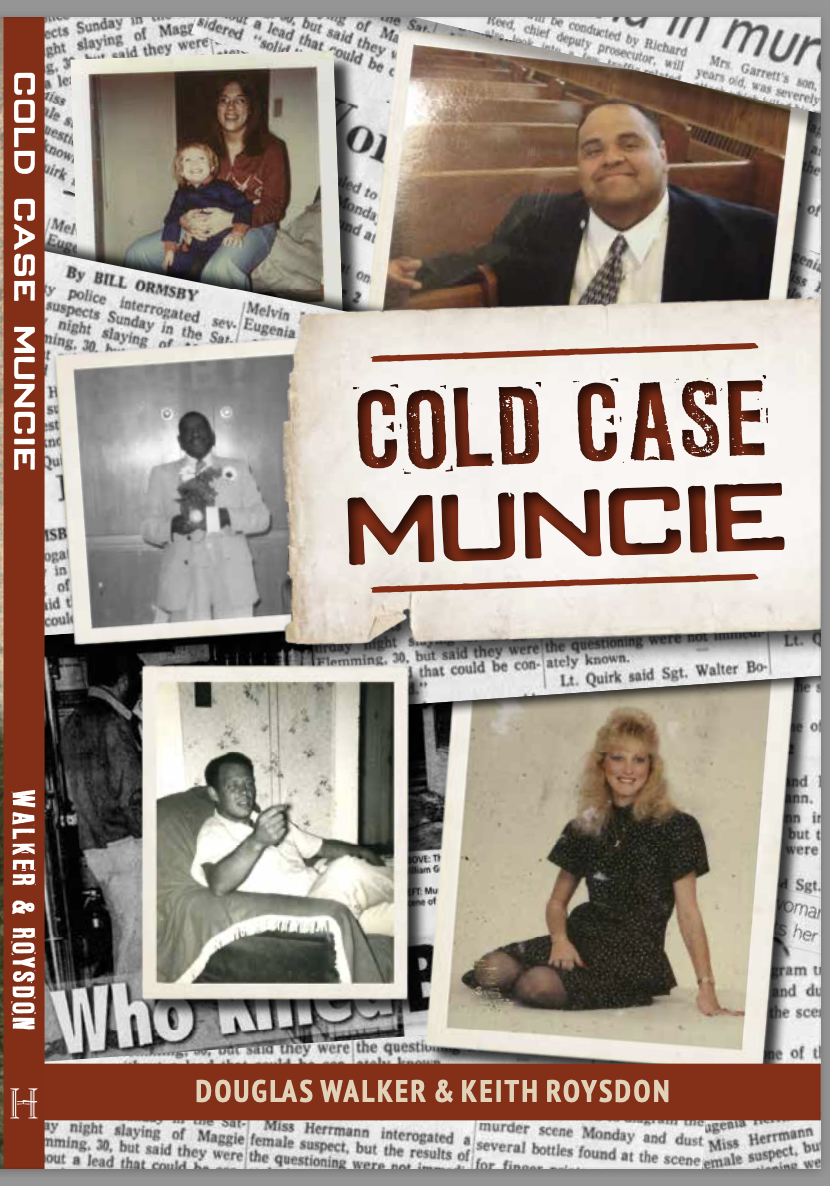
Along with my longtime writing collaborator Douglas Walker, I wrote about cold cases for many years for the newspaper in my hometown of Muncie, Indiana. The most notable cold case to many was the killing of two teenagers in Westside Park in 1985. Walker and I wrote about it in our third true crime book, “The Westside Park Murders,” released by History Press in 2021.

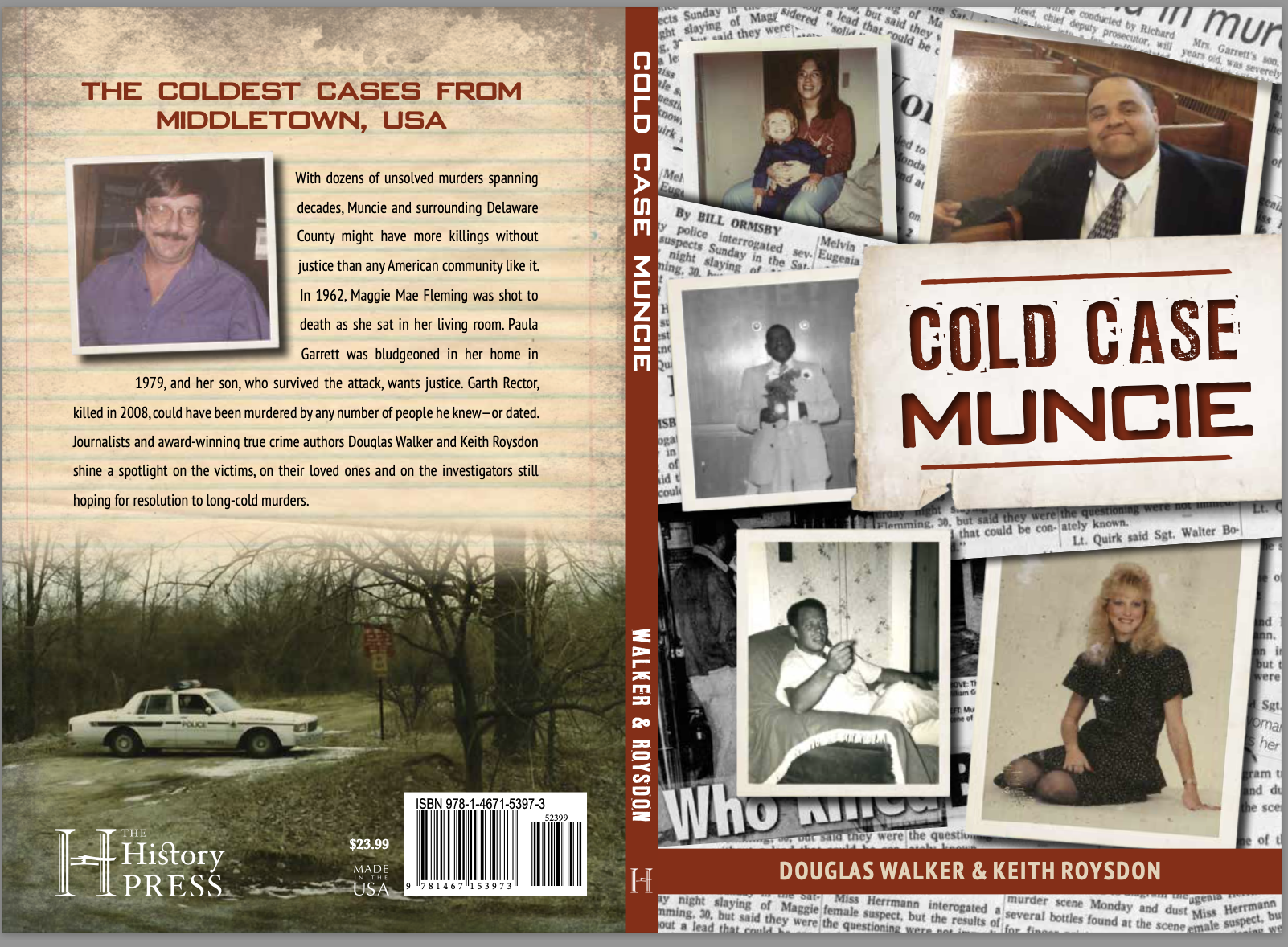
But our fourth book, “Cold Case Muncie,” released in 2023, is an entire book of cold cases, still-unsolved murders in the Muncie and East Central Indiana area.

We had identified more than 30 cold cases, some dating back to the 1960s or even earlier, during a regular series of newspaper articles beginning in 2010. We went back and re-examined many of those cases for the book.

We interviewed surviving loved ones of the victims and revisited the murder scenes.

We put an emphasis on soliciting any new information about the murders, including a point of contact for each of the police departments responsible for resolving those cases.

And we placed emphasis on the survivors. Many of the cases are illustrated by photographs I took of those people who, today, are still waiting for someone to bring closure for the killing of their loved ones.

I’ve noted before that closure is an elusive thing, even harder to achieve than it seems, and that’s pretty damn hard.

I’m glad “Ballard” has taken up the case of cold cases and I’m glad to have brought some attention to them too.

I will not quote ‘You Can’t Go Home Again’ – damn it, I guess I just did

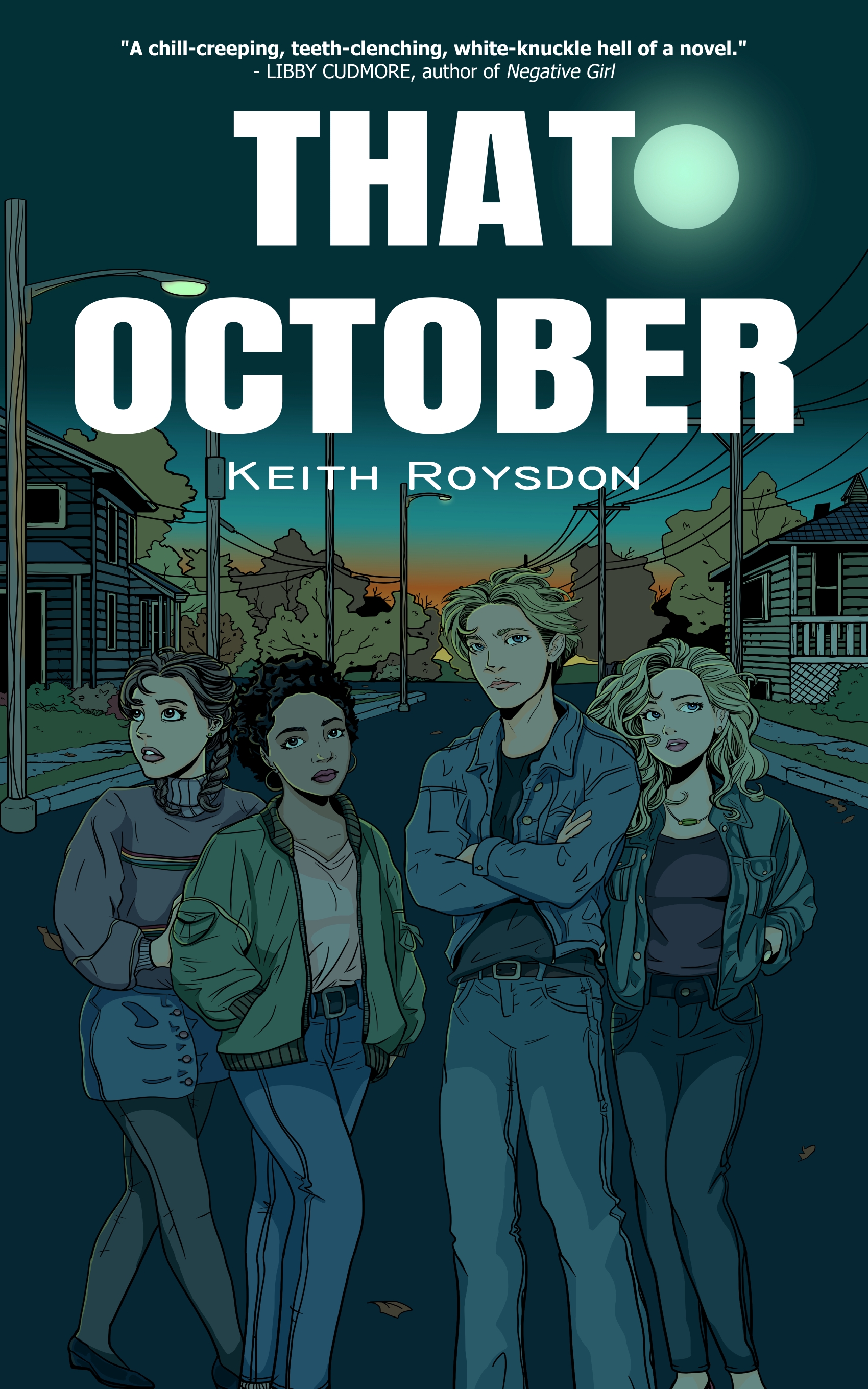
I’ve noted on social media in recent days that we recently spent a little time in Muncie, Indiana, promoting THAT OCTOBER and getting together with family and friends and looking around the city that was my lifelong home until we moved to Tennessee almost three years ago.

It made perfect sense to promote the book there because 1.) more people know me there than here and B.) the book is set in my version of Muncie as it was in 1984. The novel’s not a documentary, obviously, but it’s got the overall vibe of Muncie more than 40 years ago and the teenage characters do some of the same things my friends and I did in Muncie when we were that age or a little older – going to movies, watching MTV, going to house parties. I never prowled through a junkyard, I admit, but that part of the book was inspired by my late Uncle Si Stewart, who talked about when he took a shortcut home from school through a Muncie junkyard when he was a kid in the 1950s.

We get back to Muncie once or twice a year since we’ve moved down here, and I’m always so grateful that I get to see family and friends there and get to look around the city I knew so well and covered for the newspaper for most of my life.

I always come away with gratitude for the people I get to see, those that I get to meet and the places that are familiar to me.

But I always feel sad when I’m there. I’m nearly swamped with melancholy while I’m there and for a while after.

It’s not just that the city has changed. It has, and not just in the three years we haven’t lived there. It was changing most of the time I lived there too.

I always explain to people who don’t know Muncie as the city where David Letterman went to college, where the first half of “Close Encounters of the Third Kind” was set, where Garfield the cartoon cat was created and is still produced and where Ball canning jars were made dating back to the 1890s.

It’s the city where four true crime books I co-wrote with Douglas Walker, my frequent collaborator at Muncie’s newspapers, are set. There’s no getting around that Muncie – one of several Midwestern cities that were nicknamed “Little Chicago” – was sometimes a violent and murderous place.

It’s a city that in some ways peaked when I was young, as young as the teenage protagonists of THAT OCTOBER. Its population peaked at just over 76,000 in 1980 and has fallen regularly since to an estimated 64,000 now. Most of the big industrial employers went away, some of the most recent in the 2000s, although luckily there’s some stopping of the bleeding thanks to growth in employment in the education and healthcare fields.

Still, Muncie has struggled and is struggling. The city can’t keep the streets paved. The mall is all but dead. Some, not all, of the government leadership seems determined to wipe out all the welcoming efforts that groups and private individuals have made over the years. And at the same time there’s decades-long efforts to bolster downtown, there’s a proposal to pull the last few hundred government workers out of downtown and put them in an ill-advised government center miles to the south, outside the city limits. (When one of the downtown government buildings was being built in the early 1990s, there was discussion of metal detectors inside the doors. An attorney who oversaw the project said it was insulting to frisk people who were on their way to pay their taxes. Yet here we are, decades later, and metal detectors are a way of life because life is cheap and murder is easy. That said, I think it’s insulting to tell people who pay their taxes that they can’t even pay those taxes or go to court or talk to their representatives without leaving the city, ffs.)

It’s depressing to contrast the city currently with the city as it was in the 1970s and 1980s. I don’t even get into a lot about how thriving the city was in 1984 in THAT OCTOBER, but as strange and upsetting as it was for murder and mystery to envelop the city and the young protagonists of my book, 1984 in the real-life Muncie was a boom time. Life in the city had peaked, in some ways, and in the decades since, it has not struggled its way back.

My friend Tammy told me this morning, as I was ruminating on all this, that my hometown’s struggles reflect this country’s stuggles and she’s right, of course. I take that as personally as I take what’s happened to Muncie.

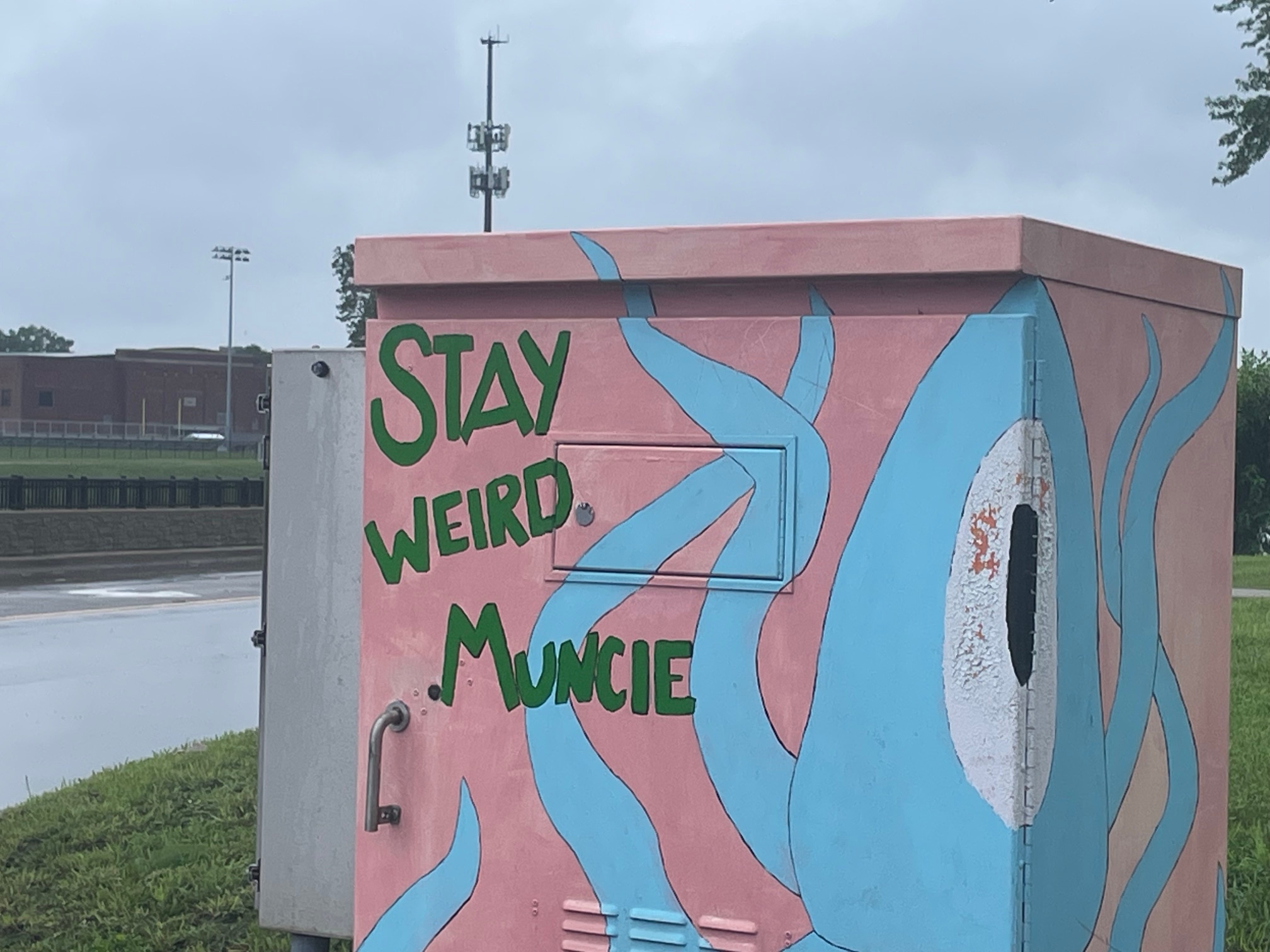
One of the consistently amusing sights around Muncie is a public art project from a few years ago that prompted artists to decorate traffic light control boxes. The art was contributed by a lot of different artists and ranged from the beautiful to the abstract to the whimsical like the “Stay Weird, Muncie,” message above. I took that picture our first day back and I’ve thought about it a lot.

I’d like to think that my hometown can be weird, interesting, welcoming, fulfilling, progressive but comforting and I like to think it can be a good hometown, either for someone who’s still living there, someone who’s just visiting or someone who’s come home again.

I’d like to think that, and maybe take comfort from that once I shake this profound melancholy I feel. But I’m not sure its possible.

October – actually THAT OCTOBER – arrives a month from today

I promise I won’t give you a daily countdown, but how could I resist a nice round period of time like one month?

On June 1, my 1984-set crime novel THAT OCTOBER will be available. My editor Jill Blocker and artist Sara McKinley and I have really reached the finish line in this self-publishing journey – don’t all journeys have finish lines? – and all that remains now it to get the word out.

The paperback is available for pre-order on various sites now. Before June 1, we should have the electronic version available also.

I’m doing a couple of talks back in my hometown of Muncie, Indiana – inspiration for the city of Middletown, where THAT OCTOBER takes place – in June. although I don’t expect that to be of interest to many of you unless you’re in the Muncie area or somewhere in the Midwest with a lot of time on your hands.

In the next month, I’ll tell you a little about THAT OCTOBER and the world when it takes place: A time when high school students should have been spending all their time thinking about dates, football, seeing the biggest movies – “The Terminator” was new in October 1984, and “A Nightmare on Elm Street” would come out within a couple of weeks – MTV and Halloween.

Instead, the six high school friends in THAT OCTOBER are thinking about the murder of one of their classmates and the taking of another.

And they don’t understand why the adults in town seem unconcerned or, at best, evasive when the friends urge them to DO SOMETHING to solve their friend David’s murder and bring Lee Ann home.

Jackie and Michael, new siblings in a blended family, and their friends Sammi, Toni, Elmer and William push forward with their own investigation, which follows a trail rooted half-way around the world, in a time before any of them were born.

I’ll share a bit more as we move forward. I hope you come along for the ride.

The late, great late night

colbert-letterman

Yes, back in the 1980s, I was a huge fan of David Letterman. Yes, I stayed up for his 12:30 NBC show – after Carson’s “Tonight Show” – every night. Yes, I videotaped Letterman as I was watching. Yes, I excised commercials.

Yes, in a hall closet that’s been the repository of most of my VHS tapes over the decades – a closet that should be devoted to some more productive use, as I’m sure my wife is thinking as she reads this – are those tapes, buried along with videos recorded over the air of “The X-Files” and “Lois and Clark.”

Yes, I acknowledge it’s strange that I sat up and taped those Letterman shows.

I regret nothing. (Even though I haven’t watched the tapes in years.)

That’s because, back in those days, Letterman was the cutting edge of late-night comedy.

As I’ve noted here before, I was watching Carson from my late childhood or at least early adolescence. Carson was and will ever be the king of late-night. Nobody did it better.

Letterman – another Indiana guy, who spent time here in Muncie, working at the radio station I always listened to and going to college where I later went – was innovative and funny and awkward in all the right moments.

I haven’t watched a lot of Letterman in recent years and maybe it’s ironic that Jon Stewart’s “Daily Show” and “The Colbert Report” have taken over my late-night viewing – when I can stay awake that late: The days of staying up until the 1:30 a.m. sign-off of Letterman’s old show are long gone.

So I was pretty pleased at this week’s news that Stephen Colbert was going to take over for the retiring Letterman on “The Late Show” next year. Colbert is sharp and funny and heartfelt and he’ll make a great host. I’ll probably check out at least the start of his show after Stewart’s sign-off.

I’m curious if Colbert’s right-wing ass character will “appear” at all on his new show. I’m curious how Comedy Central will replace “Colbert Report.”

You can bet I’ll be checking out Dave’s victory lap in this final year.

Heck, I might even break out some of those 30-year-old tapes and relive Dave’s glory days.

I can always watch those at 7 p.m., when I’m not too sleepy.

‘Close Encounters’ and Muncie, my hometown

There’s been a long history between my hometown, Muncie, Indiana, and Hollywood.

Sometime I’ll do a fairly comprehensive look at the many mentions of Muncie in movies and TV shows ranging from the 1960s “Tom Slick” cartoons to “The X Files” and “Angel.”

In the meantime, though, I wanted to note the special relationship between Muncie and Steven Spielberg’s “Close Encounters of the Third Kind,” the 1977 UFO thriller. The movie was airing on SyFy this afternoon and I got sucked into watching some of it.

The movie wasn’t filmed here in Muncie, although there was discussion of that happening. Local officials and Columbia Pictures apparently negotiated for a while and rumors swept through town that the city bought new police cars specifically to seal the deal. It didn’t happen, although the city got some publicity from having the first half of the move set locally.

If you haven’t seen it, Spielberg’s movie is about the the first meaningful contact between humans and aliens. The movie opens with a team of scientists, led by Lacombe (Francois Truffaut), discovering mint-condition World War II-era fighter planes in the Mexican desert.

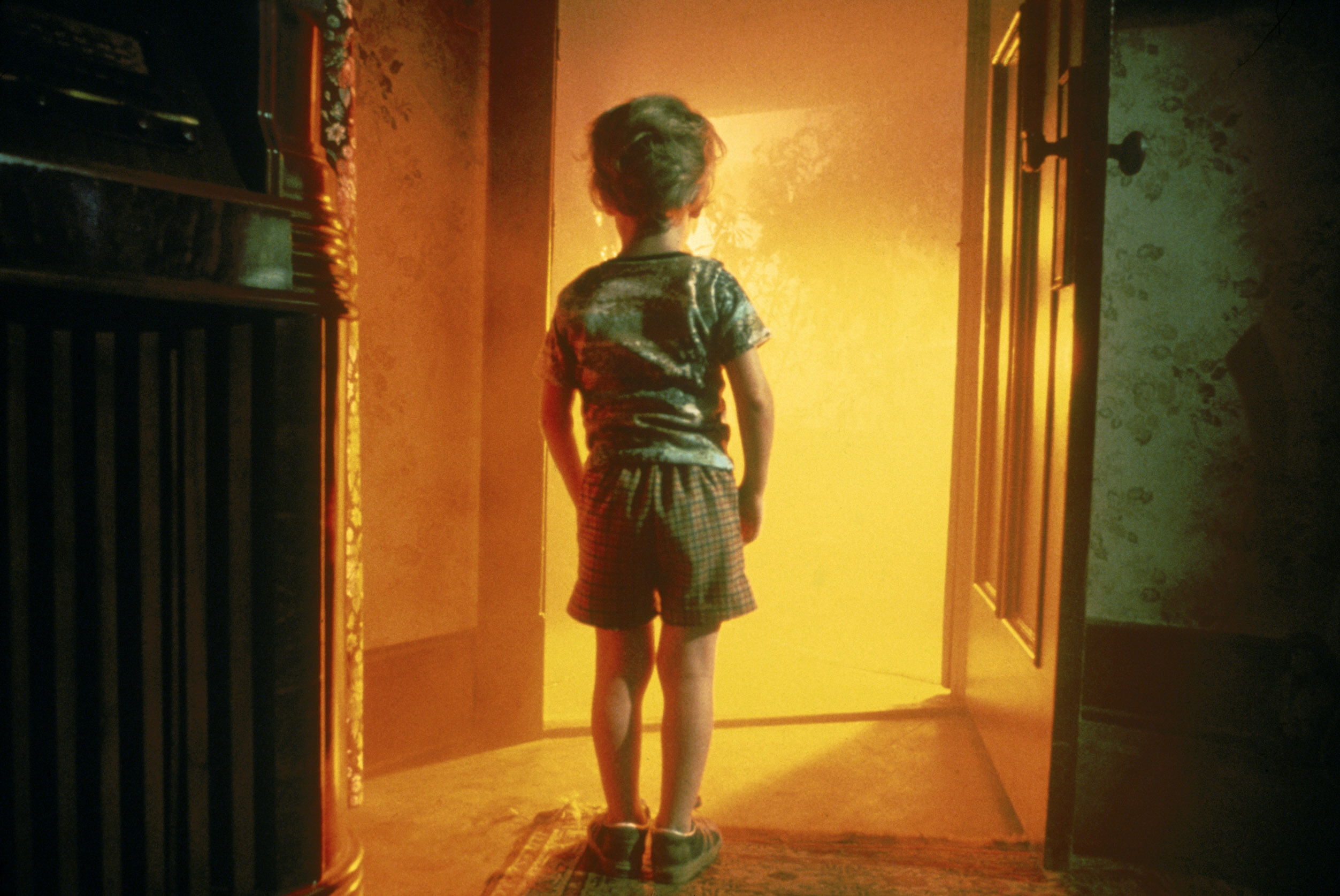
The scene moves to Indiana as we see air traffic controllers in Indianapolis communicating with the pilots of two airliners that have near-misses with some unexplained object. Then we’re in Muncie – the on-screen title still gets me a little goose-bumpy – at a rural farmhouse where single mom Jillian runs into the woods to find her toddler son, Barry, who has happily followed something out of their house and into the dark.
In the suburban Muncie home of Roy Neary (Richard Dreyfuss), a power company lineman, Neary is trying to persuade his kids to go to see “Pinocchio,” the re-issue of the Disney classic. They’re more interested in playing miniature golf, however.

Before long, Neary is sent to investigate the cause of a power outage and his truck is buzzed by low-flying UFOs. He gives chase along with half the Muncie police department. Thus begins his obsession. It is one he shares with dozens, maybe hundreds of others.

Some random thoughts, from a Muncie-centric perspective:

The Neary house, while looking like a shambles, has some authentic touches, including some Ball State University merchandise.

At one point, radio scanner traffic says Harper Valley. There’s no Harper Valley around Muncie. But if there was, they would have a dandy PTA, I bet.

There is a Cornbread Road – where Neary is sent to work on a power outage – and you can bet it was chosen for inclusion in the movie because of its quaint name.

The McDonald’s and Shell station look just right for the period.
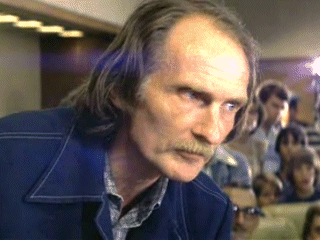
The hillbillies – softly whistling “She’ll be coming around the mountain when she comes” as they wait for the UFOs to appear – are a nice touch but one that caused a lot of consternation at the time among local people who didn’t want to be represented onscreen by hill folk. Especially when one of them, played by character actor Roberts Blossom, says, “I saw Bigfoot once.”

There’s no toll road right outside Muncie, and certainly no nearby toll gate that divides Indiana and Ohio.

The movie got the police emblems on the patrol cars right, though.
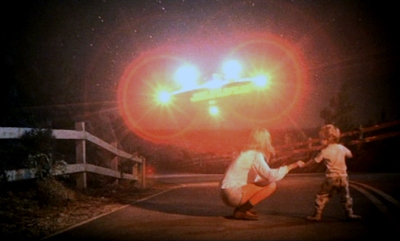
There’s not much in the way of hillsides around Muncie, and certainly no mountainous overlook that cops and Neary could watch from, first as the UFOs fly over and then as lights come back on below.

The look of The Muncie Star wasn’t quite right, although its gargantuan size was. Holy crap, newspapers were big back then.

Neary’s “Ball U” T-shirt was a nice touch. I had one right about that time. They were a slightly naughty hit.

On the second night, when a newly fired Neary and a crowd of Muncie residents go back to the hill to wait for the alien ships to reappear, the collective mental seed that compels them to seek out the UFOs is destined to take them out of Muncie.

By the time Neary becomes obsessive about his encounter and begins building replicas of Devil’s Tower, Wyoming – scene of the ultimate Close Encounter – in his mashed potatoes and in a huge mound of dirt in his family room, his family bails on him and so, frankly, did I.

“Close Encounters” is a terrific movie that builds to a touching climax. I can’t help but be more interested, however, in the early scenes and what they indicate about my town.

 

iPhoneography: County fair carnival rides

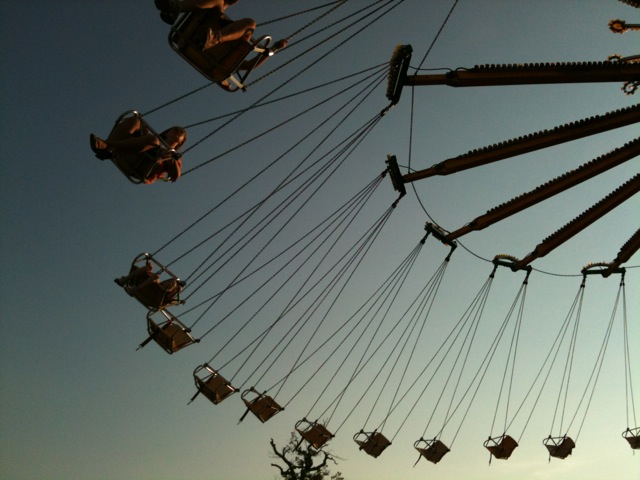
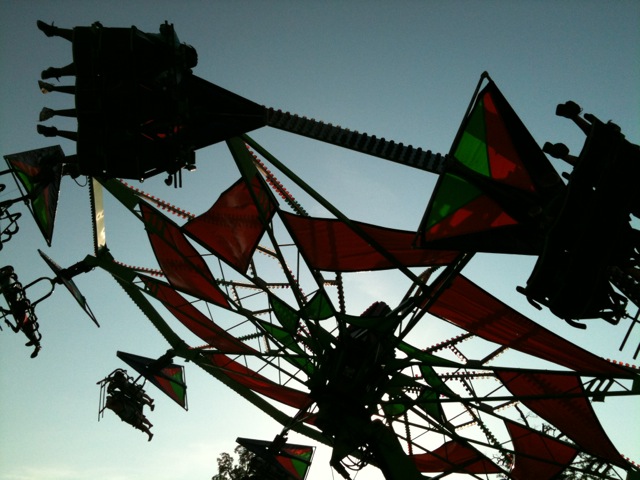
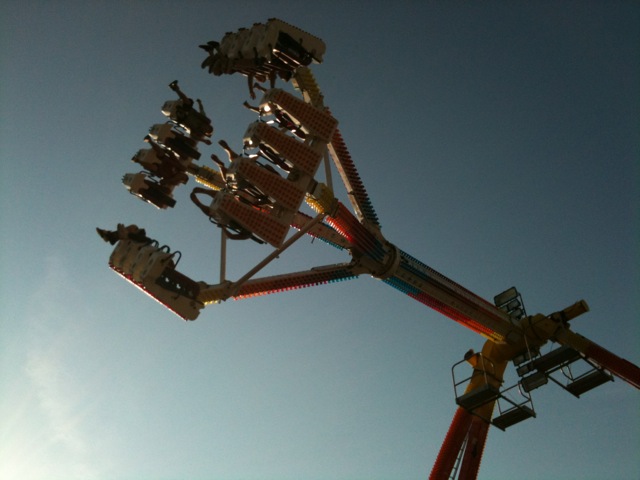
What would summer be without a county fair? The fair gives us food that’s good and bad for us, carny games and carnival rides – and an opportunity for iPhone photos.

Here’s a look at this week’s Delaware County Fair, held in Muncie, Indiana.

The last couple of hours of daylight and the onset of twilight is my favorite time to take carnival pictures. You’ve got enough light to get some details but a strong source of light to make for dramatic backlighting. Then, within a few minutes, the sky darkens enough to create beautiful artificial lighting photos.

Here’s another shot of the Yo-Yo.


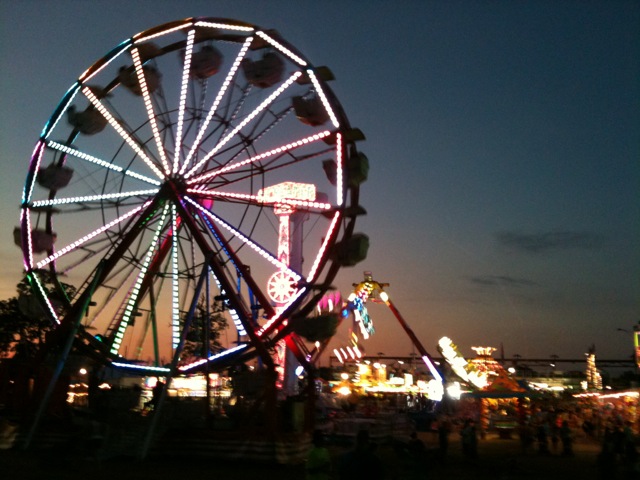
The Ferris wheel is always a favorite.


The Freak Out looks very different by day …

… and night.

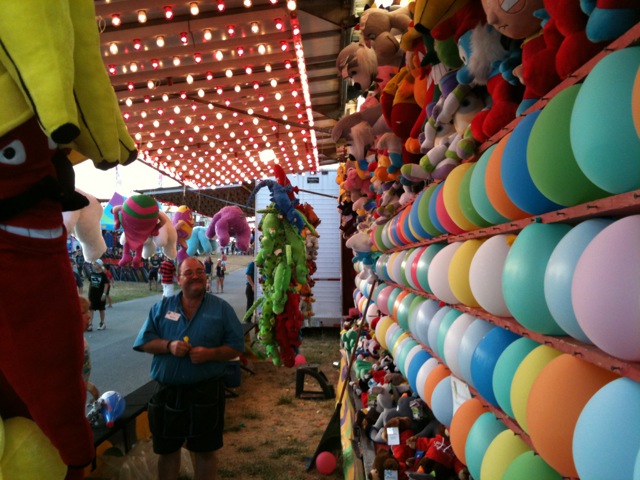
Gotta love the games, including the ever-popular balloon-busting ones.

And the prizes. When I took this, a young woman operating the game said, “Are you taking a picture of my crabs?”

Night falls on the midway.


Not a professional photographer: Shapes and angles

I like taking pictures, with my iPhone and my digital camera, although I don’t have really expensive equipment or much formal training.

I love taking pictures of lonely spots, places only sparsely populated at the time I’m there, and among my favorite pictures in those moments are those that emphasize angles and shapes, either architectural or natural or created by light and shadow.

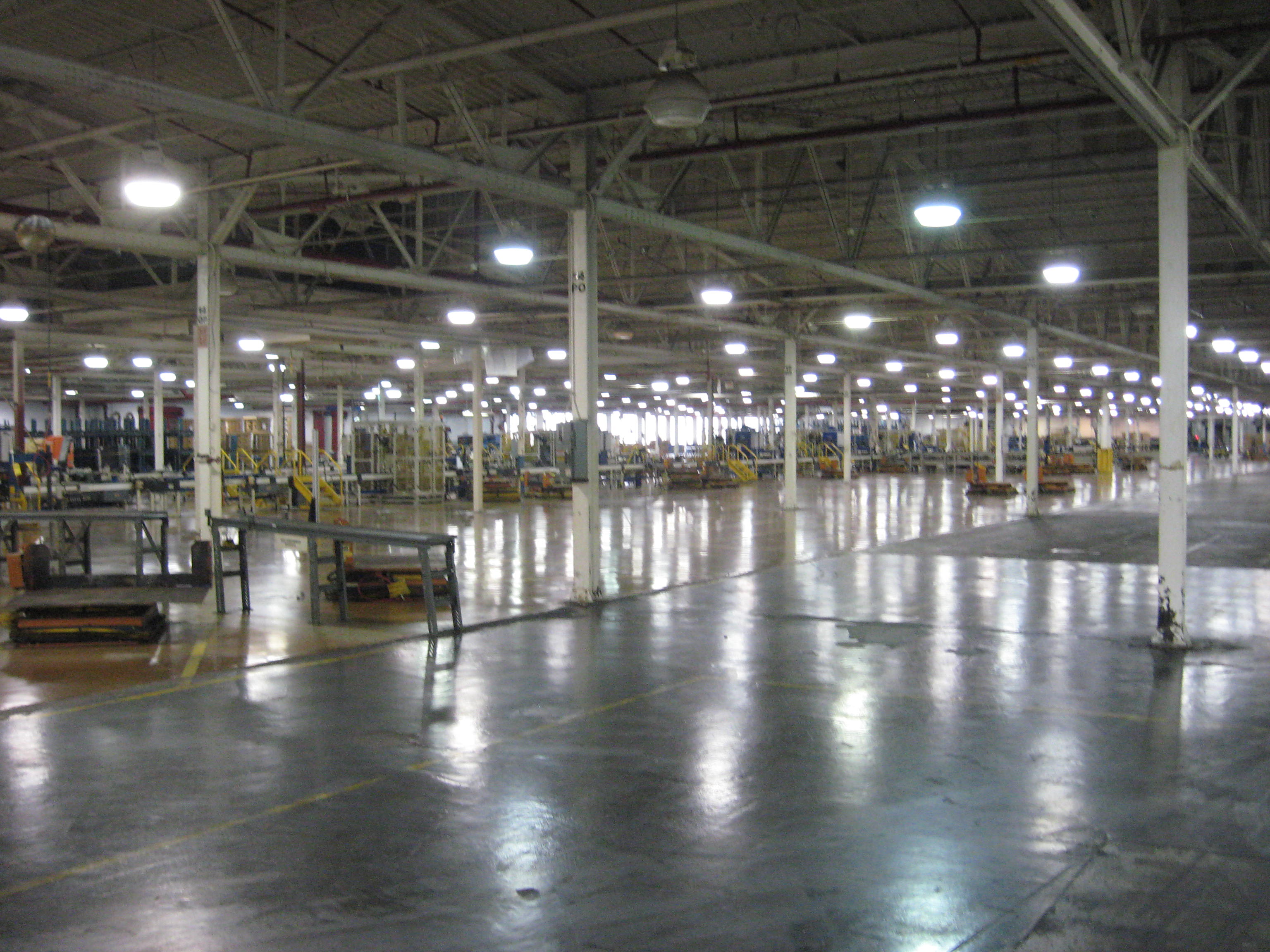
One of my favorite photo opportunities came during a 2009 tour of the former BorgWarner automotive plant here in Muncie, Indiana. The plant had closed just a few months before and equipment, tools and other bits and pieces of the plant’s history were being sold off.

The photo above is one of my favorites, of the cavernous interior of the million-square-foot plant.

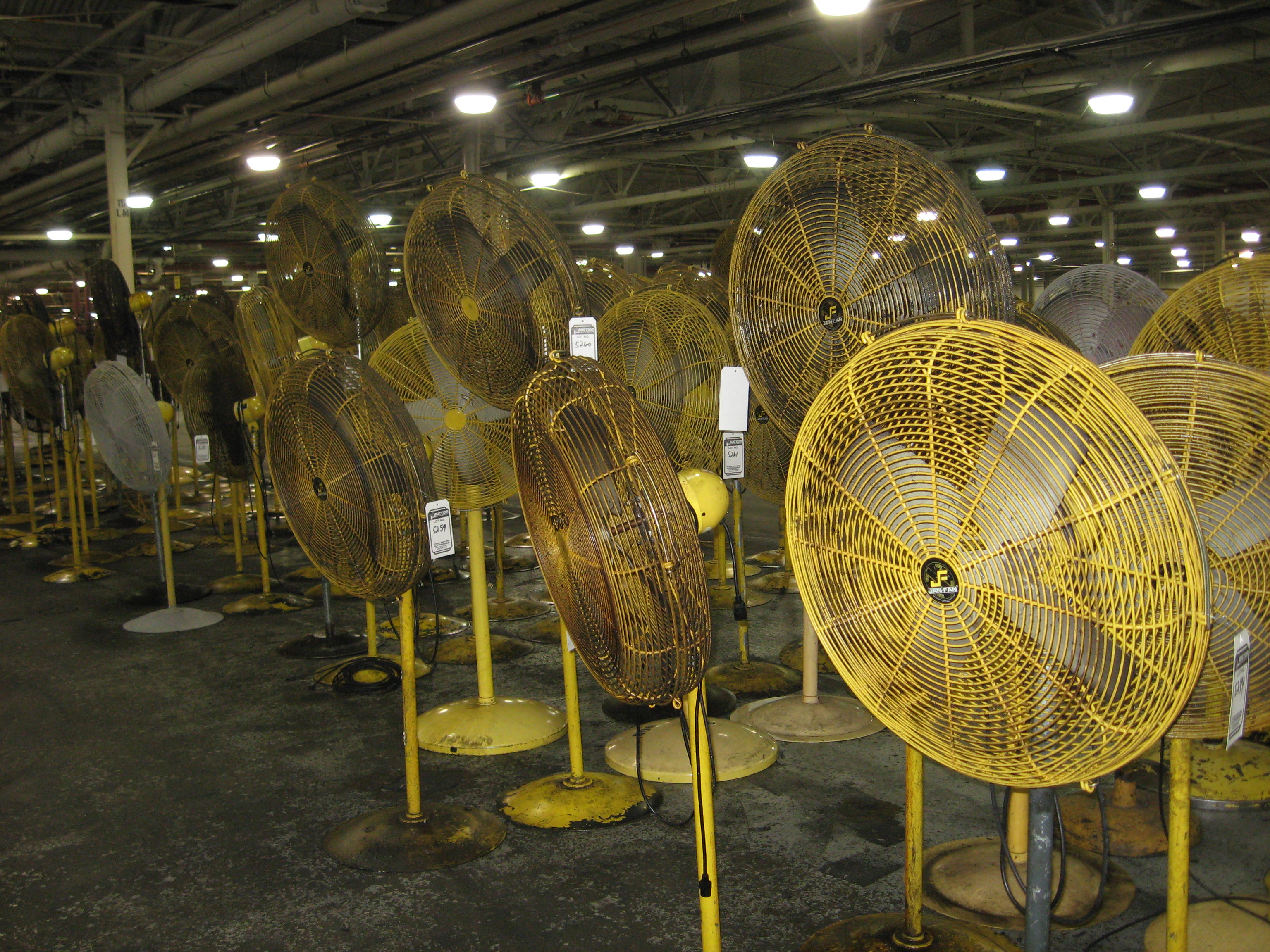
Above is a selection of fans that, for decades, cooled workers in the stifling factory.

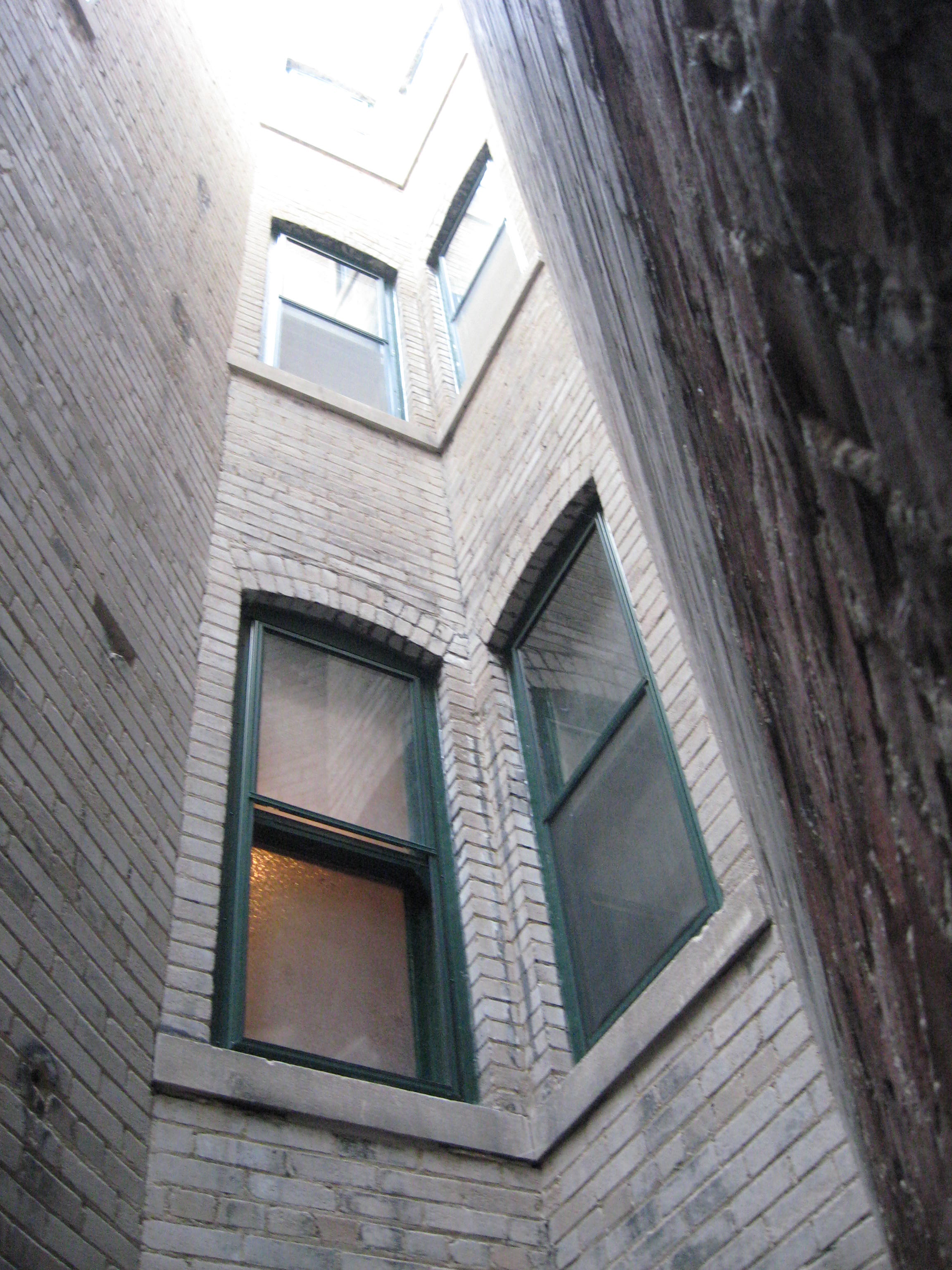
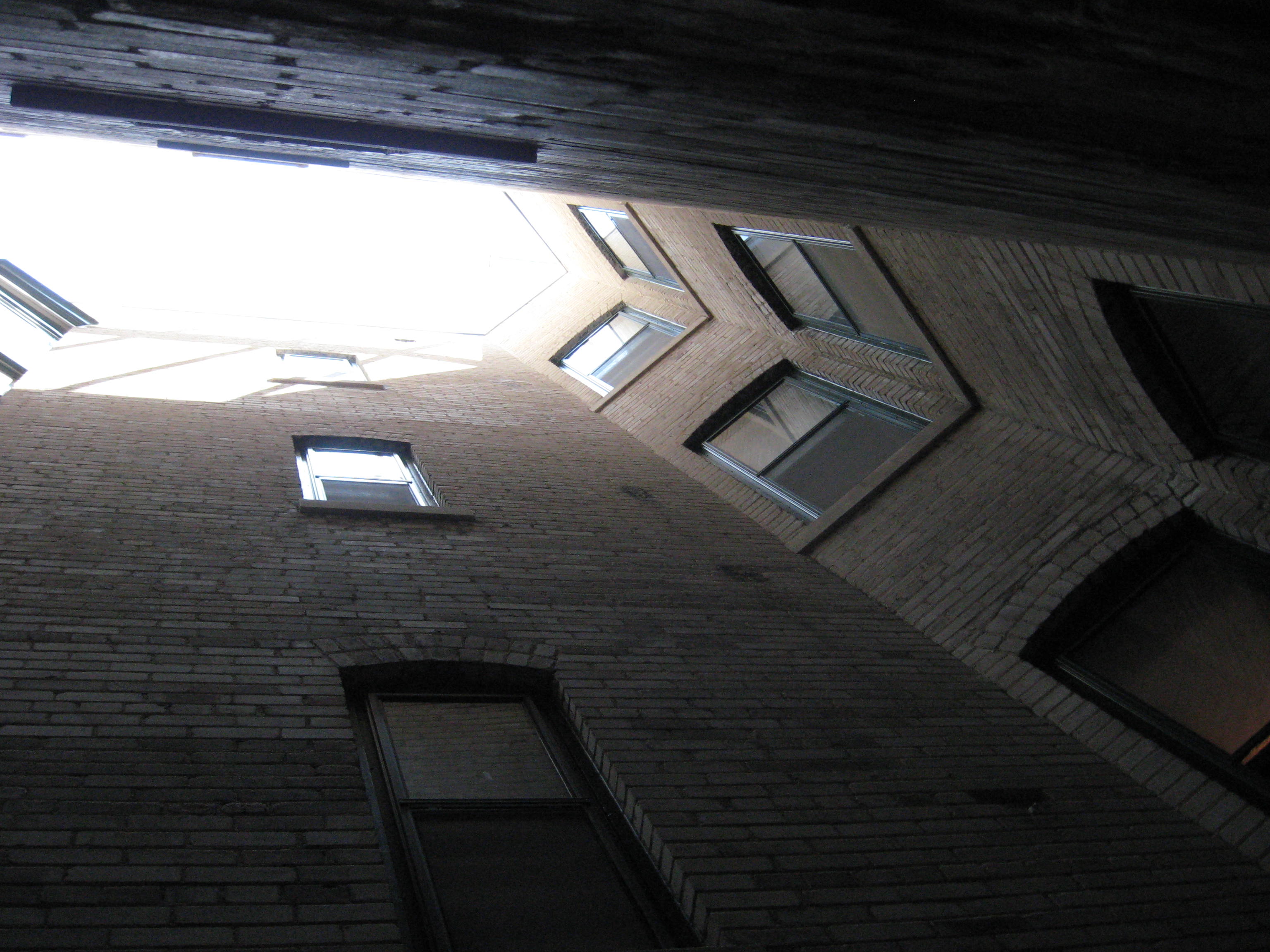
Another work-related assignment led me to take pictures in the soon-to-be-renovated Canopic Apartments in downtown Muncie. I was really intrigued by the light well at the center of the apartment building.

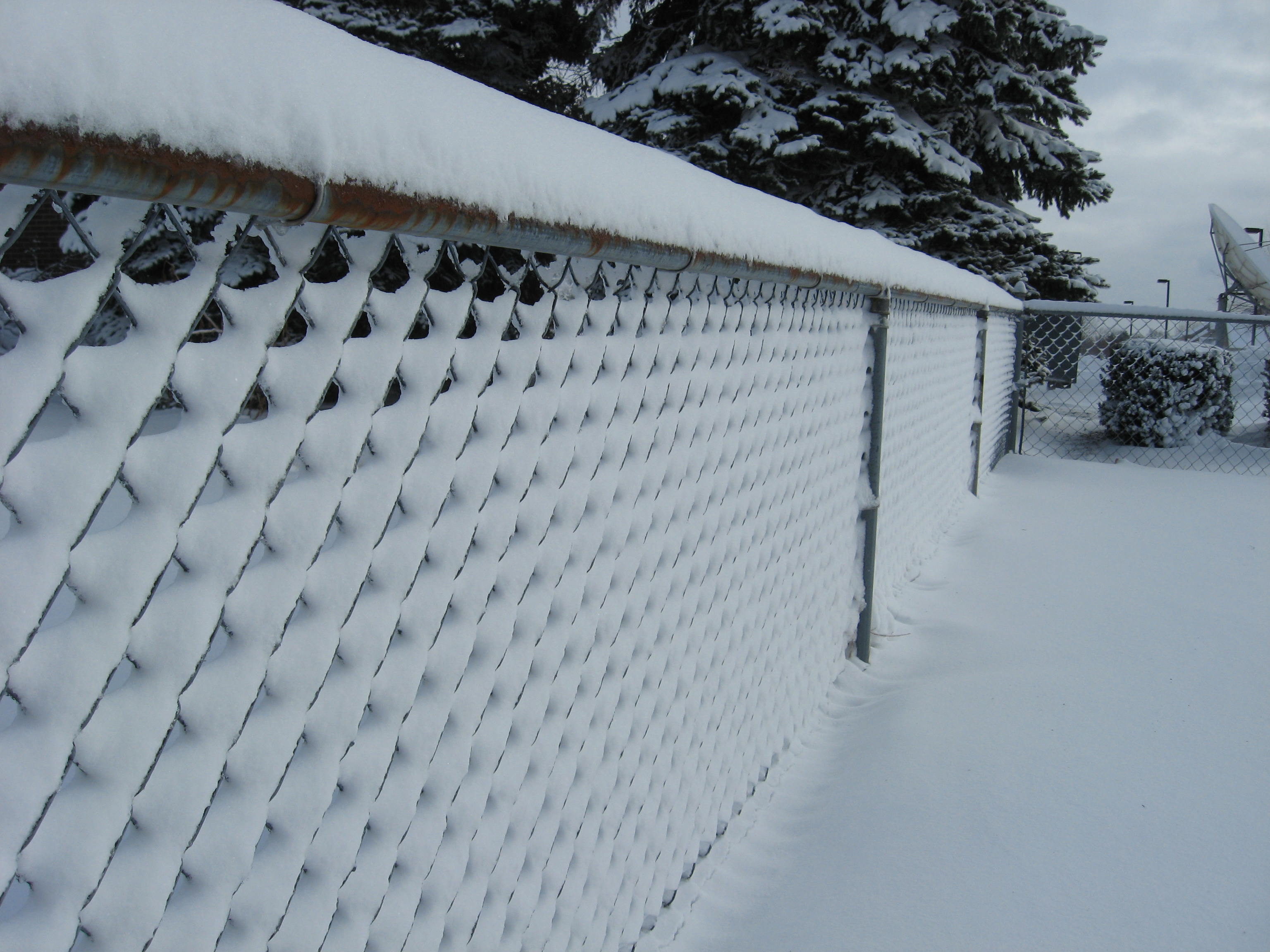
Nature-made shapes can be cool. (Heh.)

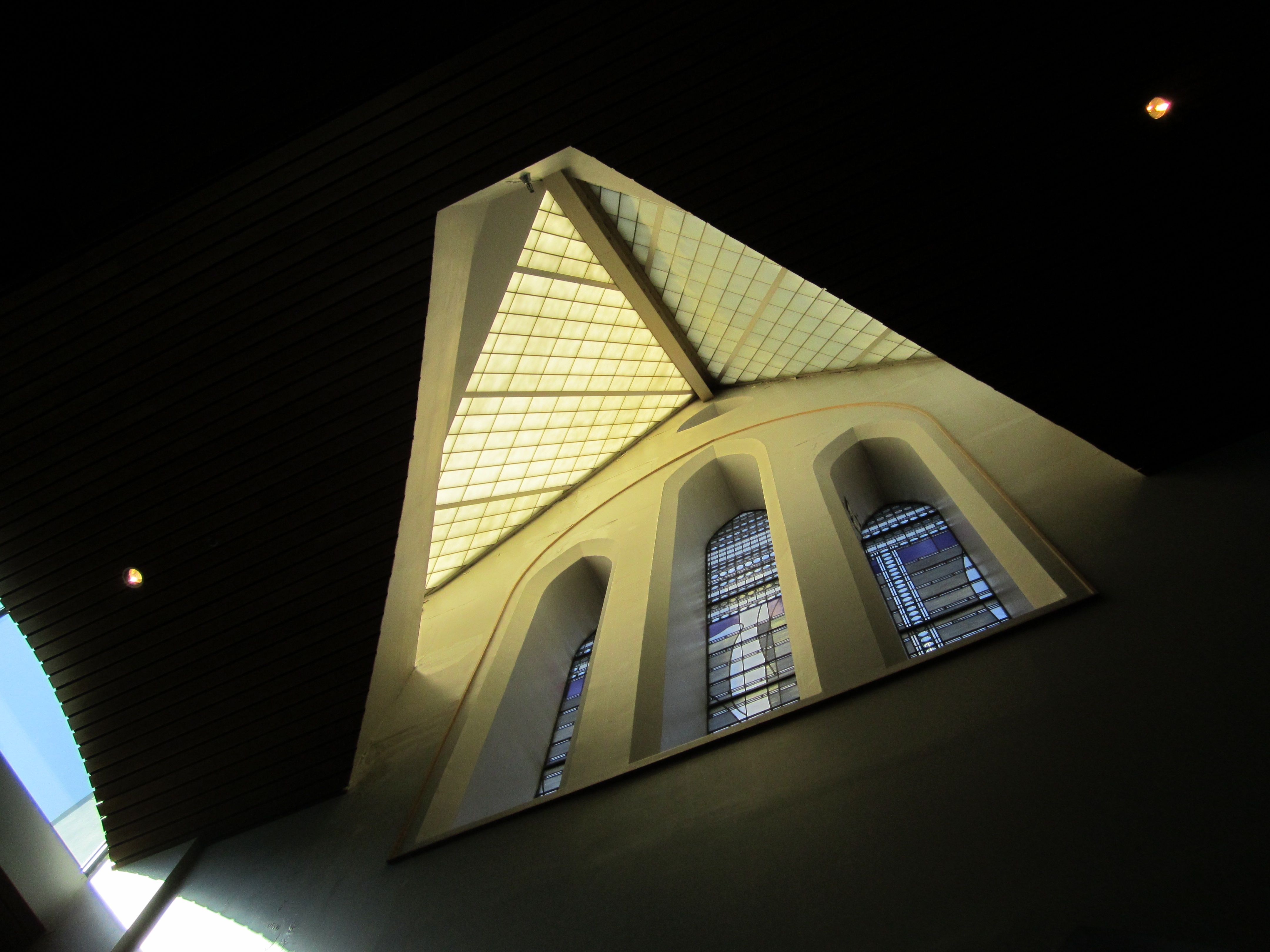
Then there’s the modern-style stained glass windows at the Unitarian Universalist Church in Louisville.

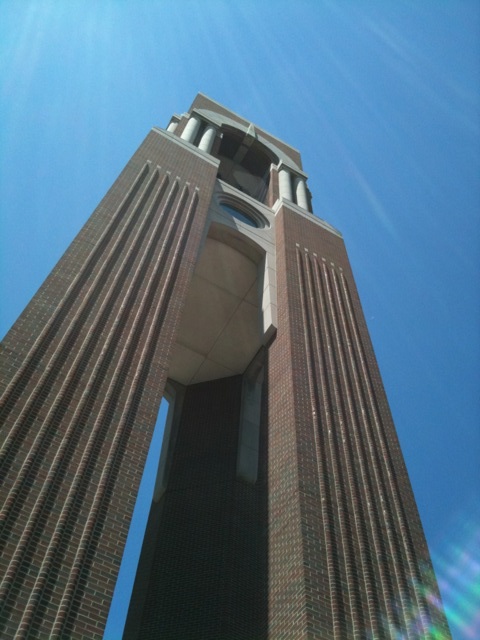
Lastly, two photos I took today with my iPhone.

They’re of the bell tower at Ball State University here in Muncie.