Tag Archives: Star Trek

‘Star Trek,’ ‘Doctor Who,’ ‘Star Wars’ – the future’s not what it once was

This is ancient history – actually, that would be a good name for this site – but there was a time in the 1970s when “Star Trek” looked deader than one of Dr. Leonard McCoy’s patients. The original series had ended nearly a decade before, the show’s creative minds were waffling between making a new TV series and a big-screen movie – I don’t have to tell you how the success of “Star Wars” in 1977 made up their minds to produce a theatrical film – and it was not at all certain the franchise – which isn’t a word that was commonly applied to creative properties back then – would continue.

So Paramount’s decision to hire director Robert Wise to make “Star Trek: The Motion Picture” was a pivotal moment in the … well, franchise.

I can’t describe to you today what it was like to be watching a syndicated rerun of the original “Star Trek” series one Sunday morning on an Indianapolis TV station in 1979 and see a commercial for “The Motion Picture.” My friends and I in our local “Star Trek” club had been keeping up on the making of the film, of course, so it wasn’t a surprise. But it damn sure was a thrill. (Say what you will about the first movie, but we anticipated it like crazy.)

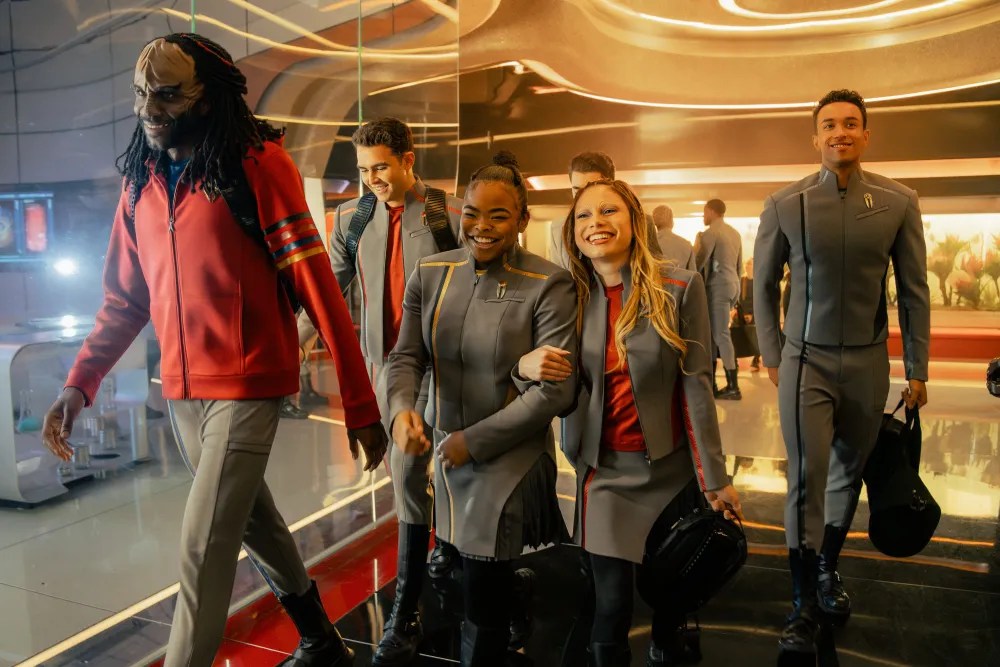
Fast forward to spring 2026 – it is spring, isn’t it? – and “Star Trek: Starfleet Academy” has been canceled after its first season on the Paramount Plus streaming service. A second season has already been filmed and will air, I guess, on the streamer, as well the fourth and fifth seasons of “Star Trek: Strange New Worlds,” which have already been made and which has already been canceled.

I’m not inclined to support Paramount because of its repugnant politics, but I gotta say I’ve stuck around with the service in part because of the chance to see new “Trek” episodes. These cancelations aren’t giving me many reasons to stick around longer.

I know plenty of people who are so sick of working in restaurants and stores and even patronizing restaurants and stores and hearing music from a half-century ago playing on the Muzak. When will Boomers die and take their music and their franchises with them? I’m at the tail-end of the Boomer generation and I wonder that sometimes too.

But we’ve reached a point here in which we might see an end to, or at least a hiatus of, some long-running franchises.

“Doctor Who” is at a crossroads with the latest season of the show, which began in the 1960s, ending (except for a purported Christmas special still to come this year) and Disney opting out of future involvement.

The “Star Wars” franchise – HOW MANY TIMES WILL HE USE THAT WORD? – had substantial success with the recent “Andor” series and some uncertain promise with the “Mandolorian” movie – or has interest in that story and the lil Yoda kin dude already faded? When will we get “Star Wars” stories that aren’t immediately adjacent to the Skywalker family saga? And will we accept them if and when we do?

I suppose it’s logical enough to ask how much longer Marvel movies and TV series will continue to be made, but while the Marvel Comics world has been around for more than 60 years the MCU hasn’t been around for 20 yet. And a big hit movie will clinch the MCU as an ongoing thing.

As a matter of fact, a big hit lifts all boats. And studios are loathe to give up on any intellectual property, which is why we’re going to see more “Lord of the Rings” and “Harry Potter” shows and movies. We’ll someday see more Indiana Jones, I’m sure, and we’re already seeing more Godzilla. And I did a whole piece for CrimeReads about the Universal Studios monsters and their undead – undying – popularity.

As for “Star Trek,” it’s a shame that things – a new series? a new movie? – are so up in the air this year, the 60th year of the intellectual property.

But I’m sure the franchise will be back with some hit and life beyond the grave at some point.

And we can go on saying “franchise” and “intellectual property.”
6-Episode Problem: In which I am forced to wish for longer TV seasons

I grew up in the 1960s and `1970s – ha! I bet you thought I was a youngster, huh? – and TV was a huge part of our lives. Obviously. This was during a period when weekly episodic TV series had long seasons of many episodes, certainly by today’s standards.

I mean, “Star Trek” had 79 episodes over only three seasons (and some of those episodes were outright losers that I’m sure somebody is nostalgic about now) and “Trek” looked like a piker compared to many TV series: “Gunsmoke,” which ran for 20 seasons, aired 39 episodes in each of its first few seasons, although those were admittedly half-hour episodes. Yesterday I noticed that “Alfred Hitchcock Presents” also had 39 episodes some seasons.

That reinforcing of the idea that vintage TV series aired a boatload of episodes back in the day compares and contrasts to today, when it’s a shock when any new series runs more than 10 or 12 episodes per season. The excellent “The Pitt” is the exception with 15 episodes per season. (“The Pitt” is also the exception compared to many current series in that the seasons air only a year or less apart.)

Enter “3 Body Problem,” the terrifically entertaining Netflix adaptation of the science fiction bestseller (and Chinese TV adaptation). Yesterday news broke that the second season of the series would consist of only six episodes compared to eight from the first season. Forbes wrote that the third season is supposed to be even shorter. This as people note that author Cixin Liu’s three novels get longer with each book.

Oh, and also, it’s been two years since the first season.

Add to that the apparent circumstance that there’s no telling when the second season of the great series “Pluribus” will be produced or seen.

I don’t necessarily want to return to the days of 39 or even 22 episodes, the latter still a common number among some network series.

But I wouldn’t mind if other series followed the schedule of “The Pitt” and gave us a few more episodes in a slightly more timely manner.

The long goodbye: ‘Star Trek Strange New Worlds’ gone after fifth season

1.90.3-2ONB4KWX2J2KFMHWY2TE37L4ZE.0.1-7

This is definitely not going to be one of those posts about how TV was better in the old days or how TV was better when a season of a show consisted of 22 episodes or even more, although I think there’s something to be said about a season that has enough episodes to give the characters and the world they inhabit a little breathing room.

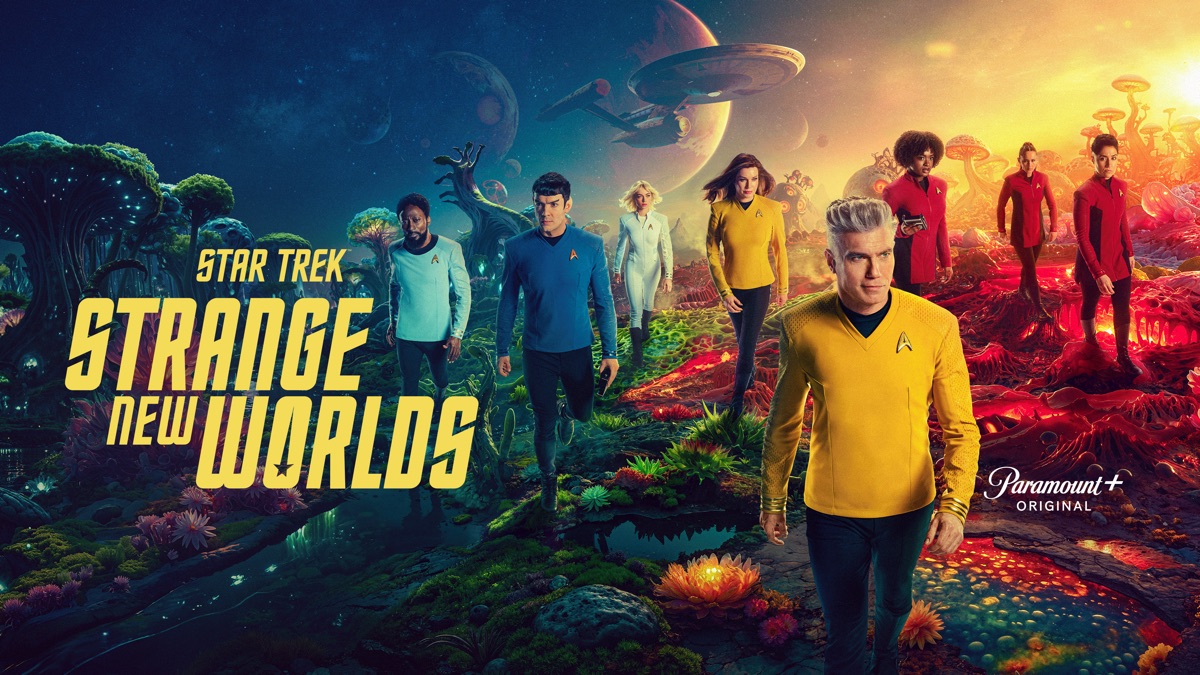
This is a post about how much I enjoy “Star Trek Strange New Worlds” and how much I’ll miss it when it’s gone after its fifth season. Paramount+ announced this week that the series, a prequel of sorts to the original “Star Trek,” would end after its fifth season.

If you’re not scoring at home, the third season of the series will begin streaming on July 17. The fourth season will follow, probably in about a year, and the fifth season after that.

This is a post in part about how Paramount+ said the fifth and final season would consist of only six episodes, fewer than the 10-episode seasons we’ve seen so far.

I’ve got lots of thoughts about the series, which has focused on the Enterprise under the command of Captain Christopher Pike. Those who remember the original “Star Trek” know that Pike was presented as a man who was left shattered after rescuing a group of cadets from a horrific accident. Pike was left disfigured and paralyzed and in a motorized chair for the rest of his life.

“Strange New Worlds” has already addressed this, with Pike having received the gift of seeing his future in an episode of “Star Trek Discovery,” the series from which “Strange New Worlds” was spun off.

Key to Pike’s journey is that he’s accepted his fate and made peace with his future, so even though “Strange New Worlds” has already played with the timeline as established by the original series, it would feel like a cheat to have Pike escape that fate in the final season of this show. Even though we like Pike, as played by Anson Mount, and might want him to go on adventuring forever.

The fact that the final season is projected to include only six episodes would indicate 1.) the showrunners have a very set plan for the final season and needed only six episodes to tell it or 2.) Paramount+ only gave them enough budget for six episodes, which would be a pretty ignominious way for the series to go out – on the cheap – but really, we don’t expect much of Paramount anymore.

There’s another “Trek” series in the works, one based on Starfleet Academy, and there could be others announced in the next two years.

But I’m wondering if “Strange New Worlds” might not morph into a new version of the original series, with most of the players – Kirk, Spock, Uhura and others – already in place on the current series.

So what do you think will happen? Will we see a revamping of the timeline and Pike’s fate? Will we see some new adventure? Will we see a reboot of the original series?

RIP Harve Bennett

harvebennettstartrekII

Rest in peace, Harve Bennett. We’ll always be grateful that you saved “Star Trek.”

The first “Star Trek” movie had come out in 1979 to mixed reviews and, by some estimations, disappointing box office.

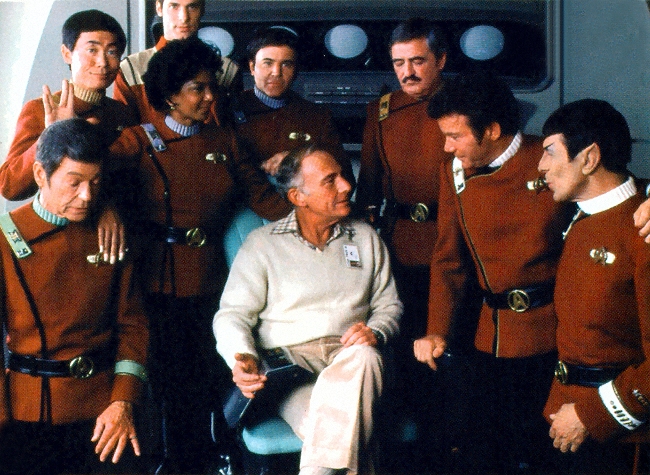
Paramount didn’t give up on the franchise, but decided to economize on the second installment. The studio handed control to Paramount TV producer Bennett, who had produced “Mod Squad,” “Six Million Dollar Man,” “Bionic Woman” and other series.

Bennett produced “Star Trek II: The Wrath of Khan,” directed by Nicholas Meyer, on a modest $11 million (!) budget by reusing models and footage from the first movie.

The resulting movie, released in June 1982, was a critical success and a crowd-pleaser, bringing in $78 million at the box office.

And guaranteeing the movie series would continue.

Thank you, Mr. Bennett.

RIP Leonard Nimoy. Sorry for ticking you off.

nimoyvincentposter

I met Leonard Nimoy only once. And I irritated him.

Let me explain.

During the late 1970s and early 1980s, most of my friends and I were members of the Muncie Star Trek Appreciation Club, a very active Star Trek club based here in Muncie, Indiana. When I say active, I mean that besides monthly meetings, we did a bunch of fannish stuff. We went to movies together, watched movies on the new technology of VHS together, traveled to cities around the Midwest for conventions and raised money for muscular dystrophy, even appearing on the Indianapolis segment of the Jerry Lewis telethon.

And we met the stars of “Star Trek.”

Not just at conventions and autograph signings. That would have been all too easy. And of course, this was before the Internet, which later made communication with almost anyone, even celebrities, easier thanks to email or Facebook. This was in the snail mail and phone call days.

Somehow – the memory of how is lost to me now, more than three decades later – we made arrangements to meet with the likes of George Takei – who we met with a few times, taking him to dinner at what was at the time one of Indianapolis’ swankiest restaurants, the King Cole, later closed after an alleged bout of Legionaires Disease – and William Shatner, who we met in the bowels of Market Square Arena while he was touring with his spoken word performances along with symphony orchestras. When we met Shatner in a quiet MSA hallway, one of our group – not me – excitedly told him, “You’re my biggest fan.” I think the encounter might have been the inspiration for Shatner’s “Get a Life” sketch on “Saturday Night Live.”

We met Nimoy at the Ohio Theater in Columbus, Ohio. The exact date escapes me now and the memorabilia from that meeting is in storage somewhere. But it would have been after “Star Trek: The Motion Picture” debuted in late 1979 and before “Star Trek II: The Wrath of Khan” came out in 1982.

Despite having returned for the first “Star Trek” movie, Nimoy was in his “I am not Spock” mode, having written the book of the same name in 1975, when “Star Trek” felt more like a burden than a blessing, and it was well before “I am Spock,” written in 1995, when he had come to peace with the character that defined his career for many people.

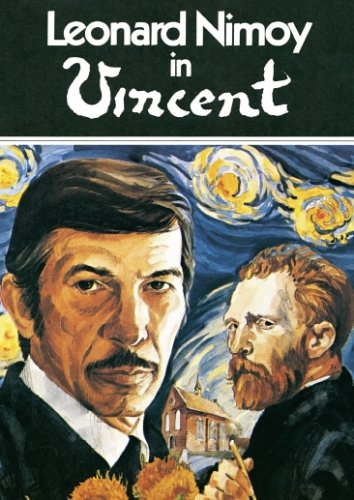
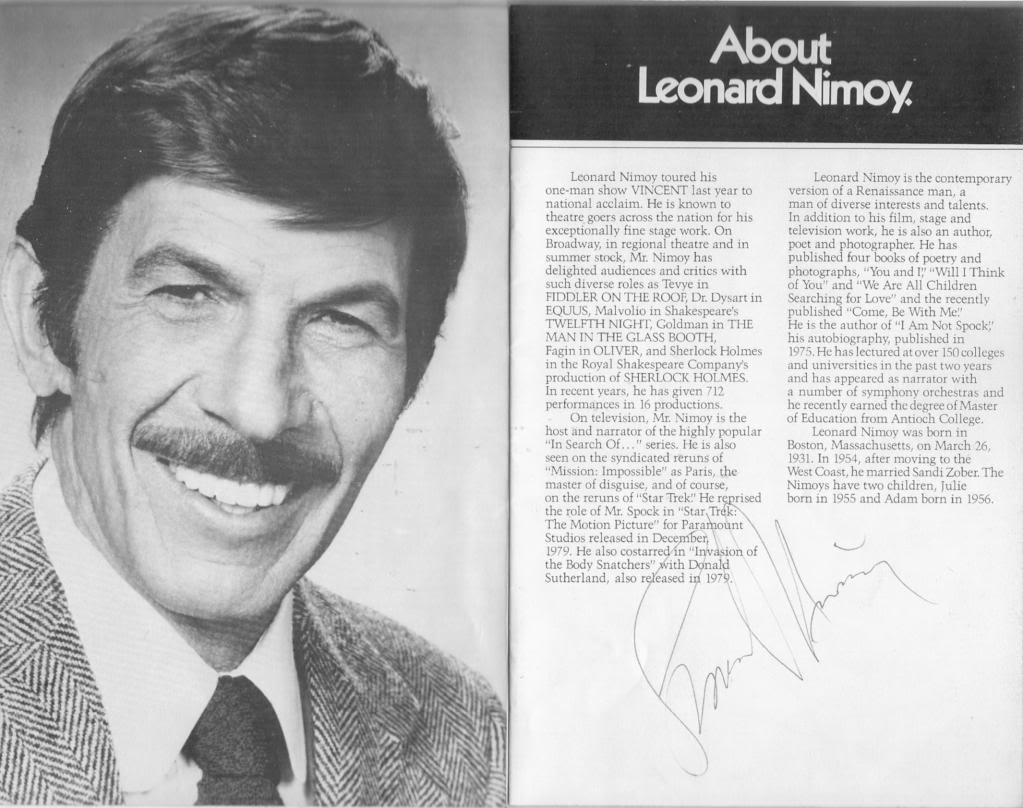
On that night in Ohio, a bunch of us had come to Columbus to see Nimoy in “Vincent,” a one-man stage show he had written in 1979. Nimoy played Theo, brother of Vincent van Gogh, talking about the artist a few days after his death. It was a good show and emphasized how versatile Nimoy, the actor, writer and artist, was.

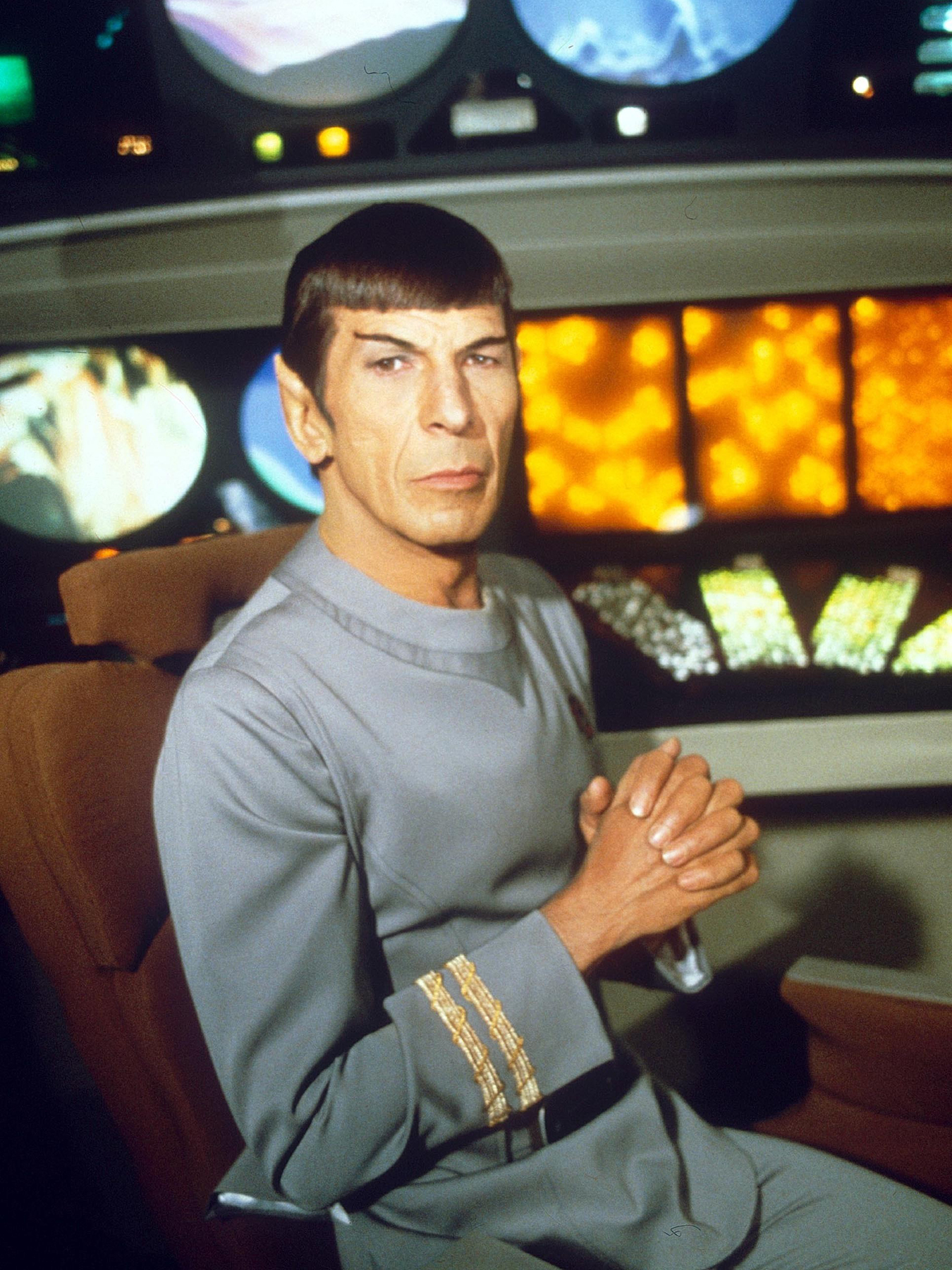
We made arrangements to meet briefly with Nimoy at the stage door of the theater. Most of us had something for him to sign – being fans of course, and young fans at that – and I had the program for the show and a color 8-by-10 of Nimoy, in full Spock makeup and costume, from “Star Trek: The Next Generation.”

I knew that he might not react well, but I thought I might as well try it anyway. How many times, after all, would I ever meet Nimoy, a science fiction and television icon?

nimoyvincentbio

When he came out, he seemed amiable and willing to exchange a few words – none of which were “You’re my biggest fan;” that kid was in the trunk of the car. I handed him the program and he signed it (not the one pictured with this column; again, storage somewhere).

LEONARD NIMOY - 1979

Then I handed him the photo of Spock. (Reasonable facsimile here.)

I wish I could say he arched an eyebrow, Spock-like. I think it’s more accurate to say he furrowed his eyebrows.

And sighed. Heavily.

And signed the photo and gave it back to me, as amiably as could be expected for a man who was trying to extricate himself from a role that, within a couple of years, he would fully embrace again.

By the time Nimoy appeared in “Wrath of Khan” in 1982, he was Spock – even if the sequel book didn’t come about for more than another decade – and had become master of the character. Hollywood lore tells us that Nimoy agreed to appear in the movie series in exchange for directing the third and fourth films. He proved to be an accomplished director and parlayed the success of those films – particularly “The Voyage Home,” the one with the whales – into directing hits like “Three Men and a Baby.”

This night, however, outside the stage door of a theater in Columbus, Ohio, Nimoy must have wondered, “Who the hell are these people and why do they insist on forever linking me to a character I played almost two decades ago?”

But – sigh notwithstanding – he signed the damn photo.

Thanks, Mr. Nimoy. Rest in peace.

Me, MeTV and Saturday night

meTVsaturday

The weekend nights – Friday and Saturday nights, really – are and always have been special to young people. They were nights of freedom, with the promise of being able to stay up late because the next mornings were not school mornings.

I grew up watching “Sammy Terry” on WISH-TV 4 on Friday nights – a double-feature of classic and/or cheesy movies beginning at 11 p.m. – and “Science Fiction Theater,” a double-feature of more SF-oriented – as opposed to horror – movies without a host that aired on WISH on Saturday nights.

Of course, despite the enduring memories of Sammy Terry on Fridays, Saturdays have always had an edge is airing great old horror and science fiction. The legendary “Mystery Science Theater 3000” ended its run on the then-Sci-FI Channel on Saturdays (I still miss that viewing experience so much) and “Commander USA’s Groovie Movies” aired on USA Network in the latter half of the 1980s.

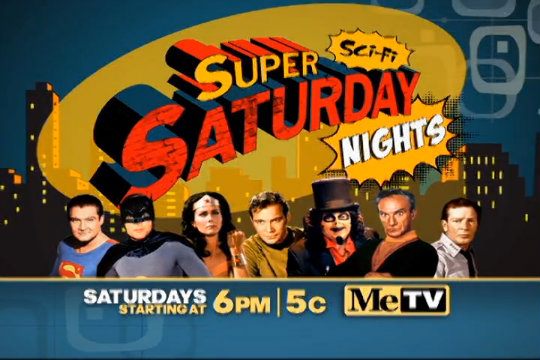
Considering I’m in the demographic for MeTV, it’s not a surprise that the channel, which specializes in airing classic TV of the 1950s-1980s, is one that I’m always checking out. And it’s not surprising that MeTV has me – and a loyal fanbase – hooked for its Super Sci-Fi Saturday Nights programming block.

MeTV’s Saturday night line-up has varied a bit over the past couple of years but has only grown more solid recently with its selection of TV shows and, as its crown jewel, the selection of classic horror films hosted by longtime Chicago horror host Svengoolie.

I’ve written about Svengoolie here before, but I’ll note for the record that the show, written, hosted and almost totally performed by Rich Koz, is perhaps the most entertaining geek-oriented two hours on TV right now.

That’s because of how much TV has changed in the past two decades.

With a proliferation of channels – and channels devoted to geek-friendly fare that include (now) SyFy – it seemed like a safe bet that lots of classic TV shows would be available to fill our days and late-nights.

(And yes, I know that virtually anything that airs on TV these days is available on disc, streaming or online. But I like a well-curated TV lineup.)

But any dreams I might have had of being able to see classic sci-fi or horror movies on these 24-7 channels were dashed when I saw what the channels actually chose to air: Tons of “reality” programming and hour after hour of reruns of network shows like “CSI.”

MeTV, which began airing in Chicago in 2005 and went national in 2010, appealed to Baby Boomers and others of nostalgic mindset by airing classic sitcoms and dramas.

The channel’s Saturday night lineup doubles down that appeal by programming for the growing geek base.

The night starts strong with episodes of “The Adventures of Superman,” the 1950s George Reeves series that hasn’t been widely seen in recent decades. That’s followed by the 1960s “Batman” series, the 1970s “Wonder Woman” series, “Star Trek,” “Svengoolie,” “Lost in Space” and “Voyage to the Bottom of the Sea.”

I’ve never been a big fan of the last two, Irwin Allen kids’ shows from the 1960s, but they’re good fare for insomniacs who haven’t been lulled into peaceful sleep by Svengoolie’s airing of some classic Universal monster movie.

And while “Wonder Woman” never met a villain she couldn’t subdue by throwing him into a swimming pool – just watch a few episodes; you’ll see what I mean – the Lynda Carter series plays nicely along with the campy “Batman” series and the crime-busting noir “Superman” show.

MeTV’s whole lineup is comfort food for those of a certain age, of course. Its Saturday night lineup is comfort food for geeks of a certain age.

Pop culture classic: ‘Galaxy Quest’

galaxy-quest-movie-poster-

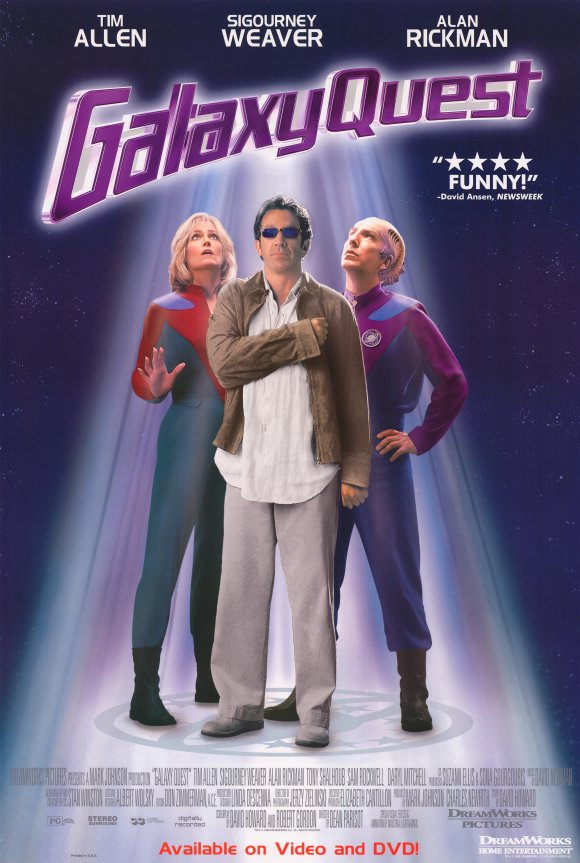
I’ve heard the argument made, online, that “Galaxy Quest” is the best big-screen “Star Trek” movie. “Star Trek” reboot director J.J. Abrams apparently said as much. While I think the claim is made somewhat facetiously, there’s a lot to be said for the light-hearted 1999 sci-fi comedy.

Beyond the trappings of the movie, which looks at a group of has-been actors living off the fame of their cult TV show 20 years later, there are a lot of subtle and not-so-subtle nods to “Star Trek” the show, its cast and fandom.

The movie, directed by Dean Parisot, shows us the cast of the former “Galaxy Quest” series in the only setting in which they can thrive: Fan conventions. While the show’s captain, played by Tim Allen, basks in the glory of his adoring fans, the rest of the crew – Sigourney Weaver as the ship’s eye candy, Alan Rickman as the Spock stereotype, Daryl Mitchell as the kid actor grown up, Tony Shalhoub as the perpetually befuddled and hungry engineer and Sam Rockwell as a glorified extra who comes along for the ride – seethe with jealousy.

From convention appearances to openings of electronic stores – where Rickman, so dry and sarcastic, has to trot out a modified version of his catchphrase: “By Grabthar’s Hammer … what a savings!” – the actors bicker and scramble for jobs.

When an oddball group of fans – led by Enrico Colantoni of “Veronica Mars” and including Rainn Wilson of “The Office” in a small role – asks for their help, they think they’re appearing in some elaborate fan-made performance. Soon enough they learn that the “fans” are aliens, come to Earth to find the heroes of the “historical documents” they’ve been watching in space. They’re seeking help in fighting off an evil alien conqueror.

“Star Trek” fans will find a lot that’s amusingly and comfortingly familiar here, from the perils of guiding the huge ship out of space dock to the ridiculous design of the craft itself.

Not to mention the ghettoized duties and personalities of the crew – Weaver’s character gets to repeat the computer’s pronouncements -and the backbiting behavior of the actors, all of who are resentful and jealous of Allen’s very Shatner-esque commander.

It’s easy to overlook Allen’s laid-back performance, but he really captures the bravado of a once-hot actor who still expects to be treated like a star.

Rickman is so good as the irritated Alexander, whose resemblance to Leonard Nimoy and his frustration at always being identified as Spock is dead on. Tony Shalhoub has some of the movie’s biggest laughs as the bemused engineer and Rockwell is wonderful as a bit player who would have given anything to have what even the cast of this cult TV show has.

“Galaxy Quest” might not be the best “Star Trek” movie ever made, but it sure is the best movie about “Star Trek” ever made.

TV crush: Yvonne Craig

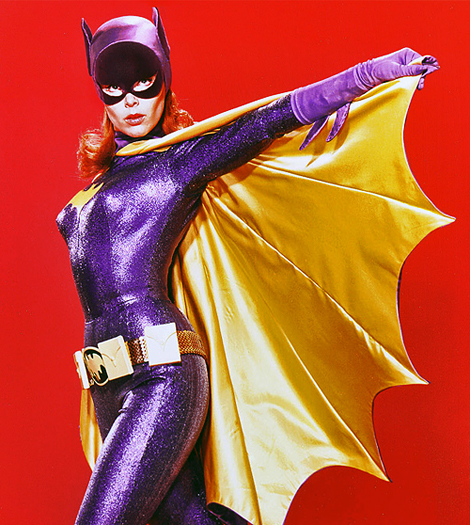
batgirl cape

It’s safe to say Yvonne Craig sparked more than a few transitions from boyhood to manhood for male TV viewers in the 1960s

That’s because Craig made a heck of an impression on us as Barbara Gordon, also known as Batgirl, in the “Batman” series.

Craig, born in 1937, was a ballet dancer before appearing in a variety of TV series, including “The Man from UNCLE” and “The Wild, Wild West.”

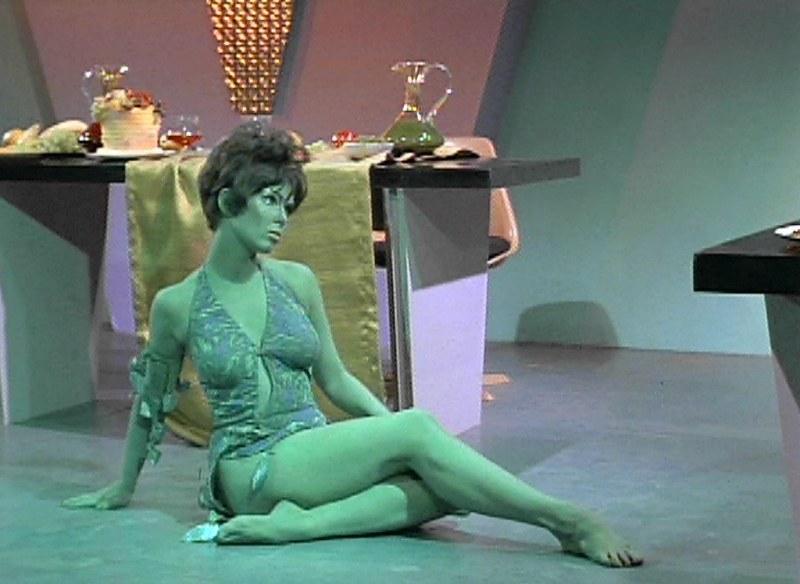
Yvonne_Craig_Star_Trek

Her appearance as a green-skinned seductress in the “Star Trek” episode “Whom Gods Destroy” – the second chartreuse woman in the series – is no doubt responsible for the presence of a green-tinged woman in the 2009 “Star Trek” movie.

But all it took was for Craig to join the “Batman” cast for her to forever be a fanboy favorite.

Craig, as Batgirl, was added to the cast for the final season in 1967.

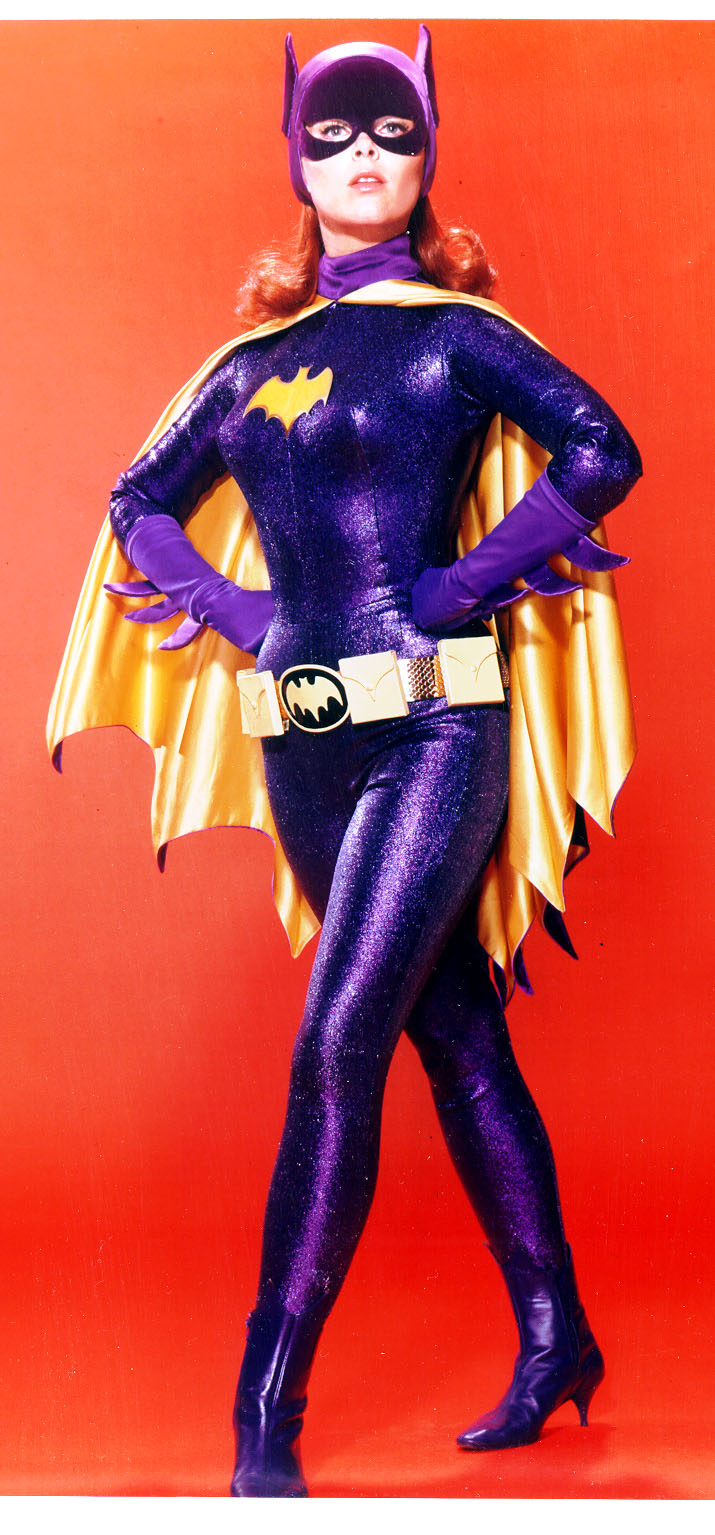
yvonne_craig batgirl full

The impression her outfit – sparkly purple suit with yellow cape and hip-hugging yellow utility belt – made on a nation of us was truly great.

Here’s to Yvonne Craig.

Unsung actors: Eddie Paskey of ‘Star Trek’

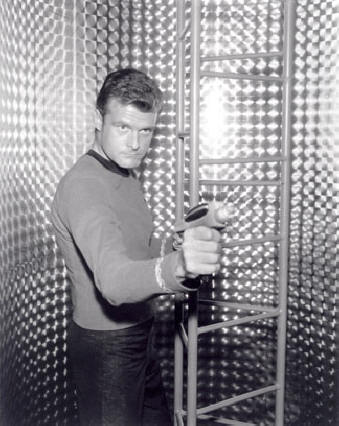
star trek eddie paskey

Besides the featured cast of the original “Star Trek” series, even beyond such recurring performers as Grace Lee Whitney as Janice Rand, there’s a familiar face in the background of most episodes of the series.

If you’ve watched many episodes, you’ve noticed actor Eddie Paskey, usually in a red shirt, a bad sign for “Star Trek” crew members.

star trek paskey w doohan

Yet Paskey appeared in 57 episodes of the original “Star Trek” series. He often played crewman and security officer Mr. Leslie, and the “Star Trek” wiki Memory Alpha says he appeared more often than Sulu or Chekov.

Paskey even died in one episode – true to his “red shirt” status – although he was alive and well in the next.

Paskey, now 73, left the series in its third season due to bad headaches from a medical condition complicated by the bright lights of the set. He operated his family’s auto-detailing shop and makes occasional “Star Trek”-related convention appearances.

Although Paskey is a familiar face from his many background appearances on the show, I didn’t know until I looked him up online that he had another pivotal role in the series: He was the driver of the truck that struck and killed Edith Keeler (Joan Collins) in the series’ greatest episode, “City on the Edge of Forever.”

And he was the hand double on the show for James (Scotty) Doohan, who was missing a finger.

If that’s not enough to guarantee a lifetime of appearances on “Star Trek” convention stages, I don’t know what would be.