Tag Archives: science fiction

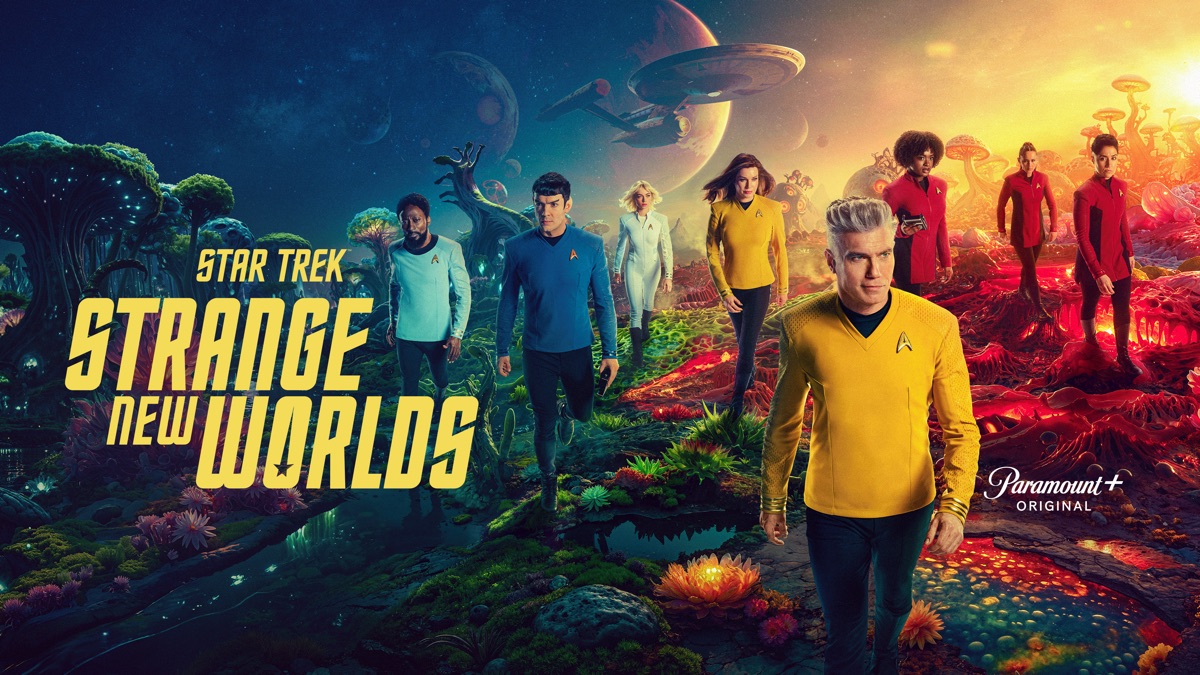
As ‘Star Trek’ winds down, here’s what the franchise needs – and doesn’t need

A lot of people aren’t old enough to remember the years of “Star Trek” wandering in the wilderness. After the original series ended in 1969, following its third season, it was just barely beginning to catch the attention of the pop culture world at large. Before reruns had wound down from the original NBC run, the show had been syndicated. By 1970, Paramount was already bragging that reruns of the show’s three seasons improved the ratings for any station that aired it.

I became a fan of the show when an Indianapolis station began airing the reruns after the 11 p.m. newscast and the news anchors, through a video effect, “beamed” into the episode. Within a few years, Star Trek conventions had begun, a U.S. space shuttle was named after the Enterprise and plans were made for a “Star Trek Phase II” series. Then “Star Wars” was a huge hit in 1977 and Paramount shifted plans to the big screen and the Robert Wise-directed and enduringly controversial “Star Trek The Motion Picture” was released in 1979.

I’ll never forget watching Sunday morning reruns of the original series and seeing, during one of the commercial breaks, an ad for “The Motion Picture.” For an arrested adolescent in an Indiana Star Trek Club, it was a thrill. Finally, the long hiatus was over.

The movies followed, more TV series followed, and Star Trek became as much a part of our culture as superhero movies have been in the past few years.

Now, 60 years and a few days after the 1966 premiere of the original series, the future looks pretty bleak for Star Trek. We’re most of the way through the fourth season of “Star Trek: Strange New Worlds,” a series that winds down after a truncated final season (most likely) next year and four seasons of some really good Star Trek and some really good television but too many episodes that left me wondering how more thoroughly the potential and very limited lifespan of the series could be wasted. And no, I haven’t watched this season’s puppet episode yet, and I might not. As far as I’m concerned, no TV series will ever top the mixing of a puppet character and live action characters as well as “Smile Time,” the 2004 episode of “Angel.”

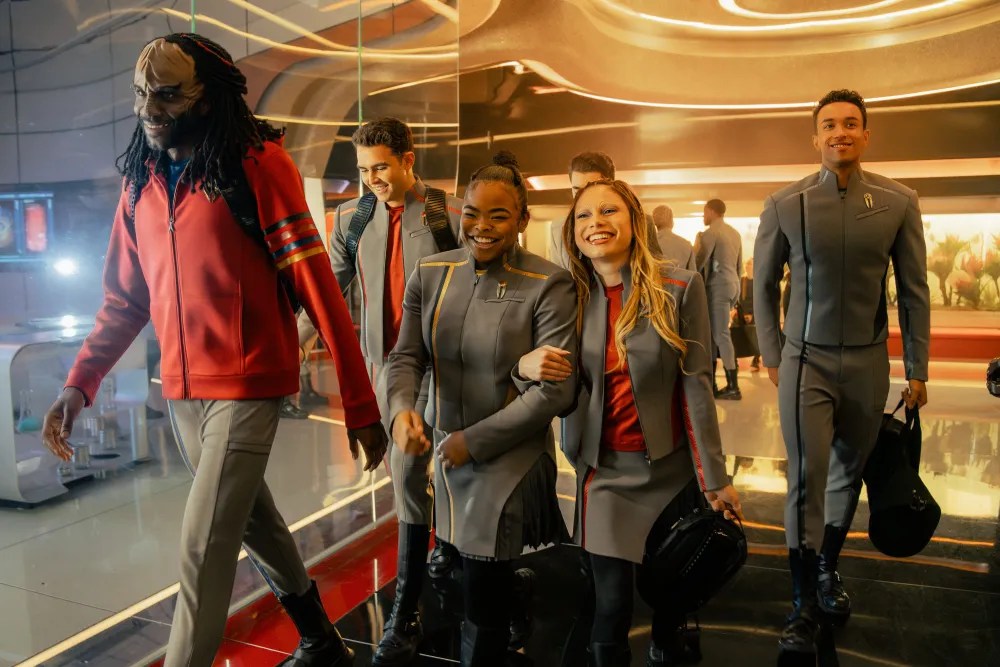
So we’ve got a couple of episodes left this year, six episodes of the fifth and final season probably next year and a second and final season of “Starfleet Academy,” already canceled by Paramount Plus.

Will they ever make another movie? Will they make more series? Probably, at some point. Star Trek is an intellectual property too valuable to leave alone.

Should they? I’m not sure. As much as I like that Star Trek is still a part of our culture, even in this truncated form, I’m not sure of the direction of the series.

We don’t need:

Ten-episode seasons in which a third of the episodes are stunt episodes.

A Quentin Tarantino Trek movie.

More series or movies that are far removed – by hundreds of years, like the final seasons of “Star Trek Discovery” – from the world of Star Trek, ie Starfleet Command, the Federation, familiar ships and even familiar characters.

What we do need:

A reboot, in effect, of the original series featuring the cast introduced in “Strange New Worlds.”

Maybe a series featuring Seven of Nine and the cast of the “Picard” series.

Movies drawing from the hugely rich history of the franchise.

New, creative blood. Like the original series, new movies and series should turn to experienced and knowledgeable science fiction writers. They should bring in people who love the series, characters and settings.

Maybe we need a break, but we don’t want a solid 10 years of wandering in the wilderness like we experienced from 1969, when the original series ended, to 1979, when the first movie was rushed into theaters.

Thoughts on AI and the ‘I never say no’ tech culture

We’re living in the opening scenes of every dystopian science-gone-mad sci-fi story ever, even though most of them never included as a plot device some mundane but infuriating circumstances like billionaires’ Artificial Intelligence stealing our writing.

But we definitely find ourselves in the beginnings of dystopian tech-gone-amok sci-fi stories with this AI girlfriend thing.

There’s plenty of science fiction, books or stories or movies or TV, that rely for drama on the devaluation of individuals or a class of people: just to cite one example, remember the “furniture” in “Soylent Green?” That was the term for a rich man’s female sex companion.

But rarely have we seen “sex bots” that are not as stupid as the dumbass guys who are going to pay to use them.

I’m certainly not the first person to equate where the world is today, under the leadership of malignant and greedy oligarchs and their toadies, to say we’re entering dystopian science fiction territory. All we have to think about is the wanton destruction of democracy, our climate, our oceans, our natural habitats, the devaluing of people and originality and creativity and the wholesale assault on privacy and the rights of women.

And yes, I’m sure I left something out.

But in recent days, in the wake of reading many articles about AI and the pollution and water use for data centers to run AI servers and how the technology is devaluing so much of what’s important, I started seeing ads like the one above, in my Instagram feed in particular. There are others, but that’s the most blatant.

The illustration shows a “sexy” AI woman, like most of the ads, but this one is very explicit in what’s likely to be the most appealing aspect of these AI girlfriends to many men:

“I never say no.”

Talking to friends about these ads, they note – rightly so – that there’s always been an element of rape culture to AI sex. “Control your AI girlfriend” says one ad that I saw, along with enticements to make her look how the user wants – skin tone, hair color, figure, etc.

Certainly there’s always been a destructive undertone – sometimes overtone – to porn. (There can be in any kind of real-life relationship, of course. It’s how humans, especially men, function. But with two actual people involved, there’s always a chance for people to learn to treat each other better.)

But without a real woman in the mix in these AI girlfriends, other than the environmental destruction caused by AI-generating data centers, the greatest destructive effect is to the idiotic men who pay to use these programs. They’re stupid. And sad.

I didn’t expect to be telling other guys, in effect, “Dude, just go find some porn. You’ll feel like less of a fool. Maybe.”

Having said that, maybe these AI girlfriends will keep them busy so they don’t spend quite as much time destroying everything else.

‘Star Trek,’ ‘Doctor Who,’ ‘Star Wars’ – the future’s not what it once was

This is ancient history – actually, that would be a good name for this site – but there was a time in the 1970s when “Star Trek” looked deader than one of Dr. Leonard McCoy’s patients. The original series had ended nearly a decade before, the show’s creative minds were waffling between making a new TV series and a big-screen movie – I don’t have to tell you how the success of “Star Wars” in 1977 made up their minds to produce a theatrical film – and it was not at all certain the franchise – which isn’t a word that was commonly applied to creative properties back then – would continue.

So Paramount’s decision to hire director Robert Wise to make “Star Trek: The Motion Picture” was a pivotal moment in the … well, franchise.

I can’t describe to you today what it was like to be watching a syndicated rerun of the original “Star Trek” series one Sunday morning on an Indianapolis TV station in 1979 and see a commercial for “The Motion Picture.” My friends and I in our local “Star Trek” club had been keeping up on the making of the film, of course, so it wasn’t a surprise. But it damn sure was a thrill. (Say what you will about the first movie, but we anticipated it like crazy.)

Fast forward to spring 2026 – it is spring, isn’t it? – and “Star Trek: Starfleet Academy” has been canceled after its first season on the Paramount Plus streaming service. A second season has already been filmed and will air, I guess, on the streamer, as well the fourth and fifth seasons of “Star Trek: Strange New Worlds,” which have already been made and which has already been canceled.

I’m not inclined to support Paramount because of its repugnant politics, but I gotta say I’ve stuck around with the service in part because of the chance to see new “Trek” episodes. These cancelations aren’t giving me many reasons to stick around longer.

I know plenty of people who are so sick of working in restaurants and stores and even patronizing restaurants and stores and hearing music from a half-century ago playing on the Muzak. When will Boomers die and take their music and their franchises with them? I’m at the tail-end of the Boomer generation and I wonder that sometimes too.

But we’ve reached a point here in which we might see an end to, or at least a hiatus of, some long-running franchises.

“Doctor Who” is at a crossroads with the latest season of the show, which began in the 1960s, ending (except for a purported Christmas special still to come this year) and Disney opting out of future involvement.

The “Star Wars” franchise – HOW MANY TIMES WILL HE USE THAT WORD? – had substantial success with the recent “Andor” series and some uncertain promise with the “Mandolorian” movie – or has interest in that story and the lil Yoda kin dude already faded? When will we get “Star Wars” stories that aren’t immediately adjacent to the Skywalker family saga? And will we accept them if and when we do?

I suppose it’s logical enough to ask how much longer Marvel movies and TV series will continue to be made, but while the Marvel Comics world has been around for more than 60 years the MCU hasn’t been around for 20 yet. And a big hit movie will clinch the MCU as an ongoing thing.

As a matter of fact, a big hit lifts all boats. And studios are loathe to give up on any intellectual property, which is why we’re going to see more “Lord of the Rings” and “Harry Potter” shows and movies. We’ll someday see more Indiana Jones, I’m sure, and we’re already seeing more Godzilla. And I did a whole piece for CrimeReads about the Universal Studios monsters and their undead – undying – popularity.

As for “Star Trek,” it’s a shame that things – a new series? a new movie? – are so up in the air this year, the 60th year of the intellectual property.

But I’m sure the franchise will be back with some hit and life beyond the grave at some point.

And we can go on saying “franchise” and “intellectual property.”

The long goodbye: ‘Star Trek Strange New Worlds’ gone after fifth season

1.90.3-2ONB4KWX2J2KFMHWY2TE37L4ZE.0.1-7

This is definitely not going to be one of those posts about how TV was better in the old days or how TV was better when a season of a show consisted of 22 episodes or even more, although I think there’s something to be said about a season that has enough episodes to give the characters and the world they inhabit a little breathing room.

This is a post about how much I enjoy “Star Trek Strange New Worlds” and how much I’ll miss it when it’s gone after its fifth season. Paramount+ announced this week that the series, a prequel of sorts to the original “Star Trek,” would end after its fifth season.

If you’re not scoring at home, the third season of the series will begin streaming on July 17. The fourth season will follow, probably in about a year, and the fifth season after that.

This is a post in part about how Paramount+ said the fifth and final season would consist of only six episodes, fewer than the 10-episode seasons we’ve seen so far.

I’ve got lots of thoughts about the series, which has focused on the Enterprise under the command of Captain Christopher Pike. Those who remember the original “Star Trek” know that Pike was presented as a man who was left shattered after rescuing a group of cadets from a horrific accident. Pike was left disfigured and paralyzed and in a motorized chair for the rest of his life.

“Strange New Worlds” has already addressed this, with Pike having received the gift of seeing his future in an episode of “Star Trek Discovery,” the series from which “Strange New Worlds” was spun off.

Key to Pike’s journey is that he’s accepted his fate and made peace with his future, so even though “Strange New Worlds” has already played with the timeline as established by the original series, it would feel like a cheat to have Pike escape that fate in the final season of this show. Even though we like Pike, as played by Anson Mount, and might want him to go on adventuring forever.

The fact that the final season is projected to include only six episodes would indicate 1.) the showrunners have a very set plan for the final season and needed only six episodes to tell it or 2.) Paramount+ only gave them enough budget for six episodes, which would be a pretty ignominious way for the series to go out – on the cheap – but really, we don’t expect much of Paramount anymore.

There’s another “Trek” series in the works, one based on Starfleet Academy, and there could be others announced in the next two years.

But I’m wondering if “Strange New Worlds” might not morph into a new version of the original series, with most of the players – Kirk, Spock, Uhura and others – already in place on the current series.

So what do you think will happen? Will we see a revamping of the timeline and Pike’s fate? Will we see some new adventure? Will we see a reboot of the original series?

From the stacks: “I, Robot’

i robot

The 2004 Will Smith movie “I, Robot” was on TV tonight. We caught a glimpse of it and my son asked about it. He’d seen most of it before, he said, but wasn’t familiar with the story.

I went to the bookshelves in another room and pulled down my copy of Isaac Asimov’s story collection, first published in 1950, about robots and humans in the near future.

My copy was published by Fawcett Crest in August 1970, when I was almost 11 years old.

My son seemed surprised that I still had books from when I was that young. I’m not quite sure how to take that.

The cover price on the book was $1.25.


Game on: ‘Ready Player One’ is geektacular

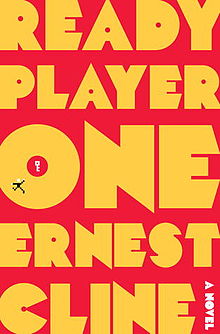
I’m late to the party on this, considering that “Ready Player One” was published last summer. I’ve never been a big gamer and wondered if the story would leave me cold. But Ernest Cline’s science fiction novel is a really fun read.

Cline’s book, set in a dystopian mid-21st century United States — in a world racked by war, rolling blackouts and the constant threat of violence — tells the story of Wade, a teenager living in the slums of Oklahoma City. Wade, like most of the rest of the population, spends much of his waking life in The Oasis, a global, online virtual reality. Wade — or at least his avatar — attends school in The Oasis, plays games in the virtual world and hangs out with his only real friend, Aech (pronounced “H”), another gamer who he’s never met in the real world.

The Oasis — part babysitter to the world, part classroom, mostly escape from bleak reality — was the creation of James Halliday and Ogden Morrow, the Bill Gates and Steve Jobs of the 2040s.

Halliday, who has been living in seclusion for years, dies and posthumously announces, through a video broadcast over The Oasis, a virtual treasure hunt. Whoever finds a series of keys and opens a series of gates on some of the virtually limitless planets that make up The Oasis will win Halliday’s fortune — billions of dollars — and control of the virtual reality world.

Wade, Aech and a female gamer named Art3mis join thousands — maybe millions — of other “gunters” — short for Easter egg hunters — in their online quest for Halliday’s treasure.

A couple of Cline’s plot points set his book apart from standard sci-fi adventure:

Halliday’s hunt revolves around the game master’s favorite moment in pop culture: The 1980s, when he was a kid.

The game’s challenges entail Wade and the others beating classic 1980s video games, demonstrating their knowledge of classic tabletop games like Dungeons and Dragons and navigating their way through the plots of 1980s movies like the teen angst comedies of John Hughes and the geek classic “War Games.”

Because the gunters knew that Halliday was obsessed with the 1980s, they’ve studied up on the period before the game began. Wade has watched every episode of the Michael J. Fox sitcom “Family Ties” several times, for example, and knows 1980s action movies by heart.

Another fun wrinkle in the plot is the presence of the Sixers, professional gamers hired by a company that hopes to take over The Oasis and turn its free wonderland into a pay-per-play world.

Cline’s got a way with characters. Wade is a lonely geek who makes an instant connection with Art3mis, a mysterious young woman. Considering the relatively few characters, “Ready Player One” doesn’t feel claustrophobic.

The story makes the best of the internal rules of The Oasis: Wade can’t just jump in an imaginary spaceship and blast off for a nearby planet to search for clues. In The Oasis, even virtual reality has its price, in online points and credits.

I’ve heard rumblings that someone is going to turn “Ready Player One” into a movie. It’s a great idea and certainly possible now that “Avatar” has introduced audiences at large to the concept of virtual reality and, well, avatars.

It’ll be interesting to see if the makers manage to stuff the movie as full of geeky references as the book, though. Would it really be possible to negotiate the rights to everything from “Ghostbusters” to “Highlander” to “Risky Business?”