Monthly Archives: April 2026

Facebook is the worst. And yeah, I’m still on it.

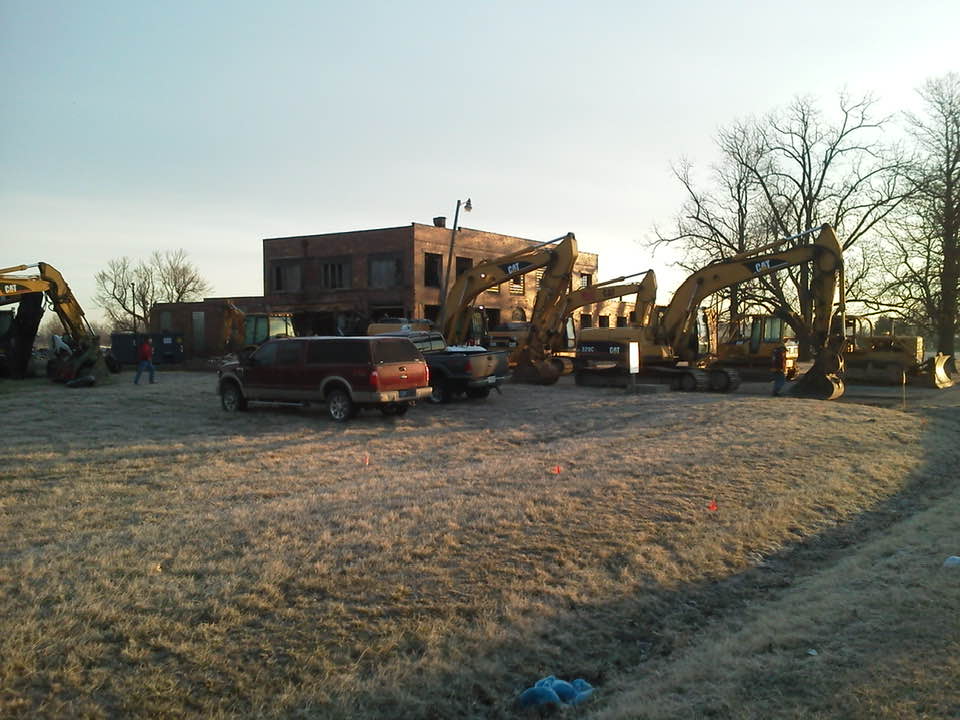
The photo above appeared on the Facebook history page for my hometown and hundreds of people are commenting on it. The building in question was the headquarters of a long-gone local dairy operation that was a beloved part of the community. In the comments, people are mourning the loss of the building and, long before that, the dairy business, and they’re citing their favorite products.

Only one problem: As some of the comments point out, this photo is more than 10 years old. The building was torn down more than 10 years ago. Because it’s not a great picture, it’s hard to tell that this demolition, more than a decade ago, left a prominent part of the complex standing. And it’s still there this morning.

The caption reads only, “Demo of Riggins Dairy.” That’s it. It doesn’t note that the demo took place 11 years ago. That’s left up to a commenter.

There are soooo many problems with Facebook. (And yes, I’m still on there, because it’s a way to communicate with friends and family and promote my work and that of others.) The worst is that the parent company, Meta, actively supports the destruction of our democratic society.

But another huge problem is misinformation and, charitably, half-assed information. I suppose the original poster didn’t intend to mislead people – including many, many people who follow the page who haven’t been in the city in 10, 20, 30 or 50 years – into thinking the demo was actively going on today. It’s hard to say.

But even by omitting information and context, even if innocently intended, it’s given the impression that “they’re tearing down the old dairy building.” I thought that myself because I haven’t lived there in going on four years. Then I saw the comments giving some trimeframe context.

I can’t tell you to boycott Facebook because I’ve got three pages – my personal page, which has very limited access by readers, and my author page and Wicked Muncie page, created in 2016 to promote our true crime books.

But for pete’s sake, be aware that you’re not getting the whole story when you see something on Facebook. Sometimes all that means is that you’re misinformed about a building. Sometimes it means you’re misinformed about assaults on our democracy.
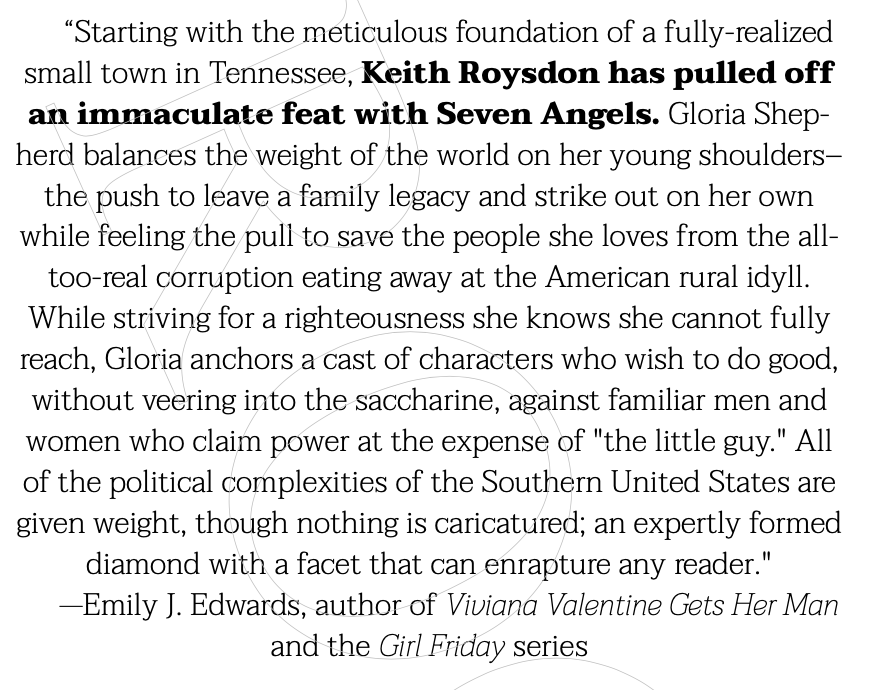
Blurbs about my new novel SEVEN ANGELS: this one from Emily J. Edwards

As part of a series, I’m highlighting some blurbs from authors who’ve read my new novel SEVEN ANGELS, out June 1 from Constellate Publishing. Today, Ms. Emily J. Edwards.

Maybe I violate some unspoken rule here when I note that some of the people who’ve read my book and been kind enough to blurb it are friends, like Colin Harker and Emily J. Edwards. But who would not want to claim them as friends?

Emily is a friend I met through social media and we chat a lot about writing and publishing. We trade pieces and snippets we’ve written to give each other some thoughts and she’s so smart and savvy.

I was recently a guest on her upcoming podcast, Silver Screen Sleuths, and we had a blast recording it.

She wrote the “Girl Friday” series of 1950s-set crime novels, led by “Viviana Valentine Gets Her Man,” and you should see out those books because they’re spot-on recreations of the time and setting, New York City.

Emily had written short stories and has a new novel in the works that you will, trust me, love.

To know more about Emily:

Cellphones replace newspapers for noir surveillance scenes

For writers and screenwriters of crime and mystery stories, cellphones pose some problems but also some solutions.

Two of the three novels I’ve written have been set pre-cellphones, in 1984 and 1948. I really enjoyed writing scenes for THAT OCTOBER and GHOST SHOW in which the characters have to urgently contact or find each other and can’t communicate via cellphone like my characters in SEVEN ANGELS – set in 2019 – can. It’s a great exercise in how your characters can problem solve.

Cellphones are so handy to modern-day stories that they can pose a problem writers must work around: They’re so handy that you have to find a way to circumvent them, like no cell service or a broken phone or a lost phone. Kind of like how the writers of the Superman comics, radio show, TV show and movies had to find a way around Superman’s godlike powers. The dude is hugely powerful, so you introduce Kryptonite or block him from the rays of the yellow sun, two things James Gunn used in his excellent 2025 film.

But one way that cellphones change everything is surveillance in thrillers, cop stories or spy stories.

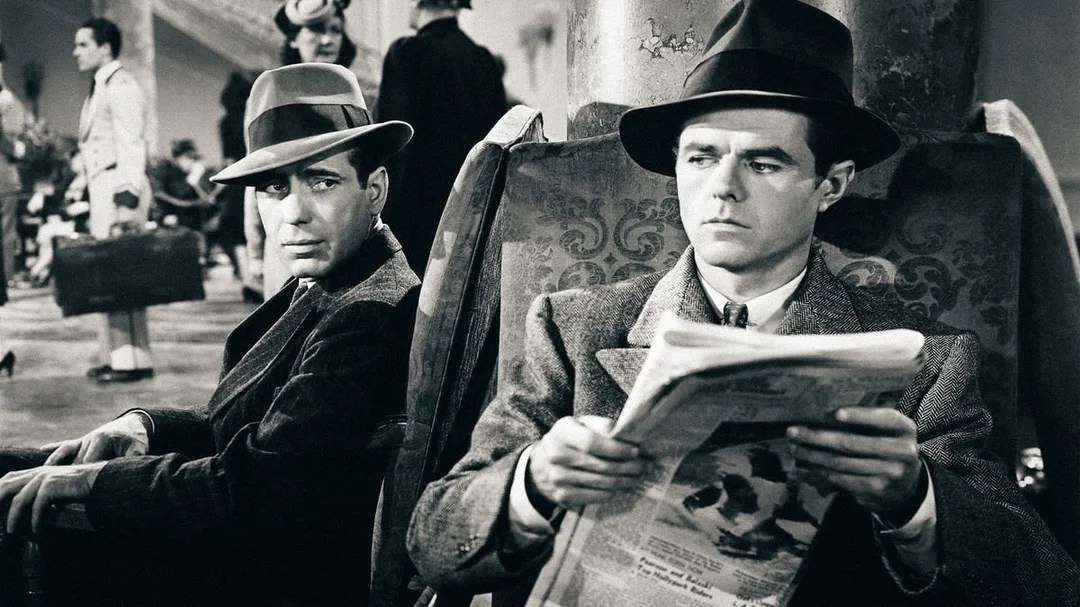
No long would a gunsel like Elisha Cook Jr. in “The Maltese Falcon” have to sit in a public place, pretending to read a newspaper, looking so suspicious that Humphrey Bogart clocks him.

These days, a shady type can simply sit or stand and look at their phone, or pretend to. Think about it: How many times a day do you see someone looking at their phone and assume they’re scrolling social media or watching Korean pop music and never think they’re surveilling someone? Surveilling you?

Two years since my first story published in an anthology, MOTEL

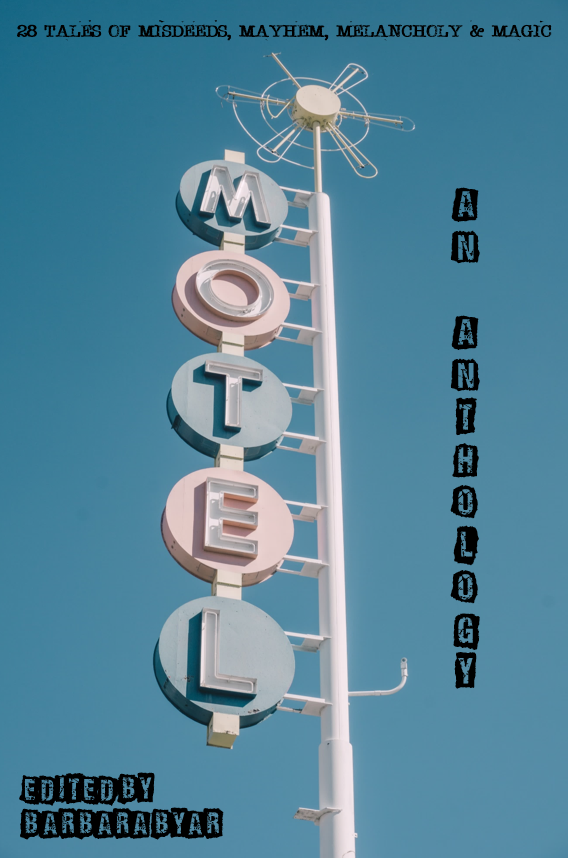
It’s been two years since the first time one of my short stories was published in an anthology. The Cowboy Jamboree Press MOTEL anthology, edited by Barbara Byar, came out in March 2024. I’d had short stories published before, starting in 2023, and of course my non-fiction had been published since 1977 and in true crime books since 2016. But having a short story in an anthology was a very cool development.

I still really like the story, “Independence,” about an unnamed cowboy passing through a small Tennessee town who gets caught up in a conflict between some small business owners and the corrupt sheriff. If you read my upcoming second novel, SEVEN ANGELS, you might realize that town is Seven Angels. I never cite the town by name in “Independence” but the sheriff in the short story is named and he’s the same corrupt sheriff as in SEVEN ANGELS.

It was a kick to have the story published in an anthology and a few followed. It’s always a kick, although I suspect the anthologies you have to purchase have smaller readership than the stories published online. Still a kick, though.

This year, in 2026, I’ll have short stories in three anthologies I know of, including my story “A Fighting Life,” about foul-mouthed kids in 1948 who figure out they can make money by scrapping with neighborhood kids, which is in the just-published-in-paperback FIGHTING WORDS. My story “This Just Doesn’t Seem To Be My Day,” about a kid spending the day with his older brothers in 1970, will appear this fall in DAYDREAM BELIEVER, an anthology of crime stories based on Monkees songs.

And a while back, I had a crime story accepted for an anthology that hasn’t been announced yet.

For me, three stories in anthologies in one year is a lot, so I doubt there will be others. But I’ll submit some stories and we’ll see.

Here’s a link to the paperback of FIGHTING WORDS is you want to read my short story and the work of some really amazing authors: