Yesterday (March 20, 2025) I wrote here about discovering two of my four co-authored true crime books were among those pirated through LibGen for AI training.
(Scroll down to read that entry.)
This morning, a quick update: Yesterday it was said that more than 2 million books, articles and academic papers were pirated. Today Authors Guild, a writers collective, says that number is actually 7.5 million.
Authors Guild (I’m not a member, but I might join) has really stepped up, as did the Atlantic, the magazine that called a lot of attention to the piracy this week and included a search function. It was certainly known that LibGen – which may be working with or at the behest of Meta, those wonderful people behind Facebook and Instagram, in this AI training theft was doing this, but I think this flew under the radar until this week.
A class action lawsuit is in the works, but Authors Guild provided a link to a form that writers can fill out to ask that their work be removed.
As a writer, I find AI an intensely bad thing. Yeah, it’s momentarily distracting and amusing to be scrolling through social media and see what are obviously AI-generated images of a horrible, horrible person licking the feet of an equally horrible person, or even to see some fanboy’s imagining of what a Justice League movie would look like if it were made in the 1960s.
Then you realize that this is AI and valuable natural resources are being used to run servers that create these images. Not to mention that real, actual artists – and in the case of the written word, writers – could be put out of work by this.
I first had some foreboding realizations about the effect AI might have on my work a few months ago when I went looking for one of my pieces for CrimeReads, so I could post a link to it, and realized that Google AI had generated bullet points of my articles. Why would someone need to click through to CrimeReads when they could just read the AI interpretation of what the site’s writers had written?
I was aware that some writers were saying they believed entire books of theirs had been used for AI training.
I was concerned about that because I know a lot of writers. I thought no one would possibly pirate and upload my little true crime books. Who would need that?
Then, on March 20, the Atlantic published a story about the 2-million-plus books, articles and scientific papers that have been added to Library Genesis, or LibGen, which is what Wikipedia calls a “shadow library” of file-shared work, including work that is not available digitally.
One of my writer friends said a couple of her books were there. Another had 15 of her 19 books pirated on LibGen.
The Atlantic offered a real public service that allowed readers to search to see if their work, or the work of someone they know, was uploaded to LibGen for AI training.
Here’s a screen shot of my search results using the link in the Atlantic.
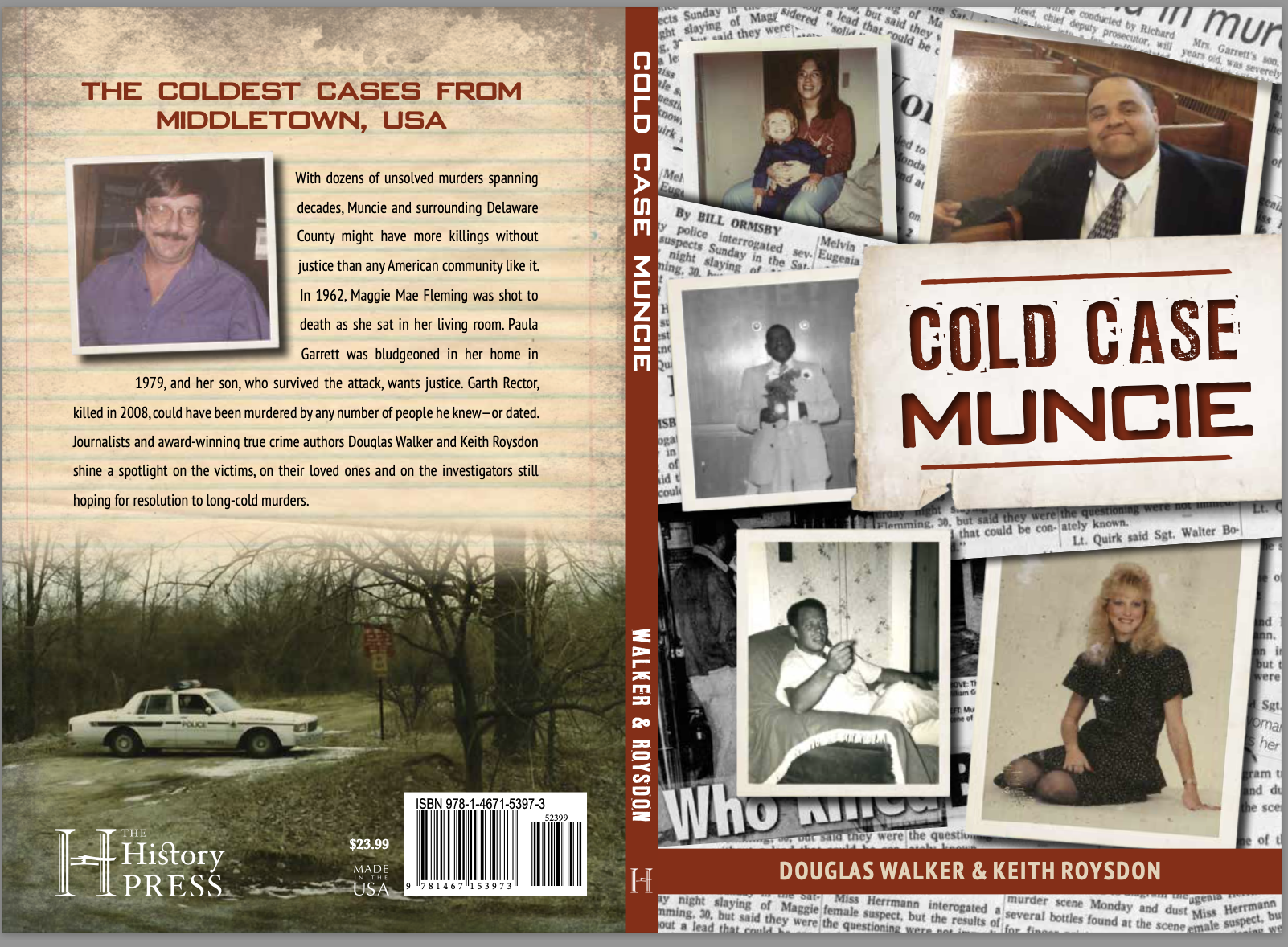
I found two of the four true crime books I co-wrote with Douglas Walker on there, using the Atlantic’s search engine.
I later found what purports to be LibGen’s own search portal and could not find these two books. Had they been taken down in the meantime? Was there some mistake? It seems hard to imagine that the Atlantic got that wrong. Based on that article, I saw dozens of writers, some of whom I know, posted that they had also found their books on the site.
It’s unclear what to think about what’s there and what’s not, but there’s no question that pirated work hurts writers and publishers who might not be able to sell copies of books if people can get them for free. Since shit flows downhill, that trickles down to harm for writers, that’s for sure.
We’re all still figuring this out. It’s been pretty clear for a while that AI-generated art and writing is bad for the planet – servers use a lot of water to cool to create AI – and bad for writers. I suspect it’s also bad for consumers, but then I was never one to snap up pirated books and art and have been pretty skeptical of that inclination.
Brave new world, hell. This seems like a very cowardly ploy.
Hollywood is forever looking for variations on Sherlock Holmes stories, although the “Sherlock” series starring Benedict Cumberbatch and Martin Freeman (a Brit production overseen by Mark Gatiss) is very hard to top. “Elementary” did a good job of modernizing the Arthur Conan Doyle detective and “House” focused the mystery to medical conditions diagnosed by a Sherlockian-level grump doctor.
Now there’s two series, one more directly tied to the Sherlock mythos, that cast Holmesian logic as medical diagnosis.
The more directly Conan Doyle-connected is “Watson,” starring Morris Chestnut in a very appealing turn as John Watson, who is running an elite clinic in the wake of the Reichenbach Falls confrontation between Holmes and his nemesis James Moriarty. Watson suffered a head injury as he tumbled into the water trying to save Holmes. Now he’s trying to recover, make a new life for himself and, as of the second episode, doesn’t realize that Moriarty isn’t dead and means to bring Watson down.
As we know from the Sherlock canon, the Falls were not the end of Holmes, so I’m wondering how long before the detective shows up to assist his best friend?
The cast is good but the show has some of the faults of network shows in that everything is explained too explicitly to ensure audiences who are barely watching the show while scrolling on their phones catch what’s going on.
Even if it is less Holmes-related, “Doc” is the better series for me right now. Molly Parker, from “Deadwood” and “Lost in Space,” plays a doctor who lost her memory of the past eight years after a head injury. (Lot of that going around.)
Now she must navigate a return to a personal life that, for her, is where she left it eight years ago. (Spoilers.) She doesn’t remember that one of her children died, she and her husband divorced, she began a new relationship and her former friend is now an enemy.
Parker is, like Chestnut, just incredibly appealing. I’d watch another couple of seasons of “Lost in Space” featuring her as Maureen Robinson if I could. And what wouldn’t we all give for several more seasons of “Deadwood?” “Doc” might be the best Molly Parker fans will get, and that’s pretty good in its own right.
You’ve seen the cover for my 1984-set YA crime novel THAT OCTOBER by now. Incredible art by Sara McKinley, who can be found on Instagram as @saramckinleyart.
Now here’s Sara’s back cover for the book, and both the front and back have blurbs from authors wonderful enough to read THAT OCTOBER and say a few kind words.
They include Libby Cudmore, Julia Scheeres, Heather Levy and Asha Greyling.
One of the most fun things for a writer to do is “fan cast” characters from their story or novel with actors. Fan-casting is fun because you can pick anybody, living, aged or deceased, who you pictured in your head during the writing. (Readers do this too!)
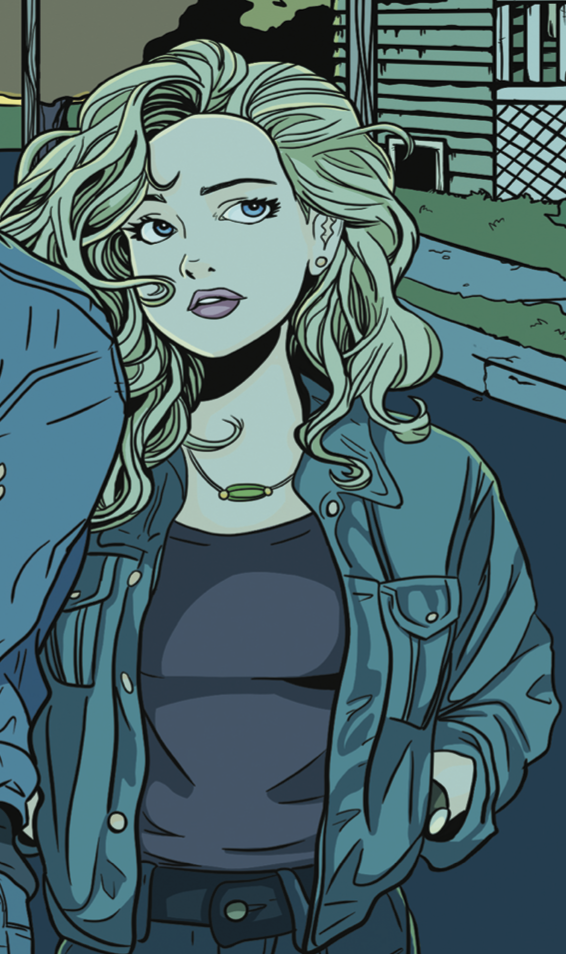
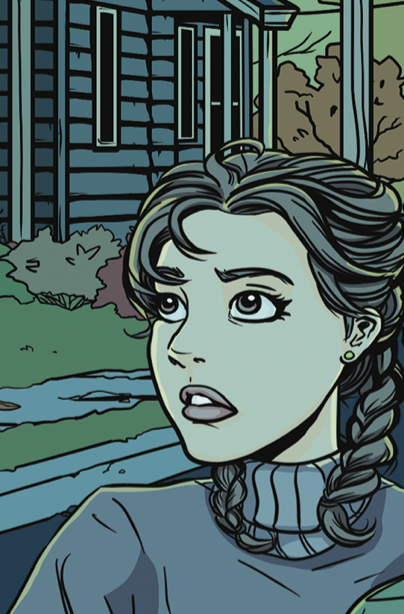
I’m lucky my friend and very talented artist Sara McKinley was able to capture my four lead characters after reading my novel THAT OCTOBER and seeing some photographs I sent her.
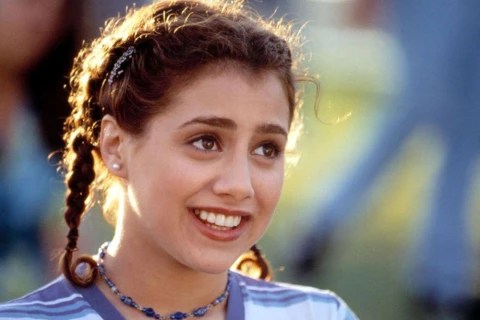
Here’s four of the main characters and the actors who I pictured when i was writing.
From left to right:
Brittany Murphy as Toni, kind-hearted and stalwart friend who arranges for a psychic reading by her mom to help solve the murder mystery at the heart of the book.
Anjelika Washington as Jackie, brave and smart, she finds out that there are secrets that can shatter her family.
Younger Jared Padalecki as Michael, Jackie’s brother who’s prone to charging at a problem – or an enemy.
Brec Bassinger as Sammi, resourceful and popular, the girl everyone falls in love with – except the one person she loves.
My novel THAT OCTOBER is a 1984-set YA crime book about high school friends who band together to investigate when a friend is killed and another is taken. They find that the adults in their Indiana town seem strangely slow to act to solve the mystery and bring their friend home.
THAT OCTOBER is publishing soon. More fan-casting to come!
It’s a work in progress and will definitely be in progress for a while, but the point is to let people know about my new 1984-set YA crime novel THAT OCTOBER and my other writing.
Don’t worry, there’ll still be pop culture stuff – hence the vintage “Tonight Show with Johnny Carson” slide above. The Carson show used these and many other designs as bumpers going into and out of commercials back in the day.
And it’s appropriate for right now anyway, when there’s more to come for this site.
My friends and I were home video and videocassette fiends. We all had VCRs – my best one was a deluxe stereo model that cost $800 at one-time Indiana appliance dealer HH Gregg – and the highlight of many evening was watching videos.
Now, I taped a lot of stuff over-the-air. I taped music videos, not only off MTV but also NBC’s Friday Night Videos, USA’s Night Flight but especially the all-night Friday and Saturday night music video blocks on TBS. Those were the best, in my opinion, because TBS just aired music videos in those overnight shows. Lots of them and no extraneously stuff.
For many years after, I had boxes of videocassettes of music videos. And yeah, I watched them, believe it or not. Many videos of the era were silly but quite a few were actually pretty good visualizations.
I recorded a number of TV shows, like “Miami Vice” every week. But probably the oddest video library I accumulated were uncut episodes of David Letterman’s old NBC “Late Night” show.
Without commercials. Yes, I stayed up late every night and watched the show, using my remote to cut commercials.
Did I go back and watch those videocassettes? Um, no. No I did not.
I don’t have any of my videocassettes anymore, or at least not more than a handful that had some actual personal video recordings. Most of my tapes went into the dumpster years ago.
Would I watch them if I still had them? No, probably not. The picture and sound quality would seem awful now.
But there’s something intriguing to think about all those hours of personally curated and edited TV.
If you were alive and had a cable TV connection in the early 1980s, you were probably watching MTV.
If you’re alive right now, in 2025, and have a cable TV connection, you’re probably not watching MTV Classic.
Let me explain.
When we moved a couple of years ago, we got a new cable TV connection – same provider, different channel choices – and I discovered an incredible time-waster, MTV Classic.
Even though you’re not watching, you can probably guess what MTV Classic shows: music videos from the 1980s and 1990s. The videos that aired on MTV and VH1 back in the day.
Some of the videos are truly classics. Some highlight just how awful a lot of the videos – which were sometimes treated as art by particular artists but were of course just promotional spots provided by record companies – were. Looking at them now, there are some fun examples that evoke nostalgia and some that exemplify how gratuitous and overblown a lot of music videos were.
MTV Classic shows one-hour blocks of 80s videos, heavy metal videos and 90s videos, etc. Just like the old channel, there’s no telling what will come up in four minutes.
There are no VJs, so no chance to discover the next JJ Jackson or Martha Quinn.
The funniest thing I learned while researching MTV Classic is that almost nobody is watching it. In TV audience terms, it’s really almost nobody.
Since the channel was launched in 1998 as VH1 Smooth – no, really – audience numbers have fallen off a cliff. The channel is available to 39 million cable households, apparently, but only about 14,000 viewers are tuning in at any moment. It is the least-watched English-language channel available to most cable subscribers.
I think some personality – or personalities – might help a little, but one thing MTV Classic does that could bring a few viewers its way is the tributes it airs to performers who have died. When crooner Tony Bennett died on July 21, 2023, MTV Classic ran a weekend of Bennett songs, including but not limited to his collaborations with Lady Gaga.
I’m guessing most people didn’t know that – if they even new MTV Classic was on their cable lineup.
For decades – heck, centuries – nostalgia has been a strong force in society. When I was a kid in the 1960s and 1970s, I loved old Universal horror films and the Marx Brothers. In the 1990s or 2000s, one of my barely-out-of-college fellow reporters surprised me once by mentioning James Dean. When I told her I was surprised she knew who the Hoosier movie icon was, the told me she’d had posters of Dean in her room at college.
So nostalgia has always been with us. Presently, look no further than all the nostalgia channels like MeTV that offer old TV shows, or modern-day series set in the past. We’re currently watching and enjoying “Call the Midwife” on Netflix, a series about, well, midwives in 1950s London (at least early on; the show moves forward in time in subsequent seasons).
Everything from “Happy Days” – which capitalized on 1950s nostalgia in the 1970s – to the History Channel – when it was less about knife-forging competitions and more about history documentaries – appeal to those of us who want to visit the past.
Make no mistake: The past, even the recent past, was not a good time for women, queer people and people of color. (Those times are hardly better now.) I always roll my eyes when people today long for “a simpler time” which usually means a time when people who looked like them were just fine and everybody else was getting the short end of the stick or worse.
So even while I’m enjoying the occasional retreat into the pop culture of the past as well as pop culture that is set in the past, before the Internet and cell phones and various threats to our way of life, I feel guilty about it.
Shouldn’t I be alert and tuned in to all the threats and transgressions we face right now? Is it advisable to dwell in the past when confronted with an uncertain future?
I bet you’re expecting me to say that it’s fine to take the occasional foray into the past for nostalgia’s sake. But I’m honestly conflicted about doing this. Yes, I know our problems will be waiting for us when we return from the depths of nostalgia, so we might as well take a breather once in a while.
But I honestly want to know: Is nostalgia the opiate of the masses, as was once said about religion? Is is deadly? Or is it a welcome relief from the walking feeling of dread of today?