It will surprise no one to know that the original “Star Wars” movies were formative experiences for me. From the original in 1977 to “The Empire Strikes Back” in 1980 to “Return of the Jedi” in 1983, the films – and more to the point at the moment – seeing them in theaters were a huge part of my life as a movie and science fiction fan as a teenager and young adult.
A couple of years ago, Stephen Danley, creator of the webpage Star Wars at the Movies, interviewed me for his podcast and page.
We talked about the experience of going to see the originals first at my neighborhood theater in Muncie, Indiana, and later at the Eastwood Theater in Indianapolis with a group of friends.
Stephen’s entire podcast and page are fun, but here’s a link to the podcast. I come in at about the 24-minute mark, if I’m remembering correctly. Here’s the link, if this works:
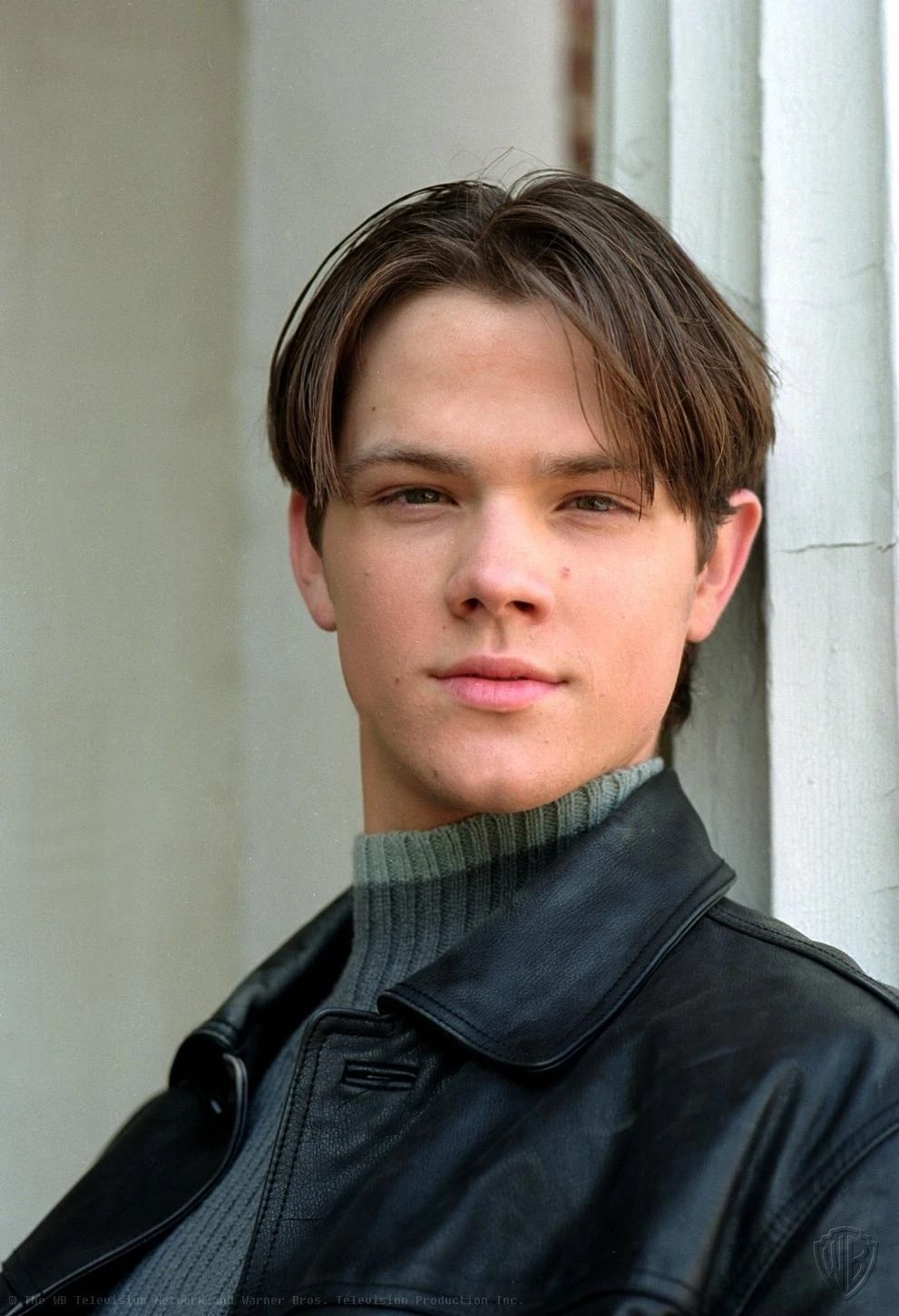
(The photo above is me from a few years later, not seeing a “Star Wars” movie and not even really seeing “A Nightmare on Elm Street Part II.” The newspaper took it as a publicity shot. I was the newspaper’s movie reviewer from 1978 to 1990.)
Way back in the dark ages, before the Internet, I wrote about TV – we’re talking about the 1980s, so even pay-cable, as they called it then, was relatively new – and my favorite time of year to write about TV was the run-up to Halloween.
I’d been a dedicated watcher of Halloween-oriented TV in my childhood, watching late-night horror host Sammy Terry and, of course, the Charlie Brown “Great Pumpkin” special.
So by the time I was an “adult” and getting paid to write about TV for my local newspaper, I would devote one of my weekly columns in October to Halloween specials and movies we could look forward to seeing on the tube, Because this was before the Internet, I mostly relied on press releases sent via MAIL in PRINT from TV networks and Indianapolis TV stations.
So I’d list a Halloween week’s worth of TV. In October 1984, for example, I noted that the 1979 remake of “Invasion of the Body Snatchers” would air on Cinemax on October 31, followed by John Carpenter’s “Halloween,” “Alligator” and George Romero’s “Creepshow.”
I noted that Elvira, Mistress of the Dark, would host a four-hour block on MTV. I watched this a while back for a book I was writing, set in October 1984, and found it a very fun experience that included Romero’s “Night of the Living Dead.”
Now we have all the info we want, all the time, about what’s coming up on great cable channels like TCM – this October its star of the month is Bela Lugosi – and streaming services.
I’ve been catching a few fun old horror films and specials. What have I watched so far this month? I enjoyed rewatching the Tom Cruise “Mummy” movie from 2017 that was supposed to kick off “a new world of gods and monsters” for a Universal “Dark Universe” that would see revivals of all the classic films from the studio. We know how badly that went.
I watched “Halloween with the New Addams Family,” a 1977 special that was really misnamed because most of the cast of the 1960s series returned for this TV movie sequel.
I’m enjoying the Creepy Cinema series on TCM that kicked off with “Sudden Fear,” a little-seen 1952 thriller starring Joan Crawford and Jack Palance.
One of the most enjoyable watches so far was “Spine Tingler: The William Castle Story,” a documentary from 2007 about the shock film director/producer who rivaled Alfred Hitchcock for the ingenuity of his films – and especially the gimmicks used to promote them, including “The Tingler.” I highly recommend this doc if you’ve never seen it. I found it for free on streaming.
And of course I’m watching as “Svengoolie” counts down to Halloween with double-features every Saturday night.
I’m almost certain that before Halloween I’ll rewatch that Charlie Brown special. It wouldn’t be Halloween without seeing t.
I’m sure nobody else has used that “Attention Kmart shoppers” joke lately, huh?
Yes, news broke in the past couple of days that the last full-fledged Kmart store, on Long Island, New York, will close in October. That’s not surprising. The retailer has been on a steady path to oblivion since the mid-2000s, when the then-owner of both Kmart and Sears started stripping off parts and selling them. It was only a matter of time. Shopping trends and tastes have changed and mightier retailers than Kmart – at least mightier in recent decades – have passed away.
Trivia tidbit: 1962 was the year that Kmart – the discount version of longtime retailer S.S. Kresge – Target and Walmart opened their doors.
I come to praise Kmart, not to bury it. Well, I’m not sure I’ll be praising Kmart, but I will cite a couple of nostalgic feelings for it.
I grew up two miles out in the country from a couple of shopping centers, one of which included a Kmart. The stores – which also included W.T. Grant, a dime store when such things still existed – were the center of our shopping existence. Kmart was where we got a lot of our clothes and toys.
I was writing about business for the newspaper in the 2000s, when my town’s two Kmarts closed. For all their faults, they filled a void for local neighborhood retail that still hasn’t been filled.
I will always think of how my mom bought a vacuum cleaner from Kmart for my wife and me. It wasn’t a hint to clean our house! It was a much-needed tool.
A lot of people have waxed rhapsodically about Kmart’s sub sandwiches, its snack bar and most especially its Blue Light Specials, periodic moments during the store’s operating hours when a sales associate would wheel a blue light up to a particular area – next to a display of shirts, or candy, or hardware – and the announcement would be made of a limited time only special price. “Attention Kmart shoppers…”
Kmart was a good place for people to shop, especially poor people.
When I heard this unsurprising Kmart news, the first thing I thought of was the Calvin and Hobbes strip reproduced at the top of this post.
It was sometime in the early 1980s – after 40 years, I don’t remember exactly when – and my friends and I learned that our local cable company was going to stop carrying one Chicago TV station in favor of another.
Now, we were old horror movie and cable TV fanatics so we were doubly anguished to learn this meant we would lose our weekly broadcasts of “Svengoolie,” the long-running Chicago horror movie program hosted by the ghoul of the same name, played by Rich Koz. Koz had taken over from the original “Svengoolie,” Jerry Bishop, a few years before. Koz’ version of the amiable character – a creature of some kind who hosted old horror flicks from his dungeon – and the show were highlights of our week.
The three (sometimes four or more) of us had the brainstorm of trying to express our appreciation of Sven and his old movies and silly puns by sending him a telegram. (As if this anecdote could be any more pre-internet.)
We sent an email that referenced a joke from another current favorite, Lola Heatherton, a show-biz creature played by Catherine O’Hara on the sketch comedy show “SCTV.”
In our telegram – cue 1914 music – we told Sven how much we would miss him and, quoting Lola, told him, “We want to bear all your children!” It was a phrase Lola would gush to adoring audiences on “SCTV.”
Now Svengoolie has always read viewer letters on his show. He still does to this day.
And, unbelievably, Sven read our telegram, citing us by name, on the very last show of his we would be able to see before our cable ditched his broadcast channel.
Sven did seem a little confused by our out-of-the-blue Lola Heatherton quote. And who could blame him? He even made some comment about not understanding what the heck these people were saying.
Now of course we can watch “Svengoolie” every Saturday night on the national nostalgia channel MeTV. And Koz, forty years after our telegram and 30 years after he returned to the role after a brief break, is still doing it. He’s now accompanied by helpers like Gwengoolie, played by Sarah “Pinup” Palmer.
One thing that hasn’t changed is that Sven and his show still let us wallow in nostalgia – and puns – and in the best way possible: with knowledgeable and fond presentations of classic films. I thought about this recently when I was watching his presentation of “Dracula,” the 1931 original with Bela Lugosi. Sure, you could watch the Universal classic on streaming or disc. But this feels right.
Nostalgia can be a tricky thing. We can’t wallow in it. We have to live for today. Svengoolie gives us the perfect framing for nostalgia.
In most respects, we live in fraught times. Some comfort can be found in two good Batman and Superman animated shows airing new episodes.
Yeah, that sounds like cold comfort for anyone worried about the state of the world.
But we take comfort where we can get it these days.
I’ve previously written here about “My Adventures with Superman,” a mostly lighthearted series that’s part of Cartoon Network’s Adult Swim block. The series is good, fun stuff, probably the best Superman-focused animated series since “Superman: The Animated Series” in 1995. (“Krypto the Super Dog” was good fun too, and hewed to Superman canon more than it could have been expected to.) The Superman animated series, part of the wave of animated DC heroes that included the truly great “Batman: The Animated Series,” “Justice League” and “Justice League Unlimited,” featured the work of Bruce Timm, Eric Radomski and Paul Dini.
The 1995 Superman series, like all of the work of those creators and other animation geniuses like writer Dwayne McDuffie (“JLU” and others), captured the comic book spirit of Superman: the forthright hero who deals with uncertainty at times but always does the right thing. “My Adventures with Superman,” pitched to a slightly younger audience than some of those earlier series, has the absolute correct tone.
And as different as Batman and Superman are, so are “My Adventures with Superman” and “Batman: Caped Crusader.”
The later series, ten episodes of which are available on Prime Video, debuting just a few days ago, is the latest in a long, long line of Batman adaptations that include live action and animation.
It’s no surprise that “Batman: Caped Crusader” is so good when you consider the show’s creators and executive producers: long-standing animation wiz Bruce Timm, producer J.J. Abrams, “The Batman” film director Matt Reeves and writer Ed Brubaker.
The series is an incredibly effective blend of Batman mythos and characters into a genre that’s always been a good home for the vigilante: noir.
In “Batman: Caped Crusader,” Batman operates in a shadowy world that’s clearly the 1940s, even more so than the stylized “Batman: The Animated Series.” There might be an anachronism or two, but the look and feel of the series is pure mid-century noir.
Batman – and alter ego Bruce Wayne – moves through a world of gangsters, cops both crooked and straight, crusading attorneys and prosecutors and increasingly, as the season progresses, more dangerous and outlandish criminals.
In the 10 episodes of the season, we see the deepest, most unsettling secrets of not only Gotham’s criminal underworld but of its upstanding citizens. We’re introduced to a number of classic Batman villains, but none more impressive than Harley Quinn, who isn’t played as a frenetic joker (pun intended) but as a soft-spoken menace.
The vocal cast is led by Hamish Linklater, who at times seems to be channeling the voice of the late, great Kevin Conroy but always makes the dual roles of Batman and Bruce Wayne his own. The supporting cast, especially Jamie Chung as Harley, is perfect.
“My Adventures with Superman” is lighthearted comic book fare and does a great job at hitting that tone. “Batman: Caped Crusader” is dark and menacing and is the best Batman adaptation in years.
Like a bunch of other people, I’m gonna mark the anniversary of MTV’s debut on this date, Aug. 1 1981, with a little bit of nostalgia.
It’s okay, I’ll be brief and get this over with as painlessly as possible.
One thing I won’t do here is bemoan the lack of music on modern-day MTV. I haven’t watched the cable channel in years. I do watch the MTV Classic channel sometimes, mostly for the 1980s videos.
I just wanted to say that, if you’re not old enough to remember, MTV was a cultural touchstone for most of us around a certain age in 1981. I was a child in the 1960s and grew to adulthood in the 1970s, but the 1980s was probably the most important decade of my life up to that point.
I was reviewing movies and a bunch of entertainment for my local newspaper from 1978 to 1990, so I feel tremendous nostalgia for the 1980s. I started full-time at the paper in the 1980s. At the very end of the 1980s – okay, early 1990 – I met my wife. In 1989, I started covering politics and government and sometimes crime, the turning point in my newspaper career.
It sounds cheesy to say it, but MTV and the music of the 1980s was the heartbeat of my life at the time. I didn’t discover it as a teenager, like most people, because it didn’t exist until I was in college. But it shaped a lot of my tastes and entertainment sensibilities.
My friends and I watched MTV and its competitors and cohorts – Friday Night Videos, music videos all night weekends on TBS – religiously. We hauled ass to get to a screen to watch Michael Jackson’s “Thriller” video debut on MTV on December 2, 1983.
We were glued to our TVs on Halloween 1984 to watch Elvira, Mistress of the Dark, guest-host on MTV, playing odd and weird videos. I refer to that night in one of my novels.
MTV was notoriously slow to play Black artists. It quickly became a delivery system for advertising. Some of the most pretentious music videos of the era are hard to watch now.
But MTV was a huge cultural force not long after August 1, 1981.
In many, many ways, that was a vastly simpler time. But many things are better now. Nostalgia can be toxic, especially when people pine for “the good old days” that were decidedly not good for so many people.
But nostalgia is okay once in a while. We can enjoy looking back and remember to look ahead, too.
I’m not gonna do some revisionist thing and try to tell anybody that “The Six Million Dollar Man” and “The Bionic Woman” were ahead of their time and were ground-breaking science fiction TV series.
But I am here to say that a recent rewatch of some pivotal episodes of the former – the latter isn’t on a streaming service I subscribe to – left me impressed about how grown-up the shows were.
Yeah, no doubt, the shows were for a family audience, including kids, and episodes had that slow-motion running effect that probably every kid in the world imitated at some point.
So there’s no question what the aim of the shows was.
But rewatching some recently, I was struck by how realistic the shows were, in two big ways:
The bionic people were damn bitter, especially early on, at what the government did to them in rebuilding them.
And the government lackeys, including everybody’s pal Oscar Goldman, were manipulative MFers.
You know the drill on these shows, and probably even watched them first-run or in eternal reruns. I was in my mid-teens when the series began, and while I rolled my eyes at the shows, I appreciated there was some small amount of science-fiction TV that wasn’t reruns of “Star Trek.”
The original series ran for more than a hundred episodes over five seasons beginning in 1973. The “Bionic Woman” was introduced a season or two in and got her own three-season spinoff. Anyway, astronaut and colonel Steve Austin loses both legs, an arm and an eye in the crash of a test plane. Later, Jaime Sommers, Steve’s longtime friend and sometime girlfriend, loses both legs, an arm and an ear in a parachute jump.
Adventures ensue, and the series – preceded by TV movies – really leaned heavily into a James Bond- or “Mission: Impossible” mood early on. Before too long, the mothership series took on a much more sci-fi vibe and featured aliens and murderous satellites returned to Earth and, of course, Bigfoot.
What struck me was how pissed Steve Austin was that Goldman and Dr. Rudy Wells took it upon themselves to replace his assorted limbs and eye with a pretty definite expectation that he would be pressed into spy service. In fact, the original pilot does not feature Goldman but has a magnificently creepy government operative played by Darren McGavin.
At some point, McGavin even wonders out loud about keeping Austin on ice between missions, but his doctor (played in the pilot by Martin Balsam) says he won’t let that happen.
They were totally gonna Winter Soldier the guy.
That’s dark, but Austin’s depression and frustration at being turned into something not quite human is even darker. It’s not a season- or series-long vibe, like it would be today, but things are not all sunshine and lollipops after the first couple of episodes.
Don’t worry, there’s plenty of silly stuff, like bending steel pipes and jumping over walls, to come in the series. And there’s star Lee Majors’ awesome track suits, leisure suits and – late in the series – porn star mustache.
And Lindsay Wagner is much more adorable and smart and funny than I remembered.
There are worse ways to fritter away your vintage TV-viewing time than watching these bionic people.
It’s a weird thing, going home for the first time in 30 years.
I should say that I don’t really consider the house where I grew up, near Muncie, Indiana, home anymore. It hasn’t been for a long time. I’ve lived other places in the past 40 years and I consider them the more recent and relevant “home.”
So getting to see and walk through, for the first time in 30 years, the farmhouse where I grew up from about three years old didn’t really feel like I was home.
Nevertheless, I was filled with thoughts and memories I’m still trying to process.
My parents moved from the city to the farm sometime in the early 1960s. My dad, who had worked in a factory since about 1946, wanted to be a farmer in his spare time. My two older brothers were in high school and middle school and I don’t think I ever heard what they thought of moving out of the city and to the very rural area, with a small school system, at their age. I was a couple of years or more from starting school, and I kept in contact with my closest friend, a cousin about my age, so I didn’t feel too uprooted.
Besides, the farm was a great place to grow up. The house itself, dating to the 1890s, had been home to farmhands who worked for some large-scale farmers in the area. The house was very plain and no-frills: brick on the outside, plaster walls in the four bedrooms, kitchen and living room and twelve-foot ceilings that seemed very high to a three-year-old. One of my earliest memories is standing on the steps of a ladder, with my cousin, in that living room.
The outbuildings – a huge barn assembled with wooden pegs instead of nails and a grainery building – were wonderful places to play. My friends and I played out a lot of scenarios inspired by “Batman” and the spy shows of the day like “The Man from UNCLE.” If there was a spot we could jump from or hang from on a rope, we found it. Now that would seem nightmarish to the parents of young kids.
I wrote for CrimeReads about how the farmhouse – which was haunted, incidentally – helped shape my love for the scary and spooky in movies, TV and books.
By the time my parents moved to a smaller space in the early 1990s, I had lived in apartments and houses and made my own home with my wife and, a few years later, our son. My last few times at the farmhouse was to pack up my stuff – books, magazines, model kits – and take it along to my then-current home or trash it.
I lived in Muncie for most of the thirty years after my parents sold the place and I always wanted to go back and see if or how the farmhouse had changed. I didn’t until just recently, after I’d moved to Tennessee but was back in Muncie to see family still there and to talk about my books. My parents passed away many years ago.
My wife and I decided to stop at the farmhouse one night in June when we were in town. We pulled into the driveway and I was struck by how much had changed outside: more of my dad’s original 20 acres had been sold over the last 30 years, making for many more houses close by. The number of trees around the house had greatly increased and the wraparound porch had been finished.
The very nice current owner of the house came out and I noted that my dad had built the garage from the bricks of a downtown Muncie movie theater.
The woman couldn’t have been more nice, letting us in to walk around the place and gawk at what they and the previous owners had done: The kitchen had been expanded and moved, my parents’ bedroom downstairs had changed, the three bedrooms upstairs that had been for my brothers and I were somewhat different.
One of the first things I looked for was the toilet off the kitchen. For most of my life, you used that toilet at your own peril, as a foot or so away steep, vertigo-inducing wooden stairs descended into the basement, which was mostly finished in concrete but still had the aura of a horror movie set. The toilet stairs to the basement had been sealed off and it was a nice half-bathroom now rather that a Doorway to Hell with a toilet at the top.
I’m glad I went back and was happy to meet the owner, whose family has lived there for several years. The previous owners and the current owners have made their mark on the place so much that the inside is almost unrecognizable and you could drive past and not recognize the place from the 1970s aerial photo included here.
It was an odd feeling, a little satisfying and yet mostly unsatisfying, to see the place again. Unsatisfying because so much had changed. It wasn’t frozen in time. Really, it shouldn’t have been, and I’m glad it’s been home to others over the decades.
It’s not my home anymore. Yet it is, weirdly, still my home.
Like Batman or Spider-Man, Superman is a character familiar enough to get audiences to tune in but with a past that allows some exploration and surprising variations.
I’ve enjoyed the episodes I’ve seen so far of “My Adventures with Superman,” a fun series, squarely aimed at youngish viewers and longtime fans, airing on Cartoon Network’s Adult Swim block.
The show can’t quite measure up to WB Animation’s classic Superman tales of going on 30 years ago – and I’m not sure how it’s even possible that that much time has passed – “Superman the Animated Series,” “Justice League” and “Justice League Unlimited.”
I loved those series, have them all on DVD – remember those? – and my fondest memories are introducing those to my son when he was old enough to not be bothered by the animated violence. (His first action animation experience, along with “The Incredibles.”)
So while I’ll always have a fond spot for those series, “My Adventures with Superman” is really cute. And I don’t mean that term to serve as a disservice, or “sweet” either. But those are the first two thoughts that come to mind.
If you haven’t checked it out yet, “My Adventures with Superman” starts out as Clark Kent, Lois Lane and Jimmy Olsen begin their journalism careers as interns at the Daily Planet. It’s enjoyable that Clark is the most uncertain of the three, much like the character in the Christopher Reeve live-action film.
Superman is a character that’s open for varying interpretations, from Reeve’s quietly confident hero but bumbling Clark to the racket-busting Clark and Superman of the 1950s “The Adventures of Superman” to the kind and admirable character of the animated series of the 1990s and 2000s.
In other words, Superman is everybody’s Superman, and as long as an animated series or live-action film gets right his innate goodness and his unflagging desire to do the right thing, that’s a good Superman tale in my book.
In late 1968, I was buying Marvel comics after getting an introduction to them from a neighbor.
The powerful images and what-seemed-to-me powerful storytelling made an impact on me, Not the least reason was that I loved – and still do – team stories. Avengers and Fantastic Four were my favorite comics.
So Avengers 57 (the final page of which can be seen above) wowed me.
Roy Thomas’ writing and John Buscema’s art were breathtaking in the next issue.
What we couldn’t know at the time was that the comics would influence, decades later, big-screen Marvel adaptions. The world that Captain America, Iron Man, Vision, Black Panther and even Spider-Man lived in was a shared one. Cap and Panther were friends. The Avengers clashed sometime, but they were Earth’s Mightiest Heroes.
The team-ups had already been strong, of course, but only grew stronger after this.