Yesterday, I was watching the new documentary “Vincent Price: What Keeps Us Alive,” which I had DVRd from TCM’s premiere of the program Friday evening, and found it quite good. I’ve always liked Price and if you search for his name here on this site you’ll find posts about when I met him at an airport in the early 1980s and when I met his kind and generous daughter, Victoria Price, this summer here in Knoxville.
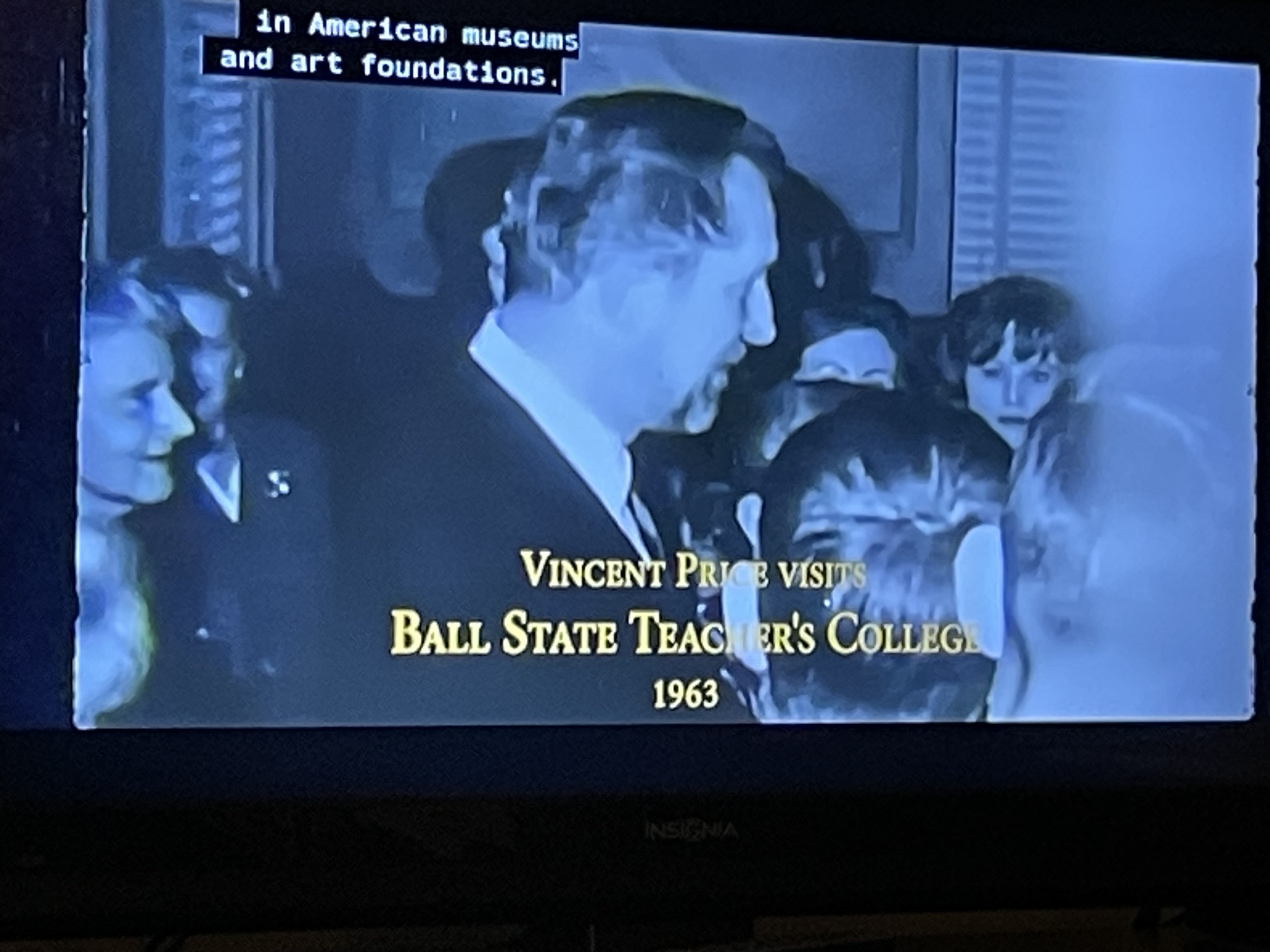
But as I was watching the documentary, I was startled to see some B-roll footage of Price talking to a large group of people and the caption read, “Vincent Price visits Ball State Teachers College 1963.”
If I’d ever known Price had visited my hometown of Muncie, Indiana, I’d forgotten that fact.
I was a pre-schooler at the time of his visit and was a few years away from becoming the huge fan of horror movies that I would become.
For his part, Price was in another of his career high points. He’d been acting on stage and screen since the 1930s and co-starred in “Laura” in 1944. He’d become, along with Boris Karloff, the king of American horror films in the mid-century, starring in a string of classic films like “The Tingler” and “House on Haunted Hill” in 1959.
His film roles in the 1960s brought him another kind of fame as he played the lead in a string of Edgar Allan Poe adaptations for director/producer Roger Corman and American International Pictures. Right before his Muncie visit the latest of those films, “The Raven” had been released and more films now regarded as classics were to come.
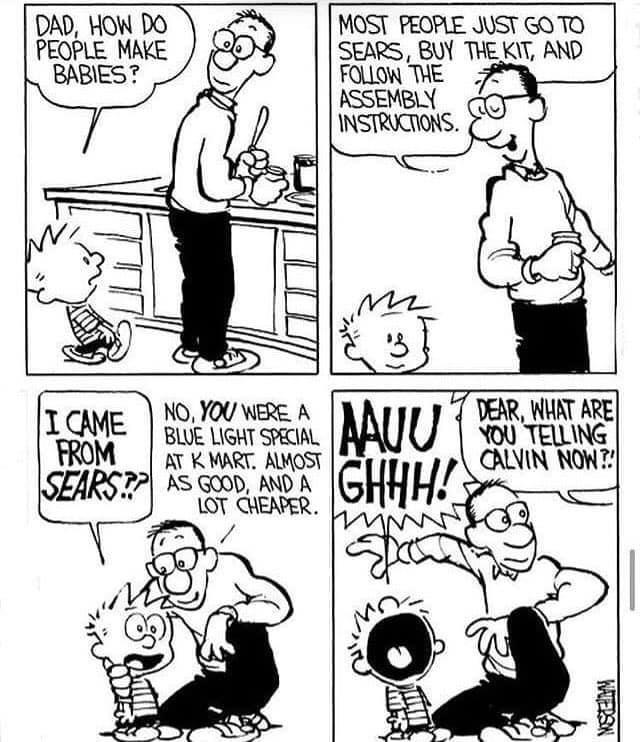
Price was in the midst of something else in 1963. He was promoting the democratization of art as part of a promotion by huge retailer Sears to encourage people to buy prints of works of art by great artists. As part of that promotion, Price appeared in hundreds of cities and towns, showcasing the art prints available at Sears and giving talks at local colleges and universities.
Among those was Ball State Teachers College in Muncie, where the footage used in the documentary was captured. The school was renamed Ball State University in 1965.
I was curious how the local newspapers covered Price’s appearance. It wasn’t that long before the aging newspaper editors, out of touch with popular culture, would question the need to put the 1980 assassination of John Lennon, for example, on page one.
But Price had the right mixture of old Hollywood and art appreciation to convince the editors to cover his March 6, 1963 appearance.
Both the Muncie Star and the Muncie Evening Press ran announcements of his appearance in advance and covered him at receptions with the city’s leading industrialists and philanthropists like various Ball and Kitselman family members.
I’m most proud of coverage by Roy Bigger of the Muncie Evening Press, who wrote a page one story for March 7 about Price’s talk to an “overflow audience” at a Ball State convocation in which he talked about art and the public’s right to know, understand, appreciate and own art. That’s where Sears’ art collection offerings came in, of course. He talked about writers like Tennessee Williams and artists like James Whistler.
About 500 people had to be turned away from the convocation in Ball State’s Assembly Hall, Bigger reported.
So cool to discover, even 60 years after the fact, the meeting of my hometown and one of my favorite film actors.