Once you’ve had Facebook, you’ll never go back

In watching the reaction to the new Facebook today — reaction that ranged from irritation to outrage — I was reminded of David Letterman’s straight-faced observation about pop star Madonna back in the 1980s. “I think she wants to shock us,” Letterman said, tongue in cheek.

Earlier today I compared FB to a significant other who flirts or picks a fight just to make sure we’re still paying attention and not taking them for granted.

Sure, there’s some legitimate reason for upgrading and offering your users the latest and best features. But I think FB wants to remind its bazillion users how much it means to us.

Even if that means pissing us off.

As someone who has been in the communications business since I was a teenager, I can testify to the feeling engendered by reader reaction. No matter if it’s a complaint about a controversial story or photo or, even worse, the removal of a beloved comic strip, the response is appreciated. It means people are paying attention, that you’re still part of their everyday lives.

Face it, most of us might never take up Twitter (although you should, because it’s really fun) or Google+ (yawn). But for those bazillion of us who check in to FB every day — even if our devotion is far more casual than “checking in” via Foursquare or more low key than posting our latest rant about an irritating co-worker or prodigious child — we’ll keep checking in, no matter how many times we threaten to quit FB.

And no silly revamping of the way our pages look will keep us away.

Now, let me tell you what I don’t like about the new Facebook …

iPhoneography: Halloween at the dollar store

It’s a very special installment of iPhone photos of Halloween stuff. This time: Halloween stuff at the dollar store!

Dollar stores are an increasingly successful part of the country’s retail industry. Customers have even forsaken discount stores like Walmart to patronize dollar stores.

Of course, dollar stores have their limitations, especially when it comes to Halloween merchandise. You won’t find a large selection of masks and costumes there. You will find some basic masks, a good variety of creepy decor and bags of sugary treats.

Here’s a quick look at the best of the dollar store’s eerie merchandise.

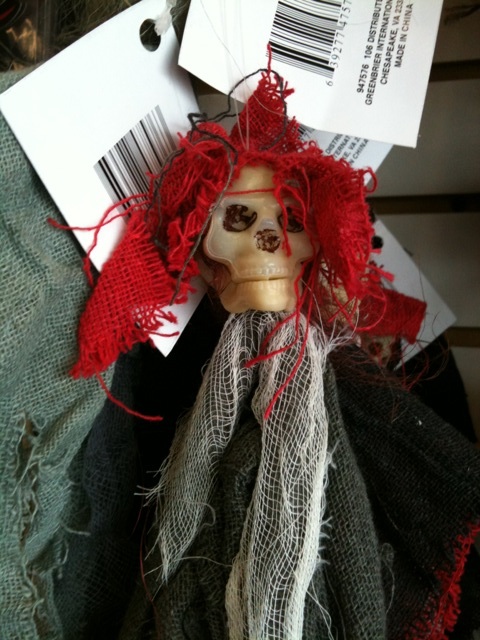
These skeletons wearing shrouds are actually pretty cool. They’re small, of course, but detailed and effective.

And here’s the Carrot Top version:

Dollar stores might not have elaborate costumes, but they’ve got a heck of a variety of cloth to compliment a costume.

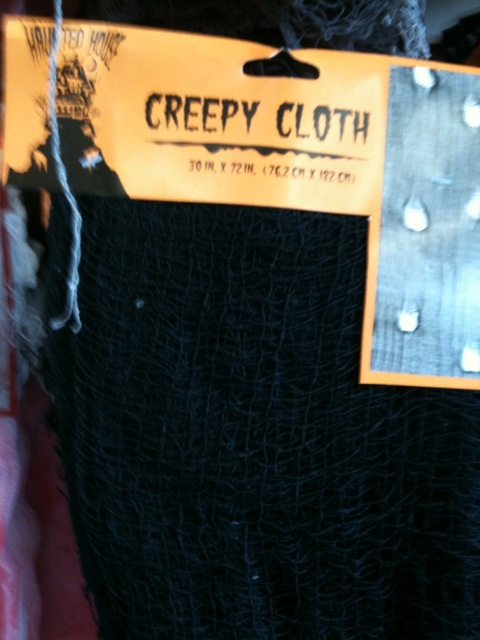
There’s creepy cloth:

Not sure exactly what makes it creepy.

And bloody cloth, which is self-explanatory and just as creepy. Maybe creepier.

My favorite part of this is imagining the offshore factory where this is made. “Yeah, Marge, they switched me from the creepy cloth to the bloody cloth production line today.”

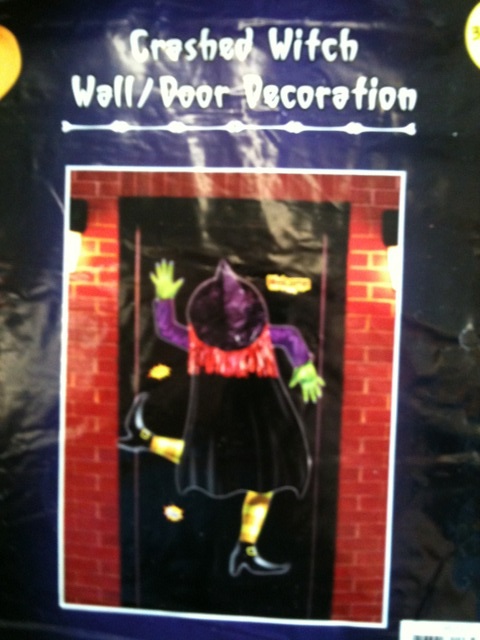
Here’s the 787th invention that I wish I had come up with. I hope the person who invented the squashed witch is getting some royalties.

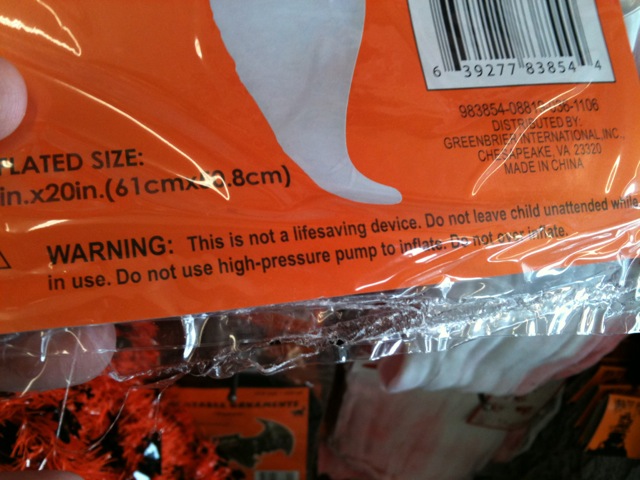
And thank goodness for warnings:

“Oh my gosh, I was about to give this blow-up plastic ghost to Timmy to use in the pool as a floatation device. Good thing I saw this warning.”

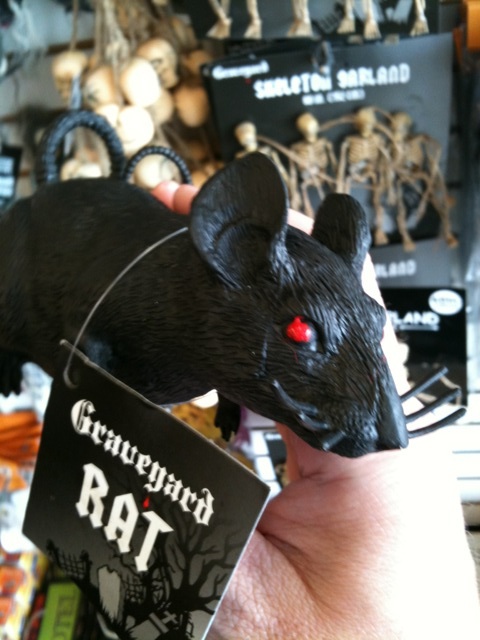
And, last but not least, the ever-popular graveyard rat.

Now with extra red eyes!

More to come.

Chet and Bernie to the rescue

One of the most enjoyable mystery series out there is Spencer Quinn’s Chet and Bernie series.

Bernie is Bernie Little, a California PI. Chet is his dog.

And Chet narrates the stories.

If it sounds kind of cutesy to you, kind of cozy and coy, you’re wrong. While dog lovers will find plenty to like about the books and the dogs-point-of-view that Chet brings to the stories, these are always funny, sometimes tough, often exciting stories in the hardboiled PI genre.

It just so happens, in the case of Quinn’s books, that the hardboiled PI here is Chet.

Quinn — the pseudonym of novelist Peter Abrahams — has created quite a pair. Bernie Little is a former athlete turned PI whose knack for righting wrongs is exceeded only by his bad financial judgment. Chet is his fiercely loyal companion who washed out of K-9 school.

Chet’s narration is frequently touching — the dog thinks Bernie can do no wrong, except when it comes to the aforementioned finances — and almost always funny. As told from Chet’s point of view, the stories are refreshingly straightforward good guys versus bad guys tales leavened with a dog’s outsider-looking-in-on-human-foibles perspective.

Not that Chet is all-knowing. He might be one of the best examples of the “unreliable narrator” style of writing. While Chet “recounts” to us readers the conversations he hears but doesn’t always understand, there are tantalizing gaps in what we know, usually occurring when Chet notices a Cheeto on the floor or gets distracted by the mention of a ball, missing some crucial bit of information.

Not to mention when Chet knows the key to the mystery and who the bad guys are … but can’t communicate that to Bernie, of course.

The latest in Quinn’s series, “The Dog Who Knew Too Much” — really don’t be put off; the titles are the punniest elements of the stories — finds Chet and Bernie investigating the disappearance of a new client’s son, who goes missing from a wilderness camp.

Before long, the man-and-dog duo are trying to find the boy and running afoul of vicious small-time crooks. There are more than a few moments of tension for the two, but the book — like the earlier entries in the series — happily ends with, as Chet would put it, the bad guys in orange jumpsuits breaking rocks in the sun.

People who love dogs will appreciate Quinn’s grasp of the psychology of man’s best friend. Fans of crime novels will like Bernie’s handiness with a gun or his fists and appreciate Chet’s enthusiasm over bringing down a perp with a few well-placed bites.

If you’re so inclined, Quinn maintains a good blog at Chetthedog.com that features reader-submitted photos of “Friends of Chet.”

Quinn’s books are a treat — and not just the kind that Chet and the other members of “the nation within the nation” would enjoy.

iPhoneography: Halloween stuff part three

I’ve neglected the posting of iPhone photos of masks, decor and the proverbial etcetera about my favorite holiday for too long. Time to remedy that oversight.

The National Retail Federation, that pro-shopping, pro-spending outfit that forecasts consumer trends, hasn’t yet predicted how much we’ll spend on Halloween this year. Last year, the NRF forecast Americans would spend $6 billion on Halloween costumes, candy and decorations. I’m not sure that projection worked out, considering the state of the economy. We’ll see what they say when they come up with this year’s number.

As Halloween has morphed from a holiday for kids that adults tolerated a generation ago to a full-blown excuse to party and begin eating snack-size Snickers in September, canny retailers have found bigger, better and bloodier Halloween goodies to sell us.

“Bigger” especially applies to the trend we’ve seen in the past few years of life-size ghouls and ghosts for Halloween decor.

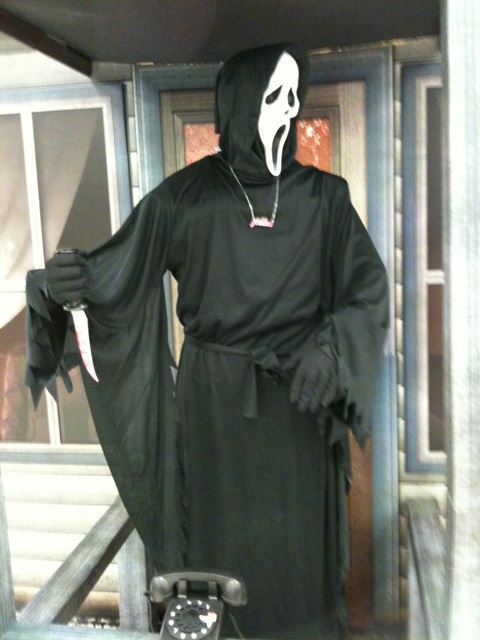
While I’m not a huge fan of the “Scream” movie franchise — I thought the first film was pretty good though — I have to say I’d be impressed if somebody put this life-size Ghostface figure on their porch.


Much more timeless is a good old human skull replica. Here’s a shelf full at Target.

I thought this mini skeleton at Target was pretty cool. It’s appropriately spooky and atmospheric.

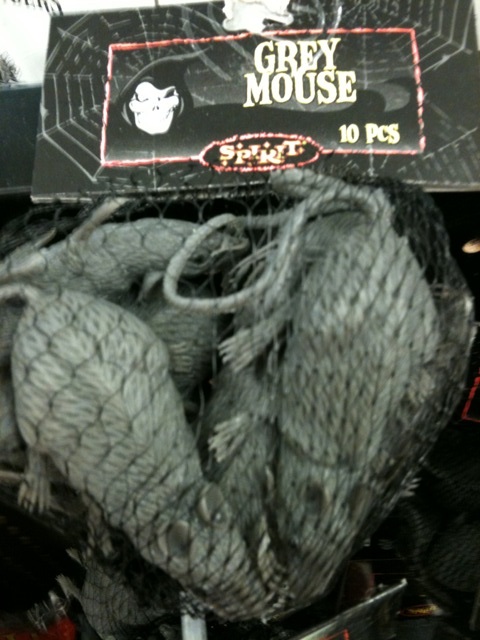
To round out this edition, how about this: A bag of mice. Who doesn’t need a bag of mice? Although if we brought these into the house, my cat would go nuts.

More next time!

And Justice (Leagues) for all

As a comic book reader from way back, I’m loving the big-screen adaptations of some of the Marvel comics favorites from my childhood. “Iron Man,” “Thor” and “Captain America” were all top-notch.

Marvel’s longtime competitor, DC, has had a lot less success in movie versions. While the “Dark Knight” films are pretty good — although somewhat self-consciously non-comic-booky — “Superman Returns” was glum and very nearly boring and this summer’s “Green Lantern” was meh.

Honestly, the most consistently successful adaptations of comic books can be found, to no one’s surprise, in animated series and movies.

If you haven’t watched a superhero cartoon since “Super Friends,” you’re missing well-written shows that offer plenty of action for kids and characters and continuity for grown-ups.

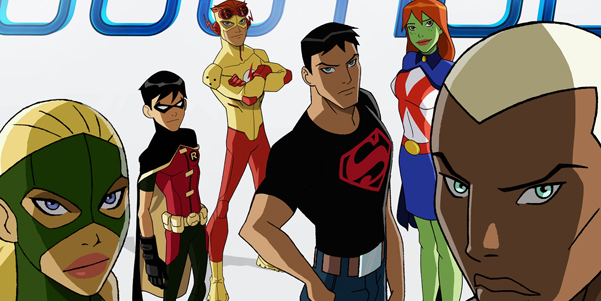
The “Avengers: Earth’s Mightiest Heroes” show on Disney XD has the complex plots and myriad characters of modern-day Marvel comics and Cartoon Network’s “Young Justice” has engaging characters and an over-arching mythology that, several episodes into the series, is just beginning to build.

The premise of the series is that Robin, Kid Flash, Aqualad and other proteges of adult heroes like Batman and Flash team up in a training exercise of sorts to prepare them for eventual entry into the Justice League. There’s intrigue in a shadowy group that appears to be manipulating the young heroes and there’s rivalry and clashing emotions among the members, who include a young Superboy who is, in a plot faithful to recent comics, a weeks-old clone of Superman.

“Young Justice” is surprisingly somber in its overall tone, maybe befitting a modern-day fantasy series.

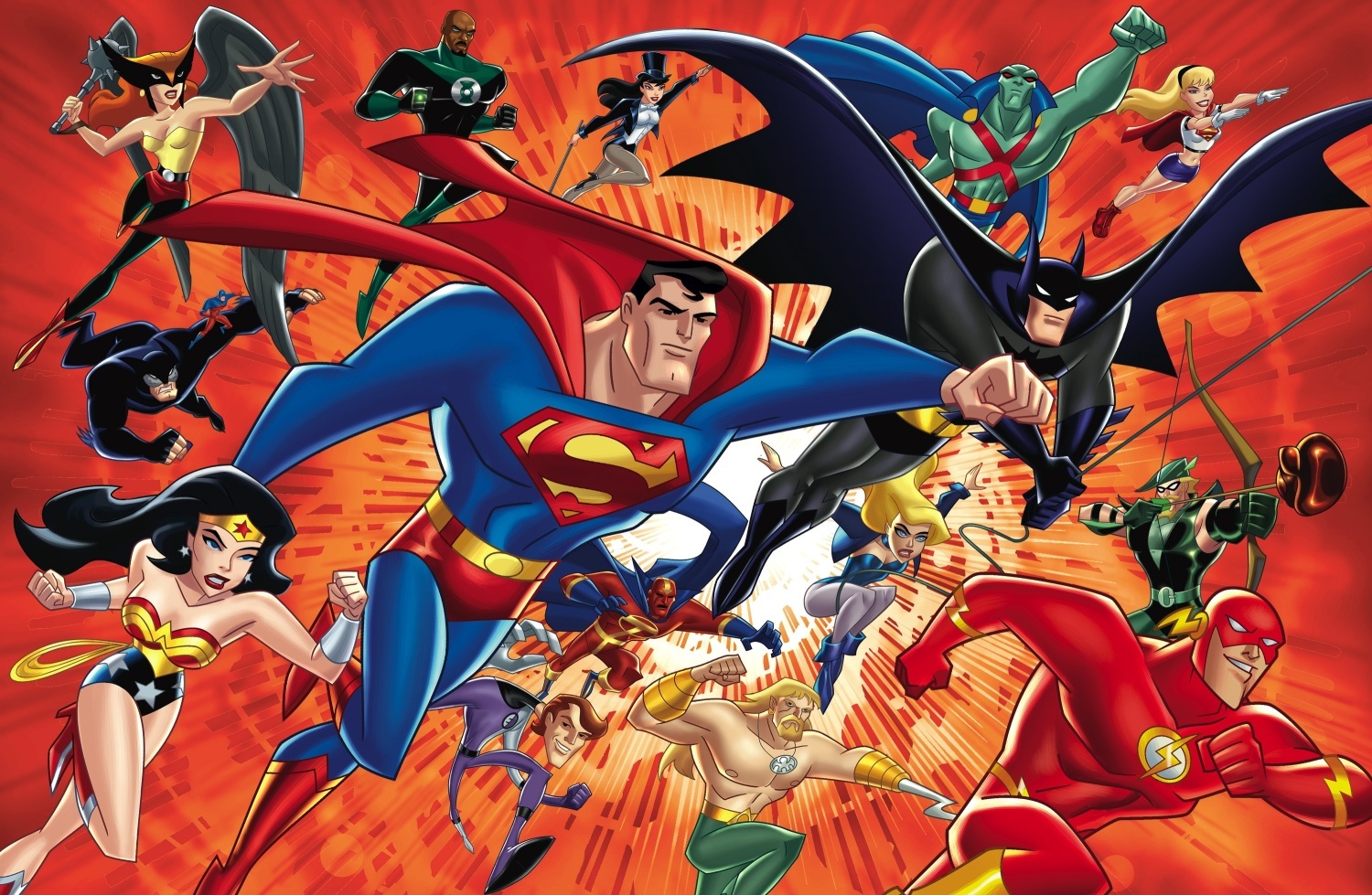
It’s conspiracy-laden mythology reminds me in some ways of “Justice League” and “Justice League Unlimited,” two Cartoon Network series that ran for four seasons, more or less, in the mid-2000s. From the makers of the “Batman” and “Superman” animated series of the 1990s and early 2000s, the “Justice League” series was full of superheroics and enough characters to bewilder any fanboy. But it was marked by a surprisingly dark undertone of a government — and sometimes a public — suspicious of superheroes who often came across as aloof and frighteningly powerful.

“Young Justice” may very well grow into the equal of “Justice League.” It’s convincing blend of action and thoughtful character drama show a lot of promise.

Thingmaker memories

When I was a kid, a lot of girls I knew had Easy-Bake Ovens. For boys, the opportunity to give yourself second-degree burns and burn your house down came via the Thingmaker.

News that Hasbro is eliminating the Easy-Bake Oven’s light bulb and replacing it with an actual heating element stirred memories of the Thingmaker.

While the Easy-Bake’s light bulb didn’t really pose much of a hazard, the Thingmaker was a genuinely dangerous toy. And we loved it.

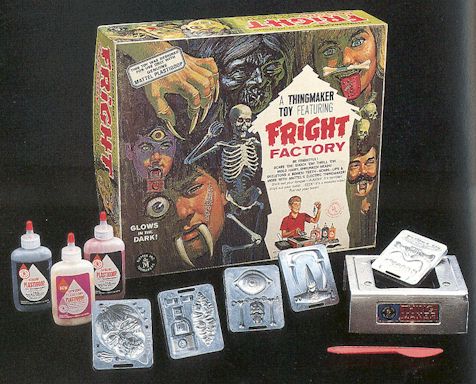
As part of the monster craze of the 1960s — sparked by the TV reissue of the old Universal monster movies, which also precipitated Famous Monsters of Filmland magazine — Mattel released the Thingmaker Fright Factory in 1966.

For those of you who don’t know or don’t remember, the Thingmaker in its various incarnations was basically a hotplate — not unlike a traveling salesman might put on top of a chest of drawers in a run-down hotel to warm up a can of beans — with metal molds that could be used to make soft plastic toys not unlike what you might find in a box of Cracker Jack if the Cracker Jack factory was operated by the Addams family.

Really. With the Thingmaker, boys could make realistic scars, fangs, eyeballs, miniature skeletons and, oddest of all, shrunken heads. Yes, the Thingmaker probably represented the high point of kids collecting and playing with representations of shriveled, shrunken human heads.

All you had to do was plug in the hotplate — er, Thingmaker — and wait for it to warm up. Then you simply placed one of the molds on the scorching hot surface and — ow, dammit that hurt — you simply placed one of the molds in the Thingmaker and squirted some colorful plastic goop into it from handy bottles included in the Thingmaker kit.

The Thingmaker baked the plastic pieces in the molds until they were ready to extract. Using a pair of tongs that were provided, you simply removed the molds from the Thingmaker — ow dammit — and let them cool before removing your ghoulish new toys.

The scars and eyeballs could be applied — hopefully after they cooled — directly to your skin to excite and alarm your parents. The skeleton could be assembled. The shrunken heads … well, I’m not sure what you could do with them other than freak out squeamish girls who had been waiting several hours for a light bulb to bake a cake.

I loved my Thingmaker but remain to this day surprised that it was allowed to come to the market. My mom, a smart woman, wouldn’t let me use it in the house. No doubt remembering the Silly Putty Incident of 1967 — which left a stiff, permanent stain on our carpet — she banished me and my Thingmaker to our front porch.

Like my Captain Actions, Johnny Wests and Major Matt Masons, my Thingmaker disappeared over the years. I like to think that it found a second life, warming up coffee for some poor soul living over a big-city bus station.

My moment with Vincent Price

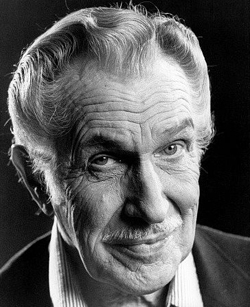
It was the spring of 1982 and I was in an unexpectedly quiet spot in Chicago’s O’Hare airport, waiting for a plane. And, just as unexpectedly, there in front of me was horror movie icon Vincent Price.

I had been in Chicago on a press junket for the Arnold Schwarzenegger movie “Conan the Barbarian,” which was due to come out in just a few weeks. I’ve previously recounted my brief meeting with Schwarzenegger, who was far from a household name at this point.

Likewise, Vincent Price wasn’t a household name anymore. Except in my household, and those of other old horror movie fans around the world.

Price was about 71 by this point and his career had, in some ways, peaked a couple of decades earlier. His series of classic 1960s horror films, many adaptations of Edgar Allen Poe movies, were followed by a series of 1970s films that, by virtue of being offbeat, had given his later career a boost. Price had won critical acclaim and made fans with the “Dr. Phibes” movies and “Theater of Blood,” in which he played a washed-up horror movie actor plagued by a series of murders … or was he the murderer?

I loved the Poe movies and looooved the “Phibes” films, which were modern and old-fashioned at the same time.

But by 1982, the type of horror movies in which Price had starred had fallen out of fashion. This was the period in which every hack filmmaker was imitating John Carpenter’s great 1978 “Halloween” with cheap and tawdry slasher films.

Maybe I was emboldened by having just talked to Schwarzenegger and the “Conan” crew, but I knew I had to talk to Price.

He was, improbably, alone. No entourage. Not even a traveling companion.

I crossed from the bank of seats where I had been about to sit and approached him slowly. He looked up and smiled and seemed to encourage me to come closer.

I introduced myself, told him what I was doing in Chicago and asked if I could sit with him for a moment.

Even though by this point in his career he must have been approached by strangers thousands of times, he welcomed me graciously and gestured for me to sit down.

We made small talk — at least when I wasn’t telling him how much I loved his work — although I don’t recall if he said why he was traveling.

I remember thinking how jealous Jim, Brian, Derek and my other movie fan friends would be about my opportunity to meet one of our favorite stars so I asked if he would mind if I got out my tape recorder and recorded our conversation.

Price, so friendly in our few minutes together, balked at this.

“I think it would attract too much attention,” he told me.

By this point, a few other people had arrived at the gate for their flights and had noticed Price. He was right, and I nodded.

We spoke for a few more minutes, although by this point Price was distracted by the other people around us. Before long, a woman came up to where we sat and asked if she could take his picture. (This was in the days before cell phones, of course, and the woman had a camera, which was certain to attract even more attention.) Price smiled a little tightly and gave his permission.

Feeling almost guilty that I had started this snowball of recognition, I thanked Price for spending some time in conversation with me and headed back to the seats closest to my gate. He smiled and thanked me for my time.

Price spoke to a few of the people near him but before long excused himself, probably to go to a nearby airport restaurant. I didn’t see him again before my flight left.

Although Price seemed almost a curiosity to the crowd in the airport that day, he achieved yet another level of pop culture fame just a few months later. Michael Jackson’s “Thriller” album and music video, featuring Price’s spoken word “rap,” was released in November of that year. Although he wasn’t seen in the insanely popular video, his distinctive voice was heard, and anyone who wondered whatever happened to Vincent Price had their question answered.

I was lucky enough to have found out, a few months earlier, whatever happened to Vincent Price. And in the process, found that he was a gracious and generous man.

I didn’t get a chance to meet Price, who died in 1993, again. But he’ll live on in my memory from our airport meeting that day in 1982.


iPhoneography: Halloween stuff part two

As promised (warned?) another installment of my visual tour of Halloween stores.

In each of these entries, I’ll touch on some of the most eye-catching masks and decor.

And a belated warning: Some of this stuff is gory. The bloody body parts and the like aren’t my favorite type of Halloween decorations — my tastes lean toward cardboard pumpkin window cut-outs and tissue-paper ghosts — but I’ll include some of the more unusual examples of the yucky stuff.

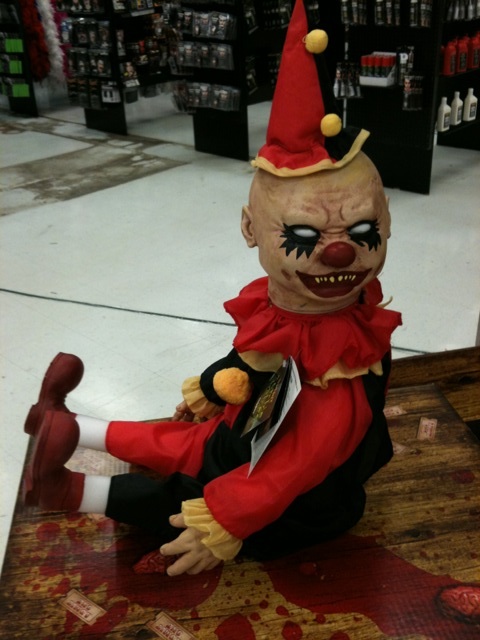
To start things off on a ghoulish note, here’s an example of the gory stuff. Spirit Halloween stores offer Zombie Babies. They’ve got a million different kinds, all of them slightly queasy-making. This one is apparently called “Giggles.”


Here are some cool gargoyles from Target. I think these would look good on a bookcase year round, don’t you?

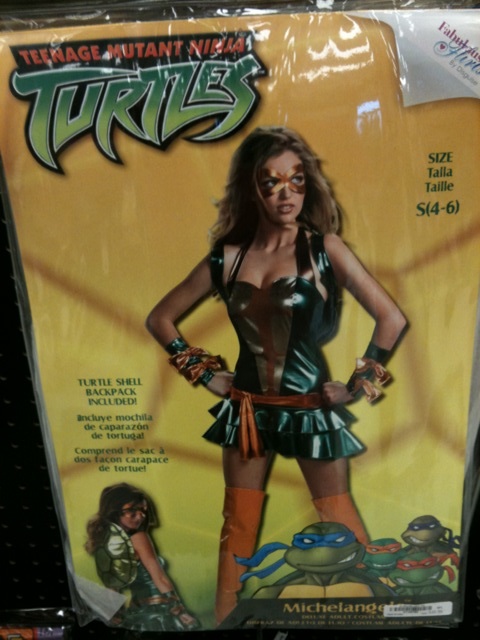
Of course, the sexy Halloween costumes for women are the big deal these days. This one is kind of odd, though. I definitely don’t remember the Teenage Mutant Ninja Turtles looking like this.

Here’s a suit that any of us with a big, cluttered closet could put together free of charge: The leisure suit.

Now is the portion of the blog in which we present the mask that’s most likely to give us nightmares. Can you imagine waking up and seeing this at the foot of your bed?

That’s it for now. As the old “Tonight Show” bumpers used to say, “More to come.”

Please Mr. Postman …

Outside of Christmas and birthdays, there are few moments of genuine joyful anticipation for most kids that can top waiting on the mailman to deliver a package.

Whether the package in question is a gift from a grandparent, an eagerly awaited toy or even a favorite magazine or comic book, there’s nothing like the excitement of checking the mail, sometimes for days or weeks, and finally — finally — receiving what you’ve been waiting for.

As a matter of fact, sometimes the anticipation tops the actual item that’s delivered. Remember that classic “Calvin and Hobbes” comic strip series about the propeller beanie?

That’s why I love the U.S. Postal Service, better known as the post office, and its mailmen — more accurately known as letter carriers and postmasters and other postal workers.

And that’s why it makes me sad that the Postal Service is struggling right now.

There’s a good Associated Press story that sums up the problems facing USPS right now, including declining use of what some derisively call “snail mail” as well as $5.5 billion a year that the organization must set aside for retiree medical costs.

If the Postal Service doesn’t somehow make enough money to cover that expense, it could shut down.

So USPS is considering cutting staffing, closing some post offices and eliminating Saturday delivery. Workforce cutbacks take their toll on any company or organization, without a doubt. Closing post offices not only pose inconveniences for customers but take away a sense of identity for many small towns. Saturday delivery is great but seems the most expendable.

Whatever happens, I hope they work it out. With email and online transactions, we do a lot less mailing than we used to. But our household still gets a steady stream of print magazines, packages and important mail that we can’t live without.

Maybe none of it can match, in pure joy, the mailings and packages I received in my youth: Items purchased from Captain Company ads in Famous Monsters magazine, X-Ray Specs from comic book ads and my Merry Marvel Marching Society membership package.

But the mail is still welcome in our household. More than welcome. Necessary.

45 years of ‘Star Trek’

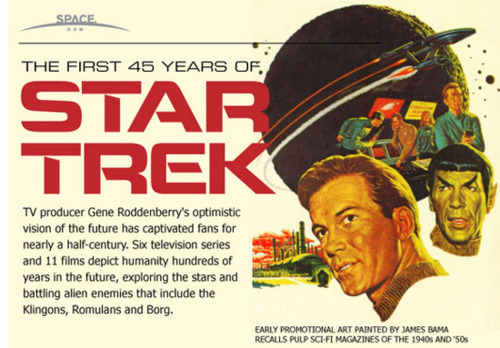
Here’s something to make us geeks feel old: A nifty space.com graphic showing the first 45 years of history of “Star Trek,” including the various TV shows, movies and relevant real-life developments.

I’ve tried to embed this and I can’t, but this link will take you to the timeline.

Geek long and prosper!