I’m not sure I remember the exact details, but when my first true crime book, co-authored with my longtime writing partner Douglas Walker, came out in 2016, it was pretty thrilling to see the book for sale in bookstores, drug stores, gift shops and online.
It’s one thing to have a book out there and to sell it and sign it, but realizing our publisher, History Press, had actually gotten the first book, “Wicked Muncie,” in stores and online sites, was pretty amazing. History Press kicks all kinds of ass in getting books in stores, by the way. All four of our true crime books found a good home with them.
Another highlight was finding our books offered by libraries, which are very nearly my favorite places on the planet. A while back, I realized our third true crime book, “The Westside Park Murders,” was available through the Chicago Public Library. I’m still boggled over that.
So it’s been fun, with THAT OCTOBER, my new 1984-set high school crime novel, finding the book on all kinds of bookselling sites. I wasn’t certain if I would have to take steps to ensure this because THAT OCTOBER is self-published.
But I didn’t have to. At some point recently I was asking the folks at Ingram Spark, the venue I used to publish the book, if they could tell me when it would be available for pre-order. They responded and noted that it already was available and showed me where Amazon was selling it.
Since that time, I’ve been excited to see that not only Amazon, a site I have qualms about, but Barnes & Noble, Bookshop, Powell’s Books and Waterstones, the famous Brit seller of books, all offer it (for pre-order right now, as publication date is June 1).
So I’ve been on social media, posting links to most of those booksellers and screenshots. It was as especially exciting to see that Powell’s, a bookseller I’ve visited in Portland, Oregon, and have done business with online, offered it.
Oddest place I’ve found the book for sale so far: Saxo, where the book is available for about 259 Danish Krone.
It’s silly, I know, to be so excited about this, but I didn’t think it would ever happen.
Next I’ll be telling you how excited I am to find THAT OCTOBER for sale at Half Price Books or McKay’s.
I know writers – and readers – who want absolute quiet when they’re writing or reading.
For me, maybe because I spent decades working in a newsroom, with overlapping conversations, police scanners and all manner of noise competing for attention, I can usually tune out the noise when I want to. Or maybe it’s that I like some noise while I’m writing.
However it works, I like having music playing when I’m writing, especially with novels. When I was writing my first novel, SEVEN ANGELS – not yet published; maybe someday? – in 2019, I played non-stop the music of the Highwomen, the Chicks, Bonnie Raitt and other artists. It’s music I like and the main character is a strong woman, which really fit with the music. When I was writing my second novel, GHOST SHOW, in 2020, I played artists of the 1940s because the book is set in 1948. This wasn’t as conducive to writing for me. I knew the music and artists but didn’t get into the right headspace during it.
When I was writing THAT OCTOBER 2021-2023, I played music of the early 1980s non-stop for a year and a half. The story takes place mostly in October 1984, so I kept my playlist – almost exclusively youtube posts of music videos – limited to songs that predated that month and year.
I incorporated some of that music into the book, making references in some cases by having the high-school-age characters mentioning or singing or dancing to the songs. I didn’t include lyrics in the novel because it can be expensive or nearly impossible to get the rights to print lyrics.
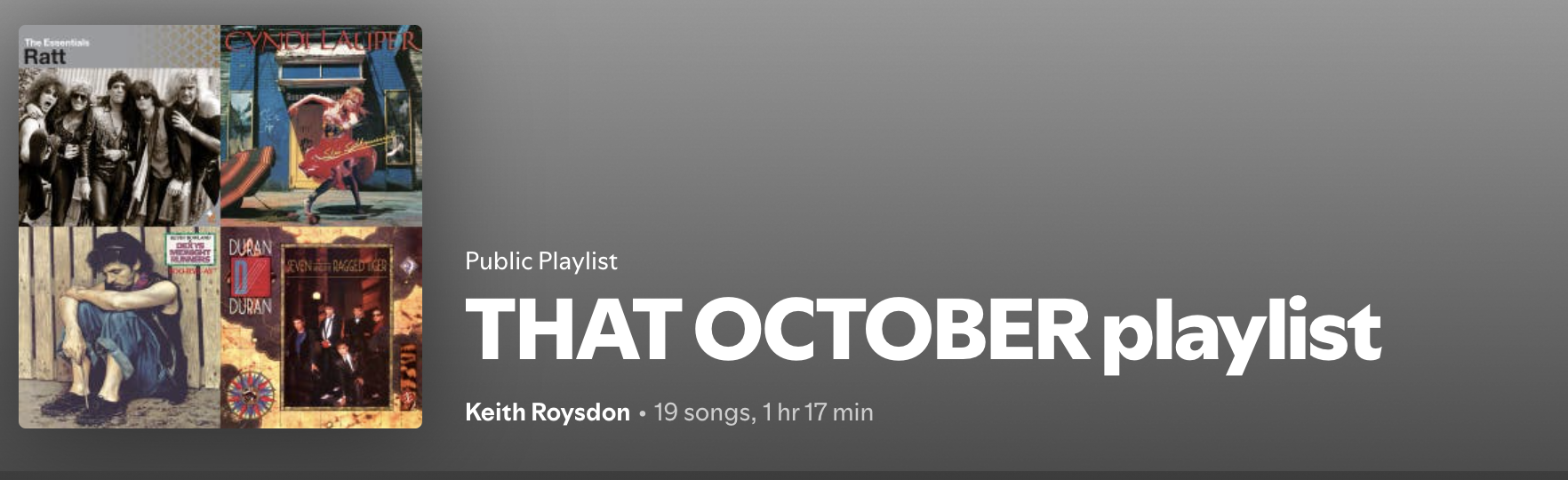
When I readied the book for publication this year, working with my friend and editor Jill Blocker, I decided to get on Spotify and make a THAT OCTOBER playlist. I used songs that I listened to during writing, songs that are cited specifically in the book and songs that just work well with the story.
Duran Duran, Ratt, Cyndi Lauper and more than a dozen others are on the playlist. I’ll probably tinker with it at some point and add some more.
THAT OCTOBER publishes June 1 and you can pre-order it now through most of the usual online booksellers. Hopefully it can be found and purchased from one of the booksellers that aren’t among the very worst on the planet.
In the meantime, here’s a link to the THAT OCTOBER playlist on Spotify. I hope you enjoy it, and the book.
You think that guy looks insufferable there, wait until a few more weeks pass. You’ll be sick to death of him.
My 1984-set crime novel THAT OCTOBER publishes June 1. It’s available now for pre-order on the usual bookselling sites, although I encourage you to purchase it through the least harmful to society one.
I hope you like the book. The authors who were kind enough to read it and give me some comments that I could blurb seemed to like it, citing the 1980s nostalgia content and the twists and turns of the plot.
Although THAT OCTOBER is self-published, there’s nothing especially straightforward about marketing a book these days. Unless you’re a huge author, you have to flog your book to potential readers. That’s usually done through social media.
There are a lot of authors who innovate in how they market their books. Some include odd tidbits they came across while researching and writing their book, and I’ll probably do some of that. Some authors post recipes true to the time period or story. Others, notably Beau Johnson, make and post creative videos to publicize their work. Beau’s videos are hilarious and effectively promote his books, including LIKE MINDED INDIVIDUALS, which continues Beau’s multi-book storyline of anti-heroes who punish the worst criminals on Earth.
Since social media is important to promoting our books, it’s especially tricky to do so in a manner that doesn’t promote some of the worst humans around, including the owners of the former twitter and Facebook and related platforms.
I don’t spend a lot of time on the former twitter anymore, mostly just to check on friends who still post there as opposed to a slightly more “clean hands” site like BlueSky. For the past week, I’ve tried to observe a week-long boycott of Facebook-related platforms, breaking that only to note a rare earthquake in East Tennessee and a Mother’s Day post about my mom, who left us nearly 20 years ago.
But I’ll continue to post on my author page on Facebook to publicize my writing. It’s not a decision I’m entirely comfortable with, but Facebook is still a place where people go, and authors are expected to have a social media presence there.
Anyway, god go with you in the next few weeks (months? years?) as you see me posting here and on social media to promote THAT OCTOBER. I hope you tolerate me and I hope you like the book.
Hype is a thing. And hype might be THE thing in the movie business.
Beware – some spoilers ahead.
I won’t tell you that if you didn’t see THUNDERBOLTS* during its opening weekend that social media is determined to spoil it for you, but Marvel and many other social media accounts are hyping the holy hell out of one of the final big twists for the film.
SPOILERS HERE:
In the final scene of THUNDERBOLTS*, the reveal of what that asterisk was all about comes as they’re announced as the New Avengers. This puts them into conflict with the Avengers team that Sam Wilson, the new Captain America, is going to put together at then-president Thunderbolt Ross’ request. There’s even a reference to Sam threatening to sue the scrappy team of anti-heroes who never really accepted the name Thunderbolts.
If you know some Marvel history, you know that in the late 1990s, the comic book company decided to spin off the Avengers and the Fantastic Four into their own universe.
To fill the void – no pun intended, if you’ve seen THUNDERBOLTS* – in the Marvel comic book universe we know, where Spider-Man and the X-Men were still operating, a new Avengers team was put together in a comic book titled “Thunderbolts.”
The secret, revealed at the end of that first comic, was that the new Avengers were not heroes at all, but were actually the supervillain team the Masters of Evil.
They were villains who pretended to be heroes, although eventually many of them warmed to the idea of doing actual heroic deeds and grew into heroic roles.
The movie THUNDERBOLTS* put a nice spin on this, with shady anti-heroes coming together to save the world. And at the end, in a manipulative political move, they are dubbed the New Avengers.
The funnier or, alternately, more frustrating element of all this as related to the movie THUNDERBOLTS* is that beginning Monday morning (this morning as I write), Marvel has saturated social media sites with the film’s supposed “new title” THE NEW AVENGERS and posted video of the cast revealing the name and even Winter Soldier actor Sebastian Stan “covering” a THUNDERBOLTS* bus stop poster with one featuring the new title.
It’s a great publicity stunt that pays off months of speculation about what the asterisk at the end of the THUNDERBOLTS* title meant.
It you didn’t get caught and spoiled, you might agree.*
I promise I won’t give you a daily countdown, but how could I resist a nice round period of time like one month?
On June 1, my 1984-set crime novel THAT OCTOBER will be available. My editor Jill Blocker and artist Sara McKinley and I have really reached the finish line in this self-publishing journey – don’t all journeys have finish lines? – and all that remains now it to get the word out.
The paperback is available for pre-order on various sites now. Before June 1, we should have the electronic version available also.
I’m doing a couple of talks back in my hometown of Muncie, Indiana – inspiration for the city of Middletown, where THAT OCTOBER takes place – in June. although I don’t expect that to be of interest to many of you unless you’re in the Muncie area or somewhere in the Midwest with a lot of time on your hands.
In the next month, I’ll tell you a little about THAT OCTOBER and the world when it takes place: A time when high school students should have been spending all their time thinking about dates, football, seeing the biggest movies – “The Terminator” was new in October 1984, and “A Nightmare on Elm Street” would come out within a couple of weeks – MTV and Halloween.
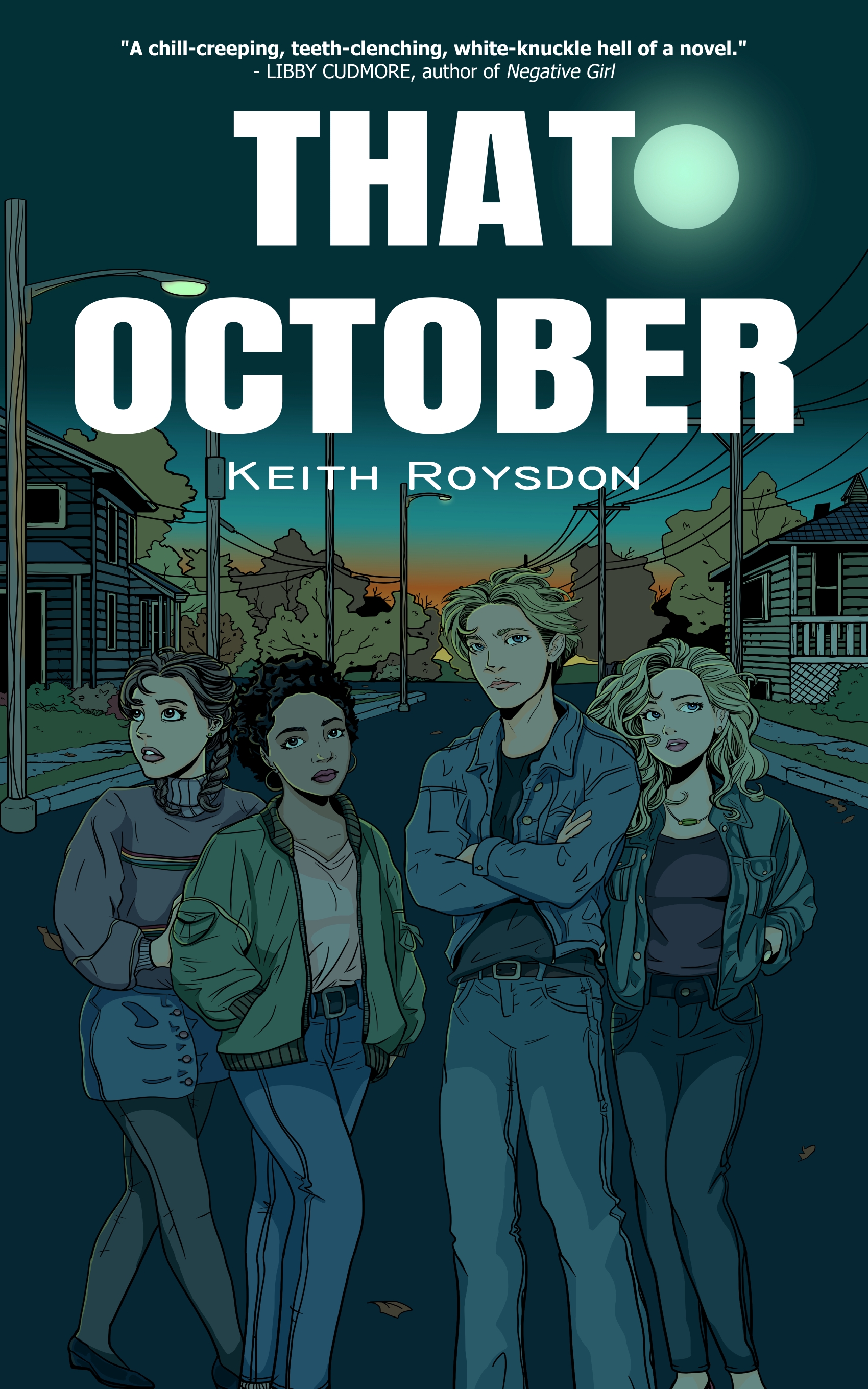
Instead, the six high school friends in THAT OCTOBER are thinking about the murder of one of their classmates and the taking of another.
And they don’t understand why the adults in town seem unconcerned or, at best, evasive when the friends urge them to DO SOMETHING to solve their friend David’s murder and bring Lee Ann home.
Jackie and Michael, new siblings in a blended family, and their friends Sammi, Toni, Elmer and William push forward with their own investigation, which follows a trail rooted half-way around the world, in a time before any of them were born.
I’ll share a bit more as we move forward. I hope you come along for the ride.
I’ve had my name on the cover of a book since our first true crime book came out in 2016, but it’s pretty cool to see my first novel, THAT OCTOBER, go live for pre-orders in advance of the June 1 publication date.
Here’s a couple of links to where you can pre-order it. I always try to include something other than Amazon, so there’s a link to Barnes & Noble as well. I’m including a link to bookshop dot org, although a friend told me she couldn’t get bookshop to complete the process, so that might be problematic.
I’ll include further links as we move toward the June 1 publication date and beyond. My preference is always that you order a book from a reliable independent bookseller.
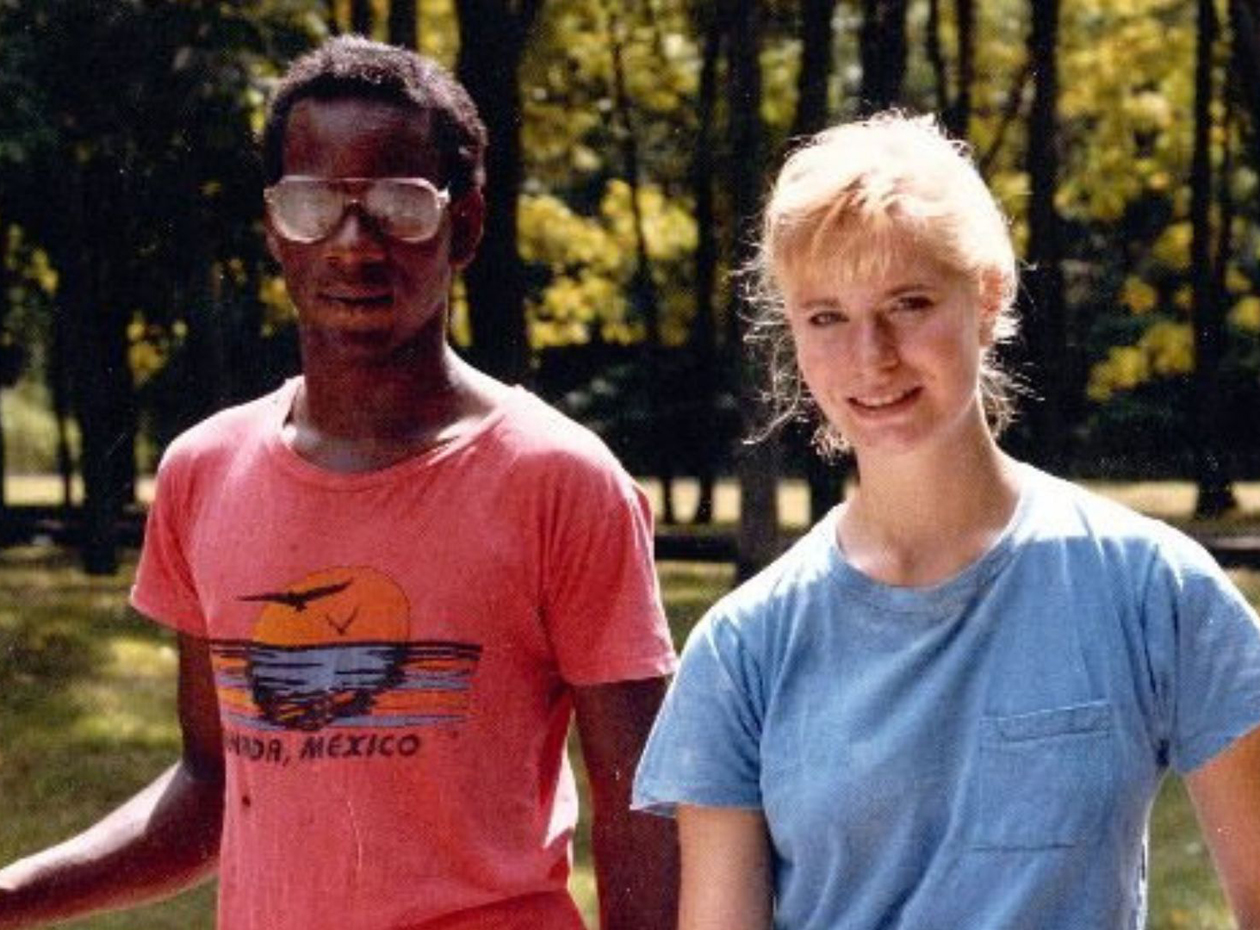
The bright young faces in this photo belong to David and Julia.
The bright young faces in this photo are of Julia and David as portrayed by Ella Anderson and Xavier Jones.
My friend Julia Scheeres’ 2005 memoir, “Jesus Land,” is being made into a movie. If it’s anything like Julia’s book, the movie – directed by Saila Kariat – will be poignant and harrowing and heartfelt and, yes, controversial. Julia’s memoir is routinely banned because she tells the truth about the fundamentalist Christian life.
I’ll give you the shorthand version of why we should all care about “Jesus Land,” and why you should read Julia’s book and see the movie when it comes out. First, a little background.
Julia and I grew up in Indiana at about the same time. In the 1980s. I lived in Muncie and she lived in the Lafayette area. Her parents were abusive religious fundamentalists – my family was Baptist but never abusive when I was growing up. Julia’s parents ended up sending Julia and David to the Dominican Republic to a teen concentration camp run by an Indiana church.
I didn’t know Julia until about 20 years ago, when she contacted me from her home in California to ask if that church was undergoing a rebirth in Indiana.
I spoke with Julia and other survivors of the church gulag and, along with a small group of reporters and editors, wrote extensively about their experiences and the modern-day church and whether it was still sending, at parents’ expense, kids out of the country to hellholes, where they were abused and made to work.
I disappointed Julia back then because my editor at the time was so afraid of upsetting the church and the local chamber of commerce that they gutted our stories.
Julia’s “Jesus Land” had come out the year before, and it told the story better than we could have anyway.
Julia and I became friends – we never met but kept up to date on each other’s families and kids on Facebook – and I wrote about “Jesus Land” again in 2021, when I interviewed Julia for an article about fundamentalist groups that were pressuring Indiana schools to ban the book. It’s something that Julia has grown accustomed to: “Jesus Land” is among books regularly banned because it dares to tell the truth about the religion-based “troubled teen industry,” and how there’s money to be made by pseudo-religious organizations that incarcerate “troubled” young people.
The two of us also spoke while I was working on, shortly after that time, another story about money flowing to the troubled teen industry in Indiana. Julia encouraged me to pursue the story and read drafts of it, which I worked on on a freelance basis for more than a year. Ultimately, the cowardly editors of a major newspaper spiked my story but kept all my research – legal documents, video depositions, reports – and, a year later, did their own story. It remains a very bitter end to my newspaper career.
I’ve moved on from those disappointments to other forms of writing, and Julia has moved on in spectacular fashion: She’s written and published two more books, and now “Jesus Land” will move from the realm of New York Times bestseller to big-screen film.
Julia and David’s story, so movingly told in “Jesus Land,” will find a whole new audience.
Julia, always gracious and kind, was the first person I thought of when I thought of writers who could read my new 1984-set crime novel THAT OCTOBER. I hoped she would appreciate its story of Indiana teenagers grappling with injustice and forces beyond their control. Her comments about the book are prominently displayed on the back cover.
Thank you, Julia. I’m so happy for the movie version of your book.
We hear so much bad news, all the time, that I wanted to share some good news with you.
After the latest depressing study about how few people read books, I have to say that it seems like somebody out there is reading, because bookselling is a growth industry all of a sudden.
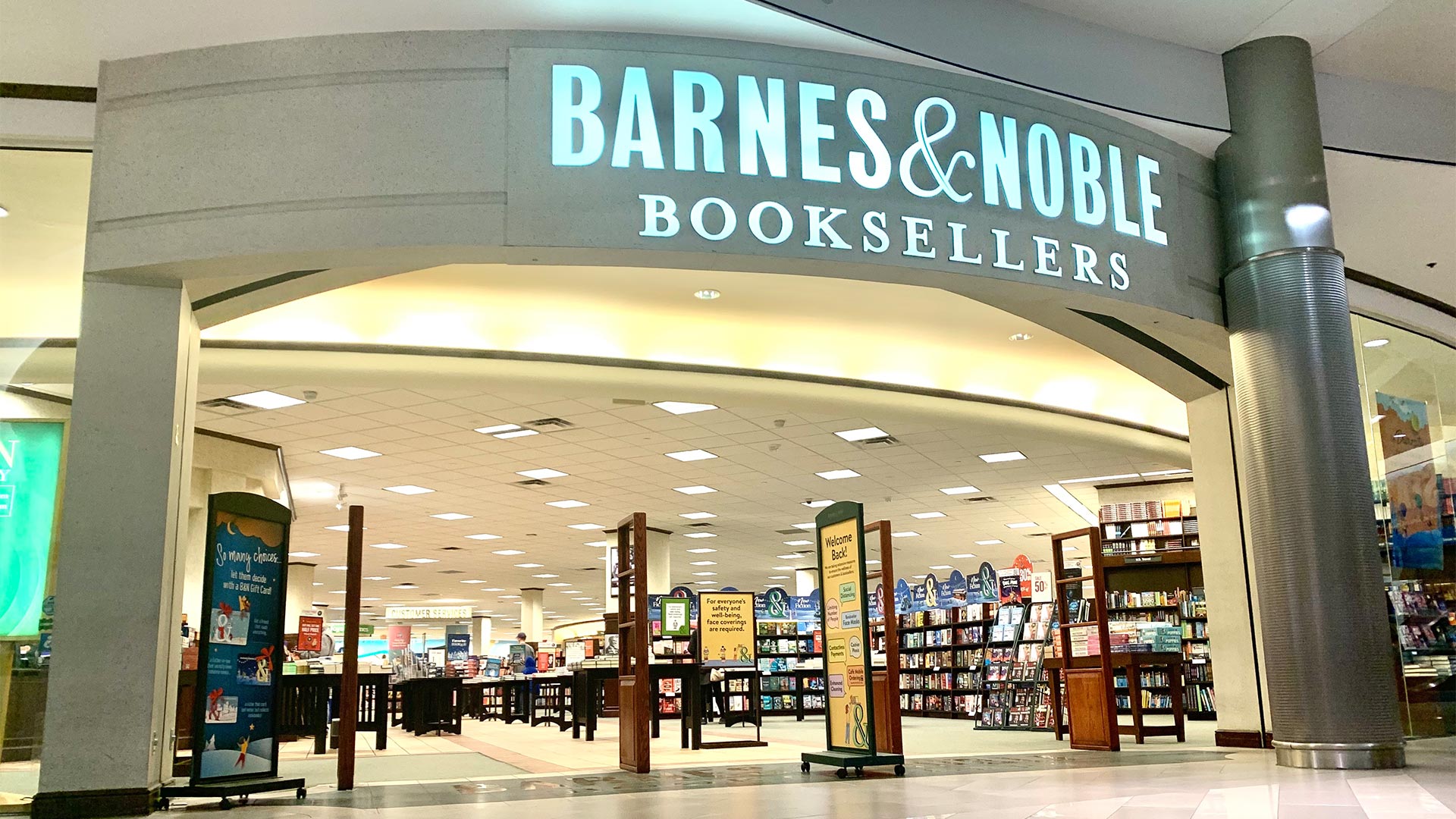
Barnes & Noble, the longtime bookstore chain that was a fixture of many malls and shopping centers before struggling a few years ago, is on an aggressive growth curve.
USA Today reported this week that the bookstore company plans to open 60 new stores in 2025. B&N has about 600 stores, up by several that opened in 2024.
Where I live, the city is getting a second B&N, in the most prosperous and thriving part of the city … not far from its existing location in the most prosperous and thriving part of the city.
This means a few things:
No company like B&N makes decisions to expand on the basis of hope. B&N has done some demographic research, run the numbers and thinks there’s market for even more books.
The company made that decision on the basis of sales and probably surveys and analysis of foot traffic, and that’s a pretty clear indicator that sales are good and the book business is good.
Maybe coolest of all is that B&N thinks there’s enough call for books that it doesn’t have to exist solely on online sales.
The last time I bought a couple of books, it was through the online arm of Powell’s City of Books, the PNW-based mega book retailer. I’ve spent a little time and money in McKay’s, a used bookstore chain, lately too.
And I continue to be on the lookout for my favorite retail spaces of all time, small and independent bookstores. Unfortunately we’ve had two that I know of close in the city in the past couple of years.
Yes, Barnes & Noble is a big company, although not as big and possibly not as soulless as Amazon. And yeah, other stores and companies sell books.
I’m glad people are buying books, no matter where they get them. I’m glad people are reading. (Not surprising sentiments for an author who has a new book coming out in the next couple of weeks, I know.)
If some of that increased interest in books, reading and book-buying benefits a big company like B&N, I’m glad of that.
Don’t forget though – patronize your locally-owned booksellers.
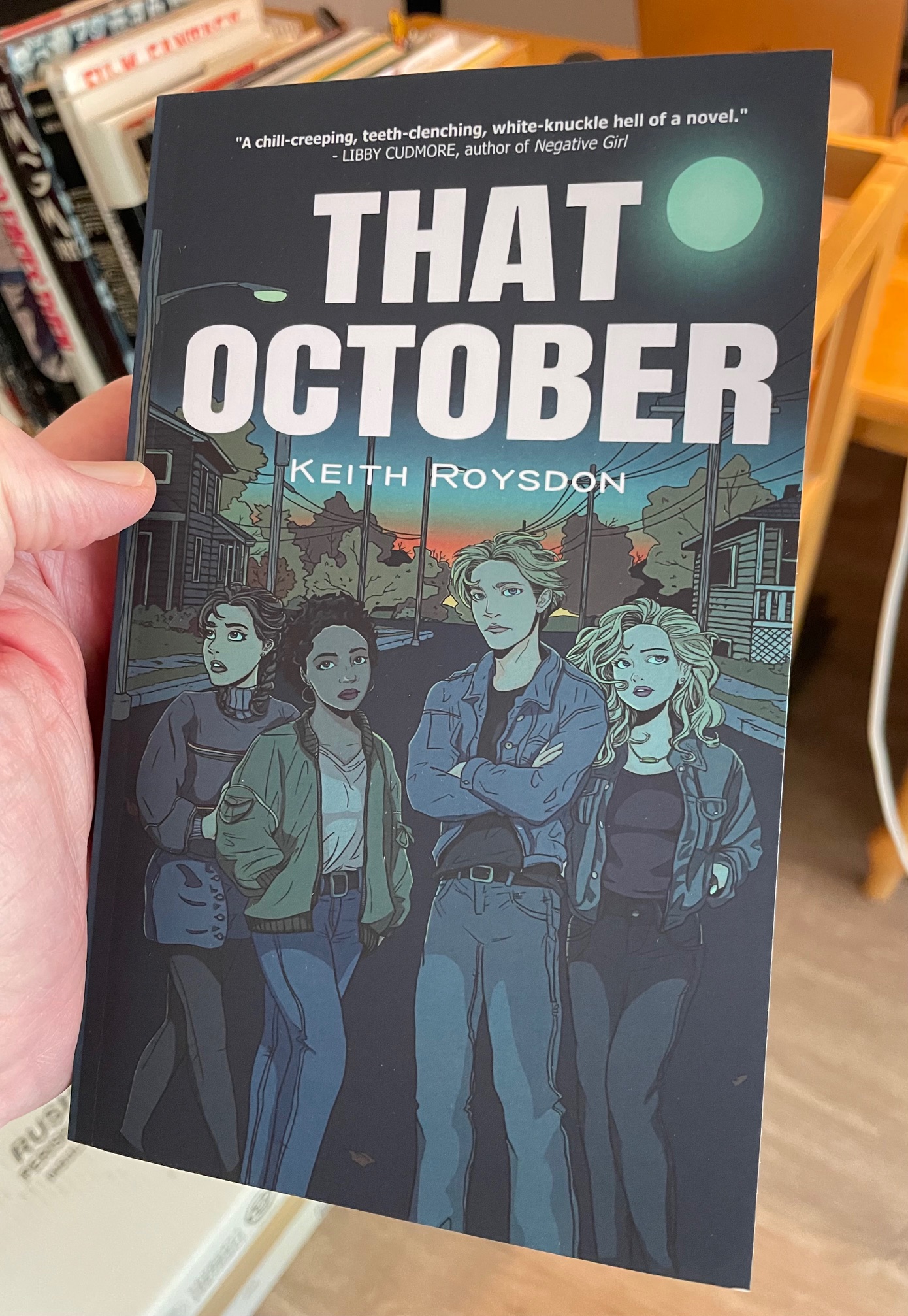
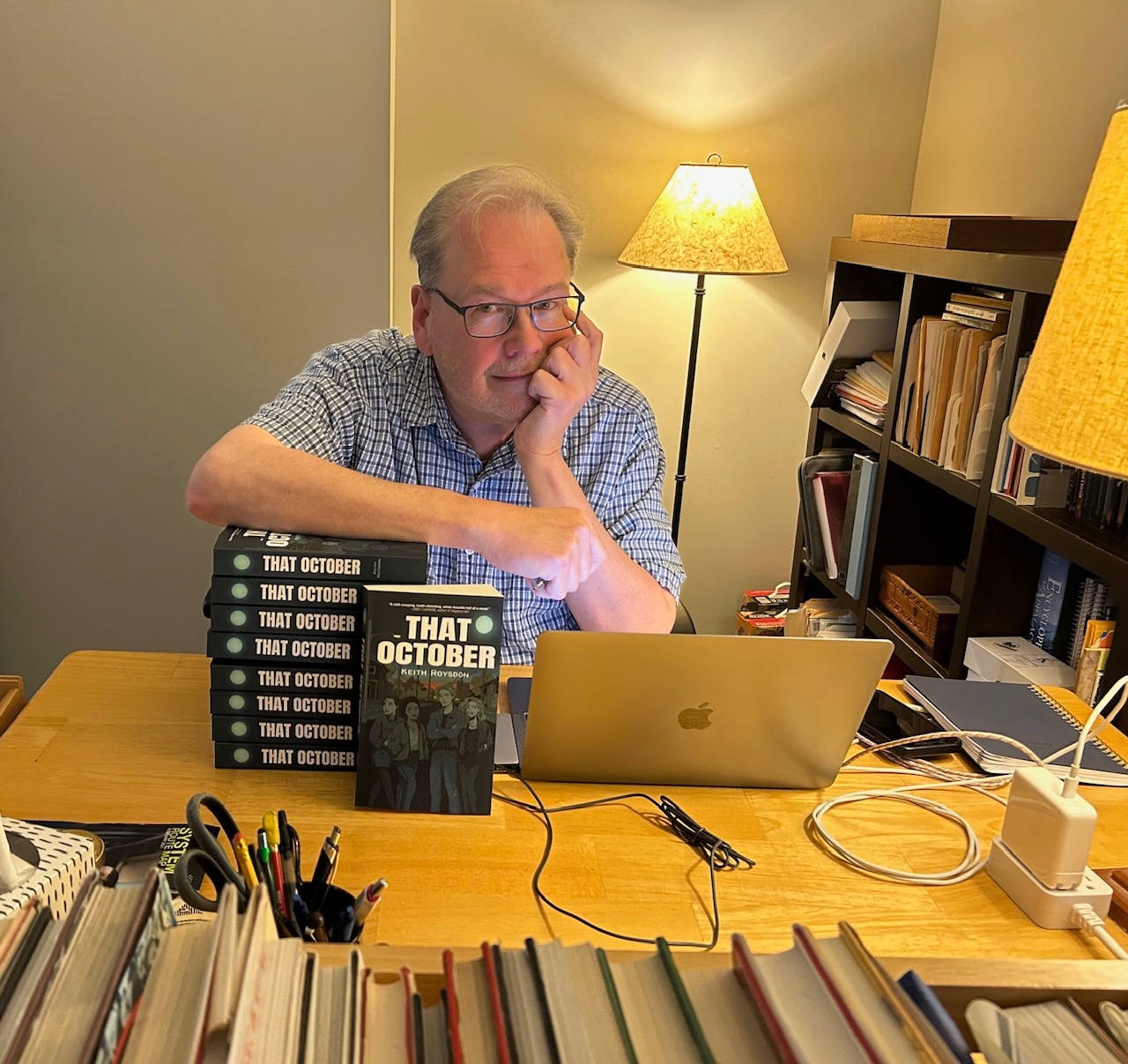
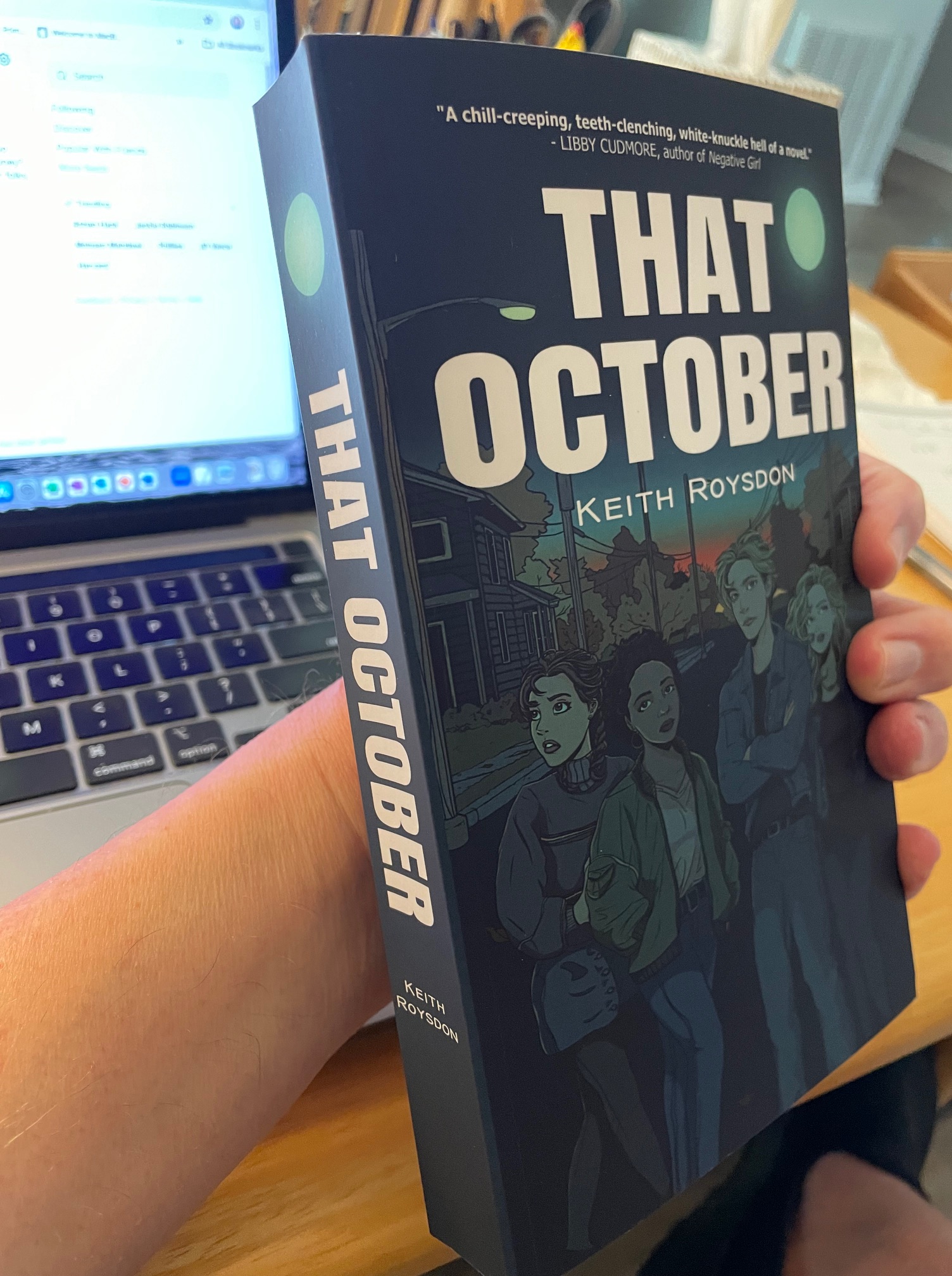
I just got my print proof of my 1984-set crime novel THAT OCTOBER.
It looks amazing. Self-published through IngramSpark. Edited by the awesome Jill Blocker. Cover imagery by the awesome Sara McKinley. (@saramckinleyart on Instagram.)
I’ll proof this and let y’all know when it’ll be on sale, both in print and electronic.






 keithroysdon