
Tag Archives: shared universe

My little foul-mouthed scrappers will return in my novel GHOST SHOW

I’ve noted in this space before that most of my books and short stories occupy the same universe that mostly varies from the town of Seven Angels, Tennessee, to the small city of Middletown, Indiana. The former is the focus of my newest novel, SEVEN ANGELS, and the latter is the setting of my 2025 novel THAT OCTOBER.

I’ve plotted references to those locales in most of my fiction, including my upcoming novel GHOST SHOW, which is set in Middletown in 1948 (THAT OCTOBER was set in Middletown in 1984).

And there’s been a few times I’ve had characters cross over from stories to novels. I’ve previously mentioned here Butcher Crabtree, who pops up in SEVEN ANGELS and a few stories.

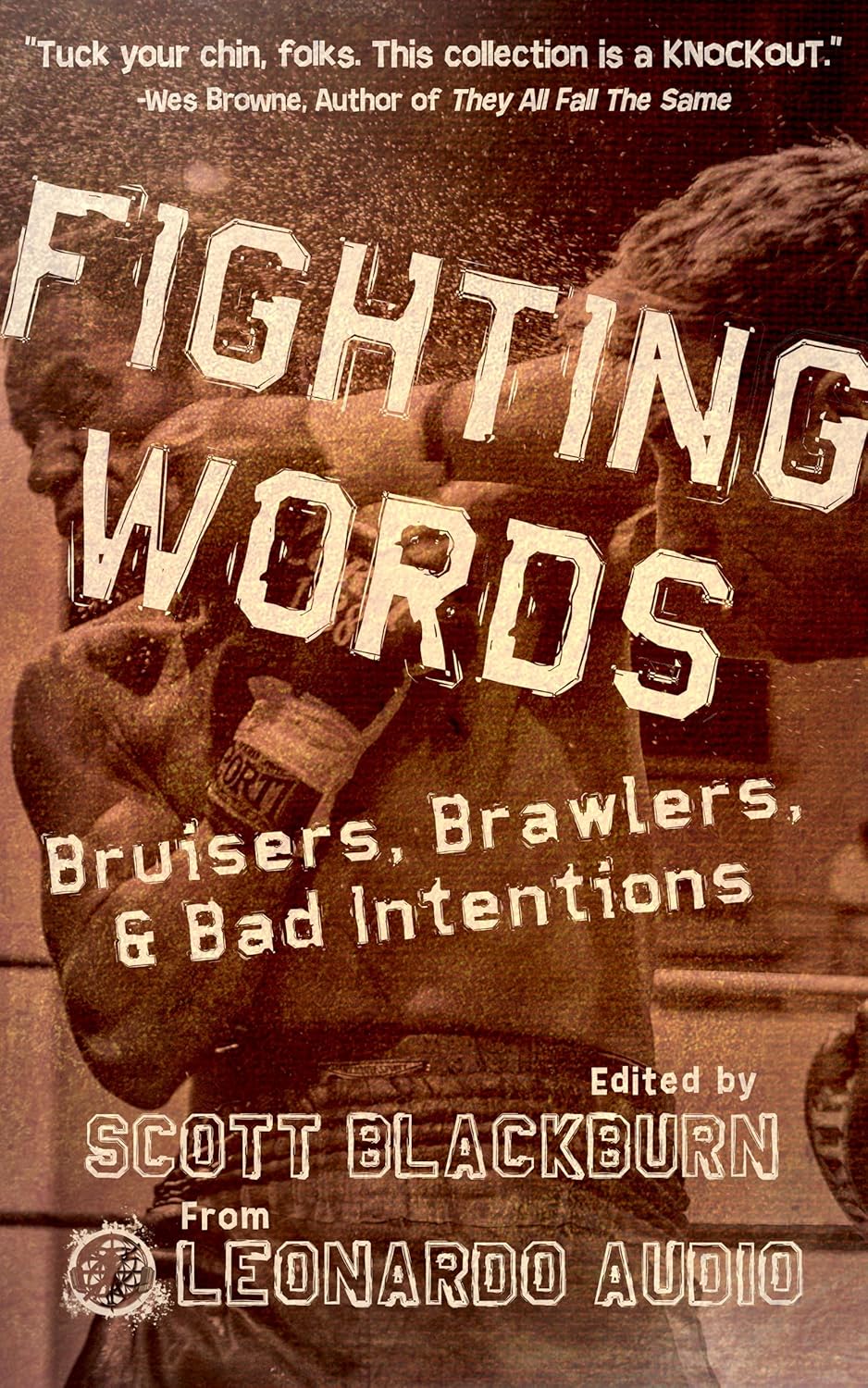
But in GHOST SHOW, when it shows up this winter, you’ll see some characters I introduced in “A Fighting Life,” a short story in the 2025/2026 anthology FIGHTING WORDS, edited by Scott Bradburn and published by Leonardo Audio.

Four of the Anderson siblings, who are the focus of GHOST SHOW, are in “A Fighting Life,” which is also set in Middletown in 1948.

They’re pretty different characters in some ways, and very much the same characters in other ways. In “A Fighting Life,” siblings Marie, Saul and Peter get into vacant-lot-punchfests when the three, all of them teens or pre-teens, discover they can make money by letting other neighborhood kids fight them for nickels. They’re foul-mouthed little bastards, as Courtney Fabrizio, the marvelous narrator of my story for Leonardo Audio, alludes to. (You should read the story, but you really should get the audio version of the anthology, particularly for the amazing work of Courtney.).

In the story, Marie, Saul and Peter take on all comers – and get rescued by their big sister Rachel as they’re about to be busted by the cops – and it’s a story that is, by turns, fun and dire.

In GHOST SHOW, Marie, Saul and Peter are still the youngest members of the Anderson family and Rachel sometimes rescues and sometimes needs rescuing. GHOST SHOW is a story that’s very, very loosely based on my mother and her siblings when they were young, and the four are based on one of my aunts, two of my uncles and my mom. There wasn’t as much mayhem in real life as I injected into either the short story or the novel.

I’d encourage you to buy FIGHTING WORDS not just for my story “A Fighting Life” but also for the really crisp and tough writing by the other writers in the anthology. And it might tide you over until GHOST SHOW arrives.

The link to buy FIGHTING WORDS:
Welcome to the low-rent universe

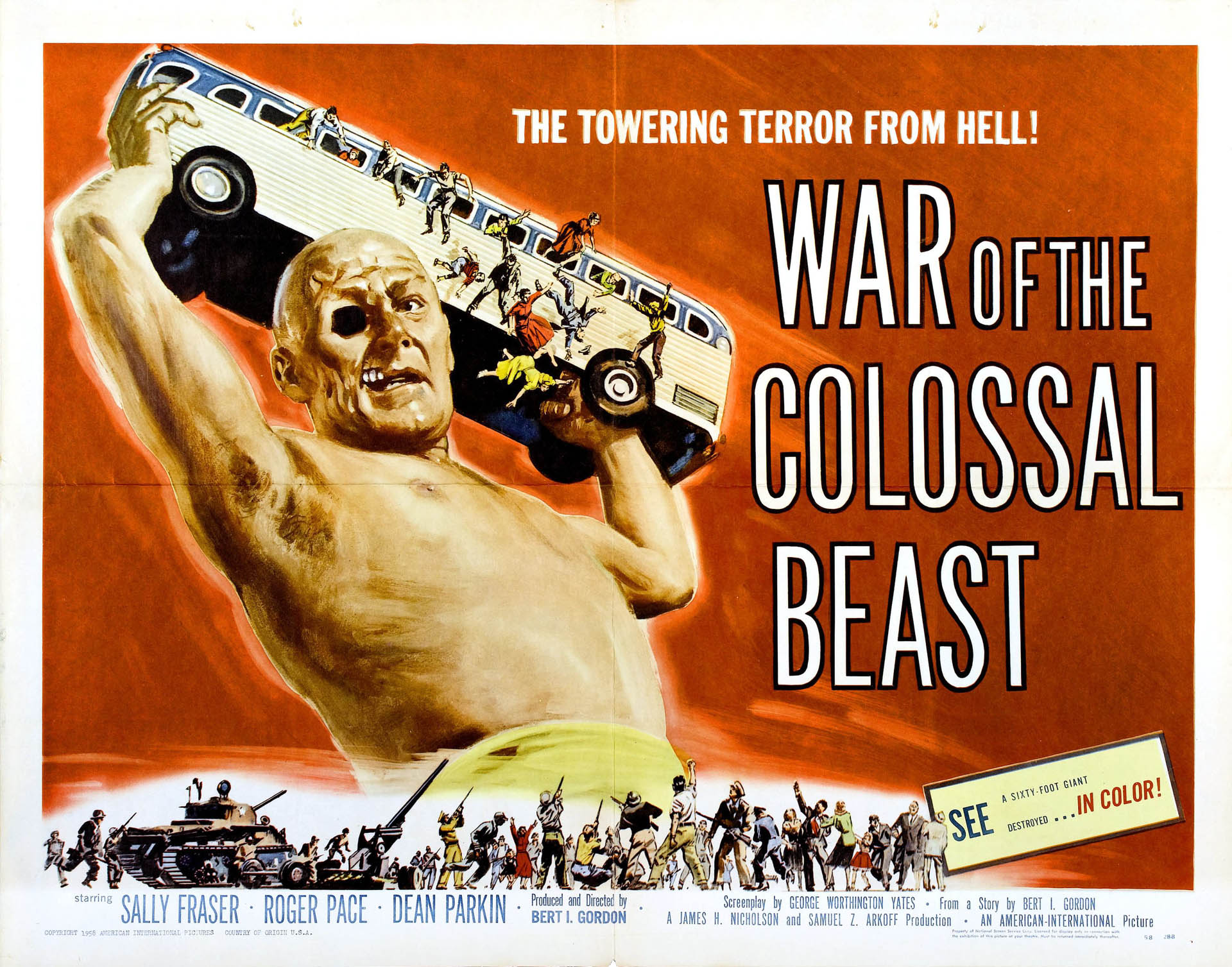
war-of-the-colossal-beast

It’s news to no one that shared universes are the big thing in movies right now

Marvel began building its shared cinematic universe in 2008 with “Iron Man” and has announced plans to continue it through at least 2020. Not to mention Marvel’s TV entries in that shared universe, like “Agents of SHIELD,” “Agent Carter” and “Daredevil,” the latter debuting on Netflix in April as the first in a series of “street-level” hero shows that will culminate in a “Defenders” series.

Of course, DC/Warner Bros. are trying to get their superhero universe going; Sony wants a “Spider-Man” universe but I’ll believe it when I see it.

And Universal has announced a shared universe of remakes of its 1930s and 1940s monster films featuring Frankenstein, Dracula and other creatures. I’m still pondering that one for another entry here.

So the other day, a movie company that I’ve never heard of, Cinedigm, announced plans to create, of all things, a shared movie universe. But using what classic cinematic tales?

The 1950s and 1960s exploitation movies of American International Pictures.

Specifically, 10 films: “Girls in Prison,” “Viking Women and The Sea Serpent,” “The Brain Eaters,” “She-Creature,” “Teenage Caveman,” “Reform School Girl,” “The Undead,” “War of the Colossal Beast,” “The Cool and the Crazy” and “The Day the World Ended.”

Strangely enough, I like this idea.

Marvel has this kind of thing perfected, down to an art and a science. I’m not sure DC’s superheroes will ever really come together on the big screen because of, I believe, a wrong-headed approach that seems more like Warner Bros. is ashamed of comic books.

But the AIP films, some of which were originally directed by low-budget auteur Roger Corman?

That’s genius.

Not because the company says it intends to shoot all 10 movies back-to-back from recently-completed scripts. Not because remaking these old AIP classics for cable TV a while back worked so well.

Because these dimly-remembered movies are perfect fodder for the remake machine.

Somebody once said that if you were going to remake a movie, don’t remake a classic. How could a remake of “Psycho” possibly work? (It didn’t.)

But with the AIP flicks, most people won’t be comparing them and, unless the remakes are horrible, they won’t be comparing them unfavorably.

And the idea of a universe shared by the monstrous, mutated “Colossal Beast” and the juvenile delinquents of “The Cool and the Crazy?” How can that possibly work?

The producers say the movies will share “a recurring cast of antiheroes, monsters and bad girls.” I can’t say that’s a bad idea and I base that on what Marvel has done with its movies.

Really, consider how improbable it might have looked, 10 years ago, to propose a shared universe that would include a bone-crunching political thriller, a good-natured space opera, a Nordic fantasy world and a rampaging monster movie. Yet “Captain America: The Winter Soldier,” “Guardians of the Galaxy,” the “Thor” movies and the Hulk’s appearances all worked.

Who’s to say those juvenile delinquents won’t end up fighting alien invaders to big box-office returns?

Stranger things have happened.