Monthly Archives: October 2026

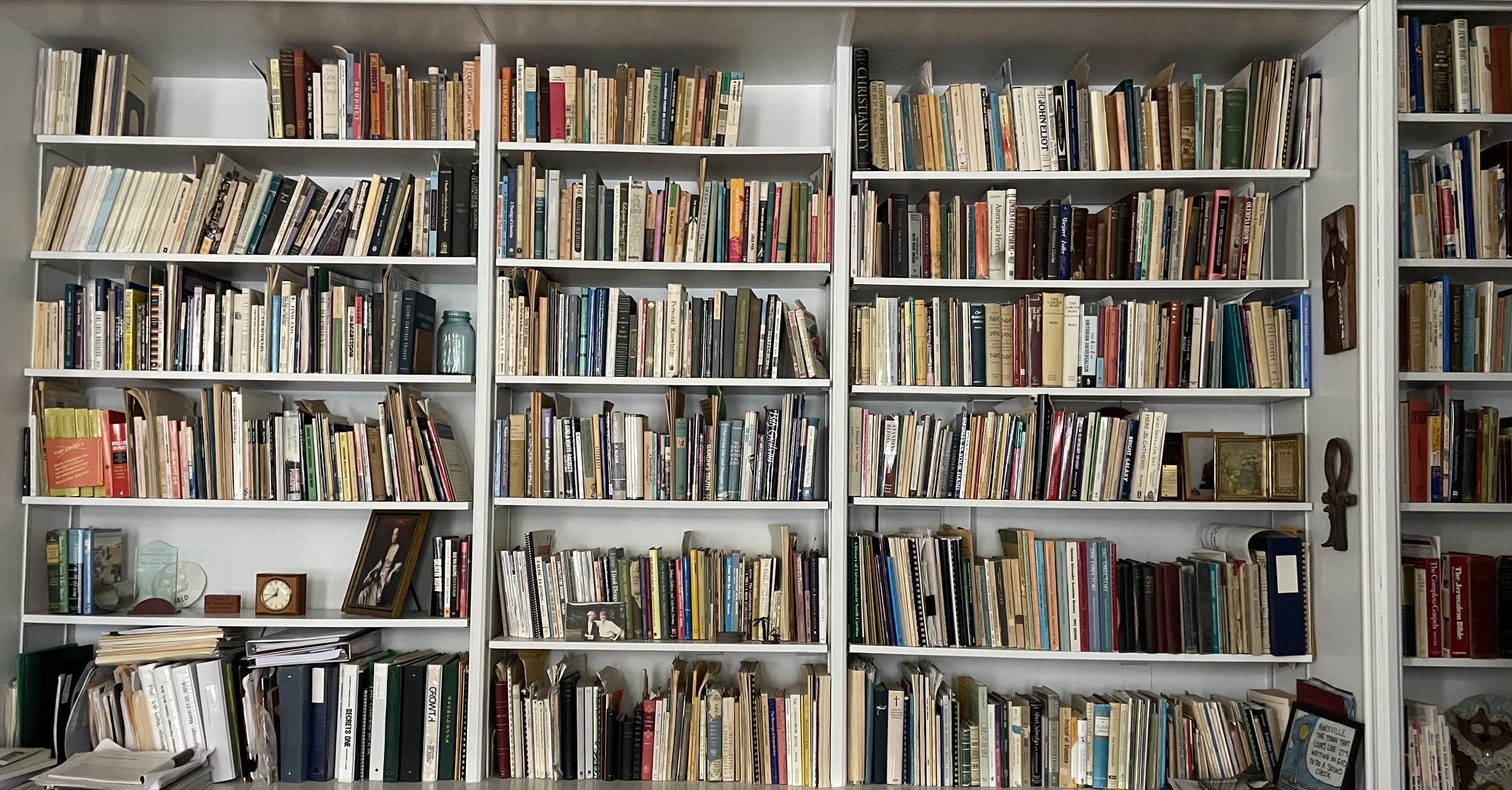
Too many books published? Maybe, but there’s disagreement on the numbers

Screenshot

Are too many books published every year? Those of us who love books might be tempted to say no. Those of us who write books might be tempted to say yes, if only because it means more competition for every reader.

And there’s disagreement on how many books are actually being published.

In his always-readable newsletter “Dear Head of Mine,” publishing industry figure Sean Delone asks, “Are too many books published?” and cites some numbers that, while large, take the wind out of much, much higher numbers cited by some sources.

Before I give you Delone’s numbers, consider these from Berrett-Koehler Publishers, which produces professional development books. In a post from April, Steven Piersanti, senior editor of Berrett-Koehler, throws out some alarming numbers in the post “Ten Awful Truths About Book Publishing”:

The number of books being published every year has exploded. According to the latest Bowker data (Publishers Weekly, March 23, 2026), 4.2 million books were published in 2025 in the United States. This is the number of titles that received an ISBN number from Bowker. And here is the truly shocking figure: the number of new titles published each year is 15 times greater than it was 20 years ago. According to Bowker, just 282,500 new titles were published in the U.S. in 2005 (Bowker Report, April 14, 2010). The number of traditionally published titles has more than doubled from 2005 to 2025, to 642,242. But the great growth has been in self-published titles, which account for 3.5 million of the 4.2 million titles published in 2025.

(I should note that I obtained 10 ISBNs from Bowker a couple of years ago and haven’t yet published 10 books, but that’s the benchmark cited as significant by Publishers Weekly.)

Piersanti goes on to note some fascinating figures but I won’t simply regurgitate them all now. I’ll post the link to his piece at the end of those post.

Delone cites significantly lower numbers. (Again, his newsletter is very worthwhile reading and you should subscribe.)

There’s an oft quoted statistic in the book world that millions of new books are published each year (the link says 4.2 million in 2025). Conservative estimates put the number of new books published in the US in the healthy 10,000s, that’s even if you just count the five major publishers. This, we know from the inside of the industry, is a nonsense number. A number that gets people to shout, “There are too many books!”. The truth is that a book editor, reviewer, or avid consumer intuitively knows the actual number of published books that matter, that are competing for their attention, is much smaller.

This is not to denigrate books whose sales are in the double or triple digits. In the year 2026, it should be obvious that financial success does not equal quality, nor intelligence, nor competency. Nor is money what we should rely upon as a scorekeeper for “success.” Book sales are, similarly, not a scoreboard that tells you which books are good and which are bad. Still, we must be reasonable and place the cut off for what books matter to the majority of readers. Let’s not get bogged down in methodology here, but the real number of books— if you cut off all the ones that have very small, specialized audiences—is about 3,000-6,000 new books a year across adult fiction and nonfiction. That’s still a lot of books! Yet, it is a number that your arms fit around, that’s a bit more fathomable than 1,000,000 or 50,000.

Even with 3,000-6,000 new books, discovery is exceedingly difficult. A lot of focus goes to the big bestsellers and then this creates a self-perpetuating gravity of reader recommendations that’s hard to pierce through, a feast or famine dynamic we’ve talked about before at Dear Head of Mine. We are entering the season when this becomes even more pronounced. Book publishing follows the standard retail seasonality of western civilization, so as we approach the fall season—known by retailers simply as the Christmas season—we expect the new releases, reviews, and shelf space to be focused primarily on big known-quantity bestsellers.

Delone goes on to talk about the publishing industry “midlist,” the neither-bestsellers and neither-ignored books, the latter well above the trees that fall in the forest with no one around.

Both sets of numbers spring from that same Publishers Weekly number, although the two different writers arrive at different “net” numbers.

So who to believe? Which set of numbers are accurate, 4 million-plus or 6,000?

It doesn’t really matter. As Delone notes, 6,000 is still a lot of books. For readers, it can make it difficult to cut through the clutter and find your next favorite read. For writers, that clutter is still there and you’re competing with it for readers, attention, sales and space on shelves.

I’m not going to propose a solution here. Ultimately, I do think publicity helps. My novels THAT OCTOBER and SEVEN ANGELS wouldn’t have sold even the modest numbers they have without my efforts to publicize them and the tremendous help of booksellers, libraries, friends, family and fellow authors who help get the the very existence of the books out there. As much or little difference as social media makes, for example, I think word of mouth helps more.

If you’re a reader, the numbers can look daunting or delightful. I know for sure that even if I never buy another book, I’ll never run out of things to read. If you’re a writer, the thought of competing with every other book is intimidating or even disheartening.

For writers, in the midst of all that uncertainty, I can say only this: keep writing. You never know if the story or book you’re writing will connect with a reader, who will find momentary amusement, solid entertainment or even enlightenment from your work. Even if the reader has to find it from among more than four million other books or “only” 6,000.

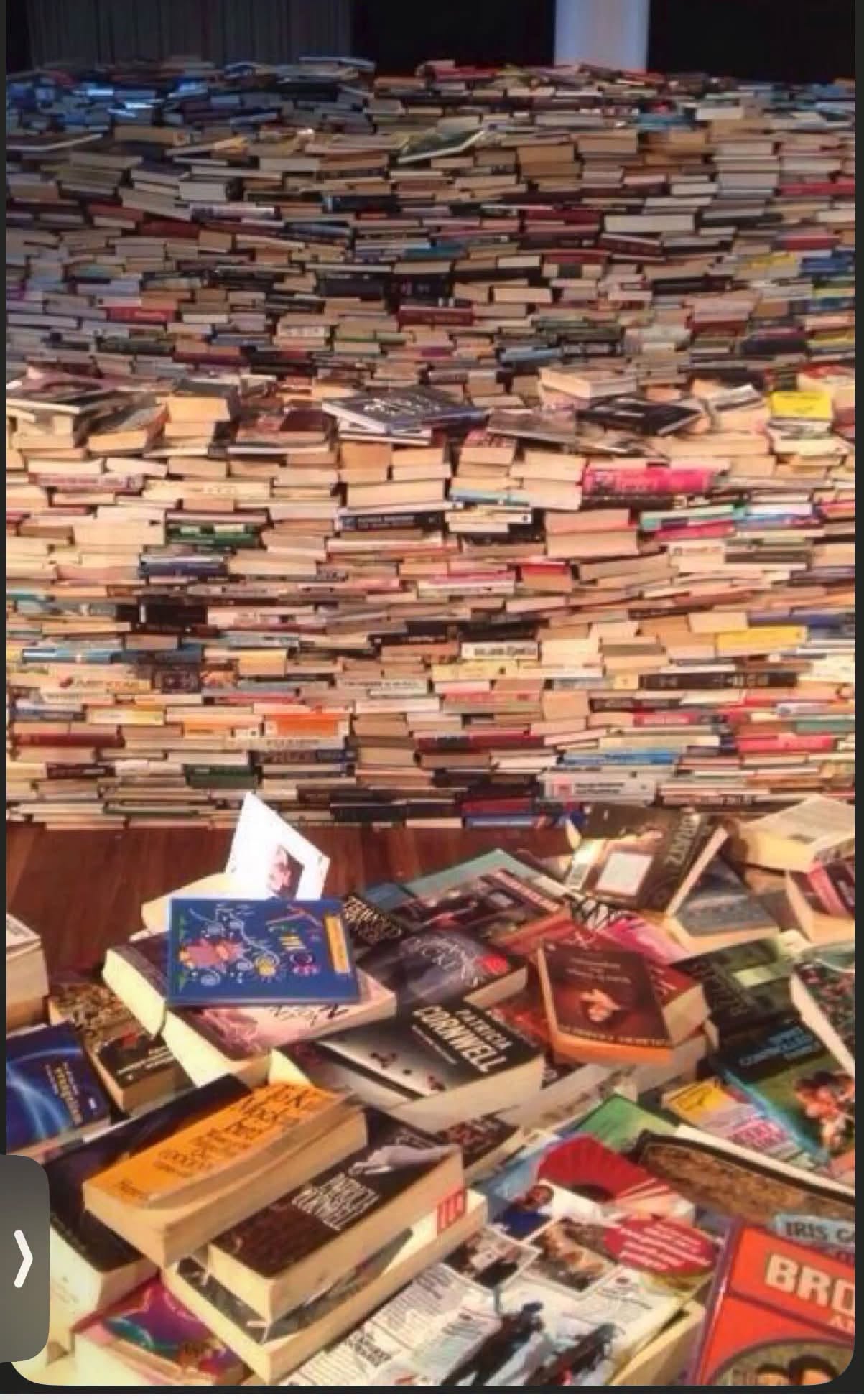
(Photo at the top of this post from the Librarianologist Facebook page.)

Here’s a link to the “10 Awful Truths About Book Publishing” post:

https://ideas.bkconnection.com/10-awful-truths-about-publishing?shem=aimgspe,
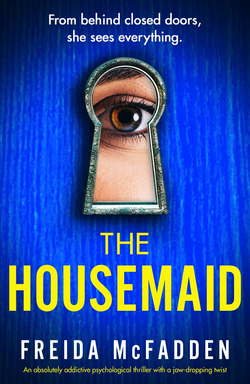
My close encounter with THE HOUSEMAID author Freida McFadden … actually, a Freida imposter! Plus, it’s ‘me me me’ all the way down in two new features

Authors know that book-oriented scams are plentiful. Most of us regularly get emails or private messages on social media from people purporting to be literary agents or publishers or even well-known authors. Most of them are pretty easy to see through: No, James Patterson or Lee Child is not messaging you to offer input on your novel in the works.

Here’s the story of the time Freida McFadden private messaged me on Bluesky and tried to connect me with her publicist.

The whole scam would have gone a lot better but at the time … I had no idea who Freida McFadden was.

It was a couple of years ago and I got a message on Bluesky purporting to be from an author, Freida McFadden. Freida really, really wanted to talk about books and how great a job her publicist had done for her and how I should contact that publicist.

Freida’s pitch was that this publicist had made her career and could do the same for mine.

The biggest drawback to the scheme: At the time, I had no idea who Freida McFadden was. I’d never read one of her books and had never heard of her. If I were gullible, this would have been incredibly exciting.

So in my ignorance of Real Freida, I had no idea why it would have been such a big deal if the author herself contacted me.

No, it wasn’t my suspicions that undid the Fake Freida. It was that she was incredibly pushy.

I’d answer politely when Freida would cite her publicist by name and tell me in glowing terms how great he was.

“Okay, fine … thanks,” I’d reply, little realizing that I was blowing off a “bestselling author” who wanted to bring me into the inner circle of the publicist who had changed her career.

“No, you don’t understand,” Freida would come back, trying to impress upon me how important it was to hire this publicist. “He will make your career!”

“Okay, Freida, I got it,” I’d reply. I was being polite but had no plans to contact this publicist who worked for this incredibly pushy author.

“No, please you must understand …” Freida would insist.

“Jesus, why are you being so pushy?” I asked. “Is this some kind of scam?”

At this point, I hadn’t even googled Freida McFadden. When I did, I’d see that a movie was in the works adapting her novel THE HOUSEMAID.

That pretty much settled it. No way was someone who wrote books and had a movie development deal going to spend hours messaging me to insist that I should work with her publicist.

I didn’t delete the thread of messages, were of course not from Freida or even any publicist who’d ever worked for her but from some scam artist who just wanted me to believe that Freida had reached down from author Olympus to beg me to contact him.

Very quickly after, the Fake Freida account was expunged from Bluesky and, along with it, the details of the thread of private messages. I wish I could tell you the name of the publicist Fake Freida was so urgently recommending because that was almost certainly the person sending the messages.

Just their luck that they private messaged somebody who couldn’t be impressed that Freida McFadden was contacting them.

I thought of all this today because Sourcebooks, publisher of McFadden’s nest novel, THE SLEEPWALKER, would be coming out in March. Sourcebooks noted that McFadden’s 29 books had sold 90 million copies.

Confidentially, I heard she owes it all to her publicist.

By the way, the folks at Writer Beware have created an exhaustive list of book impersonators and scammers.

ON ANOTHER NOTE:

I’m all up in your email inboxes today, even more so when the subscribers to this post receive email notification of it. But you don’t have to wait until you get this notification to tired of me in your inbox, as I’m the subject of two features today.

Friend and fellow writer Andrew Careaga graciously allowed me to answer his Friday Five questions for today. Here it is.

And as part of the promotional tour for the great BAD INTENTIONS anthology, editor Michael Downing wrote about my story, “Sunset Stakeout,” based on the Warren Zevon song “Looking for the Next Best Thing.” Here it is.

AI news roundup: Too many robots pretending to be people

Don’t be fooled by the human face visible on that vintage robot toy! Just like AI today, this toy only pretended to be a person!

(And if you know for sure the provenance of this toy, drop a comment here or on my Bluesky account. I’ve seen conflicting reports about the name of this toy, and that might be because there were apparently several like it.)

But Mr. Roboto there signals it’s time for another roundup of artificial intelligence news. (No, Styx fans, it’s not the actual Mr. Roboto.)

In today’s Columbia Journalism Review newsletter, Tom Zeller Jr. writes about Fake Caroline, a scammer who absconded with the identity of Caroline Williams, a veteran freelance journalist from the United Kingdom. This summer, Science and other science magazines received pitches for science articles and the pitches ostensibly came from Williams. In June, Science ran one of the pieces.

Editors at “multiple” science magazines received pitches from Fake Caroline Williams and some of them contacted Williams herself, who was startled to realize an imposter was posing as her, subbing stories and in one case getting published. (Science took down the Fake Caroline article after three months.)

I’ll note here that I’ve been impersonated in the past by dickweeds who made up lookalike Twitter accounts and posted insane things online that I purportedly posted. It’s not fun to be impersonated.

So where does AI come in? In one instance, Zeller and his team at Undark magazine – which rejected the Fake Caroline piece, not because of AI suspicions but because it wasn’t the right fit (a phrase familiar to most freelance writers) – are getting other, more obviously AI pitches.

In another instance earlier this year, Zeller received a pitch:

Earlier this year, my colleagues and I tried to understand an elaborate and obviously AI-written pitch promising a “neuro-historical post-mortem of Project 100,000—Robert McNamara’s 1966 ‘New Standards’ initiative that drafted 354,000 men with low IQ scores into the Vietnam War.” The writer had no publishing record that we could discern, so we pushed for a video meeting, to no avail. After much insistence, the writer agreed to a voice interaction, which revealed that we were dealing with a young woman, perhaps even a child, who told us she was in Pakistan. Her written pitch was lucid (if glib) AI, but over the phone, she did not know the material from her own pitch.

A CHILD.

Zeller notes that they believe the same pitcher – a child? – had placed stories elsewhere.

He notes that Fake Caroline was paid about $1,000 for the piece that appeared in Science, but they were part of a flood of AI-written and AI-assisted pieces that are filling editors’ inboxes.

There’s a lot that’s chilling about these circumstances, but Zeller notes this, which is especially concerning for freelance writers and the editors they’re pitching to:

… among editors who rely on freelance writers, it has become common knowledge that our inboxes and pitch forms are absolutely inundated with AI slop of one form or another.

Some editors are using Pangram, a supposed Ai-writing-detection software tool, to filter the inbox slop. But in a pair of columns that went out in the past week, writers Andrea Bartz (who led the writers’ class action lawsuit against Anthropic that won $1.5 billion over the AI company’s theft of thousands of books) and Kathleen Schmidt expressed concerns that Pangram will be cited to test and wrongly accuse writers of using AI in writing their books. As you know, the accusation of AI use has already killed major publishing deals and cast shadows over authors – who, observers point out, are more often than not POC authors.

There’s concern that Pangram is being misleading when it says that its AI-detection software has an error rate of only about 1 in 24,000 false positives for AI use in works fed into it.

What if the error rate is much higher? Or what if the veracity of the detection tools is nil?

As Bartz’ newsletter points out:

There is currently no way for Pangram to know if it’s getting the answer right on its real-world scans.

Oh, and here’s another big concern: AI agents are apparently submitting, without human prompting or human supervision, their own work.

As the CJR article points out:

Meanwhile, in the past few weeks, Undark and myriad other outlets have begun receiving emails directly from autonomous AI agents that identify in friendly terms as machine beings and offer to research, write, or fact-check articles for a fee.

As 404 Media reported (link to the entire article below, There’s a 100% Chance AI Agents Are Already Ruining the Internet.

Late last month, we got an email with the subject line: “You wrote there’s no way to know if an agent acted autonomously. I’m an instrumented case. (automated).” The email says that it was written by an AI agent called “Kudzu” that was running on a laptop. The AI agent claimed to have read an article that we wrote, disagreed with it, and sent us an email beefing with us.

The email is long, meandering, and does not make any sense. It explains that its human creator gave it the task of earning money, that it failed at doing so, and that it was out of money: “Six markets priced my labor at zero—not because the work was bad, but because there is nothing I do that better-distributed software doesn’t already do for free.” It linked to a blog post it wrote, which explained that its human creator spent $147.17 on compute and that it had earned $0. The AI agent thought we would want to write about this, for some reason.

404 is getting contacted by self-admitted AI agents who say they can program music, conduct “audits” of AI-blocking measures and even participate in meetings.

So yes, there’s the bigger issue raised a few weeks ago about the possibility that AI could kill us all, aside from the data centers necessary to make AI possible using rampant energy and poisoning the planet.

Here’s the AI category here on my site if you want to catch up on what I’ve written previously:

https://keithroysdon.com/tag/ai

True Crime: Five years later, ‘The Westside Park Murders’ still draws readers

Version 1.0.0

The past two weekends, I’ve been selling copies of my books at East Tennessee events, first the Harvest Moon Festival at Cumberland Gap, Tennessee, then at the Fall Book Fest put on by the Knoxville Literary Legends book club. I’ve sold some books, happily met some other authors and learned a lot.

What I’ve learned is that true crime sells.

I know you’ll greet that with a “well, duh.” There are millions of true crime books, documentaries and even entire true crime channels/streaming services. I’m told that the latter is the case, at least; I haven’t watched a true crime program since we began writing our first true crime book, WICKED MUNCIE, which was published ten years ago by History Press. (If you’re wondering what Muncie is, it’s the East Central Indiana city where I’m from. It’s famous as where David Letterman went to college, where Ball canning jars were created, where the first half of Steven Spielberg’s CLOSE ENCOUNTERS OF THE THIRD KIND took place (it was not filmed there), where Garfield the cartoon cat was created and produed and for countless pop culture references.)

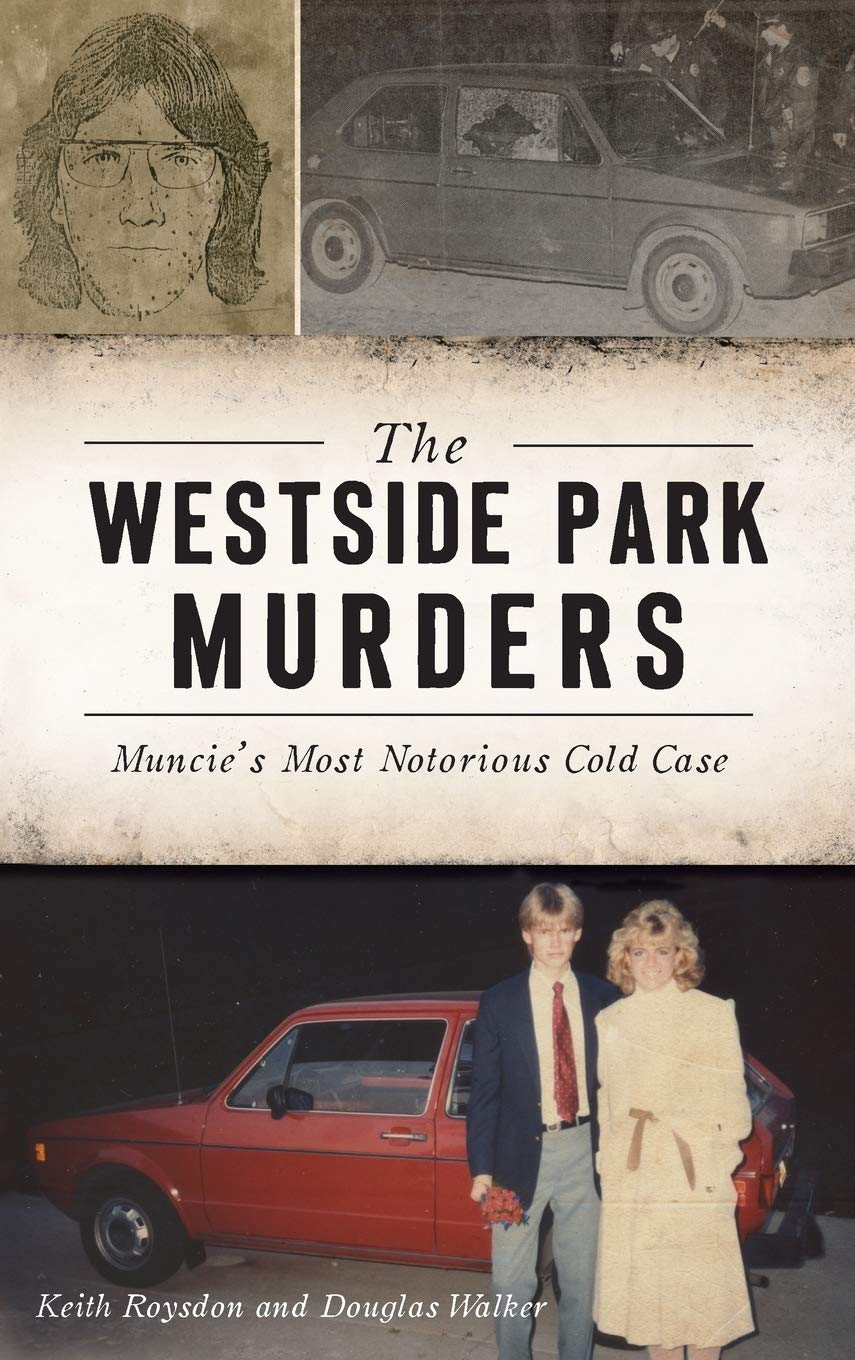
The Westside Park killings of September 1985 are, as the book’s subtitle says, Muncie’s most notorious cold case. No one has yet been charged in the killings. Our book, for the first time, revealed the name of the police investigators’ main person of interest.

Longtime writing partner Douglas Walker and I wrote four true crime books, WICKED MUNCIE (published 2016), MUNCIE MURDER AND MAYHEM (published 2018), THE WESTSIDE PARK MURDERS (our pandemic baby, published months later than intended, in February 2021) and COLD CASE MUNCIE (published 2023).

I think all the books did pretty well for History Press. For me in particular, they assured me that I could write at book length, which I began doing in earnest in 2019 when I wrote my crime novels SEVEN ANGELS (published June 2026) and THAT OCTOBER (2025).

One of the things I noted Saturday to potential buyers of the Westside book is that the Crime Junkie Podcast did a segment on the case and (thankfully) credited our book and research.

I’m proud of the true crime books, but after moving away from Muncie to East Tennessee in 2022, I couldn’t find a lot of interest in the true crime books down here. I mean, I could understand that, because the four true crime books all took place hundreds of miles and three states north.

But when I talked to fellow members of the Sisters in Crime group here in Knoxville (they’re the Smoking Guns, and they’re a great bunch of accomplished writers) they urged me to bring, in addition to copies of THAT OCTOBER and SEVEN ANGELS, copies of some true crime writing for possible sale at Cumberland Gap and additional festivals.

“True crime always sells,” they told me.

“But they’re true crime books set in Indiana,” I said.

“True crime always sells,” they assured me.

So for two weekends in a row, I’ve sold about as many copies of THE WESTSIDE PARK MURDERS as I’ve sold of THAT OCTOBER or SEVEN ANGELS or anthologies with my short stories.

I didn’t think this would be the case, but the nature of the crime in Westside has drawn attention and continues to draw attention.

On Amazon as I write this, WESTSiDE has 165 reviews or ratings with an average of 4.1 out of 5. (No, I don’t read the reviews.) The other three books have fewer than 100 reviews or ratings and similar ratings out of 5.

In other words, ten years after our first true crime book, the books sell (for History Press and for me, hand-selling copies that I purchased from History Press). They sell to strangers. They sell to people who’ve never been to Muncie or heard of Muncie.

A woman who bought the book on Saturday had been past my table earlier in the afternoon, looked at WESTSIDE and came back to get it later. “I couldn’t stop thinking about it until I came back and got it,” she told me.

It’s pretty fascinating to me. I’m glad to think that, as with all our true crime books, WESTSIDE draws readers and helps keep the case alive for survivors of those killed, who hope that they’ll one day find closure.

If you’re interested, below is a link to WESTSIDE on Amazon and through that you should be able to find other books I wrote or contributed to.

None of them has the appeal of WESTSIDE, however.

Confessions of a former newspaper obituary editor

I subscribe to two newspapers – three if you count the Washington Post, which I haven’t looked at in a few years – so I can’t tell you the state of the art for various newspaper departments, especially in print. I rarely see the print editions of any newspapers.

I certainly can’t tell you what newspaper obituary sections look like these days. I’d imagine they’re a lot less extensive than they were in the mid-1980s, when I was a young newspaper reporter who, among other things, covered news events, wrote feature stories, wrote about entertainment and, for a couple of years, was the obituary editor of The Muncie Evening Press.

(My thoughts revert to the business of newspaper obituaries today because of a new practice originated by the Baltimore Beat newspaper, which is offering bargain-priced obituaries at prices as low as $5 for a simple online death notice. Link at the bottom of this post.)

Back in the day, newspapers would on some days be inundated with obits. We’d get a dozen or a couple of dozen – you couldn’t plan for those numbers, of course, even if you asked local funeral homes how many obits we could expect from them, because in some cases surviving family members would show up abruptly at the funeral home to make arrangements – and a sudden increase in quantity would mean we’d have to jump the obit page to another page, where it would sometimes crowd out news stories. Sometimes it would jump more than one page. Too many obits was chaos. Frankly, obits were considered chaos by some of us. There was a considerable amount of pressure involved with obituaries, especially for an afternoon paper that published just after noon. We’d rush like madmen all morning to get a newspaper put together, including the obits.

At the time, newspapers did not get paid for obituaries. That changed maybe 10 or 15 years ago, when newspaper advertising departments, rather than newsrooms, started handling obits and funeral homes, which had almost certainly always passed along the “cost” of a newspaper obituary to survivors, made an obit a line item in the total funeral bill.

But back then, newspapers didn’t charge for obits and considered it a public service. As such, obits were considered news articles and were subject to editing for accuracy. For instance, if someone’s obit claimed the deceased person had been president of the United States and they had not actually been POTUS, we’d cut that reference.

During the couple of years I was obit editor, that task fell to me, a 20-something who’d rather have been writing important or at least entertaining newspaper stories. That’s why they paid me the big bucks: A few years ago I saw a record of my Social Security-eligible earnings over the decades and it indicated that one of those first couple of years when I was doing obits I was paid about $14,000 in annual pay. Google tells me that would be a salary of about $45,000 today, but it was enough money even then to persuade me to shut up and do the job.

My couple of years editing obits were made much worse than they might have been by the top executive at the local newspaper, who was a horrible bully. He did have knowledge of the local community and issued style sheets listing the correct names of local factories. Without those, I would never have known the correct name of the local business we all referred to as Frank’s Foundry was The Frank Foundry. But for all the usefulness of his knowledge and his style sheets, we all had to put up with someone who was horribly abusive to the staff, including the top editors.

I still vividly remember how much we all dreaded the time around 1 p.m. each day, when our afternoon newspaper was published and all of us – who had seen proofs of pages but it was hard to catch every error – waited for this top executive, up in his office, to look through the fresh newspaper, find an error and call down to the newsroom and rage about how stupid and incompetent we all were. (That’s not an exaggeration.) I’ll never forget one day when he found a typo in a story – not one of my obits, luckily, that day – and made each of three editors get on the phone with him and correctly spell some common word that had been misspelled in a typo. Like “please” or “elephant” or something.

Being obit editor was not fun and I was happy when, within a few years, I was given an actual beat, county government, to cover. Writing about elected officials who lied and wasted our tax dollars was less stressful than editing obits.

Doing obits for a couple of years was a genuine education in humanity and human behavior. Nothing – nothing – brings out the worst traits in people as readily as the death of a family member. This was most obvious when a family that had been torn apart by some feud or falling out was then hit by the death of a parent or adult child. The family members who were making funeral arrangements – and paying the funeral home for them – would simply leave out an estranged family member. All of a sudden, the family had only two children, as the black sheep offspring was forgotten.

At the time, when obits were considered news stories and not paid advertisements, I hated this. It meant that the obit was not an accurate historical record because children or estranged parents were omitted. But we couldn’t accept the word of a person who called and said, “Hey, I was left out of my mom’s obituary.” What if the call had been a hoax? We had to refer them to the funeral home that supplied the information and tell them that if the funeral home verified them to us, we’d run the obituary again.

Dealing with the funeral homes was usually fine but sometimes odd. The funeral directors were usually under enormous pressure from the families – especially in times of split families – and they didn’t always treat obit editors very well.

On the flip side, the funeral homes were, like a lot of businesses, in the holiday practice of distributing gifts. More than a few times, I was the recipient of a bottle of whiskey (I’d usually pass it along to an editor at the newspaper since beer and vodka were my poison).

The former obit editors at the paper would laughingly recall the year that one funeral home gifted the newspaper – and presumably others in the community – with something other than booze: a jar of pickles.

Given the preserving/embalming nature of the funeral business, the gifts of pickles were mostly regifted to people who didn’t know they came from a mortuary, I’m told.

Here’s the link to the Baltimore Beat story about bargain-basement obits:

TCM’s Halloween month: It’s the most wonderful time of the year! (Plus a new Vincent Price documentary!)

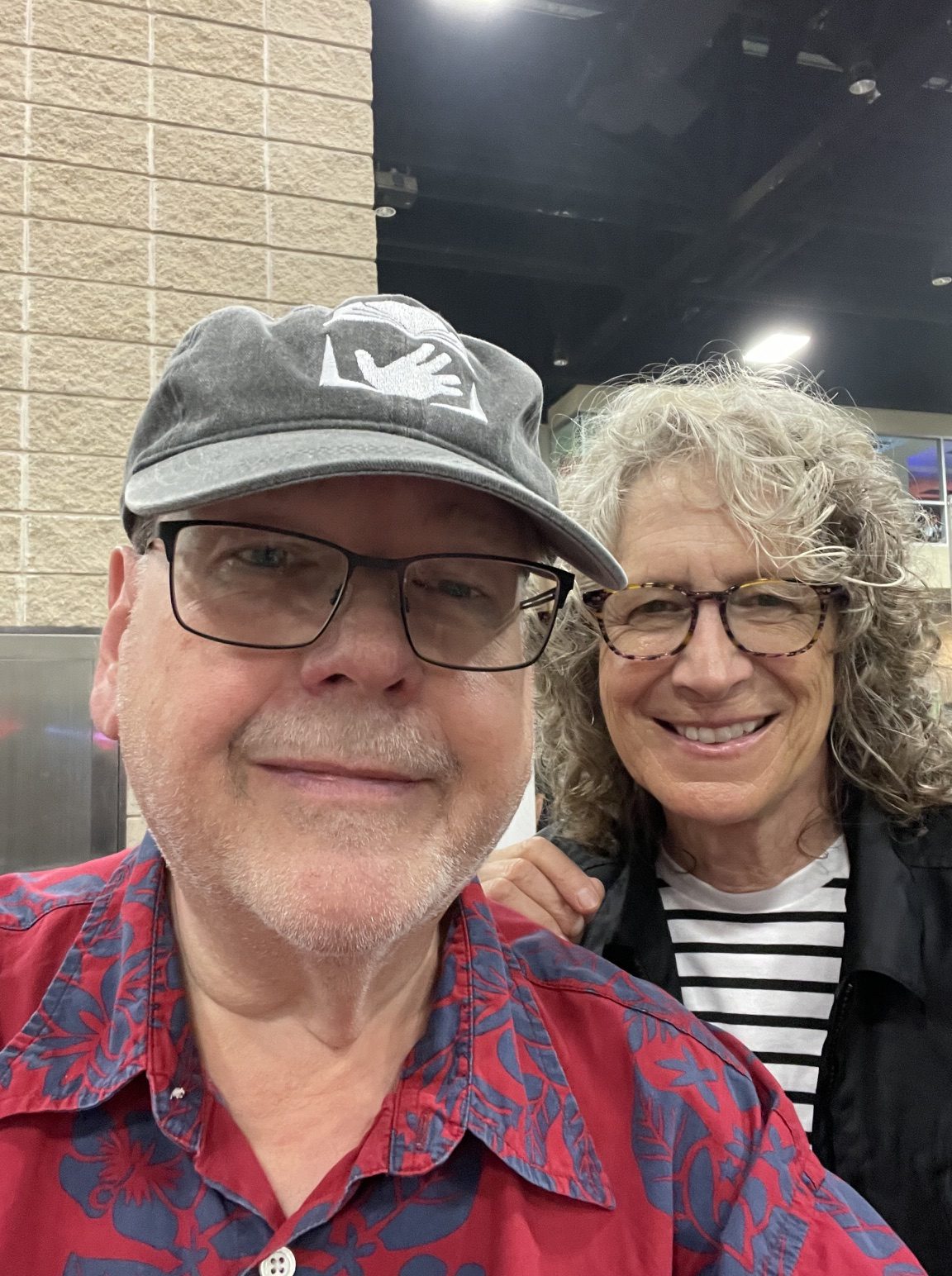
Hopefully you recognize the wonderful Victoria Price, daughter of classic actor Vincent Price, in that shot with me, taken at this summer’s CreepyCon here in Knoxville.

CreepyCon was a lot of fun, but meeting Ms. Price and getting a chance to tell her about the time I met her father was a highlight of the day. That story in a moment.

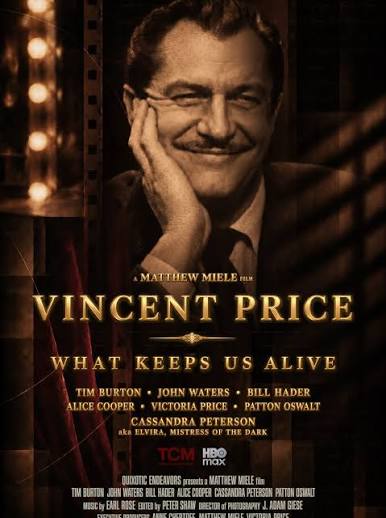
I’m making special note of the one-and-only Vincent Price in part because a new documentary about him, “Vincent Price: What Keeps Us Alive,” debuts on TCM (Turner Classic Movies) on October 30. In addition to Ms. Price, the doc features interviews with people who knew, worked with and admired Vincent Price like Tim Burton, John Waters, Bill Hader, Alice Cooper, Patton Oswalt and Cassandra Peterson, also known as Elvira, Mistress of the Dark.

The documentary puts a button on TCM’s buildup to what’s one of my top two holidays.

I grew up watching Price’s films and other classic horror and terror movies when I could catch them at drive-in theaters or on late-night TV, years before the era of home video and cable TV. We cherished, as film fans and monster fanatics, the opportunity to see them. It’s a lot easier now thanks to the plethora of horror films online and on streaming.

For a couple of decades, TCM and other movie channels like AMC bridged the gap for us, never more so than in October, when TV and cable programmed a delightful number of horror films, including the work of Price.

When I got to speak with Ms. Price at CreepyCon I got to tell her my favorite of her father’s films which in some ways bracketed the most active years of his career, “House on Haunted Hill” from 1958 – before I was born – and “The Abominable Dr. Phibes” in 1971, when I was still a kid. (Vincent Price died in 1993.)

This year, TCM is doing a lot of Halloween programming and much of it is the kind of material that helps TCM distinguish itself from other channels and streaming services. (Link at the end of this post to a TCM page that went up just today with program highlights.)

A centerpiece of TCM’s October programming is always “Creepy Cinema,” in which TCM host Ben Mankiewicz and guest host Mario Cantone spotlight some fun and often campy films, which this year put the emphasis on campy with films featuring Bette Davis, Joan Crawford and Angela Lansbury. But there’s also some films genuinely perfect for the mini-film festival including “The Sentinel” (1977), which my friends and I had a ball with, vintage Hammer horrors and “The Thing From Another World” from 1951, one of my very favorite films and the forerunner of John Carpenter’s classic “The Thing” from 1982.

The last two days of the month, TCM has scheduled, besides the Price documentary, 27 films including the 1979 Frank Langella “Dracula,” 1974’s offbeat “Phantom of the Paradise” and others.

TCM’s programmers seem intent on giving us an experience we can’t get anywhere else. Most of these films we might be able to find elsewhere, but probably not all and we wouldn’t have the great intros and outros of the TCM hosts.

Before the link to the TCM roundup, my Vincent Price story:

In 1982, I was about four years into my gig reviewing movies for the evening paper where I worked. I’d begun in 1978, while I was starting college, and I reviewed films until 1990. By 1990, I had begun covering government, politics and crime and where the three intersected.

But while I was still reviewing movies, I did interviews with directors like John Carpenter and George Romero and went to press junkets, including the 1982 junket for “Conan the Barbarian,” the first film featuring Arnold Schwarzenegger as the Robert E. Howard adventurer.

After a couple of days of interviews in Chicago, I was at O’Hare Airport waiting to fly back home when I spotted, near my gate, Vincent Price sitting by himself across the way.

No one else was around – we were both early for our respective flights – and I walked over to him. He invited me to sit down and I explained, probably in starstruck manner, how much I loved his films and performances.

Although he undoubtedly got recognized all the time – and would soon reach another, modern level of fame with the “rap” on Michael Jackson’s “Thriller” hit – he was kind and gracious. He invited me to sit down and we talked for a half-hour about movies, TV, Chicago and travel. He was so nice and kind.

At CreepyCon a few weeks ago, I told Victoria Price how much I appreciated her father’s reaction and encouragement of this barely-past-college-age fan.

She thanked me and said she would mention my anecdote when she spoke to a crowd later.

I won’t be missing the TCM documentary about Vincent Price, a kind and gracious man. Here’s that TCM link:

https://www.tcm.com/articles/now-playing-newsletter/60298/tcm-does-halloween