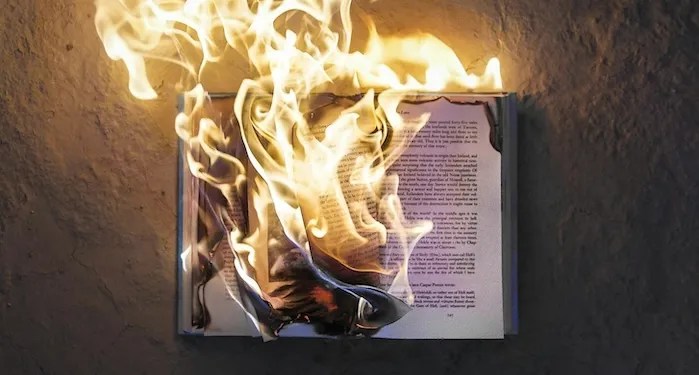
If I were to turn this space into a full reporting of every assault on books and literacy and writing and publishing and privacy and freedom of choice, I’d never get anything done. The folks at Book Riot – that’s their image above – are doing a good job of keeping track of every petty tyrant’s ambitions to tell you what you can and can’t read.
But I will note this: In a month of frustration and anger at the attack on books and our freedom – and you bet your ass those two are connected – by everything from greedy AI companies (who need to go broke and out of business sooner rather than later, please and thank you) and petty tinpot wannabe dictators over their own little fiefdoms, there’s little that has presented as so ignorant and intolerant as “We’re coming for the books,” uttered recently by repugnant Republican Texas Lt. Governor Dan Patrick.
Here’s how the Texas Tribune reported it on August 19:
Lt. Gov. Dan Patrick on Wednesday vowed to pass legislation punishing public schools that do not remove graphic books from their shelves by knocking them down a notch in the state’s annual school performance ratings, which the state uses to seize control of underperforming districts.
Flanked by easels displaying printed covers of books he found obscene, the lieutenant governor said school boards and administrators have not been following a 2025 law aimed at weeding out lewd books from the shelves in Texas’ more than 9,000 campuses attended by some 5.5 million schoolchildren.
“It’s the law and we expect you to follow the law. So we’re coming for the books,” Patrick said during a news conference at the Texas Capitol. “We ask that you do it on your own and remove these books.”
The law from last year, Senate Bill 13, granted school boards the authority to approve and remove books based on complaints they receive, such as those from parents and activist groups. Before, those powers largely belonged to school librarians. But Patrick said an overwhelming majority of school boards have not taken any action, as the law nears one year in effect.
Patrick is no stranger to controversy over his ignorant, intolerant and politically questionable acts. I’ll leave it to more comprehensive online sources to tell you about that.
Book Riot notes that this is “manufactured panic over the content of books in school libraries,” and there’s certainly some head-shaking in noting that Patrick was conducting a publicity stunt for his podcast. The far-right activist/busybody who stood on stage with him was his next podcast guest and she’s put together a list of 2,200 “dirty books” that Patrick is touting as the state’s unofficial list of books that will get school libraries in trouble.
All of you know this space has become increasingly noisy lately regarding authoritarian-wannabe and oligarchs’ attacks on books and writing and publishing and privacy and freedom, because please have no doubt that anytime a politician and would-be authoritarian wants to ban books in school libraries, what they really want to do is control every aspect of your life, from your reading material to who you marry and how and when you reproduce.
Huge sweeping generalization there? I’m not gonna go the easy route and compare these wannabe dictator moves to the best-known authoritarian movement of the 20th century, But that’s what’s at work here.
So to cop a phrase from the old gun lobby bumperstickers, “You can have my books when you pry them out of my cold, dead fingers.”
As Kelly Jensen so ably put it in that Book Riot piece:
If laws like SB 13 are about local control, then why does one partisan activist brag about having been engaged in censorship attempts at 163 schools where she doesn’t have a student or pay taxes toward? Why does one partisan activist get to decide which 2,200 books are illegal in Texas?
This isn’t about local control. It’s about Republican control of anything and everything, down to local availability of books.