I like writing about the scourge of generative AI in the arts – obviously – and it seems like there’s new news almost every day.
I’ll make this quick:
In the new Publishers Lunch is a report on how some publishers have developed guidelines and methods of screening papers and books for AI use. (You’ll recall that the suspicion of AI has roiled the mainstream publishing industry lately, causing book deals to be canceled and, possibly, author careers to be stymied.)
Academic publishers cited in today’s Publishers Lunch have tried to come up with a constructive method of screening works submitted to them for use of AI. That’s because like a lot of publishing, academic publishers are being swamped with submissions of AI or AI-assisted slop.
The guidelines, which build on the use of AI-detection tools, set thresholds for when AI use is detected.
Some of the publishers have established four guidelines:
Assisted – AI helped you brainstorm or research but the writing is yours. Meaning, if you asked AI to find the relevant information for you and then you read those source materials and wrote from them, that’s a mechanical assist. It’s just AI working as a search engine.
Collaborated – AI drafted parts while you rewrote, verified, and made it your own. Meaning, if the facts, ideas, etc. came out of the AI model itself (e.g. you asked it explain something to you) and wrote from its answer instead of the source materials, that is AI collaboration and should be disclosed.
Generated & reviewed – AI produced the artifact, but you read every line, checked the facts, and stand behind it. To be clear, you hold responsibility for its integrity and accuracy.
Generated & unreviewed – AI made it and you didn’t really check. This is not acceptable AI use for PUP staff ever: internal, external or under any circumstance.
Publishers Lunch says that for at least one publisher, if a submitted work meets the last two guidelines, it’s rejected. That’s because that particular publisher correctly argues that the use of that much AI couldn’t be copyright-able because, of course, AI is based on the work of others.
I’m skeptical, but at least somebody is setting some guidelines somewhere.
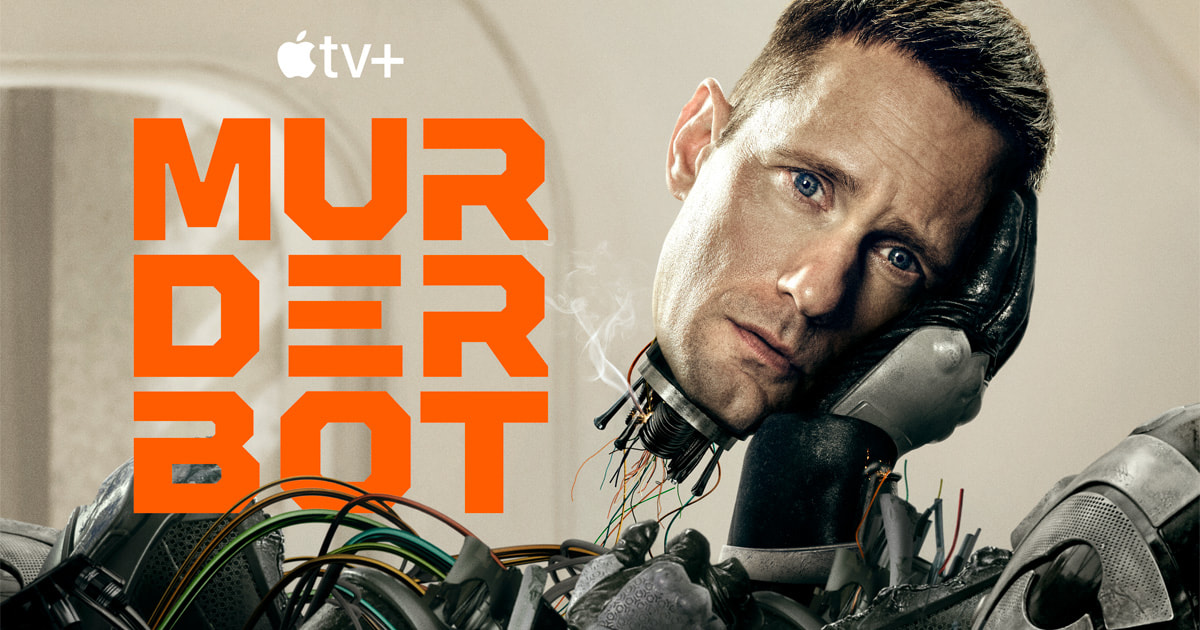
(Image at the top of this post is from the wonderful, funny AppleTV Plus series MURDERBOT, based on the series of novels by THE MURDERBOT DIARIES by Martha Wells.)
I had intended to follow-up my weekend post about getting my books in a local bookstore by suggesting what authors might do to achieve the same thing, but I’ve delayed that for the moment. First things first, and just like a house on fire, the dual plagues of AI and Amazon get our attention at the moment.
For a few weeks now, book lovers and people who hate AI have been despairing at reports about how companies that steal, buy or pirate books to train generative AI – thus putting creative people at risk of losing their livelihoods – have been buying and scanning books. The revelation comes out of the landmark class action lawsuit Andrea Bartz and other writers filed against Anthropic. Bartz and company won a $1.5 billion settlement on behalf of many, many writers whose work was stolen by the AI company.
Details of Anthropic’s practices came out in the discovery process, and they’re horrifying: The company was buying hundreds of thousands of copies of books, some of them older and out of print, and they’re cutting off the spines and feeding the pages into AI-making programs. The books are utterly destroyed. The judge in the Bartz case ruled that this practice was legal because the company had bought copies of the books, not stolen them. (They’re using older books to ensure no AI writing gets fed into the AI consumption process, of course.) Videos of this process – chopping spines off books and the ultimate shredding of the pages – are disgusting and disheartening.
And of course Anthropic isn’t the only AI company doing this.
Today, thanks to an ingenious investigation by 404 Media, we also know that Amazon is doing it. Maybe not a surprise – Amazon and its owner are widely regarded as awful; most of us who do business through them do so only reluctantly, or at least that’s how I feel – but the confirmation from 404 Media, which was also shared by Publishers Lunch this morning, is damning,
This is the lead of the 404 Media story published today:
Amazon is buying massive quantities of books, scanning them for AI training data, and destroying them in the process.
(I’ll link to the 404 Media story at the end of this piece.)
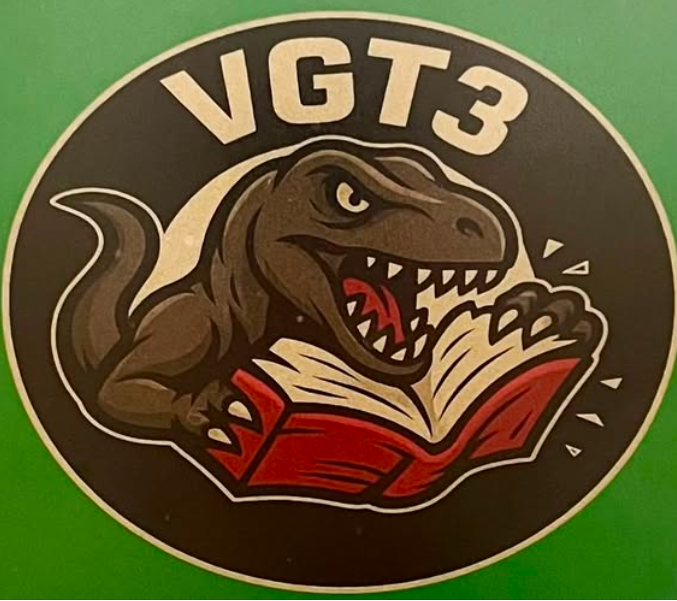
404 Media cleverly hid an AirTag-type tracker in an old book that was to be sold to Amazon’s book-buying operation. 404 was able to track the book as it and many others were shipped around the country and ended up in Las Vegas, where it went to an Amazon warehouse used by an operation called VGT3. That’s the operation’s logo above. Charming, huh?
Amazon didn’t really address the process or its value to anyone but Amazon in its response to 404.
(404 had, in July, reported on an increase in sales of old books and speculated that the increase in sales was due to AI-generating companies buying books it could scan and destroy. And again, I’ll note that the books being chopped and scanned and shredded were published before 2022 or so to AVOID THE WRITING BEING TAINTED BY AI.
As 404 reported: These booksellers suspected AI companies were behind these large bulk purchases because of the high number of books they were buying, the seemingly random choice of books, and the fact that these buyers, unlike libraries and universities, did not seem price sensitive at all. But booksellers couldn’t say for certain who was behind the large purchases because the marketplaces where they sell their books keep the buyers anonymous. When an order comes in, a bookseller ships the sold books to a warehouse operated by the marketplaces, where books are sorted and then sent to the buyer.
In July, one bookseller told me they received a very large order of around 1,000 books on Biblio, one of these marketplaces. The seller agreed to put an Apple AirTag provided by 404 Media in one of the books included in this order so we could see where the book was going. And by extension, which company, AI or otherwise, was behind this massive order.
404 Media granted the bookseller anonymity because they worried sharing this information would harm their business.
404 found online comments from Amazon employees about the VGT3 facility that virtually all they do there is scan books.
Many thousands of books are being bought, scanned and destroyed by Amazon at that facility and probably others. And that doesn’t even account for other companies that are doing the same.
And as 404 reported:
That employees are scanning the barcodes or ISBNs on books — a unique serial number given to every published book — before scanning their content gives further credence to another theory put forth by booksellers: AI companies are trying to methodically scan every printed book in the world by working through the list of ISBNs. One bookseller told me they suspected this was the case because the very large orders they were getting never included very rare books that do not have ISBNs.
I already didn’t feel good about Amazon, where a large amount of my work can be purchased. Their practices toward employees and authors and the sheer mass accumulation of wealth by its owner were long-known and queasy-making.
Here’s another reason, thanks to the reporting by 404 Media and dissemination to the publishing industry by Publishers Lunch, to dislike Amazon.
I mentioned on social media in the past couple of days that I got the biggest reaction I’ve ever received on LinkedIn after posting that i’d unfollowed a LinkedIn connection after seeing them post touting AI.
Now this isn’t unusual on LinkedIn, where a lot of people have some financial investment and a vested interest in seeing AI succeed.
I posted this:
Unfollowed and cut my connection with an AI user.
AI is a destructive force. It kills jobs, creativity and the environment, all for profits for billionaires who don’t care about any of us. And when the AI bubble bursts, the economy will suffer.
If you’re an AI user, go ahead and unfollow me and cut our connection. You might as well, because when I see you touting AI, I’ll do it.
This brought responses from people I actually know and some that I don’t, taking the approach of warning me that: I’ll never get ahead without AI – similar to Reese Witherspoon’s “don’t get left behind” warning to all her girlies out there – and that I’m already using AI but probably don’t know it and that I’ll be using it in the future because everybody will be.
My answer was more polite than “bullshit” but that was the gist of it.
Anyway, the whole thing was amusing and good for engagement and I’ll probably go to that well again, despite the dire warnings – all, without a doubt, from people who have something invested in AI or at least hope to make a buck in it – popularizing the notion that all of us who have been writing email, writing books, etc., for decades WITHOUT the assistance of AI have apparently lost the ability to do so unless we rely on the processes that are killing the environment and killing jobs just so some poor schmuck can imagine themself as an author or have a “girlfriend who won’t say no.” (See my recent post on the topic of the AI girlfriend.
Then this morning, Publisher’s Marketplace reported on an “AI voice company” that plans to release an audio version of “The Odyssey,” timed to coincide with the Christopher Nolan movie, that will be narrated by the AI version of Michael Caine’s voice.
I can guarantee you I will live the rest of my days without listenng to that.
Those of you who know I have an absurd sense of humor know that the final paragraph of the article was my favorite:
ElevenLabs primary business is creating synthetic AI voices and text-to-speech audiobooks. They have partnered with Spotify to produce audio for self-published authors, and digital distributor Bookwire. Their Iconic Marketplace allows brands to license famous voices for AI-created content, in partnership with the celebrity or estate. Currently available voices include Dr. Maya Angelou, Judy Garland, David Hasselhoff, Laurence Olivier, and Mr. Potato Head.
So I want to know, did the company license the AI rights to the voice of Don Rickles, who voiced Mr. Potato Head in the “Toy Story” movies? And if so, why not just say their available voices included “Don Rickles as Mr. Potato Head?”
As I write this, Word – a needy little bitch if ever there was one – is notifying me once again that I should update. Nevermind that I see these pleas when I’ve opened Word on my Macbook Pro and I’m trying to get some work done so no, I don’t plan on updating now.
Not to mention the number of times Google Chrome asks me to update.
I wouldn’t mind the updates if I thought they’d have a good outcome. But too often lately it seems like companies update their products – I’m not even talking about just tech products here – based on bad design.
Example: I had to buy a new Mr. Coffee coffeemaker recently when our old one – about seven years old – began leaking water I’d poured in. I got a new one because I didn’t relish the idea of getting electrocuted before I’d had my coffee.
So I picked out the basic model, which seemed to be the same 12-cup coffeemaker as I’d had and began using it. Immediately I noticed that the water level indicator is tucked away on the side, presumably to make the coffeemaker more narrow and more sleek. (Nevermind that I could only find it in black, which might hide coffee stains better than white but is harder to tell how much water you’ve poured in.) If I want to double-check how much water I’ve poured in, because of the place Mr. Coffee is tucked away in our tiny kitchen, I have to pull it forward on the counter and turn it to peer at it.
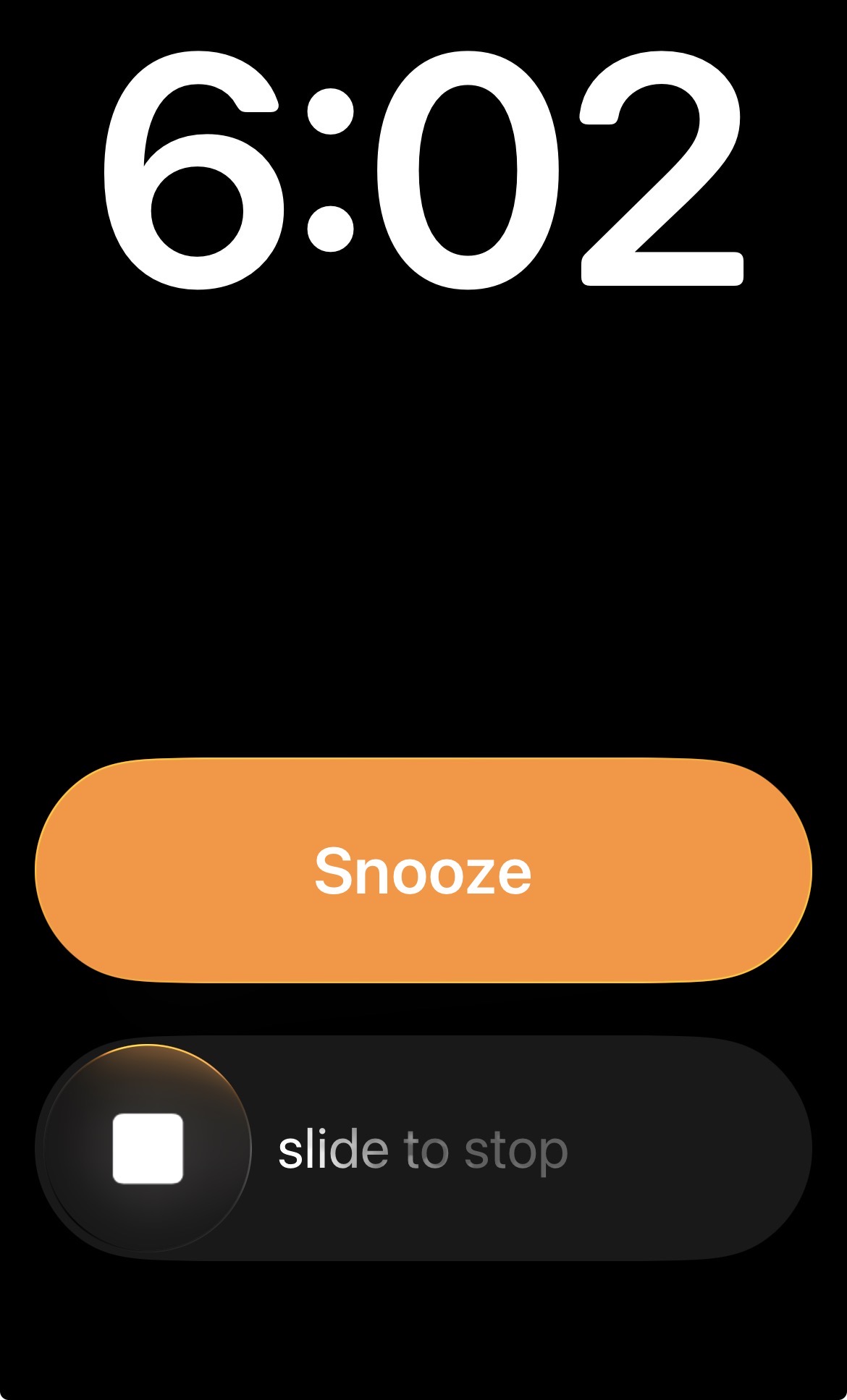
More annoying is a recent upgrade to my iphone – I bet you wondered wtf I was going to get to that – changed the way you can turn off notifications like the alarm indicator you see above.
In the past, the phone has offered a single button to tap to end an alarm or notification. Now you have to slide the notification.
No one at Apple thought about how hard this was to do with one hand. I can’t any longer turn off a notification casually with a single tap. Now I have to hold my phone in one hand and “swipe” with the other.
This change seemed to occur right about the time Apple introduced liquid glass, its “unified visual theme for the graphical user interfaces.”
Yes, by all means, you techboy schmucks, make apps and labels on your products transparent and harder to see.
You’d think someone could get paid hundreds of thousands of dollars – maybe millions in stock – to advise these companies on how not to piss off their low-vision or low-dexterity or low-mobility users?
If I’m ever swept away by a tornado, you can blame the authorities in Tennessee.
I appreciate that I can get notifications on my phone. They’re often helpful. I just wish I could choose when I want them to be helpful.
Notifications – letting us know we’ve got a text message or a new email or if bad weather is on the way or a public figure has kicked the bucket – are a way of life for many of us now, and I’m not going to disable all my notifications – which are called “push alerts” by many newspapers, or just a “push” – because they can be useful.
These thoughts are occasioned by a couple of obnoxious instances of push alerts or notifications in the past couple of days, some of these of the health app variety. Yes, thank you, phone, for letting me know my trend in walking has changed lately. Did you happen to notice how rainy it was? And yes, thank you, other health app, for waking me up in the middle of the night to let me know of something that might otherwise have let me croak deep in peaceful slumber.
Part of my hate for pushes is that I’m obsessive enough to not only swipe them off my screen but actually go to my email inbox to delete the email that generated the push or, gasp, read it and even possibly respond.
(Don’t think we don’t understand that the Push Alert Industrial Complex is conspiring with our phone manufacturers to ensure we spend more time on our devices. It’s true. I read about it on the internet.)
Anyway, I’ve gradually over time changed my phone settings to end most push alerts from the authorities, who seem to abuse the tool.
The final push alert that broke the camel’s back was one recently that alerted me of a fatal shooting in Memphis, which is five hours and 47 minutes from me. Needless to say, this 2 or 3 a.m. push alert was not from a news outlet. It was from a state-run agency. I won’t comment on why this push was sent out but not why other fatal shootings are not sent out. You can guess.
So here I am, because the state insists on alerting me to things happening six hours away, perhaps expecting me to run down to the street at 3 a.m. and scan passing vehicles for the suspect, without any means of being woken in case of forest fire or flood or tornado or hurricane.