Monthly Archives: July 2025

Indiana Jones and the Perpetual Remake Machine

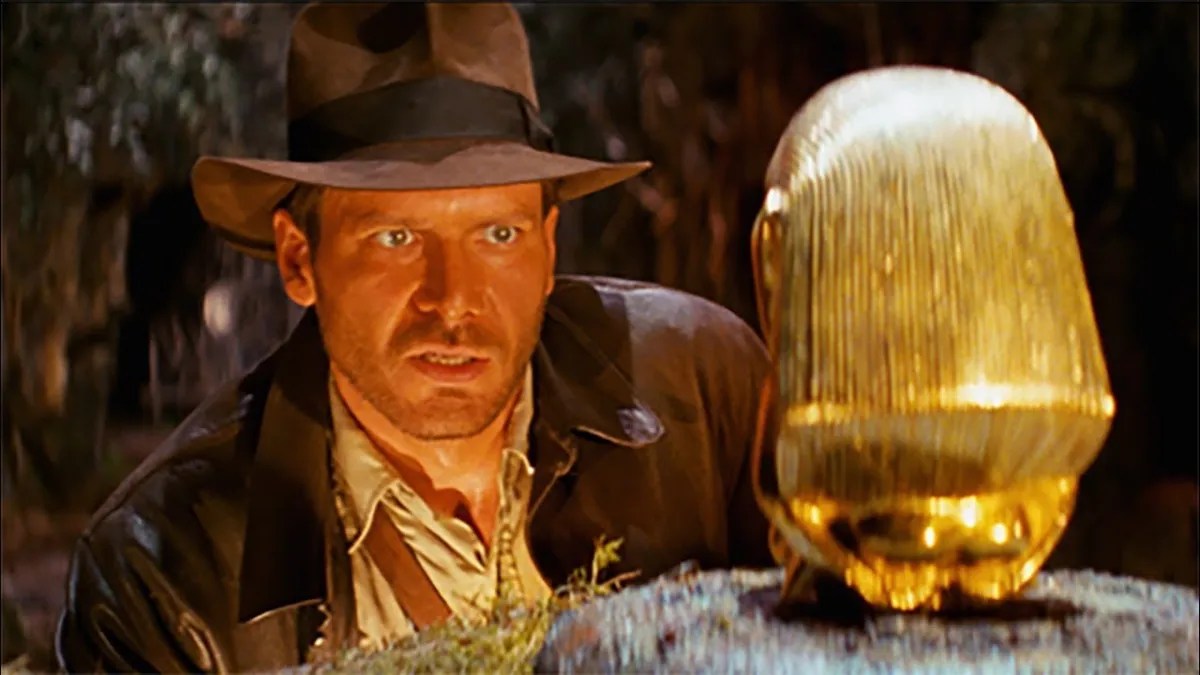
A few weeks ago, rumors moved through online circles that Disney was planning to reboot the Indiana Jones series with a new series of films starring someone other than Harrison Ford as Dr. Henry Jones Jr.

I totally expect this will happen.

I don’t think it’s likely that Pedro Pascal, currently an industry darling and starring in “Fantastic Four: First Steps,” as well as upcoming Marvel movies, will be cast in the role of the adventurous archeology professor. For one thing, Pascal is 50 years old. Ford was 39 years old at the time of “Raiders of the Lost Ark.” I think it’s much more likely that Disney will cast someone in their 30s in a remake. They want someone who could keep a movie series alive for a decade or more.

That said, if “Indiana Jones and the Dial of Destiny” had been a hit in 2023, we’d be seeing now-83-year-old Ford in continuing adventures.

But Hollywood and Disney have – sometimes more successfully than other times – long ago decided it was okay to recast and remake and reboot.

There’s been attempts to reboot the series before, or at least introduce younger versions of Jones and younger characters who could step into the role. But it didn’t work with Shia LaBeouf as Indy’s long-estranged son in 2008’s “Indiana Jones and the Kingdom of the Crystal Skull” – remember how the character started to place Indy’s hat on his head before the original reclaimed it? And it didn’t work with Phoebe Waller-Bridge as Helena Shaw in “Dial of Destiny.”

We’ve seen how some film series made recasting and rebooting work. Some handled it better than others, such as in the James Bond films. The “Star Trek” films did well with it too, at least at first. Disney and Lucasfilm tried it with the “Star Wars” films in a series of movies that worked fairly well but were harshly received by fanboys.

I’m only certain that Disney will reboot Indiana Jones at some point and will recast Indy.

Unless the practice of punching Nazis falls into disfavor.
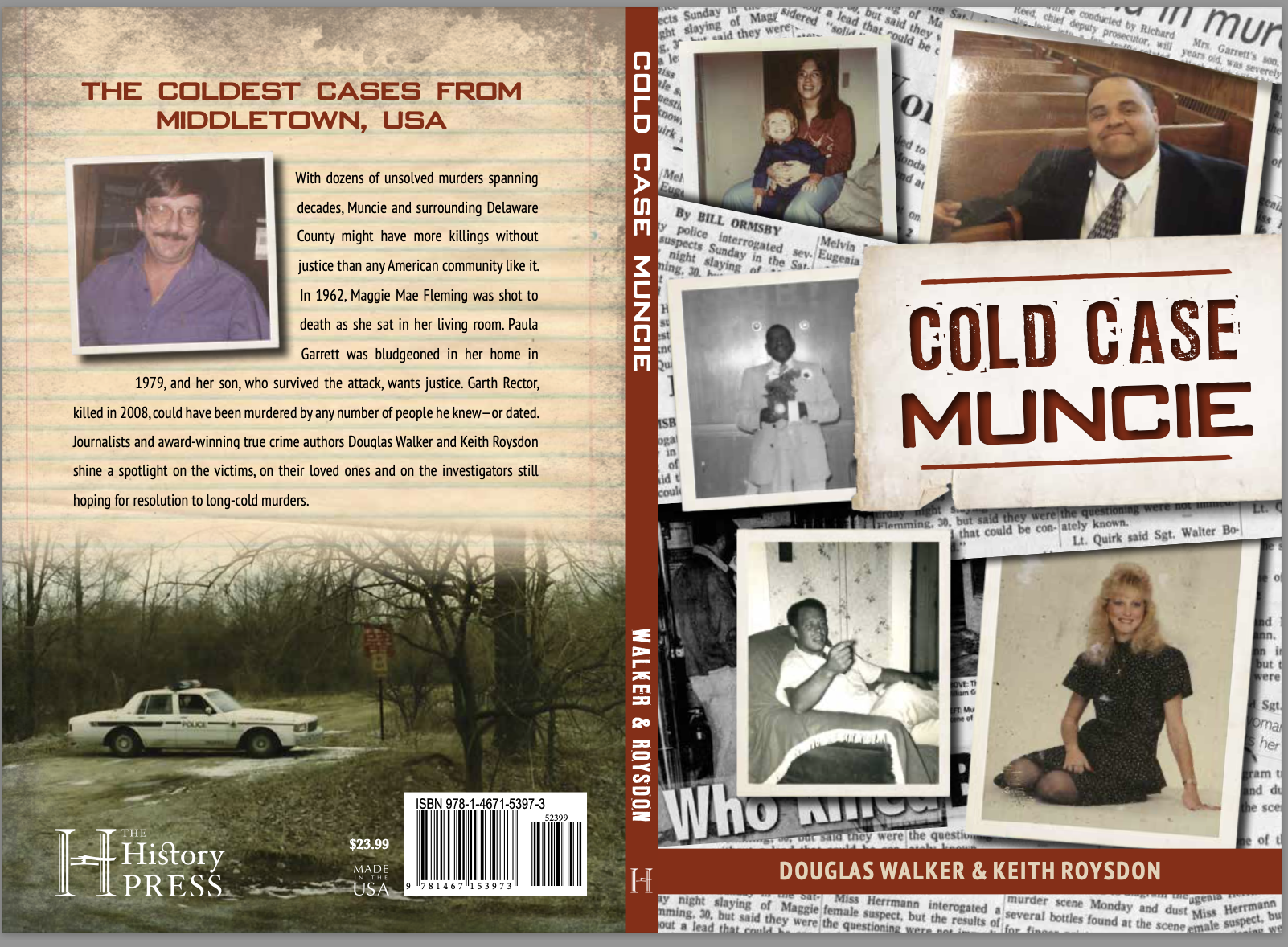
Cold cases still pull at the heartstrings

I was watching “Ballard” the other week – it’s a good series, by the way, and a very valid follow-up to the “Bosch” series and it’s own streaming sequel, “Bosch Legacy” – and it got me thinking about the cold cases I’ve written about over the decades.

“Ballard,” which stars Maggie Q as Renee Ballard, Los Angeles police detective who is featured in her own series of crime novels by author Michael Connelly, creator of “Bosch,” is about how the Ballard character is “demoted” to the LAPD’s under-funded and over-scrutinized cold case unit.

The unit, comprised of police officers and reserves and a handful of volunteers and interns, huddles in a cluttered series of rooms that look more like storage than an office. The cold case squad is the definition of an effort that is nothing like a priority for LAPD leadership but is an essential thing to the squad members.

Ballard is initially leery of the assignment – punishment, really, for daring to report another cop for assaulting her – but grows to find satisfaction in solving long-unsolved murders, bringing killers to justice and giving closure to survivors.

Along with my longtime writing collaborator Douglas Walker, I wrote about cold cases for many years for the newspaper in my hometown of Muncie, Indiana. The most notable cold case to many was the killing of two teenagers in Westside Park in 1985. Walker and I wrote about it in our third true crime book, “The Westside Park Murders,” released by History Press in 2021.

But our fourth book, “Cold Case Muncie,” released in 2023, is an entire book of cold cases, still-unsolved murders in the Muncie and East Central Indiana area.

We had identified more than 30 cold cases, some dating back to the 1960s or even earlier, during a regular series of newspaper articles beginning in 2010. We went back and re-examined many of those cases for the book.

We interviewed surviving loved ones of the victims and revisited the murder scenes.

We put an emphasis on soliciting any new information about the murders, including a point of contact for each of the police departments responsible for resolving those cases.

And we placed emphasis on the survivors. Many of the cases are illustrated by photographs I took of those people who, today, are still waiting for someone to bring closure for the killing of their loved ones.

I’ve noted before that closure is an elusive thing, even harder to achieve than it seems, and that’s pretty damn hard.

I’m glad “Ballard” has taken up the case of cold cases and I’m glad to have brought some attention to them too.

Meet the characters of THAT OCTOBER: Sammi

Another in the recurring series of quick profiles of characters from my novel THAT OCTOBER: Today, Sammi Bradford.

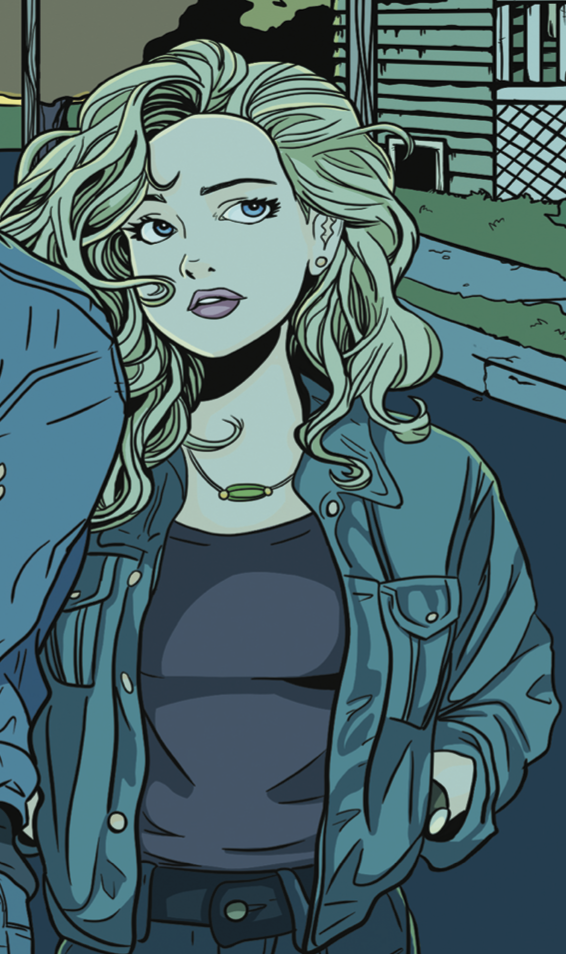
Sammi, like Toni in this space the other day, is the high school friend we all wish we’d had: Beautiful and popular but also unwaveringly loyal. There’s a reason Sammi is the last of the group of four that Jackie talks with in the book. Sammi is probably the closest of Jackie’s friends.

(Sammi is seen on the cover as drawn by my friend, artist Sara McKinley, who is saramckinleyart on Instagram.)

While Sammi’s look was inspired by Brec Bassinger – I’d watched the very fun superhero TV series “Stargirl” not long before, and she looked the way I wanted Sammi to look – Sammi has troubles that none of the other friends have, namely a father in prison.

Sammi’s mom is also the local newspaper editor in Middletown, where THAT OCTOBER takes place, and that gives my young protagonists access to the newspaper library files – the morgue, as some call them – that fuel speculation about one of the major characters in the young heroes’ life.

Sammi might also be the most courageous of the young friends, turning to face a deadly bad guy near the climax of the story, on Halloween night 1984.

Because I love returning to characters in my fiction, Sammi has a cameo in “The Devil’s Cut,” my short story in Hoosier Noir Volume 7. She’s a couple of years older, she wears her hair in an undercut and she has tattoos. Never mind that the time frame of THAT OCTOBER, set in 1984, and “The Devil’s Cut,” pretty much set in the present day, don’t match up.

That’s Sammi.

A cool thing: Finding THAT OCTOBER on Allstora, a LGBTQ+ supporting bookseller (RuPaul y’all!)

Each day since even before THAT OCTOBER was published on June 1, I’ve been looking around the Internet, finding unique and sometimes out-of-the-ordinary places where my novel is mentioned or even available to purchase.

Since finding the book on all the big online booksellers, like bookshop dot org, Amazon, Barnes & Noble and others, I think the most fun surprise has been finding it available through the Allstora site.

Allstora began life as ShopQueer and, according to the site itself, was co-founded by New York Times bestselling author and LGBTQ+ advocate Eric Cervini, drag performer and actor Adam Powell and television icon and author RuPaul.

After finding my book on Allstora, I sent them an email thanking them for carrying it and got a sweet and enthusiastic response from Aubergine:

Hi Keith,

Thank you for your kind words, we’re happy to have you here. 🙂

Have a fabulous weekend! ❤

If you’re wondering why I’m so thrilled to have THAT OCTOBER on Allstora versus any other site where the book can be purchased, it’s because, as some of you who’ve read the book know, THAT OCTOBER has an important gay theme among the high-school protagonists of the story.

That the book just happened to be carried by Allstora is probably just luck, but I like to think that someone, somewhere, recognized the storyline and characters as some that will – hopefully – resonate with readers and count a little toward representation of LGBTQ+ characters in mainstream fiction.

So Allstora, I’m thrilled to be part of your fabulous site.

(My site, meanwhile, is being difficult in letting me post a link to THAT OCTOBER on Allstora, but it should be easy enough to find if you want to direct a little business their way.)

Meet the characters of THAT OCTOBER: Toni

If you’re wondering about those four friends on the cover of my 1984-set high school crime novel THAT OCTOBER, maybe a couple of introductions are in order.

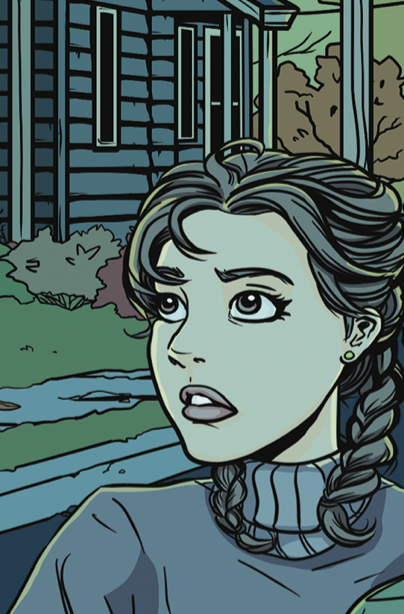
All credit to my friend and amazing artist Sara McKinley for bringing these characters to life for the cover of my book. She’s saramckinleyart on Instagram.

One of the things I tried to do when writing THAT OCTOBER was make some characters familiar without making them stereotypical. I’m not sure I succeeded, but Toni was probably toughest for me.

Toni Carter fulfills the “best friend” role in the book for her unwavering support of Jackie Rivers, but I hoped to give Toni some depth by making her the friend who was most confused and felt most isolated of the girls. Toni is an outsider, with a mom who’s considered strange – she is on the hospital cleaning staff and is a part-time psychic – but whom Toni fiercely defends.

All of us knew or know a Toni: Loyal and sweet and a little out of the mainstream. With a friend like Toni, you’re never alone.

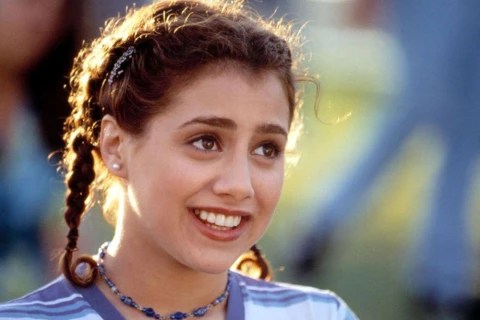
The actress I saw in my head and I was writing Toni: Brittany Murphy, so wonderful in the “best friend” role in “Clueless.” She passed away in 2009 but is forever frozen in time for me as Toni.

More of the cast of characters to come.

And you can buy THAT OCTOBER anywhere, but here’s a link to the Barnes & Noble site:

https://www.barnesandnoble.com/w/that-october-keith-roysdon/1147324325

It should be obvious, but if you write, you’re a writer

I was interviewed for a podcast recently when I was back in Indiana promoting THAT OCTOBER and I ended a question with an off-hand comment that I’ve verbalized before but this interviewer said she really appreciated it.

“If you write, you’re a writer,” I said.

That seems obvious enough, but I think some writers feel like you’ve got to attain some particular level of success, or something, to consider yourself a real writer:

You’ve got to finish every story or article or book that you begin. You’ve got to publish every story or book or see it published. You’ve got to be paid for every one. You’ve got to be published by a prestigious site or magazine or anthology or publishing house, all to be considered a legitimate writer. (Now that I write that sentence, I can’t imagine what a “legitimate” writer would be anyway.)

None of those things are necessary to being a writer.

For certain, it’s a good thing to finish what you’re writing. That’s good discipline and a sign that you’re able to follow through, even if it’s not your best work. It definitely would be a cool thing to try to get every story or book you write published, but no way in the world does that happen to every writer (maybe to Stephen King or Lee Child, and probably not even them).

Getting paid or being published in some cool place is super and I highly recommend it. But that’s not the definition of being a writer.

Sitting down at your keyboard – that’s mine in the photo; please disregard the random junk in the keys – is part of the definition of being a writer. Or sitting down with your notebook or legal pad and your favorite pen.

You’re also a writer if you’re sitting in a comfortable space, staring out the window, watching random squirrels frisk their way past enjoying the sun, or watching the headlights and taillights of passing cars cutting through the dark. While you’re sitting there, you’re probably thinking about stories or coming up with ideas of ways to execute a scene. Or you might just be letting your imagination roam. You can do the same thing while mowing the lawn or watching TV or listening to music.

There’s enough anxiety and imposter syndrome for writers, and always has been, about writing or what they hope to write or what they have written to feel more of it because they’re not turning out a thousand sterling, perfect words every day.

If you’re exercising your imagination, if you’re mulling over characters or phrases or plots, if you’re making notes or writing it out longhand or you’re dashing out a couple of thousand words every day – even if you go back and start over – you’ve accomplished your goal.

You’re a writer.

Going viral, social media, dystopia and books

I went viral on social media – two different social media, with two different posts – over the Fourth of July weekend.

(This is not a pat myself on the back post. I think there’s something interesting that’s happened here, beyond the viral-ness.)

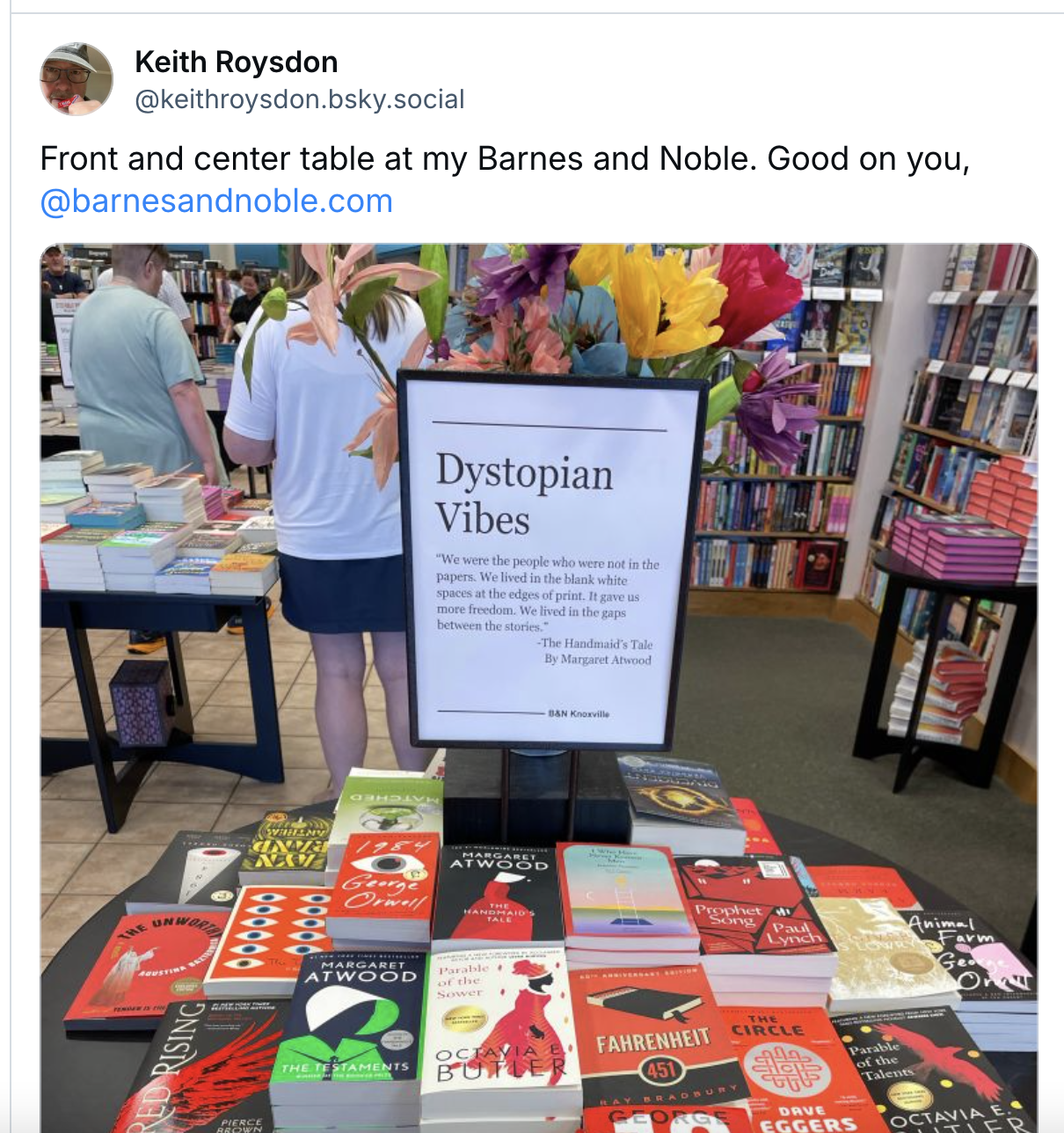
The first post that went viral is the one above. On Saturday, I was in the Barnes & Noble bookstore near me and took a picture of the first table inside the door. If you can’t tell from the picture, it’s a display marked “Dystopian Vibes” and offers books including “1984,” “Animal Farm” and the works of Margaret Atwood and Octavia E. Butler.

I thought I’d snap a picture and post it and thank Barnes & Noble for putting these books out there so prominently. Yes, that placement encourages sales. Yes, it’s ultimately a big corporation trying to move copies of books. But it’s something.

I thought the post might get some traffic, but I never get a lot of engagement, even with 3,000 Bluesky followers.

By Sunday afternoon, this was the response:

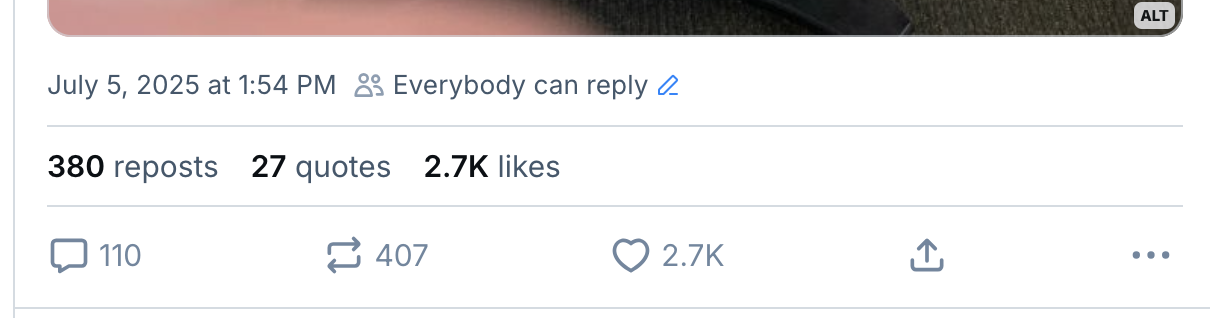
380 accounts reposted my post, which got 2,700 likes.

This is a multiple of thousands the reaction I was expecting. I had to mute notifications on the post.

That wasn’t all, though.

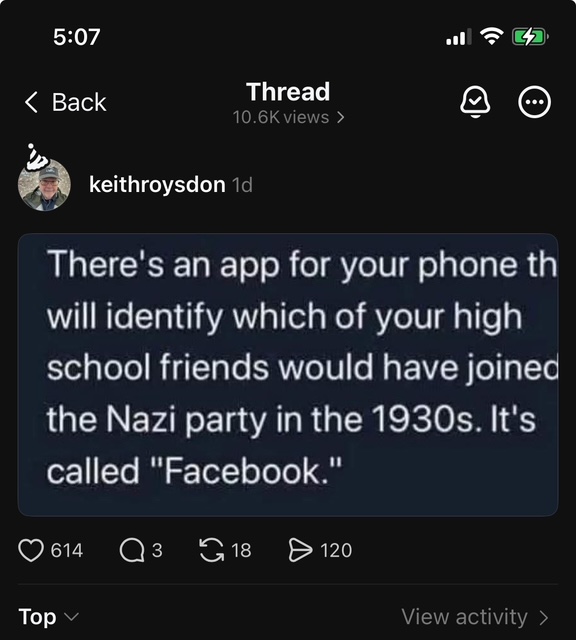
I saw a bitterly amusing meme on a friend’s Facebook account – there was no indication on the account who originally posted it – and I posted it on various social media, including Instagram, which shares posts to the social media app Threads (which I don’t use much).

Here’s the post, and the reaction:

Believe me when I tell you, I usually don’t get 600 likes on Threads, a social media I barely use.

So what’s the upshot to all this, besides a little more engagement and traffic to the companies that own Bluesky and Threads, the latter the detested Meta? (The even more detested Twitter turned up with very little notice of either post, by the way.)

The upshot, it seems to me, is that there’s a lot of interest and engagement in posts about our currently untenable, dangerous and yes, dystopian path.

That’s a good thing, that people are engaging in posts critical or even acknowledging the path this country is on.

And, as a bonus, the Bluesky post shows a ton of engagement about books that forecast, define and address our society.

There’s nothing more encouraging than the realization that people are engaging with literature that calls to light our current peril.

So maybe a small percentage of the frogs in this slowly boiling pot of water are aware they’re in a slowly boiling pot of water. I hope.