Tag Archives: writing-tips

Kill your darlings? I say writers should resuscitate their darlings: the story behind Door to Door

Writers are always told to “kill your darlings.” That means, of course, that they should learn to be comfortable with cutting lines, paragraphs, chapters and even more if they get in the way of the story. Stephen King famously cut about 400 pages, or 150,000 words, from the manuscript of his magnum opus THE STAND for its original publication. His publisher said the novel was just too long. After THE STAND was hailed as the masterpiece it is, King restored a later edition to something like the original manuscript at 1,152 pages.

I think writers can get in the way of our own success – not only in terms of publication but also story merit – when we’re reluctant to kill our darlings.

That doesn’t make it an easy thing.

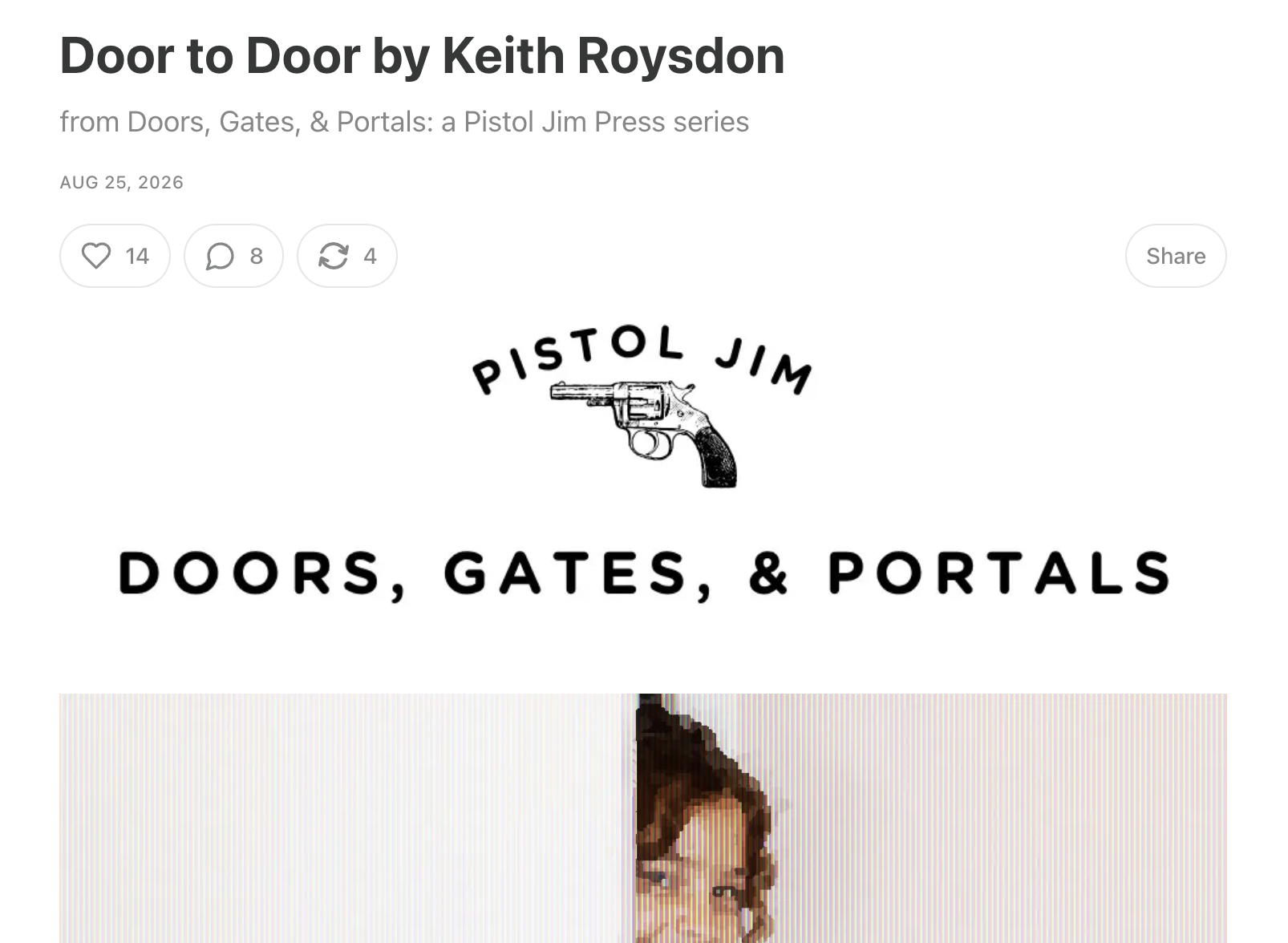
I wrote “Door to Door,” published this week by Pistol Jim Press – link at the end of this post – in 2024 for a call for submissions for stories about cults. It got rejected.

So when editor Martine Proctor and Pistol Jim honcho James Maxwell posted a call for stories about doors, portals and gates, it seemed like a good time to revive and sub “Door to Door.”

The only problem? The original was about a third again as long as the 1,000 words or so that the call for subs wanted.

So I cut two or three hundred words. For a story of that length, that’s a lot of dead darlings. It’s not the most I’ve cut from a story, though. I cut some dialogue and I cut a few details, but the point of the story still came through.

I liked the original version of the story and I like the new version. And feedback by people who’ve read it is good.

I should note here that the story was inspired by something that happened in real life: I was home one uncomfortably warm day a few years ago and a young woman came to the door selling magazine subscriptions or something. She literally looked like she was about to faint from the heat and I invited her in and gave her a glass of water.

No murder ensued, however, unlike in the story. No magazine subscriptions ensued either.

I very well might have written some other story for the Pistol Jim call for subs, but it worked out well to give the original, rejected story a shot. Albeit in a slimmed-down version.

Writers should still kill their darlings, especially when it’s necessary. (Says the guy who might publish a 108,000-word novel, GHOST SHOW, in the coming months.)

But even dead darlings can have a new life in some altered form.

Say, that sounds like a story idea …

Here’s my story “Door to Door” for Pistol Jim:

https://pistoljimpress.substack.com/p/door-to-door-by-keith-roysdon
If you write, you’re a writer … and maybe you could use a boost

It’s been observed by smarter people than me that writing can be a daunting profession and avocation because of the isolation inherent in sitting at a desk all day, typing on your laptop or making notes in your journal.

It can be a challenge, and I’m not talking about writer’s block, although there is that, too.

The bigger challenge can be the feeling of working in a vacuum, the feeling that you’re writing and writing and rewriting and aren’t sure if you’re getting where you want to be with your story, your article or your book.

I’m known to say, “If you write, you’re a writer.” It doesn’t matter if you’ve been published or not, if you’ve had short stories or books published, to great acclaim or total *cricket noise.*

Cause I believe if you’re writing, or making notes, or thinking about writing and sending yourself ideas in texts and emails … well, you’re writing.

Sometimes you need a boost. I know I do. I’m lucky to have writer friends who read my stuff, from flash fiction to novels, and tell me what they think. I’m lucky to provide the same kind of support for my writer friends.

So a small group of us are now offering a boost to writers, no matter what stage they’re in.

I joined up with Constellate Creatives a while back and just the other day announced my affiliation with CC, which is owned and overseen by longtime friends of mine who are writers but also know other aspects of the writing life, from editing (developmental and copy editing) to publishing to marketing and everything in between.

Our goal is to help writers.

There’s a contact button on the Constellate Creatives site that I’m linking to below.

And I’ll tell you more in the weeks and months ahead.

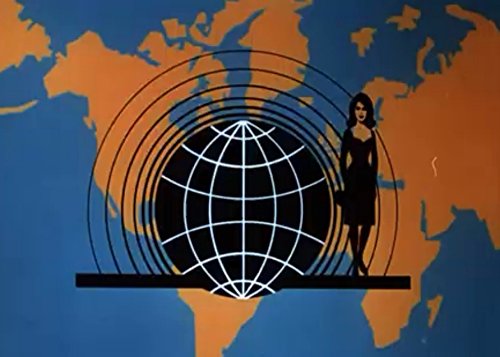
The image above isn’t the Constellate Creatives logo. It’s an image from the 1960s spy TV series “The Girl from UNCLE.” But it’s a pretty nifty bit of art and sort of communicates the international foundation of Constellate.

More info:

https://constellatecreatives.com/

It should be obvious, but if you write, you’re a writer

I was interviewed for a podcast recently when I was back in Indiana promoting THAT OCTOBER and I ended a question with an off-hand comment that I’ve verbalized before but this interviewer said she really appreciated it.

“If you write, you’re a writer,” I said.

That seems obvious enough, but I think some writers feel like you’ve got to attain some particular level of success, or something, to consider yourself a real writer:

You’ve got to finish every story or article or book that you begin. You’ve got to publish every story or book or see it published. You’ve got to be paid for every one. You’ve got to be published by a prestigious site or magazine or anthology or publishing house, all to be considered a legitimate writer. (Now that I write that sentence, I can’t imagine what a “legitimate” writer would be anyway.)

None of those things are necessary to being a writer.

For certain, it’s a good thing to finish what you’re writing. That’s good discipline and a sign that you’re able to follow through, even if it’s not your best work. It definitely would be a cool thing to try to get every story or book you write published, but no way in the world does that happen to every writer (maybe to Stephen King or Lee Child, and probably not even them).

Getting paid or being published in some cool place is super and I highly recommend it. But that’s not the definition of being a writer.

Sitting down at your keyboard – that’s mine in the photo; please disregard the random junk in the keys – is part of the definition of being a writer. Or sitting down with your notebook or legal pad and your favorite pen.

You’re also a writer if you’re sitting in a comfortable space, staring out the window, watching random squirrels frisk their way past enjoying the sun, or watching the headlights and taillights of passing cars cutting through the dark. While you’re sitting there, you’re probably thinking about stories or coming up with ideas of ways to execute a scene. Or you might just be letting your imagination roam. You can do the same thing while mowing the lawn or watching TV or listening to music.

There’s enough anxiety and imposter syndrome for writers, and always has been, about writing or what they hope to write or what they have written to feel more of it because they’re not turning out a thousand sterling, perfect words every day.

If you’re exercising your imagination, if you’re mulling over characters or phrases or plots, if you’re making notes or writing it out longhand or you’re dashing out a couple of thousand words every day – even if you go back and start over – you’ve accomplished your goal.

You’re a writer.