I like writing about the scourge of generative AI in the arts – obviously – and it seems like there’s new news almost every day.
I’ll make this quick:
In the new Publishers Lunch is a report on how some publishers have developed guidelines and methods of screening papers and books for AI use. (You’ll recall that the suspicion of AI has roiled the mainstream publishing industry lately, causing book deals to be canceled and, possibly, author careers to be stymied.)
Academic publishers cited in today’s Publishers Lunch have tried to come up with a constructive method of screening works submitted to them for use of AI. That’s because like a lot of publishing, academic publishers are being swamped with submissions of AI or AI-assisted slop.
The guidelines, which build on the use of AI-detection tools, set thresholds for when AI use is detected.
Some of the publishers have established four guidelines:
- Assisted – AI helped you brainstorm or research but the writing is yours. Meaning, if you asked AI to find the relevant information for you and then you read those source materials and wrote from them, that’s a mechanical assist. It’s just AI working as a search engine.
- Collaborated – AI drafted parts while you rewrote, verified, and made it your own. Meaning, if the facts, ideas, etc. came out of the AI model itself (e.g. you asked it explain something to you) and wrote from its answer instead of the source materials, that is AI collaboration and should be disclosed.
- Generated & reviewed – AI produced the artifact, but you read every line, checked the facts, and stand behind it. To be clear, you hold responsibility for its integrity and accuracy.
- Generated & unreviewed – AI made it and you didn’t really check. This is not acceptable AI use for PUP staff ever: internal, external or under any circumstance.
Publishers Lunch says that for at least one publisher, if a submitted work meets the last two guidelines, it’s rejected. That’s because that particular publisher correctly argues that the use of that much AI couldn’t be copyright-able because, of course, AI is based on the work of others.
I’m skeptical, but at least somebody is setting some guidelines somewhere.
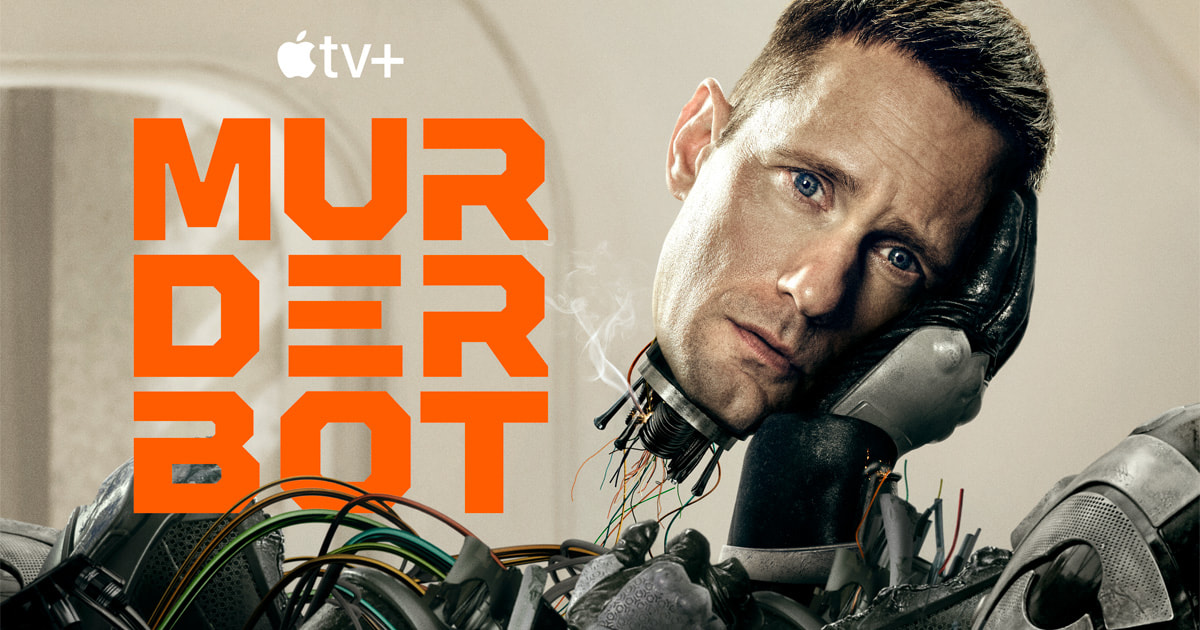
(Image at the top of this post is from the wonderful, funny AppleTV Plus series MURDERBOT, based on the series of novels by THE MURDERBOT DIARIES by Martha Wells.)
Discover more from keithroysdon
Subscribe to get the latest posts sent to your email.
