Tag Archives: fiction

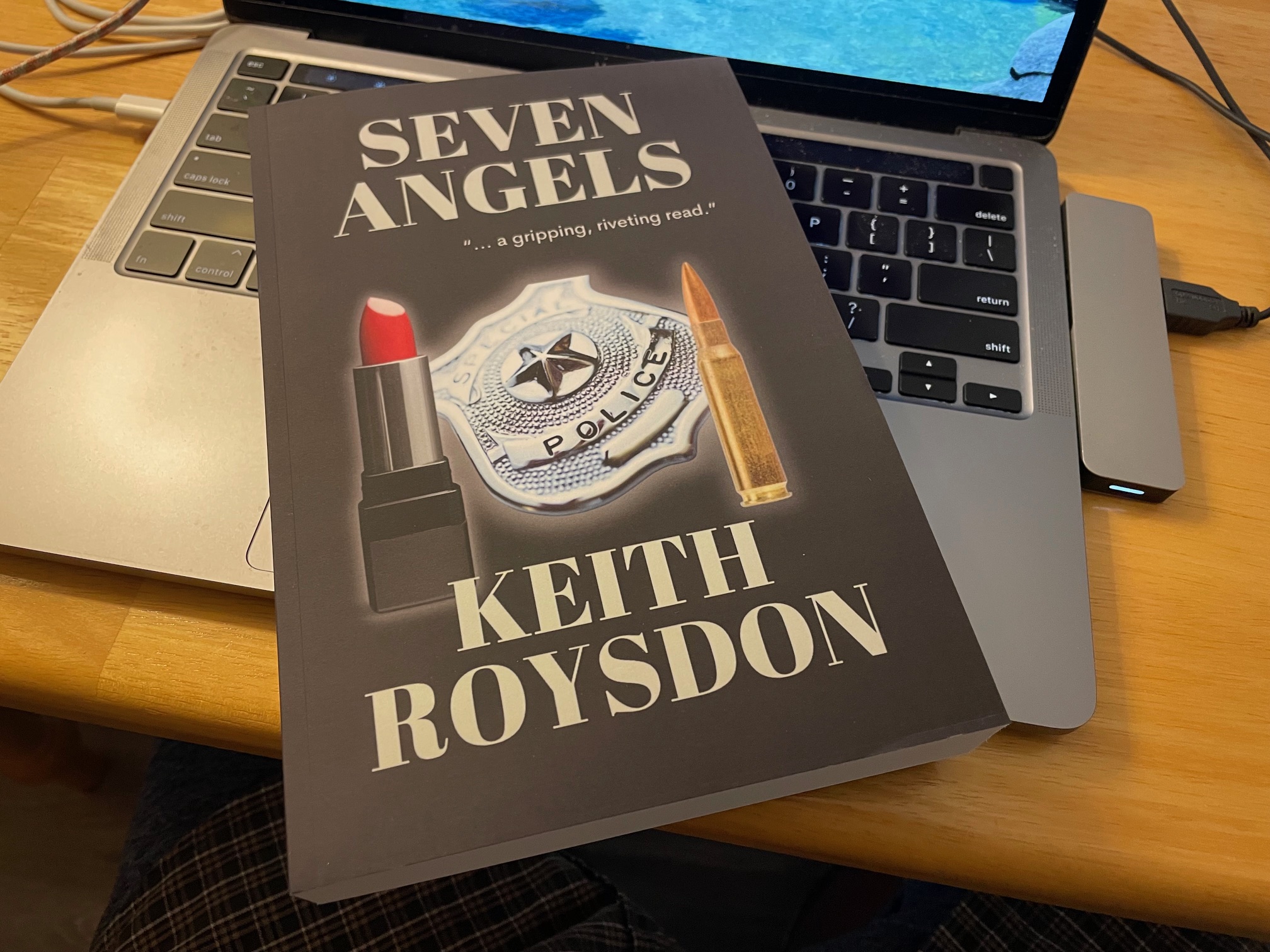
Countdown’s almost over: SEVEN ANGELS publishes tomorrow, June 1

Okay, I should just acknowledge that when you’ve published a book, the promotional push for it is never over.

But it feels like we’ve reached something of a milestone as my new crime novel SEVEN ANGELS is published tomorrow, June 1, 2026, by Constellate Publishing, a publishing imprint of Constellate Creatives, a company founded by my longtime friend Jill Blocker and for which I do some editing and other work.

By way of noting that promoting a book is never ending, I’ll say that I’ll be darkening your doorstep plenty even after the book is published.

A few quick words on how I got here:

I wrote a few crime novels back in the early 2000s that weren’t completely baked and I didn’t pursue publishing them. A few years later, sometime before 2010, I outlined a book called SEVEN ANGELS, a crime story about a fictionalized version of the little town in Tennessee where my parents grew up.

(I was still about 14 years from being a Tennessee resident myself, but I’d been down here plenty of times, visiting family.)

After I outlined SEVEN ANGELS, I set it aside. I didn’t write a book-length project again until my first true crime book, co-authored with Douglas Walker, was published in 2016. Three more true crime books followed. It turns out that writing and co-writing and editing those books was essential for me in figuring out how to write a book-length manuscript. I’m a plotter and outliner, and turning out an outline – one paragraph per chapter, outline length in total 15 or 16 pages or more – is a step I can’t imagine skipping.

In 2019, I took a buyout from my newspaper job and finally felt I had time and focus to write novels. In a few years, I’d written SEVEN ANGELS, GHOST SHOW and THAT OCTOBER. The latter was the first to be published (self-published) in 2025.

I’d gone back to SEVEN ANGELS almost every year since 2019, fleshing it out with new characters and I hopefully made it better.

The blurbs and comments and reviews have been laudatory and I appreciate it.

For a few months now, I’ve been actively compiling ideas for a new novel, including using some elements from an aborted novel from 2025. (I’ve mined those early 2000s books for a number of ideas and characters, and I’ve done the same with GHOST SHOW, so nothing ever entirely goes to waste.)

So here I am with a promise: I’ll be working on the next novel, along with articles and short stories.

And I’ll be promoting it all, so forewarned is forearmed.
Thoughts on AI and the ‘I never say no’ tech culture

We’re living in the opening scenes of every dystopian science-gone-mad sci-fi story ever, even though most of them never included as a plot device some mundane but infuriating circumstances like billionaires’ Artificial Intelligence stealing our writing.

But we definitely find ourselves in the beginnings of dystopian tech-gone-amok sci-fi stories with this AI girlfriend thing.

There’s plenty of science fiction, books or stories or movies or TV, that rely for drama on the devaluation of individuals or a class of people: just to cite one example, remember the “furniture” in “Soylent Green?” That was the term for a rich man’s female sex companion.

But rarely have we seen “sex bots” that are not as stupid as the dumbass guys who are going to pay to use them.

I’m certainly not the first person to equate where the world is today, under the leadership of malignant and greedy oligarchs and their toadies, to say we’re entering dystopian science fiction territory. All we have to think about is the wanton destruction of democracy, our climate, our oceans, our natural habitats, the devaluing of people and originality and creativity and the wholesale assault on privacy and the rights of women.

And yes, I’m sure I left something out.

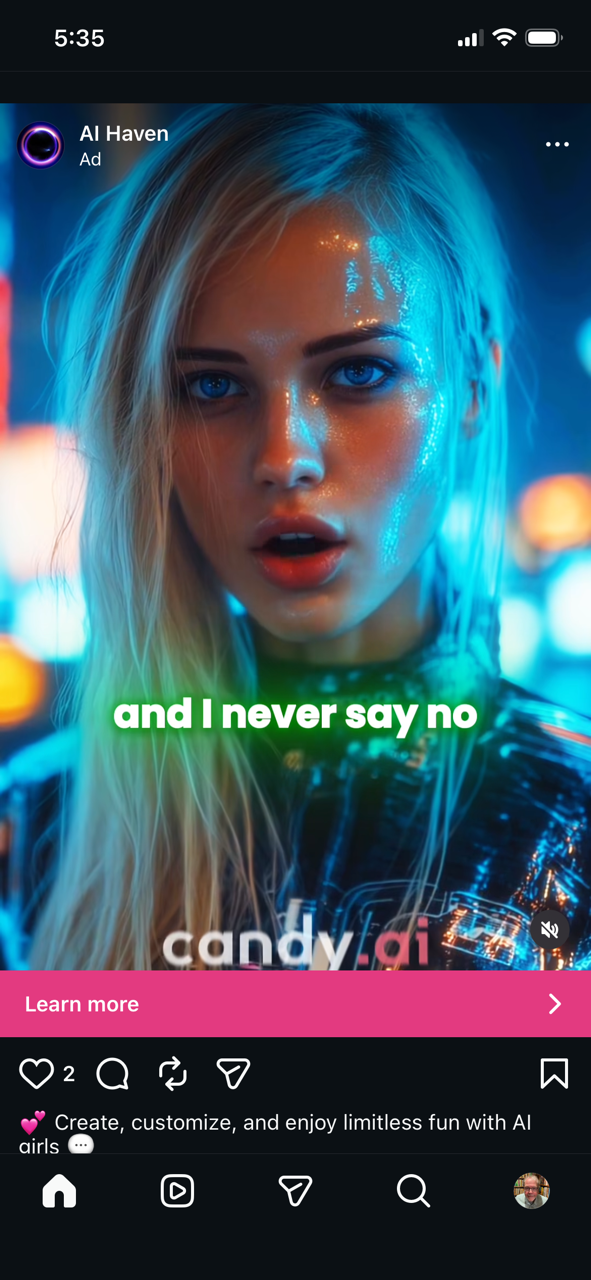
But in recent days, in the wake of reading many articles about AI and the pollution and water use for data centers to run AI servers and how the technology is devaluing so much of what’s important, I started seeing ads like the one above, in my Instagram feed in particular. There are others, but that’s the most blatant.

The illustration shows a “sexy” AI woman, like most of the ads, but this one is very explicit in what’s likely to be the most appealing aspect of these AI girlfriends to many men:

“I never say no.”

Talking to friends about these ads, they note – rightly so – that there’s always been an element of rape culture to AI sex. “Control your AI girlfriend” says one ad that I saw, along with enticements to make her look how the user wants – skin tone, hair color, figure, etc.

Certainly there’s always been a destructive undertone – sometimes overtone – to porn. (There can be in any kind of real-life relationship, of course. It’s how humans, especially men, function. But with two actual people involved, there’s always a chance for people to learn to treat each other better.)

But without a real woman in the mix in these AI girlfriends, other than the environmental destruction caused by AI-generating data centers, the greatest destructive effect is to the idiotic men who pay to use these programs. They’re stupid. And sad.

I didn’t expect to be telling other guys, in effect, “Dude, just go find some porn. You’ll feel like less of a fool. Maybe.”

Having said that, maybe these AI girlfriends will keep them busy so they don’t spend quite as much time destroying everything else.

Two years since my first story published in an anthology, MOTEL

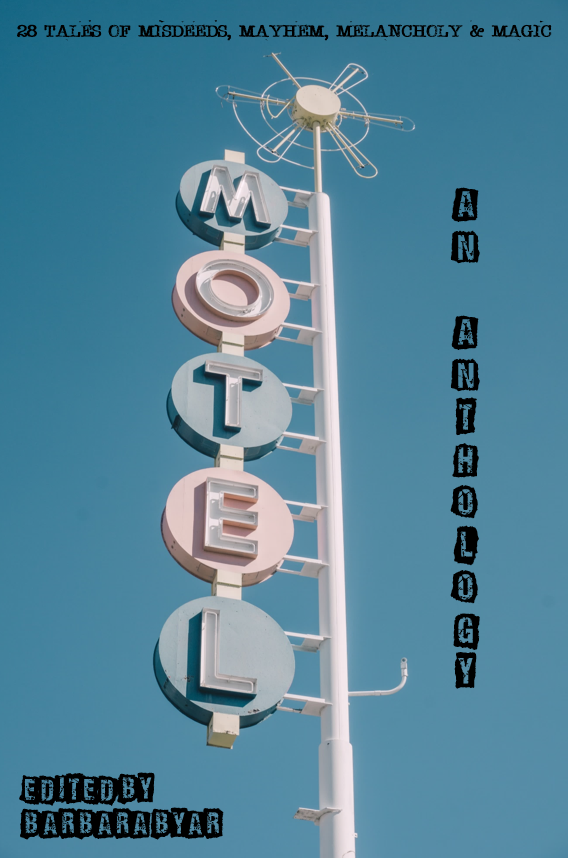
It’s been two years since the first time one of my short stories was published in an anthology. The Cowboy Jamboree Press MOTEL anthology, edited by Barbara Byar, came out in March 2024. I’d had short stories published before, starting in 2023, and of course my non-fiction had been published since 1977 and in true crime books since 2016. But having a short story in an anthology was a very cool development.

I still really like the story, “Independence,” about an unnamed cowboy passing through a small Tennessee town who gets caught up in a conflict between some small business owners and the corrupt sheriff. If you read my upcoming second novel, SEVEN ANGELS, you might realize that town is Seven Angels. I never cite the town by name in “Independence” but the sheriff in the short story is named and he’s the same corrupt sheriff as in SEVEN ANGELS.

It was a kick to have the story published in an anthology and a few followed. It’s always a kick, although I suspect the anthologies you have to purchase have smaller readership than the stories published online. Still a kick, though.

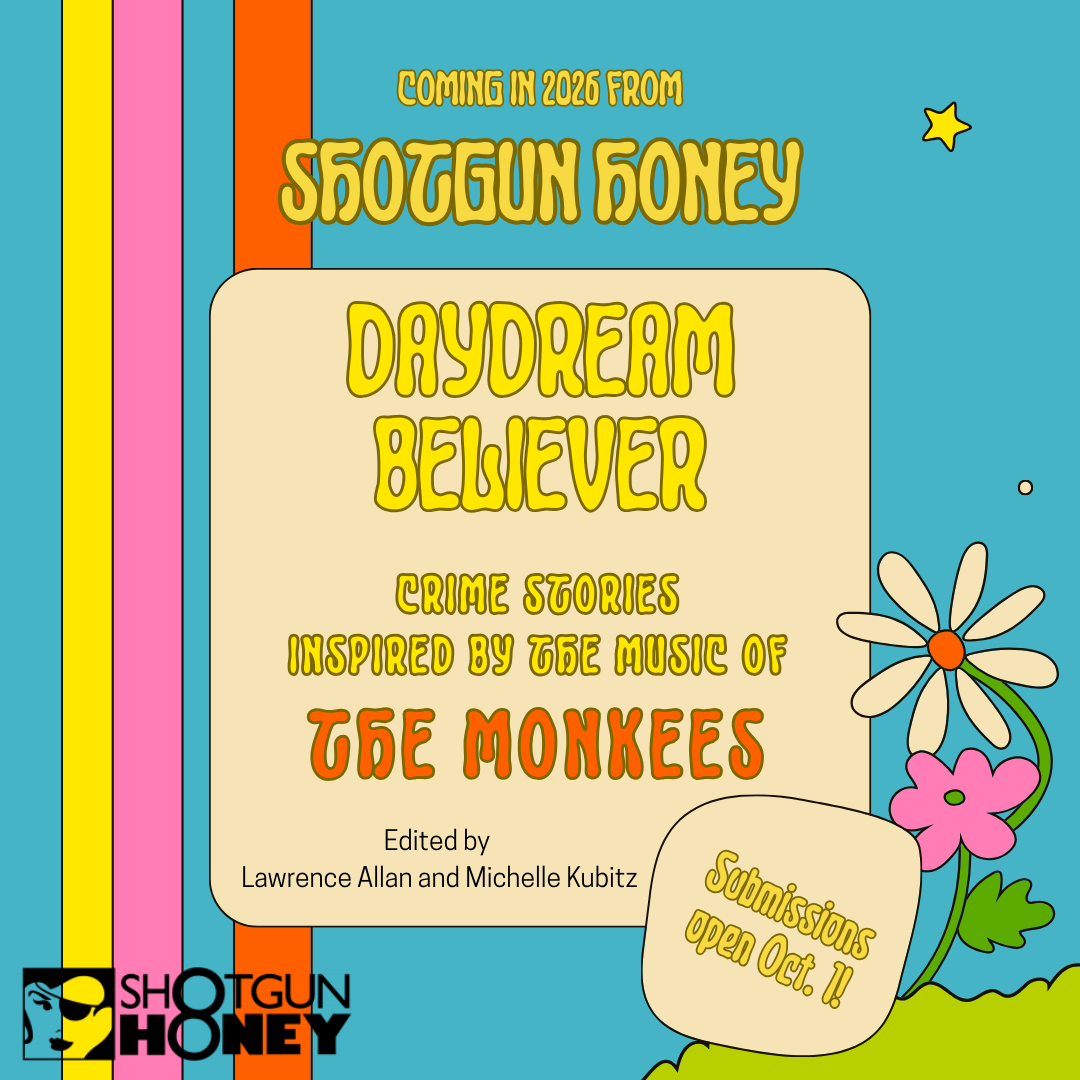
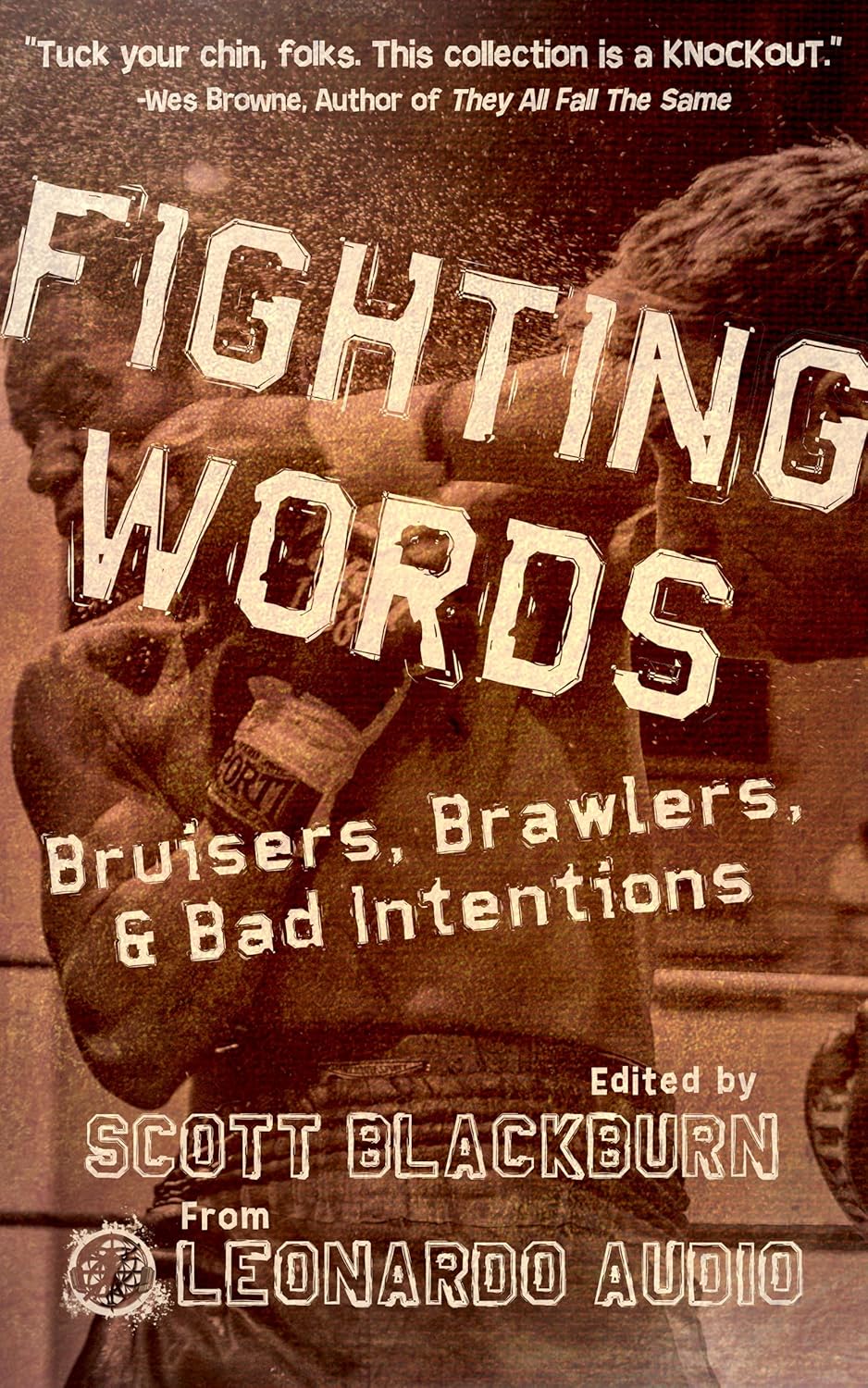
This year, in 2026, I’ll have short stories in three anthologies I know of, including my story “A Fighting Life,” about foul-mouthed kids in 1948 who figure out they can make money by scrapping with neighborhood kids, which is in the just-published-in-paperback FIGHTING WORDS. My story “This Just Doesn’t Seem To Be My Day,” about a kid spending the day with his older brothers in 1970, will appear this fall in DAYDREAM BELIEVER, an anthology of crime stories based on Monkees songs.

And a while back, I had a crime story accepted for an anthology that hasn’t been announced yet.

For me, three stories in anthologies in one year is a lot, so I doubt there will be others. But I’ll submit some stories and we’ll see.

Here’s a link to the paperback of FIGHTING WORDS is you want to read my short story and the work of some really amazing authors:

It comes and it goes and it comes around again

My morning began with a rejection but ended up with signing a short story contract, all threaded through writing some totally separate piece of work.

Man, every day is a little game of expectations versus reality for all of us, but that’s especially evident for writers.

The rejection email, as these things go, was from an editor and fiction outlet I haven’t tried before. It was direct and to the point but also gracious, saying a couple of nice things about the story I’d submitted and they’d rejected. Much better than a form rejection – I got one of those just a while back – and even thanked me for my support of them on social media, which will absolutely continue.

This rejection stung, man. It was for a story I wrote for an earlier anthology call for submissions and honestly, I really like this story. It’s not my typical crime-wimey story. It was, dare I say it, hearfelt.

But I’ll submit it again somewhere and I’m sure I’ll submit something else to the humane editor who rejected this particular story this particular morning,

So i got back to work. I’m close, very close, to finishing a 5,000-word short story to sub to an anthology/collection that I really want to be included in. I’ve got a few more words to write.

Then I signed a contract for the anthology you see above, DAYDREAM BELIEVER: CRIME STORIES INSPIRED BY THE MUSIC OF THE MONKEES. The anthology comes out this fall and has some wonderful writers in it and I’m happy that editors Shelley and Larry chose my story to include.

Then I got back to working on that 5,000-worder. And I wrote this.

(I’m thinking about having a snack later, if you need that much insight into my day,)

All of this could be filed under the life in a day of a writer. Or maybe managing expectations. Or dealing with rejections and successes.

To writers and other people: Push on. The only way out is through.

I come here not to bury the mass market paperback, but to praise it

This is sad news. Not nearly as sad or despairing as much of what we see in the news in recent years, but sad nonetheless.

The mass market paperback is dead.

This might not surprise some of you who react, “Yeah, I know, I haven’t seen one in a bookstore in a while,” or “What is a mass market paperback?” For those young enough that they don”t remember the mass market paperback, I’m fearful you’re reading this past your bedtime.

Publishers Weekly likely broke the news to most of us who remember mass market paperbacks – I’m going to refer to them as just paperbacks pretty soon now, for expediency’s sake – in a December article that noted that the ReaderLink company said it would no longer distribute mass market paperbacks. The format’s share of the market had dropped dramatically over the past couple of decades as larger-format paperbacks, sometimes referred to as trade paperbacks, and ebooks had usurped the market that had been dominated for many decades by mass market paperbacks.

Paperbacks had been the format of choice for much of the 20th century. They were less expensive than hardbacks but more cheaply made and thus less durable. But they had an ease of use, a convenience and an aura that were hugely appealing to most of us who were buying books in the last few decades of the past century. In 1966, the Beatles released a single, “Paperback Writer,” that ironically but lovingly paid tribute to the format. You didn’t hear the Beatles singing about their desire to be a hardcover writer, did you? No you did not.

As many know, paperbacks – measuring about 4 inches by 7 inches, just the size to fit in a pocket so you could always have a book at hand – were introduced before mid-century but might have become the hottest book trend ever in the 1940s and 1950s, continuing that hot streak into the 1960s and 1970s.

Paperbacks went to our workplaces, where they were handy to read on our lunch hour. They went on our commutes, where they occupied many a train and bus rider. They went to school and war in backpacks and pockets. They went everywhere, in part because of their convenient size and in part because they were so incredibly inexpensive to buy. I just looked at one of my oldest and most rare paperbacks this morning, a copy of Harlan Elliison’s “Rockabilly” from 1961. The cover price was 35 cents.

The vast majority of paperbacks I bought in the late 1960s and 1970s were priced at 65 cents, 75 cents, 95 cents. Paperbacks I bought into the 1990s were still only a few dollars, inexpensive compared to hardcovers and large-format trade paperbacks that, in my buying experience, were confined to scholarly or pop-culture works about movies, TV shows and comic books. At least that’s what still fills my bookshelves. I recently noted my copy of “The Marx Brothers at the Movies,” a 1975 Berkley trade paperback of a 1968 hardcover original, cost me just $3.95.

I have hundreds of books. Some are of recent vintage but the majority date from the 1960s to the 1990s. Among people my age, that’s probably not uncommon. Paperbacks entertained and informed us. Some of my favorites are early Stephen King novels and short story collections, the work of Robert A Heinlein and Ray Bradbury and Dean Koontz.

And I wasn’t alone. Publishers Weekly says 387 million mass market paperbacks were sold in 1979, compared to 82 million hardcovers and 59 million trade paperbacks. The 1975 movie tie-in of Peter Benchley’s “Jaws” sold 11 million copies in its first six months

Publishers Weekly notes that the paperback began losing its share of the market with the growing popularity of trade paperbacks and ebooks, the latter of which boomed in the early 2000s. And of course the shrinking number of bookstores – a trend which has, happily, reversed course – further eroded paperback sales.

Folks who’ve read this site before know I’m a fan of bookstores, especially used bookstores, and they’ll forever be a place to find books in all formats, including the once-beloved paperback, also known as the mass market paperback.

That’s where you’ll find me, looking to recapture a little of a past that’s quickly disappearing.

Filling the void in indie publishing? Is that possible?

I won’t pretend to sum up the weird state of small publishing here. If you’re been following the world of indie and small publishing, you know that 2025 has seen some small imprints go out of business – in some cases leaving authors unpaid – and others purport to try to fill that void.

I’m not sure that Constellate Creatives’ publishing arm, Constellate Publishing, the enterprise I’m affiliated with, will fill that void. For one thing, we can’t be all things to all people.

But as we started Constellate’s venture into editing – developmental editing and copy editing — and publishing and marketing a few months ago, it became obvious that somebody needed to be around to step in and catch a few worthy projects. Or maybe juggle chainsaws.

It’s making for a 2026 I’m really excited about. Constellate Publishing will publish my novel SEVEN ANGELS but there’s a diverse lineup of books on tap for the first two quarters of 2026, including a book of mindful self-help, a book of poetry, my novel and two by Jill Blocker, a reissue of her WHAT WAS BEAUTIFUL AND GOOD and her new novel, HAPPILY AFTER EVER. The latter is what’s increasingly termed a “new adult” book and will appeal to readers post-YA in their reading interests.

I’m proud to have noticed that every book besides mine is written by a woman and even mine has a cast of woman as protagonists.

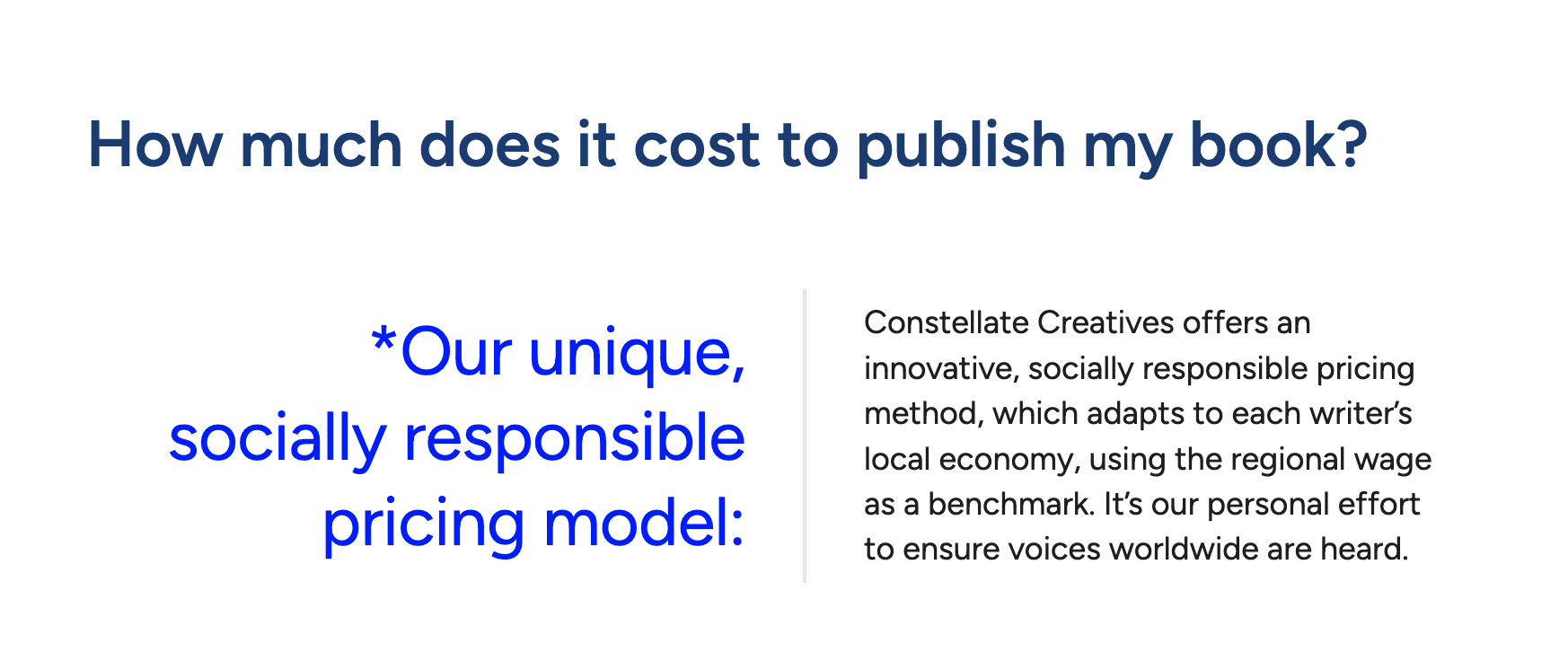
And note the slide I’ve posted above: Constellate Creatives is offering editing, publishing and marketing services, or some combination of those, and at socially-responsible fees based on the regional wage in each writer’s local economy.

Some of us love to edit copy and help with developing your work. Others (raises hand) love marketing. Yes, I’m weird like that. We can’t promise that PR about your book will land on large market-share sites like KTLA, where our news release announcing our slate for the first half of 2026, was picked up. But we’ll be pitching your work and you won’t have to deal with the dreaded marketing.

There’s a button somewhere on the CC site that will lead you to a free consultation. We might be able to answer some questions for you.

https://constellatecreatives.com/

My world and welcome to it: Seven Angels and Middletown, my fictional places

When my short story “A Fighting Life” was published in the past couple of weeks in the FIGHTING WORDS anthology, it contained the latest reference to the fiction worlds I operate in.

Since I wrote four or five novels back in the early 2000s – books that’ll probably never be seen, unless radically rewritten with what I’ve learned about writing in the meantime – I’ve enjoyed writing in a universe where, despite some timey-wimey variations, most of my characters and storylines play out in a shared world mostly consisting of the small city of Middletown, Indiana – based on my hometown of Muncie, Indiana, which was referred to in 20th century sociological studies as Middletown – and Seven Angels, a Tennessee town based on Jamestown, the small town my parents came from.

The early 2000s books featured Jack Richmond, a Middletown newspaper reporter, and a group of friends including Jess Peterson, an affable cop on the Middletown police force. There are lots of other characters too, including Luna, a topless dancer Jack falls in love with. By the end of the series of books, the two are married and have a son, Cody, and the final, still-to-be-completed book features Jack and Peterson’s desperate efforts to get Cody back after Luna’s ex brutally assaults her and kidnaps the boy.

When I wrote SEVEN ANGELS in 2019, my first crack at writing a novel in 15 years or more, I set it in the titular small Tennessee town with a side trip to Middletown and a pivotal appearance by Peterson.

My next novel, the also unpubished GHOST SHOW, is set in Middletown, but in 1948 and follows the Anderson family, who came to the big industrial town from the small Tennessee town of Seven Angels. No crossover characters, though.

My third novel, THAT OCTOBER, which was just published in June 2025, is set in 1984 Middletown and includes, among secondary characters, Richmond and Peterson at the beginning of their newspaper and police careers, respectively.

I won’t detail it all here, but I’ve returned to the Middletown and Seven Angels wells numerous times in short stories. The foul-mouthed, fightin’ siblings in “A Fighting Life” are pulled from GHOST SHOW. My very first published short story, “Independence” from the MOTEL anthology, is set in little Seven Angels, complete with the sheriff/main bad guy from the SEVEN ANGELS novel.

The seeding of characters from my earlier stories – like Butcher Crabtree, who I posted about here recently – throughout my fiction just goes on and on.

And so do I. To quote one of my (hopefully) self-deprecating quotes, “Enough about me. What do you think of me?”

It’s an e-book kind of day!

It’s Labor Day and the beginning of fall – don’t argue – and the beginning of Spooky Season – that cannot be argued with – and it’s e-book day here on the ranch.

Just a quick note that THAT OCTOBER, my 1984-set high school crime novel, is available for quick and easy download beginning today on Kindle.

Here’s the link:

Also today, FIGHTING WORDS: BRUISERS, BRAWLERS AND & BAD INTENTIONS is out on Kindle.

The anthology, put together by writer and editor Scott Blackburn, features stories about fighting, fracases, brawlers, pugs and the sweet science, especially when it’s not so sweet.

My story, “A Fighting Life,” begins in 1948 and follows three young siblings – Marie, Peter and Saul – as they discover there’s money to be made, a nickel at a time, taking on other neighborhood kids in bare-knuckle challenges in vacant lots and abandoned buildings.

But besides my story, there are nine other great stories from some of the hottest authors today, including:

Saint Bullethead by Nick Kolakowski, narrated by Chris Andrew Ciulla

Where the River Breaks by L.S. Goozdich, narrated by Victor Clarke

Pure Wrath by A.M. Adair, narrated by Linda Jones

Fight Club by David Moloney, narrated by Chris Andrew Ciulla

Conor McGregor Was a Friend of Mine by J.B. Stevens, narrated by Michael Orenstein

Call Me Mina by Laura Brashear, narrated by Stacy Gonzalez

A Fighting Life by Keith Roysdon, narrated by Courtney Fabrizio

The Grit by Meredith R. Lyons, narrated by Suzanne Elise Freeman

Bourbon BrawI by Ashley Erwin, narrated by Matt Godfrey

The Cleaner by Jason Allison, narrated by Chris Andrew Ciulla

And what’s that “narrated by” element there? That’s because in addition to the e-book, which is available now, there’s an audiobook edition coming right away.

I got to work a little bit with Courtney Fabrizio, who narrated my story, and she is fabulous.

The e-book was upon its debut the Number One new release in martial arts books and it’s a firecracker.

Here’s a link:

2025 so far, so good … ?

Don’t be fooled by that headline. 2025 is very much a shit show. I’m talking my writing year so far and that ONLY.

I published my 1984-set high school crime novel THAT OCTOBER in June and the reception so far has been pretty good. I have no complaints about how kind and generous people have been. If you’ve read it, please leave a review on Amazon. But buy it from one of the dozens of sites that sell it, especially bookshop dot org or Ink Drinkers Anonymous, the woman-owned, Black-owned bookstore in my hometown of Muncie, Indiana.

Other than THAT OCTOBER, I’ve been pleased to see a number of short stories published or purchased for upcoming publication, including in a future anthology that I can’t wait to tell you about.

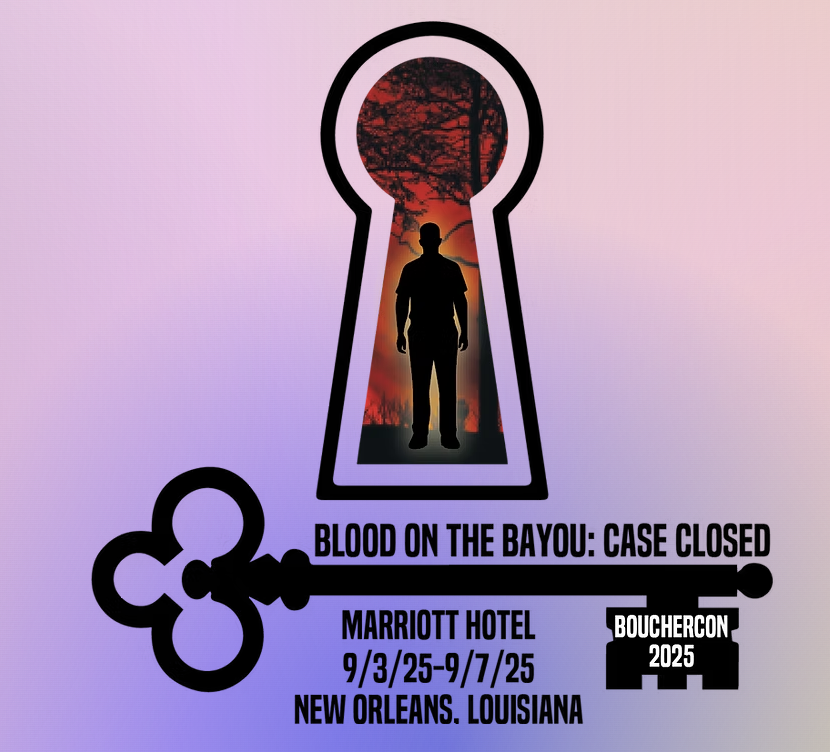
In September, I go to my second Bouchercon, the world convention of mystery and crime writers and readers, and I’ll be on my second Bouchercon panel, with a hugely talented group of authors. This one is at 3 p.m. Wednesday, Sept. 3, the first day of Bouchercon. This Bcon is in New Orleans, which I’m pretty sure should be mild and breezy by September, right? Right?

But very nearly overshadowing all this is that I submitted, earlier today, a short story to the crime fiction genre’s preeminent market. Now I don’t have any great hope that the story will be published. There are a hell of a lot of great writers out there submitting stories.

But the submission was a goal of mine for 2025. Not to get a story published in that magazine, I will note. Nope. Just to submit a story to them again.

I subbed once before, a few years ago, and their rejection was so perfectly justified but so devastating that I didn’t submit to them again for several years. Hell, I didn’t submit anywhere for a year.

So aside from publishing THAT OCTOBER, and attending and speaking at another Bcon and winning a place in this cool anthology that’s coming up in just a few weeks, getting up the nerve to submit to the Big Show again was a 2025 goal realized.

It’s all gravy from here,

As Homer Simpson would say, “Mmmm … gravy.”

The many lives – and deaths – of Butcher Crabtree

A lot of writers, maybe most of us, have characters that we love to play with. They might be heroes or villains, but we love to return to them again and again.

Mine is Butcher Crabtree, a character I created back in the early 2000s in DEATH AND TAXES, the first novel I wrote. It was the first of a series of books I wrote about Middletown, Indiana, my version of my hometown, Muncie, Indiana. That first book was about Jack Richmond, a newspaper reporter who investigates the death of the head of the local chamber of commerce and finds that the chamber chief was involved in shenanigans with some unsavory characters.

One of them was Butcher Crabtree, at the time a muscled and menacing, fire hydrant-shaped tough guy who was working as the bouncer at the Gilded Cage, the strip bar in Middletown. In his spare time, Butcher was up for committing murder on behalf of his bosses.

I’ve returned, in the past few years, to some of those characters. Reporter Jack Richmond was a novice newshound in 1984, the time period for my novel THAT OCTOBER, which was published just this past June.

Butcher is in that book, too, although in a blink-and-you’ll-miss-him cameo at a Halloween party. He’s referred to as “Uncle Butcher,” but it’s good old Butcher. Complete with his characteristic baseball bat.

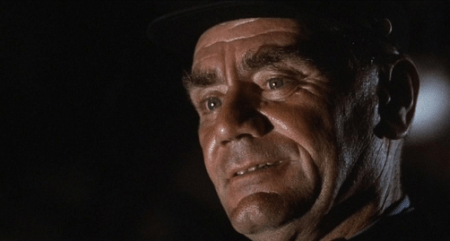
(By the way, that’s not Butcher above, but it is Ernest Borgnine in the great 1973 thriller “Emperor of the North.” In that movie, Borgnine is a vindictive and murderous Depression Era-railroad guard. I didn’t have Borgnine in mind when I created Butcher, but at least in that movie, he’s a pretty good illustration of Butcher. George Kennedy is also a passable doppleganger.)

But Butcher isn’t just a tough guy. I’ve enjoyed casting him in a variety of roles, from the threatening old uncle in THAT OCTOBER to his role in my story “Rousting,” published just recently by Pistol Jim Press. In that one, Butcher is a racist sheriff’s deputy who pushes his luck too far.

Butcher also showed up in “The Devil’s Cut,” my story in HOOSIER NOIR 7. In that one, Butcher is once again a sheriff’s deputy and is again murderous.

Is Butcher ever a good guy? Well, in my book SEVEN ANGELS – winner of the 2021 Hugh Holton Award for Best Unpublished Novel from Mystery Writers of America Midwest – he’s a mentor figure for Travis King, a troubled young man trying to make sense of his violent life.

I’ve included Butcher in a couple of other stories, too, and those – like SEVEN ANGELS – might see the light of day sometime, as THAT OCTOBER has.

Butcher often meets his end in my stories. He did way back more than 20 years ago in DEATH AND TAXES and he has since.

I don’t mind that Butcher’s lives and deaths conflict and contradict and that he seems to move back and forth through time at my whim.

When you’ve got a fun character, you don’t want to let them go.