To that Texas politician: You can have my books when you pry them … well, you know the rest

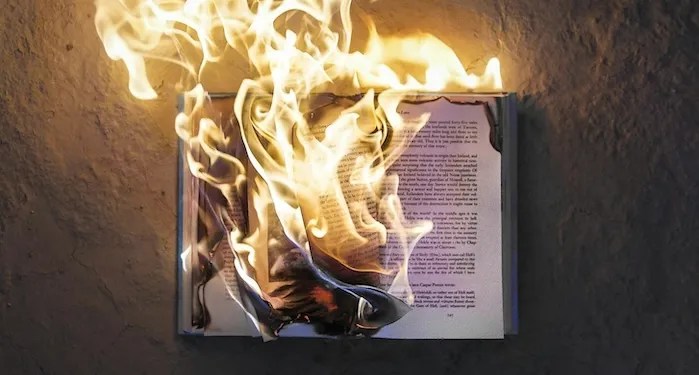
If I were to turn this space into a full reporting of every assault on books and literacy and writing and publishing and privacy and freedom of choice, I’d never get anything done. The folks at Book Riot – that’s their image above – are doing a good job of keeping track of every petty tyrant’s ambitions to tell you what you can and can’t read.

But I will note this: In a month of frustration and anger at the attack on books and our freedom – and you bet your ass those two are connected – by everything from greedy AI companies (who need to go broke and out of business sooner rather than later, please and thank you) and petty tinpot wannabe dictators over their own little fiefdoms, there’s little that has presented as so ignorant and intolerant as “We’re coming for the books,” uttered recently by repugnant Republican Texas Lt. Governor Dan Patrick.

Here’s how the Texas Tribune reported it on August 19:

Lt. Gov. Dan Patrick on Wednesday vowed to pass legislation punishing public schools that do not remove graphic books from their shelves by knocking them down a notch in the state’s annual school performance ratings, which the state uses to seize control of underperforming districts.

Flanked by easels displaying printed covers of books he found obscene, the lieutenant governor said school boards and administrators have not been following a 2025 law aimed at weeding out lewd books from the shelves in Texas’ more than 9,000 campuses attended by some 5.5 million schoolchildren.

“It’s the law and we expect you to follow the law. So we’re coming for the books,” Patrick said during a news conference at the Texas Capitol. “We ask that you do it on your own and remove these books.”

The law from last year, Senate Bill 13, granted school boards the authority to approve and remove books based on complaints they receive, such as those from parents and activist groups. Before, those powers largely belonged to school librarians. But Patrick said an overwhelming majority of school boards have not taken any action, as the law nears one year in effect.

Patrick is no stranger to controversy over his ignorant, intolerant and politically questionable acts. I’ll leave it to more comprehensive online sources to tell you about that.

Book Riot notes that this is “manufactured panic over the content of books in school libraries,” and there’s certainly some head-shaking in noting that Patrick was conducting a publicity stunt for his podcast. The far-right activist/busybody who stood on stage with him was his next podcast guest and she’s put together a list of 2,200 “dirty books” that Patrick is touting as the state’s unofficial list of books that will get school libraries in trouble.

All of you know this space has become increasingly noisy lately regarding authoritarian-wannabe and oligarchs’ attacks on books and writing and publishing and privacy and freedom, because please have no doubt that anytime a politician and would-be authoritarian wants to ban books in school libraries, what they really want to do is control every aspect of your life, from your reading material to who you marry and how and when you reproduce.

Huge sweeping generalization there? I’m not gonna go the easy route and compare these wannabe dictator moves to the best-known authoritarian movement of the 20th century, But that’s what’s at work here.

So to cop a phrase from the old gun lobby bumperstickers, “You can have my books when you pry them out of my cold, dead fingers.”

As Kelly Jensen so ably put it in that Book Riot piece:

If laws like SB 13 are about local control, then why does one partisan activist brag about having been engaged in censorship attempts at 163 schools where she doesn’t have a student or pay taxes toward? Why does one partisan activist get to decide which 2,200 books are illegal in Texas?

This isn’t about local control. It’s about Republican control of anything and everything, down to local availability of books.
Academic publishers have set some guidelines about AI use and, well, it’s a start

I like writing about the scourge of generative AI in the arts – obviously – and it seems like there’s new news almost every day.

I’ll make this quick:

In the new Publishers Lunch is a report on how some publishers have developed guidelines and methods of screening papers and books for AI use. (You’ll recall that the suspicion of AI has roiled the mainstream publishing industry lately, causing book deals to be canceled and, possibly, author careers to be stymied.)

Academic publishers cited in today’s Publishers Lunch have tried to come up with a constructive method of screening works submitted to them for use of AI. That’s because like a lot of publishing, academic publishers are being swamped with submissions of AI or AI-assisted slop.

The guidelines, which build on the use of AI-detection tools, set thresholds for when AI use is detected.

Some of the publishers have established four guidelines:

  • Assisted – AI helped you brainstorm or research but the writing is yours. Meaning, if you asked AI to find the relevant information for you and then you read those source materials and wrote from them, that’s a mechanical assist. It’s just AI working as a search engine.
  • Collaborated – AI drafted parts while you rewrote, verified, and made it your own. Meaning, if the facts, ideas, etc. came out of the AI model itself (e.g. you asked it explain something to you) and wrote from its answer instead of the source materials, that is AI collaboration and should be disclosed.
  • Generated & reviewed – AI produced the artifact, but you read every line, checked the facts, and stand behind it. To be clear, you hold responsibility for its integrity and accuracy.
  • Generated & unreviewed – AI made it and you didn’t really check. This is not acceptable AI use for PUP staff ever: internal, external or under any circumstance.

Publishers Lunch says that for at least one publisher, if a submitted work meets the last two guidelines, it’s rejected. That’s because that particular publisher correctly argues that the use of that much AI couldn’t be copyright-able because, of course, AI is based on the work of others.

I’m skeptical, but at least somebody is setting some guidelines somewhere.

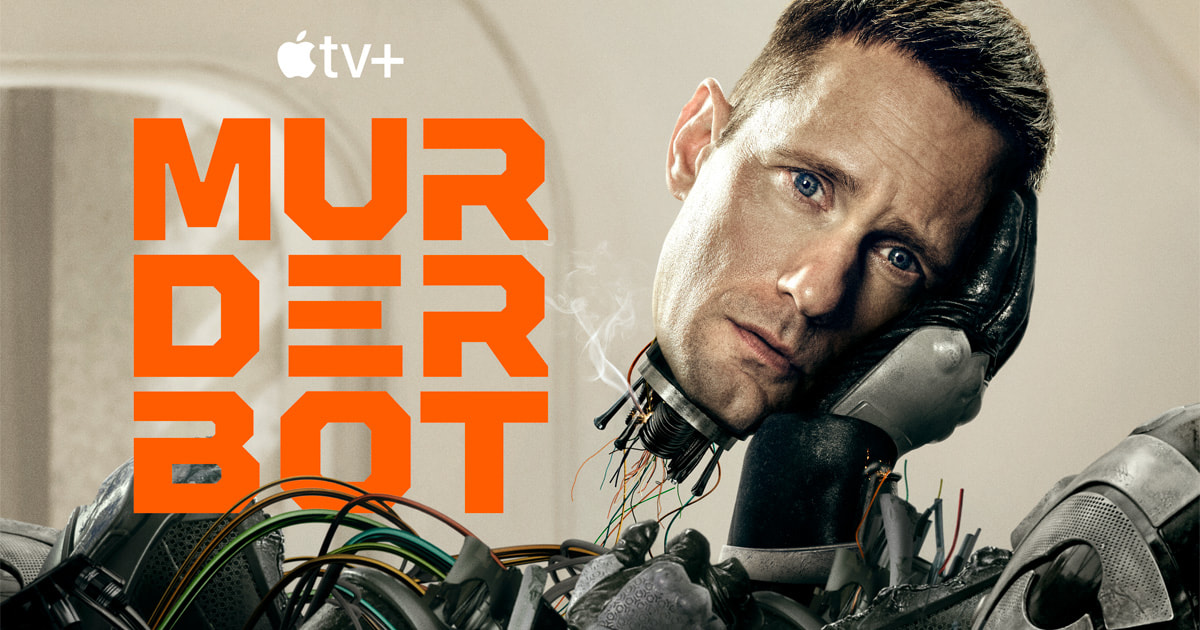
(Image at the top of this post is from the wonderful, funny AppleTV Plus series MURDERBOT, based on the series of novels by THE MURDERBOT DIARIES by Martha Wells.)

Trend chasing? So many hockey romance novels … most of them straight, though. How long will this trend continue?

Sooo many horny hockey players. And fans.

Barely a day goes by that I don’t open Publishers Lunch and see yet another book deal for a hockey romance.

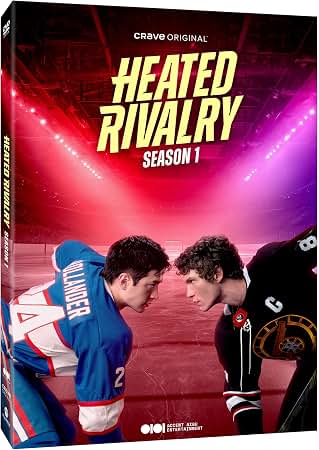
This is, of course, in the wake of the success of “Heated Rivalry,” the Canadian sports romance series about two hockey players who have an ongoing romantic and sexual relationship while playing on opposing teams. The series got a ton of views and a ton of publicity when it aired on streaming a few months ago.

It’s been interesting to see the book industry’s response to the popularity of the series, which is itself based on one book in a series called GAME CHANGERS written by Rachel Reid.

Oddly – or probably not oddly – of the half-a-dozen hockey romance books I’ve seen announced in the two or three months I’ve been subscribing to Publishers Lunch and Publishers Marketplace, most of the new novels are straight romance as opposed to gay romance like the popular streaming series.

The latest book to win a contract, the one I saw today, is, as Publishers Lunch reported:

Sunday Times-bestselling author Freya Marske’s THE OFFSEASON, the author’s first contemporary queer sports romance, pitched as for fans of HEATED RIVALRY and YURI ON ICE, in which a former figure skater who walked away from the sport returns home, where reconnecting with his infuriatingly gorgeous childhood rival, now the current national champion, reignites his passion for the ice—and more, to Ruoxi Chen at Putnam, in a two-book deal, for publication in summer 2027.

For all I know, each of the novels I’ve seen announced were in the works for years and are getting publishing contracts only now, after HEATED RIVALRY has made the subject popular for mass audiences.

It’s like another genre of books that I’m seeing announced regularly, the Western.

Who’ll get published first? Who will best meet the demands of readers? Will a half-dozen hockey romance books all be successful or will some corner the market? Or will each one inspire readers to seek out more?

After all, romantasy books – the trend, that is, not just the genre – kicked off somewhere and they’re still going strong.

Indie authors can take steps to help get their books into bookstores. A few ideas:

For most authors, especially indie authors, getting your books on bookstore shelves is a huge end goal.

It can seem like an impossible goal because brick-and-mortar bookstores have only so much shelf space. Your book is competing for space with books by masterful writers and the most hyped – many times rightfully so – books in print.

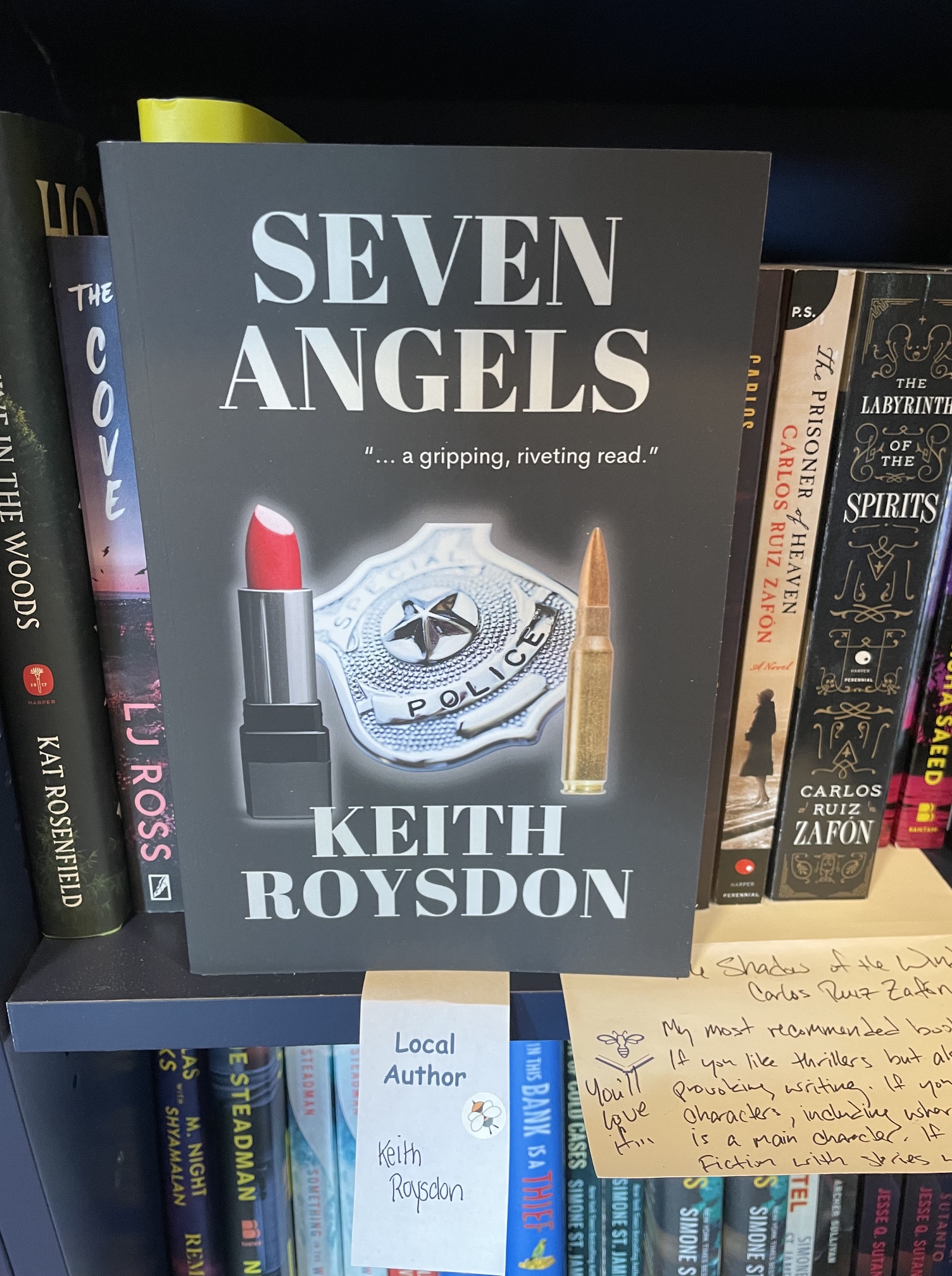
So as someone who’s recently placed my second crime novel, SEVEN ANGELS, on the shelves of the Hive Bookshop, a local woman-owned store here in Knoxville, I can tell you what steps I took that might have paid off and landed a spot on those shelves not only for SEVEN ANGELS but also my first crime novel, THAT OCTOBER.

(And yes, I say “might have paid off” because, ultimately, who can say why a bookstore owner or manager decides to stock the books they stock? I’m sure there are as many reasons for carrying a book as there are books.)

First, write your book. Finish your book. And work on it, with friends who are willing to read it – not to mention a pro editor, if you can afford it – until you’ve got a good book. Yes, I know that’s highly subjective, but in my case, the Hive owners asked if I could drop off copies of my two books so they could check them out. A few weeks later, they let me know they wanted to stock the books. One of the owners apparently read them, or at least enough of them to know a few customers might consider buying them.

And when I say “work on your book,” I’ll note that I outlined SEVEN ANGELS around 2009 and then returned to that outline to write the novel in 2019, after I’d taken a buyout from the daily newspaper business and could devote time to writing it. I added major characters and subplots years later, in 2022 and 2023 or thereabouts, that made the book more well-rounded. This isn’t a typical book-writing timeline for me, although it did take me about a year and a half to write THAT OCTOBER.

Secondly, timing is important. The Hive is literally a new bookstore, as opposed to the long-established other local indie bookstore that didn’t even respond to my request – in person and through their formal process – that they carry my work. Is a new bookstore less hidebound? Is a new bookstore more willing to take a chance on a new author? Certainly the Hive emphasizes that they’re very focused on community and local authors. Maybe your bookstore is new or they have a new decision-maker or they’re just willing to take that small gamble.

Third, cultivate relationships. I didn’t do a lot of that with the Hive, but I don’t think it hurt that I visited their store during their soft opening and bought a book, DUNGEON CRAWLER CARL, which I’d been wanting to read. Nothing’s better than when your bookstore knows you’ll not only support their store but also recommend their store to others.

Fourth, be understanding and don’t be pushy. Understand what an investment opening and maintaining a good bookstore is. As much as I wanted to, I didn’t “circle back” to the bookstore during the weeks after they had copies of my books and before they notified me they’d carry my books. I figured the owners had enough on their hands without having to respond to multiple email inquiries with an “are we there yet?” type message.

(I have traditionally been pushier with two stores back in my hometown of Muncie, Indiana. The wonderful folks at Ink Drinkers Anonymous and Aw Yeah Comics have been receptive not only when I ask if they’ll carry my books but also when I ask if they need more copies.)

Fifth, have good packaging and presentation. My cohort Jill Blocker and I published THAT OCTOBER and SEVEN ANGELS, the latter through Constellate Publishing, Jill’s book imprint spin-off of her Constellate Creatives company. (Link to Constellate is at the end of this piece.)

Sixth: Try to copy edit to avoid typos – we didn’t manage to have no typos, but I see professionally published books that have typos – and have someone – Jill in this case – who can format the book in an eye-pleasing manner.

Seventh: Have a good cover. I’m lucky that my artist friend Sara McKinley drew the cover for THAT OCTOBER based on my suggestion that I wanted something reminiscent of a dramatic X-Men comic book cover pose for the young protagonists. With SEVEN ANGELS, I knew I wanted a cover that paid tribute to those Robert B. Parker covers for the Spenser books that had one or two or three elements on a background. I found the three elements – a lipstick, a bullet and a badge – and Jill executed the cover.

Eighth: Your book might be totally bookstore-worthy but never find its way onto shelves. I thought that would be the case with mine. I didn’t give up, but I was pretty resigned to never seeing my cover in a bookstore.

And I was doubly thrilled when it happened and hope it happens for you if that’s your goal.

Here’s that Constellate link:

Report: Amazon is buying old books to scan for AI and destroy. Yes, this surprises no one.

I had intended to follow-up my weekend post about getting my books in a local bookstore by suggesting what authors might do to achieve the same thing, but I’ve delayed that for the moment. First things first, and just like a house on fire, the dual plagues of AI and Amazon get our attention at the moment.

For a few weeks now, book lovers and people who hate AI have been despairing at reports about how companies that steal, buy or pirate books to train generative AI – thus putting creative people at risk of losing their livelihoods – have been buying and scanning books. The revelation comes out of the landmark class action lawsuit Andrea Bartz and other writers filed against Anthropic. Bartz and company won a $1.5 billion settlement on behalf of many, many writers whose work was stolen by the AI company.

Details of Anthropic’s practices came out in the discovery process, and they’re horrifying: The company was buying hundreds of thousands of copies of books, some of them older and out of print, and they’re cutting off the spines and feeding the pages into AI-making programs. The books are utterly destroyed. The judge in the Bartz case ruled that this practice was legal because the company had bought copies of the books, not stolen them. (They’re using older books to ensure no AI writing gets fed into the AI consumption process, of course.) Videos of this process – chopping spines off books and the ultimate shredding of the pages – are disgusting and disheartening.

And of course Anthropic isn’t the only AI company doing this.

Today, thanks to an ingenious investigation by 404 Media, we also know that Amazon is doing it. Maybe not a surprise – Amazon and its owner are widely regarded as awful; most of us who do business through them do so only reluctantly, or at least that’s how I feel – but the confirmation from 404 Media, which was also shared by Publishers Lunch this morning, is damning,

This is the lead of the 404 Media story published today:

Amazon is buying massive quantities of books, scanning them for AI training data, and destroying them in the process.

(I’ll link to the 404 Media story at the end of this piece.)

404 Media cleverly hid an AirTag-type tracker in an old book that was to be sold to Amazon’s book-buying operation. 404 was able to track the book as it and many others were shipped around the country and ended up in Las Vegas, where it went to an Amazon warehouse used by an operation called VGT3. That’s the operation’s logo above. Charming, huh?

Amazon didn’t really address the process or its value to anyone but Amazon in its response to 404.

(404 had, in July, reported on an increase in sales of old books and speculated that the increase in sales was due to AI-generating companies buying books it could scan and destroy. And again, I’ll note that the books being chopped and scanned and shredded were published before 2022 or so to AVOID THE WRITING BEING TAINTED BY AI.

As 404 reported: These booksellers suspected AI companies were behind these large bulk purchases because of the high number of books they were buying, the seemingly random choice of books, and the fact that these buyers, unlike libraries and universities, did not seem price sensitive at all. But booksellers couldn’t say for certain who was behind the large purchases because the marketplaces where they sell their books keep the buyers anonymous. When an order comes in, a bookseller ships the sold books to a warehouse operated by the marketplaces, where books are sorted and then sent to the buyer.

In July, one bookseller told me they received a very large order of around 1,000 books on Biblio, one of these marketplaces. The seller agreed to put an Apple AirTag provided by 404 Media in one of the books included in this order so we could see where the book was going. And by extension, which company, AI or otherwise, was behind this massive order.

404 Media granted the bookseller anonymity because they worried sharing this information would harm their business.

404 found online comments from Amazon employees about the VGT3 facility that virtually all they do there is scan books.

Many thousands of books are being bought, scanned and destroyed by Amazon at that facility and probably others. And that doesn’t even account for other companies that are doing the same.

And as 404 reported:

That employees are scanning the barcodes or ISBNs on books — a unique serial number given to every published book — before scanning their content gives further credence to another theory put forth by booksellers: AI companies are trying to methodically scan every printed book in the world by working through the list of ISBNs. One bookseller told me they suspected this was the case because the very large orders they were getting never included very rare books that do not have ISBNs.

I already didn’t feel good about Amazon, where a large amount of my work can be purchased. Their practices toward employees and authors and the sheer mass accumulation of wealth by its owner were long-known and queasy-making.

Here’s another reason, thanks to the reporting by 404 Media and dissemination to the publishing industry by Publishers Lunch, to dislike Amazon.

Here’s the 404 Media story:

https://www.404media.co/we-tracked-a-shipment-of-rare-books-it-ended-at-an-amazon-ai-training-facility

Celebration: Local bookstore carries my books – and what that means for other indie authors

I had the coolest experience I’ve had in a long time on Saturday: I signed copies of my novels SEVEN ANGELS and THAT OCTOBER for a bookstore. And not just any bookstore, but my local indie bookstore The Hive, which opened this spring.

(Link to the Hive site at the end.)

I’ve had books in local bookstores for 10 years now, since 2016, when the first of my co-written true crime books, WICKED MUNCIE, was published. Each of the three true crime books that followed were also placed in Muncie bookstores (and in displays at Walgreen’s and other stores) by the History Press. Whatever else you might say about History Press, but they have the juice to get books in stores in and around the area that’s depicted in the book.

Since publishing my first novel, THAT OCTOBER, in June 2025, I’ve tried to get it in stores here in Knoxville, where I’ve lived for not quite four years. The long-established indie bookstore here turned up its nose at my request they carry that first novel. And by turn up its nose, I mean that I brought the book to that store and went through their formal online process for requesting that the store carry a book. I heard crickets back. They just never responded, and it’s been 16 months. 

And yes, I know all about how much of a premium shelf space in bookstores is. Spare me that factoid, please. Because even though Barnes & Noble replied to my request that they carry the book locally with a refusal to do so, at least THEY REPLIED. (They carry my books online, as does virtually every other bookseller, so I appreciate that.)

So I didn’t have high hopes for the Hive, even though pretty early on it was obvious how they liked to focus locally, with space on shelves and book clubs and talks and signings. I asked.

So when the Hive responded a few weeks ago with a “we’d be happy to carry your novels” and this past week said, “Your books have arrived, would you like to come in and sign copies?” I was just incredibly, pleasantly surprised.

(When I vague-posted on social media about this, some people thought I had interest in my books from TV or movies and, yeah, I have gotten a nibble in that regard but I’ve yet to see follow-through and yet to ensure it’s legit. So we’ll see.)

I’ve been lucky since THAT OCTOBER came out that not only libraries back in Indiana but two of my hometown bookstores, Ink Drinkers Anonymous and Aw Yeah Comics, have been happy to carry my novels. And it was a hell of an experience in 2025 when THAT OCTOBER was carried in the bookstore at Bouchercon in New Orleans.

So the Hive carrying my novels and asking me to sign them and even marking them with a “local author” tag was the best thing yet.

In this “all about me” celebration and back-patting here, I’ll note that there’s a slightly larger issue here. I self-published, through the good work of my friend Jill Blocker, THAT OCTOBER and Jill and I published SEVEN ANGELS through Constellate Publishing, the indie publishing imprint and spinoff of Jill’s company, Constellate Creatives. 

So three things can be inferred from my personal victory of The Hive carrying my books: Indie bookstores are the best. Decisions about what books to stock are best made locally.

And indie authors and small imprints should be heartened by the fact that small potatoes book publishing can get your book into bookstores. 

Here’s the link for the Hive on bookshop dot org

https://bookshop.org/shop/hivebookshop

What a week: More AI discourse, book news and … am I dominating your inbox?

Some of you are old enough to remember July 24, where on this very site I said that I’d unsubscribed from a “help for authors” newsletter because they’d pushed out 14 newsletters in a month and that seemed like a lot.

How many newsletters is too many? Well, we’re about to test that number. This entry that you’re reading now is the eighth new piece I’ve posted here since that July 24 column. Those posts have been fueled by a lot of commentary on AI and some book self-promotion.

Each new item I post results in an email to those of you who subscribe, so it’s almost as if I was sending out some kind of … well, newsletter.

So I’ll be keeping track of how many I post and we’ll see if I exceed 14 in a month. And y’all can keep track too and blast me in comments or social media if (when) I blow past that milestone of 14 in a month.

But today, here’s some housekeeping stuff. As Carl Kolchak of “The Night Stalker” fame always says, item:

Item: Shoutout to Andrew Careaga, in the latest edition of his newsletter today, for citing my August 5 piece on the blog here about AI. You should subscribe to Andrew’s newsletter, Friday Five.

Item: The Publishing Confidential newsletter by Kathleen Schmidt has rapidly become one of my favorite newsletters.

Item: Also essential are the various daily newsletters for subscribers to Publishers Marketplace. There’s an expense to the subscription – basically a dollar a day – but I’m feeling more plugged in to the industry as a result of Publishers Marketplace, newsletters like Schmidt’s and Careaga’s and some others I’m going to cite here from time to time.

Item: As someone who has maintained a Facebook page, Wicked Muncie, for 10 years and this site, which began life as a WordPress blog something like 15 years ago and has now amounted up more than 1,100 posts about pop culture, books, Halloween vintage costumes and a bunch of other stuff, I wanted to mention that it’s hard to maintain an active site or blog or social media account and in particular I wanted to cite Mark Evanier’s News from Me site. Evanier, a veteran writer of comics, TV and books, posts pretty much every day, sometimes more than one post a day. He knows a lot about entertainment and he knows a lot of old Hollywood types and his annual Mel Torme Christmas post is reason enough to check out his site. I’ll include a link at the bottom of this post.

Keep me in your thoughts. I’m editing manuscripts from friends and upcoming books from us at Constellate Publishing and I’m doing a lot of reading for a super-secret project that I’ll detail around the middle of 2027.

And yes, I’ll post here this weekend or early in the week because something very cool is happening in regard to my novels THAT OCTOBER and SEVEN ANGELS. No it’s not a movie adaptation. (Although … no, I’ll tell you that story someday.)

Here’s that link:

https://www.newsfromme.com

My little foul-mouthed scrappers will return in my novel GHOST SHOW

I’ve noted in this space before that most of my books and short stories occupy the same universe that mostly varies from the town of Seven Angels, Tennessee, to the small city of Middletown, Indiana. The former is the focus of my newest novel, SEVEN ANGELS, and the latter is the setting of my 2025 novel THAT OCTOBER.

I’ve plotted references to those locales in most of my fiction, including my upcoming novel GHOST SHOW, which is set in Middletown in 1948 (THAT OCTOBER was set in Middletown in 1984).

And there’s been a few times I’ve had characters cross over from stories to novels. I’ve previously mentioned here Butcher Crabtree, who pops up in SEVEN ANGELS and a few stories.

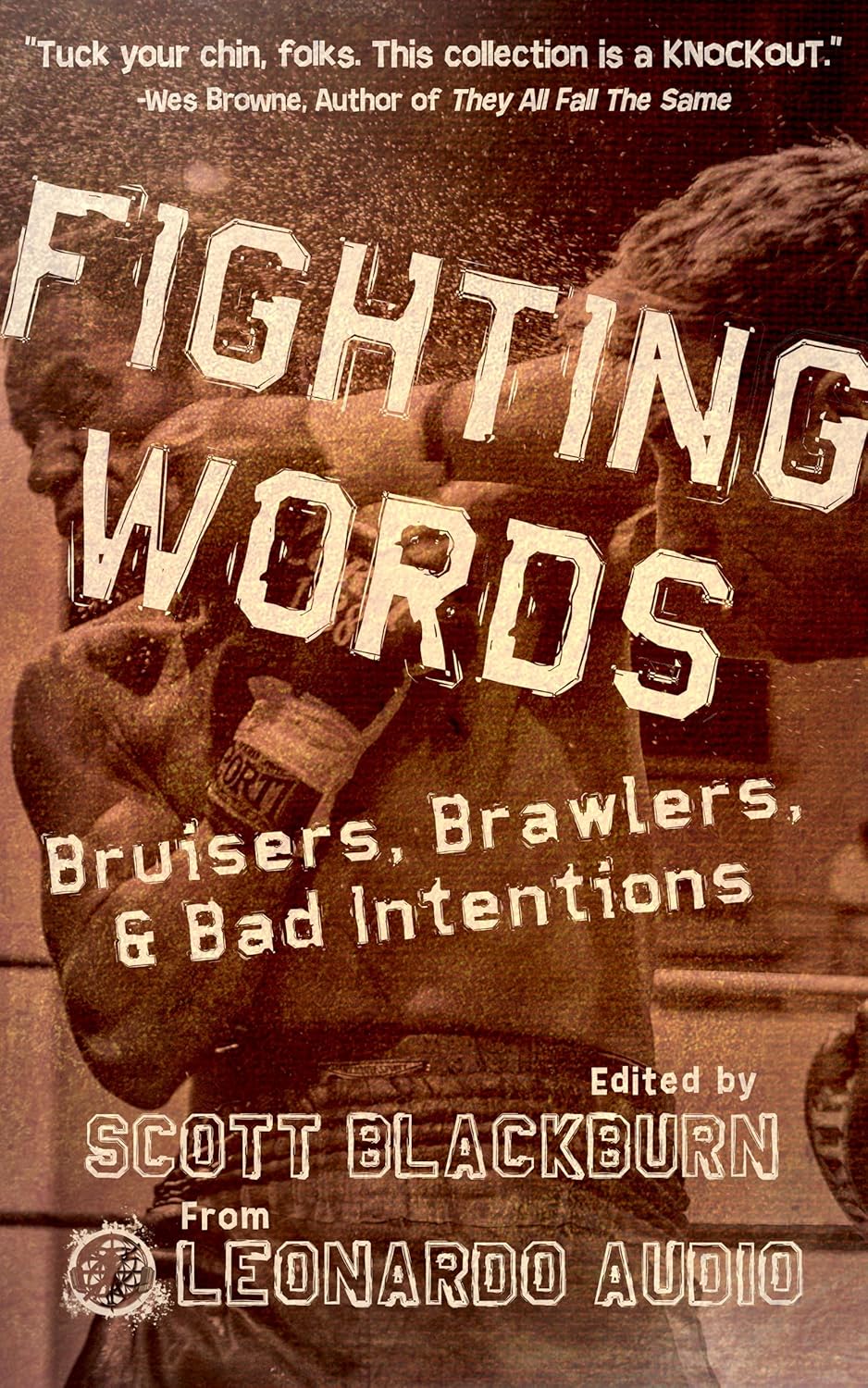
But in GHOST SHOW, when it shows up this winter, you’ll see some characters I introduced in “A Fighting Life,” a short story in the 2025/2026 anthology FIGHTING WORDS, edited by Scott Bradburn and published by Leonardo Audio.

Four of the Anderson siblings, who are the focus of GHOST SHOW, are in “A Fighting Life,” which is also set in Middletown in 1948.

They’re pretty different characters in some ways, and very much the same characters in other ways. In “A Fighting Life,” siblings Marie, Saul and Peter get into vacant-lot-punchfests when the three, all of them teens or pre-teens, discover they can make money by letting other neighborhood kids fight them for nickels. They’re foul-mouthed little bastards, as Courtney Fabrizio, the marvelous narrator of my story for Leonardo Audio, alludes to. (You should read the story, but you really should get the audio version of the anthology, particularly for the amazing work of Courtney.).

In the story, Marie, Saul and Peter take on all comers – and get rescued by their big sister Rachel as they’re about to be busted by the cops – and it’s a story that is, by turns, fun and dire.

In GHOST SHOW, Marie, Saul and Peter are still the youngest members of the Anderson family and Rachel sometimes rescues and sometimes needs rescuing. GHOST SHOW is a story that’s very, very loosely based on my mother and her siblings when they were young, and the four are based on one of my aunts, two of my uncles and my mom. There wasn’t as much mayhem in real life as I injected into either the short story or the novel.

I’d encourage you to buy FIGHTING WORDS not just for my story “A Fighting Life” but also for the really crisp and tough writing by the other writers in the anthology. And it might tide you over until GHOST SHOW arrives.

The link to buy FIGHTING WORDS:

Book sales are up to $32.5 billion, but books are dead, right?

Books are dead! Long live books!

A while back I wrote a piece for CrimeReads – link at the end of this mini-rant – about how those of us at Constellate Publishing were getting into the book publishing business even though it appeared to be an uncertain time for the industry: Some small publishers had gone out of business and some book distributors were shutting their doors, and yet such notable independent booksellers as Barnes & Noble – sarcasm there – were opening new stores all over.

So which is it? Are writers and designers and publishers doomed or are we seeing a boom time?

Today, Publisher’s Weekly reported:

The Association of American Publishers put 2025 industry sales at $32.5 billion, a 2.5% increase over 2024. Unlike 2024, when unit sales fell, the number of books sold in 2025 inched up 0.4%, to 3.15 billion.

I copied this to a writer friend who replied, in effect, “So publishers are selling a lot of books but are nickel-and-diming us writers to death.”

And yes, PW reported that religion-themed books had seen the biggest increase, but:

Adult fiction sales had the second biggest sales increase, with revenue up 3.9%, to $7.1 billion.

There’s a lot to digest in the report, but here’s a bookstore tidbit:

In terms of channels, physical stores had the biggest increase in the year, with sales up 6%, to $5 billion, an increase likely due in part to the opening of more Barnes & Noble stores as well as more independent bookstores.

Amazon was still the largest channel for book sales, with $11.3 billion in sales.

“This year’s report reflects a healthy and agile publishing industry,” commented Syreeta Swann, chief operating officer of AAP in a statement. She pointed to the resilience of print even as digital formats continue to grow.

Things can change and there’s just no doubt it’s hard to concentrate to read when it feels like we’re teetering on the brink of climate, social and political collapse with a strong tailwind, but the message to writers seems to be:

Write your asses off. There’s a readership out there.

Here’s my CrimeReads piece from a while back about getting into the publishing industry, with comments from some absolutely first-rate writers:

Take 90 seconds and listen to author Cory Doctorow explain the AI scam and why it’ll implode

You should take 90 seconds and listen to author Cory Doctorow distill the AI bubble down to what it is: a scam that’s about to fall apart. These 90 seconds are the best explanation yet of why AI and its manipulators are going to fail.