Tag Archives: newspapers

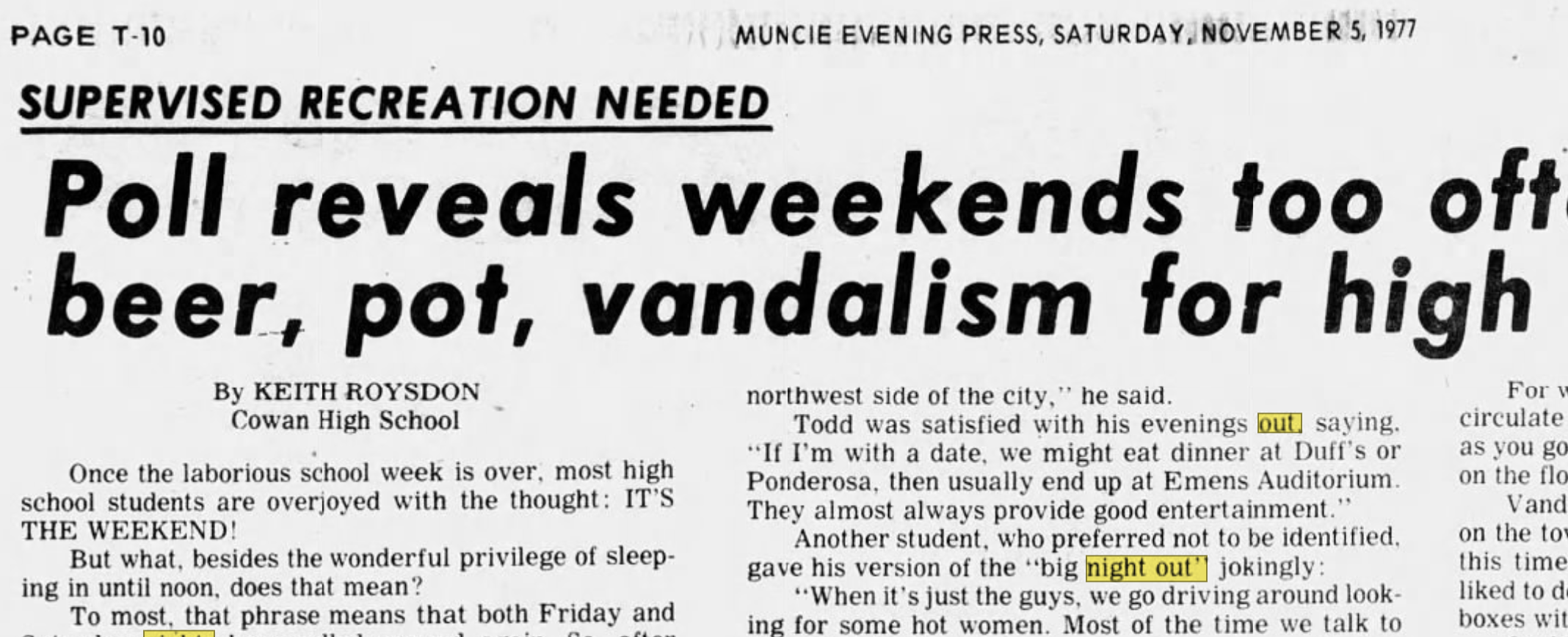
November 5, 1977, a date that will live in infamy, also known as my first published article, 49 years ago today

I could lie and say that this date 49 years ago seems like only yesterday, but truthfully it seems like eons ago.

After I woke up this morning, I opened Instagram to see video footage of author Stephen King leaving some book promotion event somewhere and I thought that King, one of my favorite authors of all time and a master of the written word, looked every day of his 79 years. He seemed a little unsteady and walked with a cane.

Funny coincidence, so do I. And King is more than a decade older than me.

If that wasn’t humbling enough, I opened Facebook memories and saw posts from 2017 and 2007, I believe, in which I noted the anniversary of my first published newspaper article from 1977.

Despite the inclination to turn over and go back to sleep at all those reminders of the passage of time, I decided to get up and, among other things, write about the 49th anniversary of my first published article.

That’s a screenshot from newspapers dot com above, and you can tell the gist of the article: friends and fellow students from Cowan High School in Delaware County, Indiana, let me interview them about what they did on a “big night out.” The gist of it was go see a movie, go see a concert, have dinner as well as a few more nefarious activities, like illegally obtaining beer – all of us were three or four years too young to buy carry-out liquor – and drinking and sometimes riding around in the rural countryside, throwing beer bottles at signs.

(I can write about this now that my son is years past the age to be encouraged to do this by my example.)

The article was hugely controversial, and a good indicator of why the less-legal activities were not attributed to anyone on the record: My school system apologized in the school newsletter to the poor students scandalized by the implication that they would do this. Somewhere, in a box somewhere, I not only have a clipping of the article but also a snippet of the apology (not from me, but from school administrators) in the newsletter.

The article came about because I had volunteered to fill in for a friend also on the school newspaper and yearbook staff. She had a ton of studying to do and wouldn’t have time to write the article for the Muncie Evening Press newspaper. (The newspaper regularly published articles written by local high school students, although most were of the “Big school fundraiser next week” variety.) I said I would and that kicked off a newspaper career that didn’t end until I took a buyout in January 2019. It didn’t completely end even then: I wrote freelance for the newspaper for a year or two even after the buyout, covering stories like Covid.

After a newspaper editor called the school guidance office (heh heh) and offered me a regular gig as the paper’s “teen columnist,” I wrote for the Evening Press all through college and for a couple of years after before they offered me a full-time reporting job in 1984. I started on my dad’s birthday, which was appropriate because my parents had never been anything but supportive of me going into writing rather than my original plan, which was to become a lawyer. My tenure at the newspaper continued even after my beloved evening paper merged with the hated morning paper in 1996.

The moral of this is: Kids, stay in school.

No, the moral is that you should take a chance every once in a while, trying something new and daring that might have an unexpected outcome.

You, too, could become a lifelong writer and pass up your chance to practice law and make far, far, far, far, far more than you ever would as a newspaper reporter.

Yeah, that’s the moral of the story.

You’ve somehow stumbled upon the latest of more than 1,100 posts on keithroysdon dot com, stretching back to the early 2010s. Books, writing, movies, TV, obscure pop culture, Halloween, snark and more snark. I’m the author of crime novels THAT OCTOBER and SEVEN ANGELS, co-author of four true crime books including the award-winning THE WESTSIDE PARK MURDERS and hundreds of short stories, news articles and pop culture pieces in spots like CrimeReads, Daily Yonder and elsewhere. You can contact me by leaving a message anywhere on this site or by hollering at me on one of my too many social media outposts.
Confessions of a former newspaper obituary editor

I subscribe to two newspapers – three if you count the Washington Post, which I haven’t looked at in a few years – so I can’t tell you the state of the art for various newspaper departments, especially in print. I rarely see the print editions of any newspapers.

I certainly can’t tell you what newspaper obituary sections look like these days. I’d imagine they’re a lot less extensive than they were in the mid-1980s, when I was a young newspaper reporter who, among other things, covered news events, wrote feature stories, wrote about entertainment and, for a couple of years, was the obituary editor of The Muncie Evening Press.

(My thoughts revert to the business of newspaper obituaries today because of a new practice originated by the Baltimore Beat newspaper, which is offering bargain-priced obituaries at prices as low as $5 for a simple online death notice. Link at the bottom of this post.)

Back in the day, newspapers would on some days be inundated with obits. We’d get a dozen or a couple of dozen – you couldn’t plan for those numbers, of course, even if you asked local funeral homes how many obits we could expect from them, because in some cases surviving family members would show up abruptly at the funeral home to make arrangements – and a sudden increase in quantity would mean we’d have to jump the obit page to another page, where it would sometimes crowd out news stories. Sometimes it would jump more than one page. Too many obits was chaos. Frankly, obits were considered chaos by some of us. There was a considerable amount of pressure involved with obituaries, especially for an afternoon paper that published just after noon. We’d rush like madmen all morning to get a newspaper put together, including the obits.

At the time, newspapers did not get paid for obituaries. That changed maybe 10 or 15 years ago, when newspaper advertising departments, rather than newsrooms, started handling obits and funeral homes, which had almost certainly always passed along the “cost” of a newspaper obituary to survivors, made an obit a line item in the total funeral bill.

But back then, newspapers didn’t charge for obits and considered it a public service. As such, obits were considered news articles and were subject to editing for accuracy. For instance, if someone’s obit claimed the deceased person had been president of the United States and they had not actually been POTUS, we’d cut that reference.

During the couple of years I was obit editor, that task fell to me, a 20-something who’d rather have been writing important or at least entertaining newspaper stories. That’s why they paid me the big bucks: A few years ago I saw a record of my Social Security-eligible earnings over the decades and it indicated that one of those first couple of years when I was doing obits I was paid about $14,000 in annual pay. Google tells me that would be a salary of about $45,000 today, but it was enough money even then to persuade me to shut up and do the job.

My couple of years editing obits were made much worse than they might have been by the top executive at the local newspaper, who was a horrible bully. He did have knowledge of the local community and issued style sheets listing the correct names of local factories. Without those, I would never have known the correct name of the local business we all referred to as Frank’s Foundry was The Frank Foundry. But for all the usefulness of his knowledge and his style sheets, we all had to put up with someone who was horribly abusive to the staff, including the top editors.

I still vividly remember how much we all dreaded the time around 1 p.m. each day, when our afternoon newspaper was published and all of us – who had seen proofs of pages but it was hard to catch every error – waited for this top executive, up in his office, to look through the fresh newspaper, find an error and call down to the newsroom and rage about how stupid and incompetent we all were. (That’s not an exaggeration.) I’ll never forget one day when he found a typo in a story – not one of my obits, luckily, that day – and made each of three editors get on the phone with him and correctly spell some common word that had been misspelled in a typo. Like “please” or “elephant” or something.

Being obit editor was not fun and I was happy when, within a few years, I was given an actual beat, county government, to cover. Writing about elected officials who lied and wasted our tax dollars was less stressful than editing obits.

Doing obits for a couple of years was a genuine education in humanity and human behavior. Nothing – nothing – brings out the worst traits in people as readily as the death of a family member. This was most obvious when a family that had been torn apart by some feud or falling out was then hit by the death of a parent or adult child. The family members who were making funeral arrangements – and paying the funeral home for them – would simply leave out an estranged family member. All of a sudden, the family had only two children, as the black sheep offspring was forgotten.

At the time, when obits were considered news stories and not paid advertisements, I hated this. It meant that the obit was not an accurate historical record because children or estranged parents were omitted. But we couldn’t accept the word of a person who called and said, “Hey, I was left out of my mom’s obituary.” What if the call had been a hoax? We had to refer them to the funeral home that supplied the information and tell them that if the funeral home verified them to us, we’d run the obituary again.

Dealing with the funeral homes was usually fine but sometimes odd. The funeral directors were usually under enormous pressure from the families – especially in times of split families – and they didn’t always treat obit editors very well.

On the flip side, the funeral homes were, like a lot of businesses, in the holiday practice of distributing gifts. More than a few times, I was the recipient of a bottle of whiskey (I’d usually pass it along to an editor at the newspaper since beer and vodka were my poison).

The former obit editors at the paper would laughingly recall the year that one funeral home gifted the newspaper – and presumably others in the community – with something other than booze: a jar of pickles.

Given the preserving/embalming nature of the funeral business, the gifts of pickles were mostly regifted to people who didn’t know they came from a mortuary, I’m told.

Here’s the link to the Baltimore Beat story about bargain-basement obits:

My newspaper work lives on! The Case of the Guilty iPhone

I’ve been out of the daily newspaper grind for … yikes … more than seven years now, but I’m always amused when any of my work lives on. It’s best when people find my stories about the FBI investigation that resulted in the city’s mayor going to federal prison. Or even pieces I wrote about Stephen King or interviews with directors like John Carpenter or George Romero I conducted back in the 1980s.

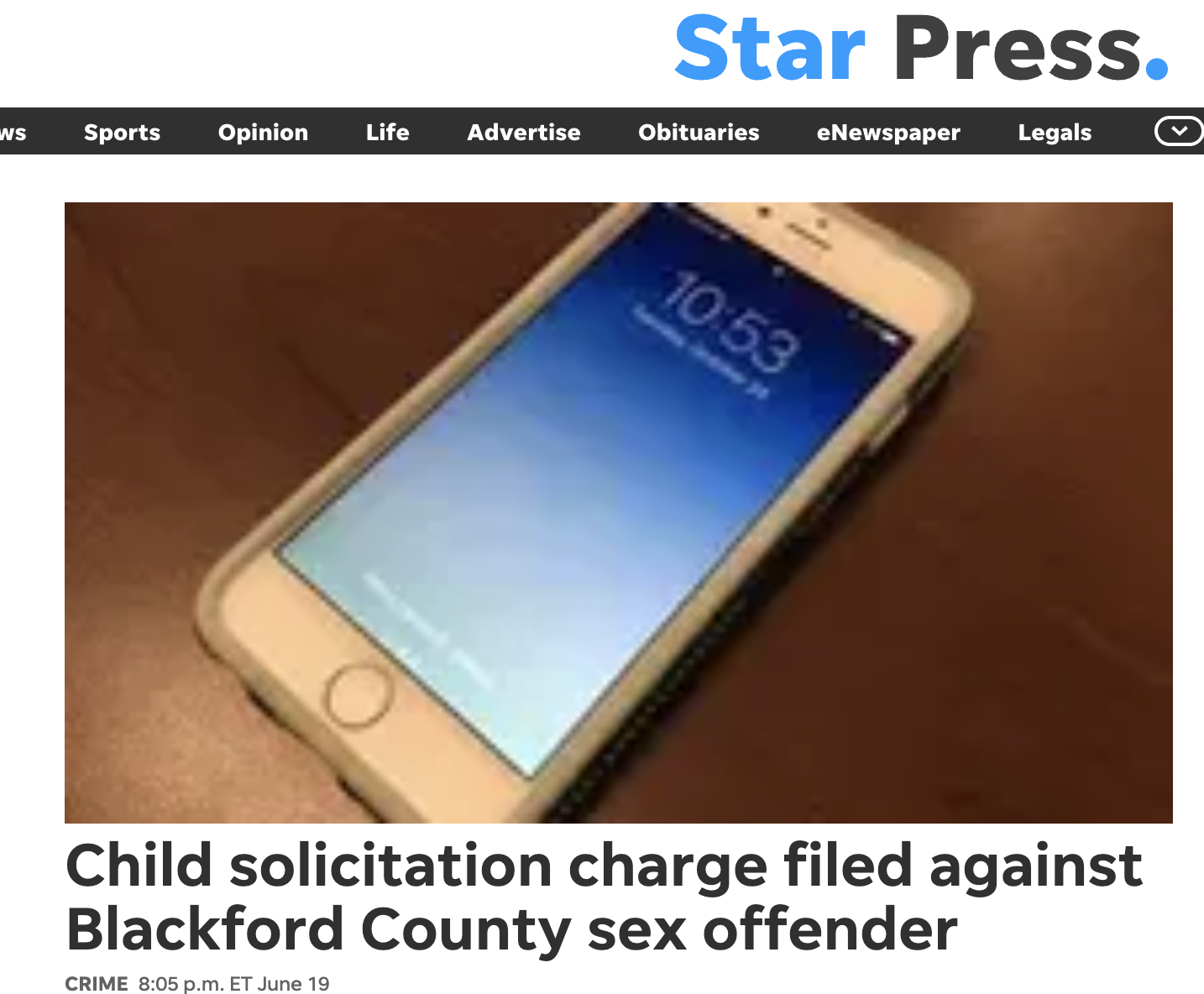
But I’d guess my most-reprinted or reused work has been the photo above, which was posted as promo art on The Star Press today.

Probably at least 15 years ago, we needed a photo of an iPhone to go along with a story. Probably a crime story. Probably a story about some pervert taking photos of something he should not have and getting arrested and possibly going to jail for it. What the photo was originally taken for is lost to the vagaries of time and memory. It survives in the newspaper’s system, however, and is easily recalled when a reporter needs a photo to go with said stories about said perverts and said crimes.

What’s funny, however, is not just how long that photo has been in use. A funnier (to me anyway) behind the scenes element is that I took that photo of my wife’s iPhone and that it’s immortalized as a substitute for a law-breaking iPhone.

Fame and infamy find their way to us in interesting ways.

To nom-de-plume or not to nom-de-plume? Too late for me!

Every once in a while, I’m taken aback when a writer who I kinda thought I knew isn’t actually who I thought they were. I’m not talking about any kind of betrayal here, dire or otherwise. I knew them only as a pen name and didn’t realize that fact.

There are a lot of worse identity crises out there, such as what happens when you deadname someone. But I still get surprised when Facebook suggests I send a friend request to someone and I don’t recognize the name but I know the face.

I realize, stupidly, belatedly, that they publish under a pen name.

I am, unfortunately, 50-some years past the time I could have used a pen name. That’s because in a very small circle of people, I’ve been known since I was in high school. That’s when my first article, under my byline, was published in the newspaper. I haven’t been out of print since 1977.

And when you have an unusual last name like mine, you’re pretty easy to find. Remember the days we were all listed in phone books, no less city directories? (The latter, if you don’t remember them at all, were phone book-style directories that let you look someone up not only by name but by address and, in reverse-directory style, by phone number. And when you looked them up, it told what they did for a living. I’m not sure city directories were any worse than the many ways you can find out about someone now, but they were handy tools for newspaper reporters and probably nightmarish for everyone else.)

(I literally remember using the city directory to find people who, according to court records, might have been victimized by a corrupt judge, some willingly. It made for some awkward conversations when someone came to the door, let me tell you.)

So I’ve never been able to take refuge in anonymity. I know this was frustrating for me and for my family, particularly when someone would call on our home phone – remember those? – to give me grief about something I’d written.

My relative high profile, as compared to people who didn’t work for a newspaper, led to some pretty awkward moments. Sometime I’ll recount one for you over a beer or coffee. You might throw your drink in my face when you hear it, though.

Anyway, it’s too late now for me to adopt an anonymous personna like the superhero the Question, pictured above. Moving to another state has given me some relief from running into people I wrote about, though.

If I get that kind of “hey, it’s that guy” notoriety again, maybe I’ll start wearing a full-face mask and fedora.