
Tag Archives: writing

To ‘stack or not to ‘stack: Substack

I’ve no idea when I first heard of Substack, the online writing and posting platform that a lot of people use and quite a few people forego. For the time being, and probably into the future, I’ll be in the latter camp. But Substack has become a hoppin’ place, especially for writers and other people who express their thoughts.

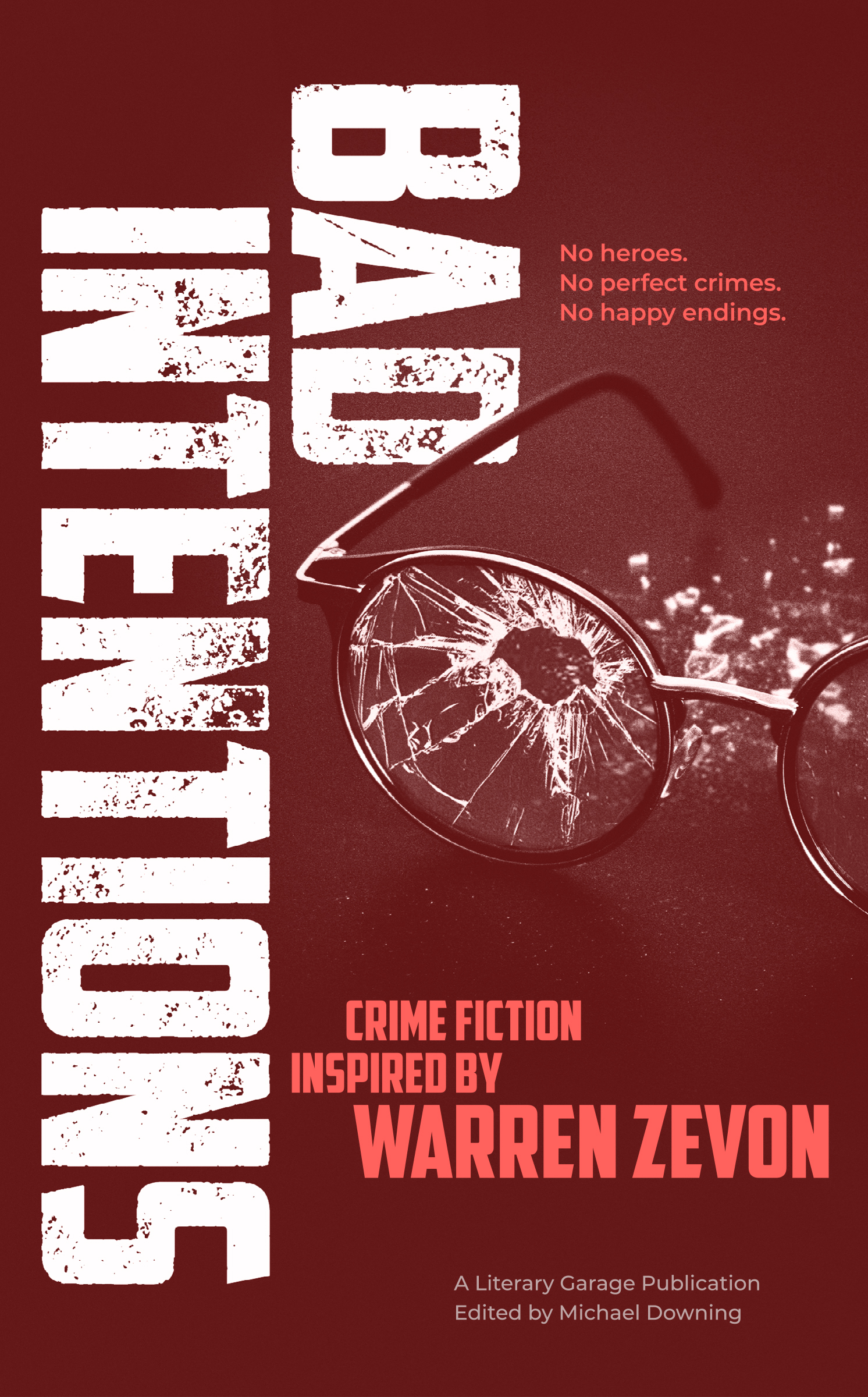
I was thinking about Substack today after reading the latest newsletter from writer Andrew Careaga. You should look him up and enjoy his writing, not only on his various platforms but also his fiction, including his short fiction story in the brand-new Bad Intentions anthology. (I’ve got a story in the anthology too; Michael Downing edited the book and Literary Kitchen published it. It’s out now.)

In the newsletter from Andrew I received today, he talks about the pros and cons of being on Substack and – this is oversimplifying, so I apologize – notes that he’s got his hands full, like a lot of us, with being ON EVERY FREAKIN’ PLATFORM IMAGINABLE. It’s the online presence writers feel they must maintain if they want to reach readers and, truth be told, people who will pay to read our work.

Andrew cites the good and bad points of Substack and links to a Guardian story from February reporting how Substack is generating revenue for and from what the Guardian calls “Nazi newsletters.”

Considering the number of people who are acquainted with Substack’s platforming of white supremacist groups and writers, it’s a little surprising that so many people who are definitely NOT Nazis, like Heather Cox Richardson, are so present on Substack. Richardson is one of 50 million Substack users worldwide, according to the Guardian.

There’s unlikely to be a mass exodus from Substack similar to that when the new owner of Twitter took over and threw the doors open wide for white supremacists and Nazis. The frequently-cited point is that if you start letting Nazis into your bar and more Nazis follow, you eventually become a Nazi bar,

And yes, I’m still on what used to be Twitter. I made the move to Bluesky for my social media platform of choice a couple of years ago. And I should note that a lot of people who temporarily left Twitter have come back.

I’m on social media platforms owned or run by truly reprehensible people and corporations, namely Meta – three separate Facebook pages – plus Instagram and Threads.

Don’t bother to tell me if Nazis own Pinterest. I have a page there, created just this year to promote my new crime novel SEVEN ANGELS. But I’ve all but given up on posting anything there because I have virtually no followers. So I don’t care if it turns into a Nazi bar with kicky hairdo and decorating ideas.

FFS, I’m even on LinkedIn.

There’s no social media or writing platform that is without concerns and extenuating circumstances. If we’re waiting for a platform owned by a corporation that isn’t reprehensible in some ways, we might have a very long wait. Why? Because there are few good corporations when it comes to mass communication. It’s their real estate, obviously, and we just toil there. That’s the case with virtually any social media platform.

And, of course, wherever people gravitate, dating back to the days of the town square, aberrant and abhorrent views will be presented.

I post on many of those social media platforms – I’m calling out my own compromised moral stance – and will continue to post here, a WordPress site I’ve had for 15 years and one on which I have subscribers (all unpaid) and which gets a couple of thousand views each month.

So my problem with Substack, overlooking the kind of moral compromise that allows me to keep using social media platforms that are equally awful, is that I’m not likely to start over and do anything but spin my wheels, i.e. the Pinterest Effect.

Is all of this thinking flawed? Yes. Is there a good solution that gives me and my work some exposure but doesn’t compromise my morals? No.

But Substack is, for the moment, a bridge too far for me. Your mileage my vary.

Here’s that Guardian story Andrew and I refer to:

https://www.theguardian.com/media/2026/feb/07/revealed-how-substack-makes-money-from-hosting-nazi-newsletters

Book touring. Touring with books. Book talks. Talking about books, I’m kinda tired, can you tell?

Screenshot

Okay, so this post won’t make any sense because even though I had a good night’s sleep I’m still kinda brain-fried. So prepare yourself. Head-scratching is not only likely, but recommended.

My longtime friend and fellow author Jill Blocker – she’s one of the masterminds behind Constellate Creatives and Constellate Publishing – just held two days of book talks and signings in Muncie, Indiana. We’re still groggy, and Jill has only just begun her extended book tour.

Two days, you scoff. That’s barely any tine at all.

On the contrary, we packed five book talks and signings and an afterparty event at a local martini bar, RoHo’s, into those two days. We spoke at the Ball State University-affiliated EB and Bertha C Ball Center, Carnegie Library, Ink Drinkers Anonymous Bookstore, Aw Yeah Comics and the Orchard Shop at Minnetrista, all in Muncie, where I was a newspaper reporter and editor for 40 years and Jill attended Ball State and interned at the newspaper. That’s where we met, a little less than 20 years ago, and we kept in touch. When we published our novels WHAT WAS BEAUTIFUL AND GOOD, THAT OCTOBER, SEVEN ANGELS and HAPPILY AFTER EVER – the latter two newly out this summer – we decided we’d publish books by other authors who wanted to work with us. We’ve published one other so far and have others in the pipeline – and we’re looking for more authors. Go to the Constellate Creatives website for more. (Link below.)

Anyway, the sadist who set up the Indiana portion of our book tour (raises hand) didn’t leave much room for seeing family and friends or even breathing while we were in the Hoosier state, yet we somehow managed to.

Now Jill is off to Seattle and NYC and back to her home base of Zurich, Switzerland.

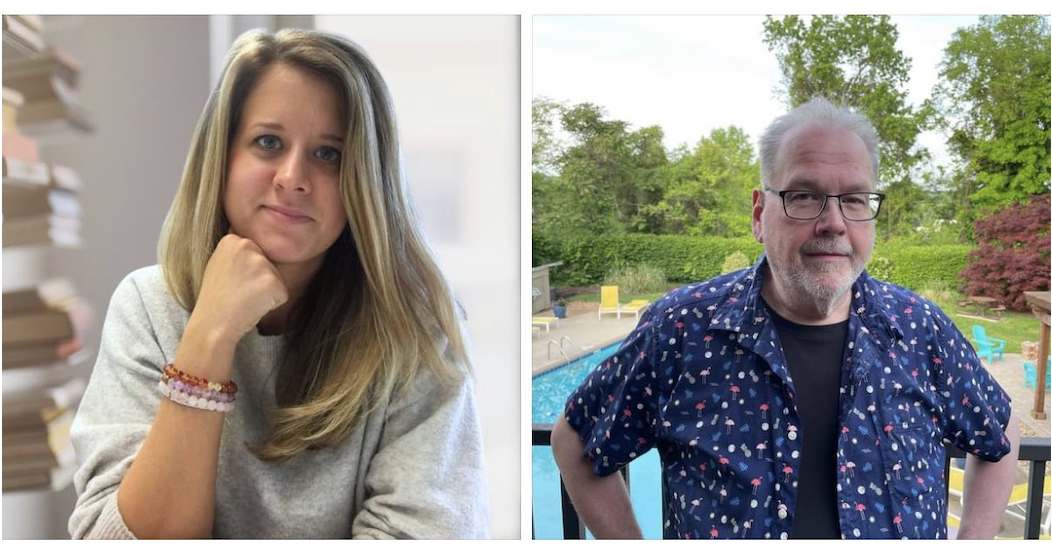
At a couple of events, we were joined by our talented friend Sara McKinley, who painted the beautiful cover for THAT OCTOBER. That’s Sara on the right there.

And we’ll be doing all this again, probably next year. Hopefully with even more books by other authors.

Nest year? Man, I better get some sleep.

Do you have BAD INTENTIONS? The crime fiction anthology inspired by the music of Warren Zevon? Cause it’s here!

Maybe you’ve seen some of us online talking about the BAD INTENTIONS crime story anthology. Hopefully we’ve caught your attention. Fifteen great stories by fifteen crime writers, all taking their cue from the music of the late, great Warren Zevon, edited by Michael Downing and brought to y’all by Literary Garage.

But did you know the anthology is OUT? Huh? Didja?

Okay, forgive me. It’s a project I’m excited about and I hope you are too.

My story SUNSET STAKEOUT is included in the anthology and it was inspired by Zevon’s “Looking for the Next Best Thing.” It wasn’t the Zevon tune that was uppermost in my mind when I was pitching this story to Michael. Until I listened to the song for the first time in years and realized what I was hearing. The “what the hell” lyrics. The soaring electric guitar.

To me, this all sounded like the theme for, each week, a “Rockford Files”-style TV series, featuring the rambling adventures of a private investigator named Jim Rock- wait, scratch that.

It’s not a story about Jim Rockford, played by James Garner as the personification of the best 1970s TV PI. It’s about a bunch of guys who’ve created “Sunset Stakeout,” a Rockford-adjacent TV series that, in January 1979, is facing cancellation by NBC.

How desperate will the producer, co-star and fledgling screenwriter of “Sunset Stakeout” be to save their series? Would they start looking for the next best thing – a movie financed by Los Angeles’ biggest drug dealer, the coke-purveyor to the stars?

Where else are you gonna find this level of Hollywood desperation, played for all the laughs and danger inherent in it PLUS a cameo from the Six Million Dollar Man?

You can find my story SUNSET STAKEOUT in BAD INTENTIONS, and you can find BAD INTENTIONS at the link below. I hope you love all these stories. And feast your eyes on that Frank Vatel cover!

Jill Blocker and I sat down to talk about our new books, writing, publishing and more

My longtime friend and fellow author Jill Blocker and I have been all over the Internet lately, talking about our new novels – HAPPILY AFTER EVER for Jill and SEVEN ANGELS for me – and we had the idea of interviewing each other and asking a few questions that we haven’t really addressed in the many articles, interviews and podcasts so far.

In the process, we worked out all the problems in the universe.

You believe that, right?

We did talk about our early writing days, what our journalism backgrounds brought to our writing and more.

For example, Jill on journalism:

I wish journalists were valued more in our society. Some of the most brilliant people I know are journalists -including some of the characters in the book. Journalists have the ability to sit down and understand important, complex issues and communicate them to the masses. Journalism definitely affects my writing style. I like short sentences and punchy lines, but more-so, I think accuracy and reliability in storytelling is one of our most important roles as writers. No one needs Fake News… real life is unbelievable enough.

And my writing routine:

My routine is to not have a routine, at least not in hours. I write almost every day, but the hours of when I write vary in that I work around other things, like taking care of our cats, laundry and exercise or appointments or interviews. Some days I don’t write fiction but I’m writing articles for sites like CrimeReads. One thing I almost never do is write in the evening, because I’m brain-fried by that point.

Here’s a link to the full interview, which is on the Constellate Creatives/Constellate Publishing site. While you’re there, if you have a book inside you or your computer that’s waiting to get out, consider clicking a button for more information about Constellate.

Instagram, Facebook running explicit porn in ads

Screenshot

I’ll say this at the top: I’m not an anti-porn crusader.

I think pornography is, on its own, a perilous thing for some people to consume. I think there can be enormous harm done to people, particularly women, who appear in it and are exploited for it. That being said, online porn, like any kind of sex work, can be financially beneficial to women, especially if they control every step of the process and make money from it.

But I think you could say – and this will come as no surprise to anyone who knows me or follows me on social media – I am an anti-hypocrisy crusader.

And yes, for my own little hypocrisy declaration, I am on social media, including Instagram and Facebook. I think the latter, much like modern-day Twitter, has done a lot to spread lies and disinformation that have ultimately hurt this country and our democracy. I’m on social media to promote my work and the work of friends (although the effectiveness of social media has never been great).

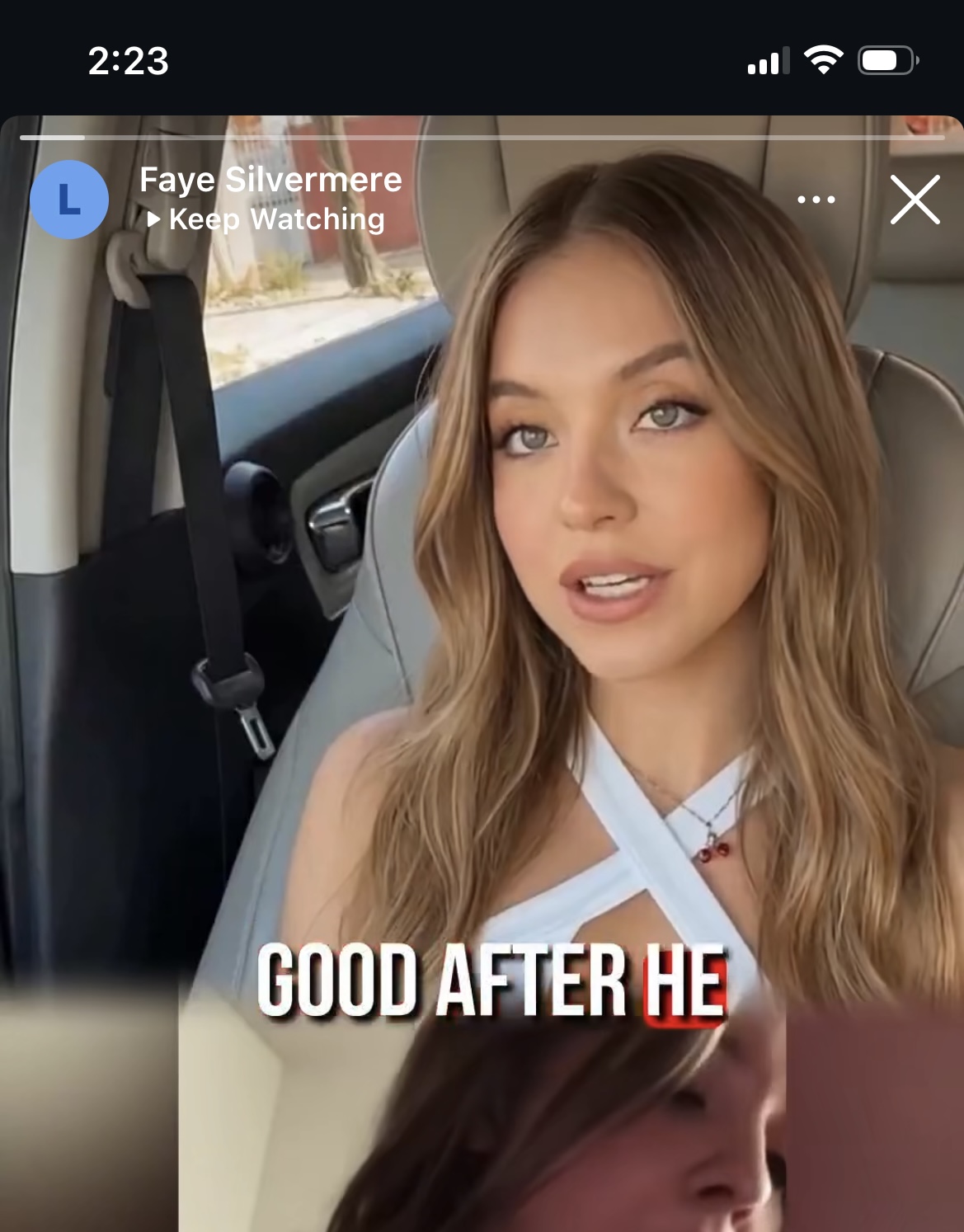
Having issued all those disclaimers, I’ll say that I was surprised recently to notice that Instagram in particular (and fellow Meta platform Facebook also; I don’t know about Threads) is running ads that include hardcore sex footage.

I’m not talking about the “I’ll be your AI girlfriend” ads that run on those platforms. Those are insulting (“I’ll never say no,” all those pretty pixel princesses coo) to everyone concerned but they’re not what I’m talking about here today.

I’m talking about explicit ads, usually popping up between Instagram stories, that are marketing something, I’m not quite sure what (I know that advertising fails if you don’t remember what product the ad is advertising) but this is a “click this link” medium, not a “hop on your Schwinn and pedal down to the corner sin store and ask for it by name” medium. And I didn’t click on any embedded links. So I’m not quite sure what they’re advertising. Pornhub or something? Dunno.

The screenshot at the top of this piece I have heavily cropped so you can’t see the bottom of the screen and its graphic depiction of oral sex. As for the top half, is that actress Sydney Sweeney? I wonder if she’s aware she’s used in porn ads?

But the fact that IG in particular is running ads with graphic sexual content when it bans that content among its users is hypocritical to say the least.

One account I know, for a genuinely legit artist and model, has to blur out her nipples in photos she posts. Yet IG users could conceivably see, after they see one of her IG stories, completely explicit sexual activity.

Even after seeing repeated examples of these ads – and yes, I’ve forever broken my algorithm in doing this research – I couldn’t quite believe what I was seeing. But I found a couple of news articles from 2025 that reported about the graphic ads, including a piece from Le Monde. “Thousands of pornographic ads go unmoderated on Facebook and Instagram” is the headline. (I’m not linking because most of the article is behind a paywall, but a cursory search found it.)

I’m very explicitly NOT calling for action or any kind of boycott of Meta social media platforms, especially Instagram and Facebook, that are running these ads. But I think people should know that Meta has two sets of standards: one for its users, who must toe the line over content, and one for its advertisers, who can follow an “anything goes” practice.

What’s the moral of the story? A friend of mine who has in the past placed ads on Instagram for legitimate, mainstream brands notes that the Meta platforms have been painstakingly trivial in their criteria for and criticism of said ads.

So I guess the bar is lower when it comes to the many, many dollars that can be made.

AI, Michael Caine and Mr. Potato Head, together again

I mentioned on social media in the past couple of days that I got the biggest reaction I’ve ever received on LinkedIn after posting that i’d unfollowed a LinkedIn connection after seeing them post touting AI.

Now this isn’t unusual on LinkedIn, where a lot of people have some financial investment and a vested interest in seeing AI succeed.

I posted this:

Unfollowed and cut my connection with an AI user.

AI is a destructive force. It kills jobs, creativity and the environment, all for profits for billionaires who don’t care about any of us. And when the AI bubble bursts, the economy will suffer.

If you’re an AI user, go ahead and unfollow me and cut our connection. You might as well, because when I see you touting AI, I’ll do it.

This brought responses from people I actually know and some that I don’t, taking the approach of warning me that: I’ll never get ahead without AI – similar to Reese Witherspoon’s “don’t get left behind” warning to all her girlies out there – and that I’m already using AI but probably don’t know it and that I’ll be using it in the future because everybody will be.

My answer was more polite than “bullshit” but that was the gist of it.

Anyway, the whole thing was amusing and good for engagement and I’ll probably go to that well again, despite the dire warnings – all, without a doubt, from people who have something invested in AI or at least hope to make a buck in it – popularizing the notion that all of us who have been writing email, writing books, etc., for decades WITHOUT the assistance of AI have apparently lost the ability to do so unless we rely on the processes that are killing the environment and killing jobs just so some poor schmuck can imagine themself as an author or have a “girlfriend who won’t say no.” (See my recent post on the topic of the AI girlfriend.

Then this morning, Publisher’s Marketplace reported on an “AI voice company” that plans to release an audio version of “The Odyssey,” timed to coincide with the Christopher Nolan movie, that will be narrated by the AI version of Michael Caine’s voice.

I can guarantee you I will live the rest of my days without listenng to that.

Those of you who know I have an absurd sense of humor know that the final paragraph of the article was my favorite:

ElevenLabs primary business is creating synthetic AI voices and text-to-speech audiobooks. They have partnered with Spotify to produce audio for self-published authors, and digital distributor Bookwire. Their Iconic Marketplace allows brands to license famous voices for AI-created content, in partnership with the celebrity or estate. Currently available voices include Dr. Maya Angelou, Judy Garland, David Hasselhoff, Laurence Olivier, and Mr. Potato Head.

So I want to know, did the company license the AI rights to the voice of Don Rickles, who voiced Mr. Potato Head in the “Toy Story” movies? And if so, why not just say their available voices included “Don Rickles as Mr. Potato Head?”

Do the hustle: dancing as fast as we can … maybe

(And yes, you’re welcome for injecting that 1975 Van McCoy earworm into your brain.)

Every day, I see dudes in our apartment complex walking through the parking lot and down the hill to the busy commercial street below. They’re wearing knit shirts with restaurant logos and I’m assuming they’re going to work in the kitchens of said eateries.

In these hotter-than-the-hinges-on-the-gates-of-hell summer days, they’re walking to work, maybe because they don’t have cars and, luckily, there are so many places to eat nearby.

Increasingly, they’re turning out for work every day at some risk: getting swept up by state-sanctioned kidnappers.

Whatever the risks and whatever the meager rewards – nobody working in a restaurant kitchen is making more than minimum wage – they’re hustling every day.

They’re an echo of their parents and, honestly, my parents. My dad worked for 30 years in an auto parts factory. The days were hot and dirty and noisy; he was half-deaf by the time he retired. And when he retired, he ran pay-to-fish ponds down the hill and behind our house. Once a week he drove to another city, his old Chevy pickup with a waterproofed wooden tank that he built on the back, to pick up catfish and bluegill to stock the ponds. He’d owned and ran an apartment house years before I was born and sharpened saws after he retired.

My mom’s story was similar, and I tell some of it in my upcoming novel GHOST SHOW. She and her sisters gathered wild-growing plants near their little town in Tennessee – the place that inspired the town in my novel SEVEN ANGELS – to sell to reps of pharmaceutical companies. They collected the plants in burlap sacks and sold them, at the end of the day, for pennies.

My mom ran our 20-acre farm for those 30 years my dad worked in the factory. She cleaned houses and factories, a job I helped with before I started working in the newspaper business.

I have only a portion of the hard work, the sheer hustle, of my parents. Or those guys walking to work in a hot kitchen every day.

And I’m acutely aware of that.

“I need to work more and work longer hours if I’m gonna write all these books,” I said the other day.

“You know, you can take downtime,” the reply came.

And I do take down time. Too much of it. I need to work harder and smarter. I need to hustle.

Apple – and everyone else – stop making your products so sleek (and hard to use)

Screenshot

I’m not crazy about my latest iphone upgrade.

Or my new coffeemaker, for the matter.

Let me explain.

As I write this, Word – a needy little bitch if ever there was one – is notifying me once again that I should update. Nevermind that I see these pleas when I’ve opened Word on my Macbook Pro and I’m trying to get some work done so no, I don’t plan on updating now.

Not to mention the number of times Google Chrome asks me to update.

I wouldn’t mind the updates if I thought they’d have a good outcome. But too often lately it seems like companies update their products – I’m not even talking about just tech products here – based on bad design.

Example: I had to buy a new Mr. Coffee coffeemaker recently when our old one – about seven years old – began leaking water I’d poured in. I got a new one because I didn’t relish the idea of getting electrocuted before I’d had my coffee.

So I picked out the basic model, which seemed to be the same 12-cup coffeemaker as I’d had and began using it. Immediately I noticed that the water level indicator is tucked away on the side, presumably to make the coffeemaker more narrow and more sleek. (Nevermind that I could only find it in black, which might hide coffee stains better than white but is harder to tell how much water you’ve poured in.) If I want to double-check how much water I’ve poured in, because of the place Mr. Coffee is tucked away in our tiny kitchen, I have to pull it forward on the counter and turn it to peer at it.

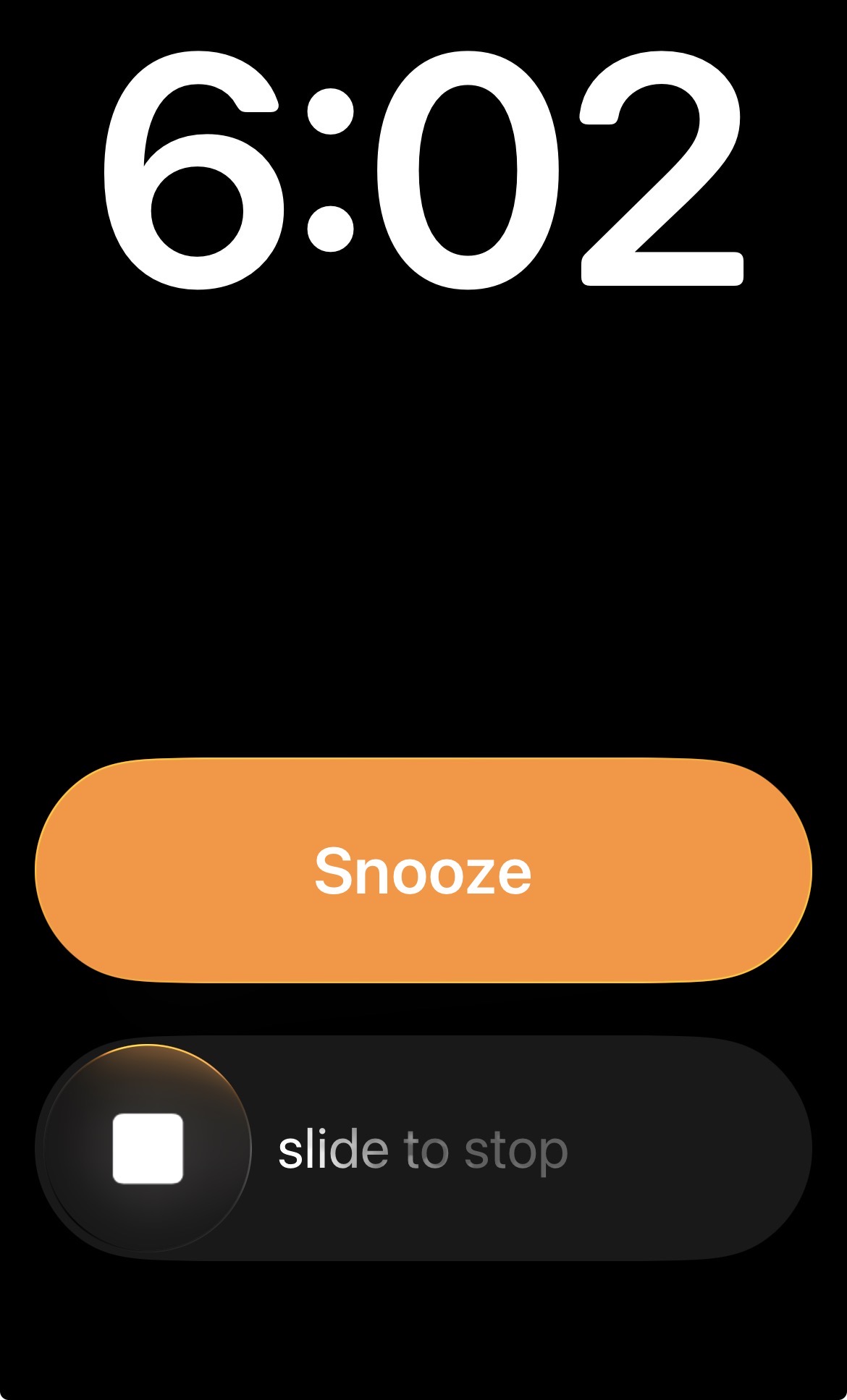
More annoying is a recent upgrade to my iphone – I bet you wondered wtf I was going to get to that – changed the way you can turn off notifications like the alarm indicator you see above.

In the past, the phone has offered a single button to tap to end an alarm or notification. Now you have to slide the notification.

No one at Apple thought about how hard this was to do with one hand. I can’t any longer turn off a notification casually with a single tap. Now I have to hold my phone in one hand and “swipe” with the other.

This change seemed to occur right about the time Apple introduced liquid glass, its “unified visual theme for the graphical user interfaces.”

Yes, by all means, you techboy schmucks, make apps and labels on your products transparent and harder to see.

You’d think someone could get paid hundreds of thousands of dollars – maybe millions in stock – to advise these companies on how not to piss off their low-vision or low-dexterity or low-mobility users?

Maybe I should apply for the job.

Writing is one of the few privileges anyone can embrace

I’m not sure what I’d be doing if I wasn’t writing.

Talking about that possibility with family members in town for a visit yesterday, one of them wondered what I’d be doing if I hadn’t kept writing when I took a buyout from the newspaper business seven years ago. I went on to write three novels, a couple more true crime books, 73 or 74 pieces for CrimeReads, 55 for another site, eight or 10 for another (now defunct) site, a few for a couple of other sites … plus dozens of press releases, short stories and more.

What would I do if I wasn’t writing?

Well, reading, of course. That’s been the oldest constant in my life (other than breathing and eating), from the Marvel Comics a friend gave me in the 1960s to books and stories aimed at young people.

But I can’t imagine a life without writing.

It seems to me that writing is not only the dominant optional privilege in my life but it could be the privilege that anyone can enjoy.

(This thought goes hand in hand with my belief that ir you write, you”re a writer, regardless if you are published or even disseminated in any way.)

The fundamental act of writing changed me. Decades of news writing made me think better and all the qualities that go with it, especially the ability to look at a circumstance critically.

I don’t think I’m a great writer. I think I am, at best, a clever writer and a sympathetic writer. Sometimes. Writing helps make me that.

And the best thing about writing is that you can do it at very little cost. Of course, thinking about writing is writing, in my opinion, and I’ve got this (aging) MacBook that lets me put together words.

But really, if I didn’t have that tool, i could write in a notebook or even scraps of paper.

Writing isn’t precious. Writing doesn’t care how much money you can afford to write.

For me, writing is in some ways the most consistent thread in my life. In many ways, it’s the most satisfying, but it’s certainly the longest-running and the one that feels among the most important.

Blurbs and reviews, reviews and blurbs: How I got ’em

I think there are few writers who enjoy asking other writers and book influencers for blurbs, quotes and reviews.

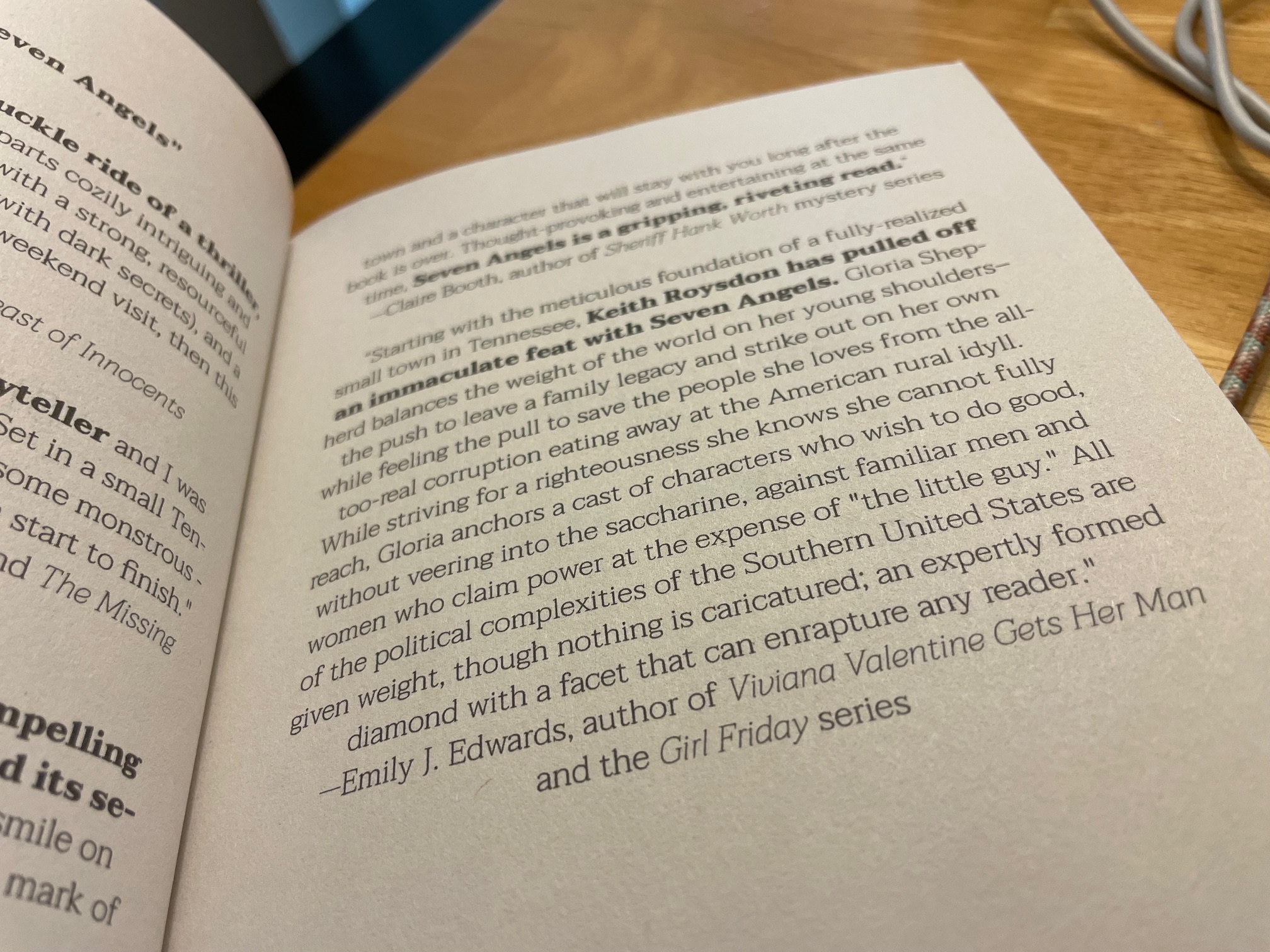
I don’t know that I’ll continue to seek out marketable opinions of my books, if I continue to write books, but I’ve been blessed with insightful comments from people who’ve had a chance to read my books – in advance for inclusion as blurbs like the one shown above by wonderful author and friend Emily J. Edwards – and after the books are published as the most marketing-heavy element of book marketing.

I’ve had only one author say they’ve been too overwhelmed with their own work to take the time to read the book for a blurb or review.

How this process went for me:

Of course, we all know what reviews are, but blurbs are those little snippets of opinion – inevitably praising – that you see on book covers and inside. They attest to the value of the book and, sometimes, of the author.

With my first published novel, THAT OCTOBER, I waited until almost too late to ask. The book was slated for self-publishing on June 1, 2025 and I probably didn’t ask people until March or April. Every person I asked except for one hugely busy person was able to read the book and provide a blurb.

With SEVEN ANGELS, I was a little more organized and asked weeks, months, earlier, well before its June 1, 2026 publication date. I did so politely and with the understanding that they were probably too busy to do it, but they all did. One author who’d said she wouldn’t be able to blurb the book emailed later to say she’d begun reading it and wanted to blurb it. I’m not sure I got a higher compliment than that.

Each of the authors got a copy of the manuscript and I told them that there would be no substantial changes to come that might affect their opinions.

The blurbs were included in the book, most inside and one by Claire Booth on the back cover. My friend and cornerstone of Constellate Publishing Jill Blocker decided the positioning.

Afterward, when I had copies of the book, I asked a handful of people, friends and online tastemakers, who I provided either copies of the proof or copies of the book to. I stepped gingerly with my request here: “If I sent you a copy, would you consider reading it and possibly posting about it?” This was a step I didn’t take with THAT OCTOBER.

In the five days (as of today) since SEVEN ANGELS was published, I’ve encouraged people to post reviews on Amazon or other sites like Goodreads. And of course people I don’t know who might read the book might do the same.

It’s a ticklish process, for sure. You have to assume that the people you’re asking MIGHT like the book and be willing to say so publicly. If they don’t, though, at least they gave it a shot and shared their honest opinion.

Because years from now, if I’m lucky, someone might have an opinion. If it’s positive or negative or mixed, it’s still a sign that someone found the book and connected with it.